
Comparing Neiman Marcus vs DressMeUpNY: A Comprehensive Guide

Introduction
Every savvy shopper and retailer knows how critical it is to assess platforms side by side—especially when the stakes involve iconic luxury versus specialized formal wear. In the complex landscape of fashion retail, comparing options such as Neiman Marcus and a niche player like DressMeUpNY offers insights that can inform decisions for both consumers and businesses. This article begins by examining the defining characteristics of each, setting the stage for a deeper exploration of how each brand serves its audience in the competitive market.
Setting the Stage
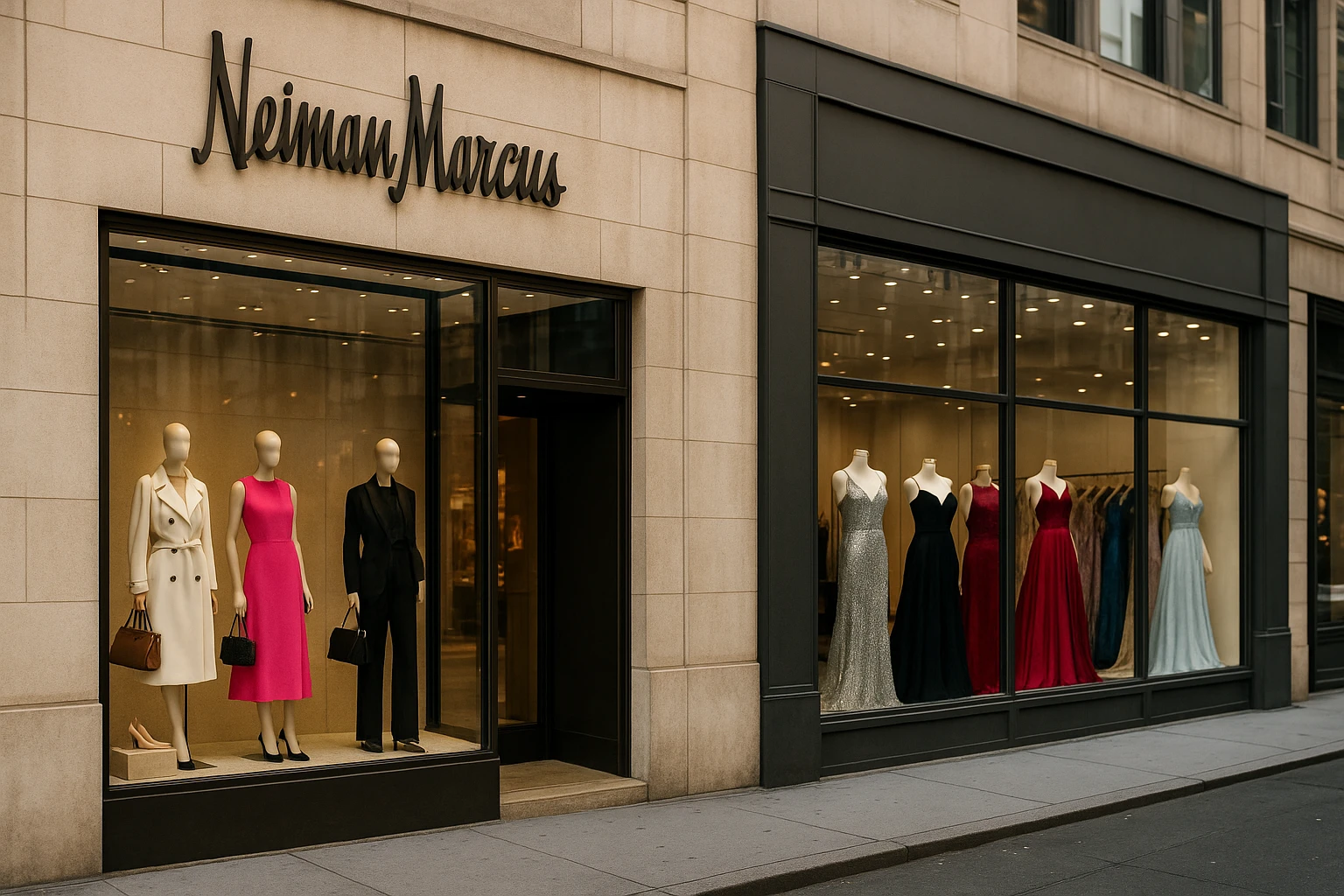
Drawing on over a century of prestige, Neiman Marcus stands as a hallmark of luxury retail in the United States. Founded in 1907 and recently transitioning under new ownership via Saks Global, Neiman Marcus continues to anchor its reputation through curated designer collections, a storied “Christmas Book,” and a network of 36 stores nationwide. As of 2025, the company operates across 17 states and maintains its flagship identity amidst strategic shifts and ongoing expansion efforts Wikipedia and OysterLink.
Enter the Specialist
By contrast, DressMeUpNY occupies a focused niche in formal attire—offering prom, evening, quinceañera, bridal guest, and red carpet dresses in a curated catalog. Known for brands like Jovani and Amelia Couture, the platform emphasizes customer satisfaction through detailed size charts, personalized support, and strong online feedback. Recent reviews highlight timely delivery, accurate representations, and attentive customer service—for instance, a reviewer in October 2025 praised prompt shipping and vibrant color reproduction Trustpilot.
Why This Comparison Matters
Understanding the nuances between a heritage department store and a dedicated formalwear specialist can unlock actionable insights. Whether it's recognizing how large-scale luxury brands adapt to evolving consumer behavior, or how boutique offerings like DressMeUpNY cater to specificity and agility, this comparison equips readers with a clearer framework. As we proceed, this initial snapshot of Neiman Marcus vs dressmeupny will serve as a foundation for evaluating strengths, weaknesses, operational strategies, and customer experiences in depth.
Understanding Brand Positioning and Market Reach
Neiman Marcus: High-Touch Luxury and Data-Driven Personalization
With a heritage dating back to 1907, Neiman Marcus occupies a storied position within the luxury retail landscape in the U.S., operating around 36 stores in addition to its Bergdorf Goodman locations forbes.com. Its strengths lie in cultivating deep relationships with ultra-affluent customers: the top 2% of its clientele account for roughly 40% of total sales, with an average annual spend of $25,000 to $27,000 across more than 25 transactions mr-mag.com. Neiman Marcus has also prioritized omnichannel integration, investing in AI-driven styling services, remote selling tools like CONNECT, and data analytics to personalize the luxury experience across in-store, digital, and remote touchpoints nextsprints.com.
DressMeUpNY: Boutique Agility and Personalized Glamour
In contrast, DressMeUpNY offers a highly specialized boutique experience focused on women’s formalwear, prom dresses, and event gowns in New York City dressmeupny.com. The boutique’s strengths are its curated inventory of premium prom and evening dresses—from designers like Jovani, Amelia Couture, and Ellie Wilde—and its commitment to craftsmanship, trend-led aesthetics, and a personalized styling experience. DressMeUpNY clients benefit from custom fittings, supportive stylist consultations, and flexibility for sizing and customization dressmeupny.com. While it lacks the scale of a national retailer, the brand's nimbleness allows it to offer tailored service and unique designs rooted in New York City's fashion-forward energy.
Contextualizing Neiman Marcus vs dressmeupny in Market Strategy
Neither brand aims to serve the mass market; however, the scale and scope of their strategies differ significantly. Neiman Marcus emphasizes volume through selective reach and deep loyalty—leveraging digital tools and exclusive brand partnerships to maintain prestige and customer intimacy at scale mr-mag.com. DressMeUpNY, by contrast, adopts a hyper-localized, boutique-first approach, emphasizing individualized service and craftsmanship suited for special events and self-expression.
Transitioning from this understanding of their distinct brand positions, we can now evaluate how these models translate into customer experience, flexibility, and long-term resilience in the evolving retail environment.
Operational Strengths and Performance Insights
While the previous section highlighted brand positioning and customer appeal, it’s important to examine real-world performance metrics. Neiman Marcus consistently demonstrates robust market resilience, underscored by strong financial and digital performance indicators. In fiscal year 2022, the company recorded over $5 billion in gross merchandise value, with 80 percent of items sold at full price and an impressive 11 percent EBITDA margin, signaling effective pricing strategy and operational efficiency PR Newswire. Furthermore, its top 2 percent of customers, each typically with at least $1 million in net worth, contribute 40 percent of total sales—highlighting the concentrated, high-value customer base that bolsters its luxury retail edge Yahoo Finance.
Comparatively, dressmeupny operates at a much smaller scale with limited transparency around metrics or traffic. Though it maintains a presence in the NYC fashion district and showcases designer collections online, visitor volume appears modest, and trust indicators vary. ScamAdviser rates it low-trust despite its 13-year domain tenure and valid SSL certificate, and traffic ranking remains minimal, suggesting a niche or emerging operation ScamAdviser. Customer feedback is similarly mixed—Trustpilot reflects a 4.2-star average across 15 reviews, with many praising delivery and quality, whereas Sitejabber exhibits a 1.9-star rating with numerous dissatisfied voices citing poor service or misleading experiences Trustpilot and Sitejabber.
From a digital performance standpoint, Neiman Marcus outpaces many of its peers. In September 2025, its online storefront generated roughly $74 million in revenue with around 9.9 million sessions, achieving an average order value between $300–325 and conversion rates around 2–2.5 percent—numbers that, while solid, suggest room for e-commerce optimization compared to the industry’s high performers Grips Intelligence. DressMeUpNY, by contrast, lacks publicly available e-commerce metrics, indicating a need for greater transparency should they aim to scale or attract broader customer trust.
Effective luxury retail today hinges on merging high-touch service with digital innovation. Neiman Marcus continues investing strategically in technology—spending $500 million across initiatives like NM Connect and AI-powered styling tools from Stylyze—generating $60 million in incremental sales within months of integration Vogue. DressMeUpNY does not publicly report similar tech CRM or personalization strategies, which may limit its capacity to emulate Neiman Marcus’s seamless, omnichannel service model.
In practice, the comparison between Neiman Marcus vs dressmeupny extends beyond aesthetics to operational maturity. Neiman Marcus showcases scale, digital sophistication, and reliable financial structures, while dressmeupny offers personalized boutique appeal with some service inconsistencies and minimal visibility into performance metrics. Retail decision-makers and customers alike can glean important lessons by analyzing these contrasting business models through both strategic and empirical lenses.
Personalization, Customer Experience, and Trust: Elevating the Retail Comparison
Moving beyond infrastructure and reach, the nuanced differences between Neiman Marcus and dressmeupny surface most clearly in their approach to personalization, customer experience, and trust. For example, Neiman Marcus—benefiting from significant scale—can deliver consistent returns and wide availability, but it risks diluting the customer relationship. One user shared that while Neiman Marcus provided shopping flexibility and online discounts (stacking Rakuten cashback and coupon codes, saving nearly $800), they still missed the intimate and curated service expected from true luxury retail reddit discussion. In contrast, dressmeupny can leverage exclusivity and hands-on assistance, fostering deeper loyalty through attentive service tailored to each customer.
In the realm of personalized luxury, customers often value the opportunity to build lasting relationships with sales associates. Reports from luxury shoppers highlight that boutiques frequently offer more attentive one-on-one experiences, personalized recommendations, and access to limited releases—benefits less common in a large-scale department store environment source. While Neiman Marcus can delegate high-touch service to concierge areas or VIP clients, it cannot uniformly replicate the quiet, attentive environment dressmeupny can nurture.
Trust and quality assurance also illustrate stark differences. A 2025 Reddit account describes receiving a used or floor-model luxury item with stains—an issue and customer frustration that stemmed from inadequate quality controls at Neiman Marcus source. dressmeupny, without such systemic complexity, has more direct oversight and can ensure that each item leaves pristine and inspected—critical for preserving reputation in boutique retail.
For retail decision-makers evaluating the trade-offs implicit in the Neiman Marcus vs dressmeupny comparison, the lesson is strategic clarity. If brand positioning emphasizes personalization, exclusivity, and superior care, dressmeupny’s model holds clear advantages. Conversely, for businesses prioritizing inventory scale, cross-brand promotions, and logistic efficiencies, Neiman Marcus demonstrates undeniable strength. In either case, blending boutique-level trust and service into scalable touchpoints—or vice versa—can deliver a competitive edge in retail dynamics.
Conclusion
In the competitive landscape of high fashion, the comparison between Neiman Marcus and DressMeUpNY highlights the diverse offerings of both brands. Neiman Marcus, with its storied history and expansive luxury catalog, offers customers a traditional yet opulent shopping experience. Conversely, DressMeUpNY leverages its unique position as a nimble, trendy alternative, appealing to modern consumers seeking up-to-date fashion without compromising on style.
Key Takeaways
While Neiman Marcus caters to clients who appreciate established luxury brands and personalized service, DressMeUpNY attracts a younger, fashion-forward audience. The overarching lesson for retailers is to understand and cater to their specific market segments. Having a clear brand identity and value proposition is crucial in maintaining competitive advantage, whether it’s through iconic luxury or cutting-edge fashion.
Actionable Insights
- For luxury retailers, creating a distinct, immersive shopping experience can enhance customer loyalty. Neiman Marcus’s investment in personalized services and exclusive partnerships sets a benchmark in this regard.
- Emerging brands like DressMeUpNY can capture market share by staying agile and trendy, focusing on digital marketing and collaborations with influencers to reach a broader audience.
- Both types of stores can benefit from integrating omnichannel strategies that blend online convenience with in-store personalization.
Research suggests that consumer preferences are increasingly towards blended shopping experiences, a trend leveraged successfully by leaders in the retail space.
Call to Action
For fashion enthusiasts and shoppers, exploring Neiman Marcus vs DressMeUpNY opens avenues to discover diversity in style and shopping experiences. Whether drawn to the luxurious allure of Neiman Marcus or the trendy vibes of DressMeUpNY, there are exceptional opportunities to elevate personal style. Explore their collections today to find the unique pieces that resonate with your fashion journey.
As the fashion landscape continues to evolve, retailers must adapt to stay relevant and meet the changing demands of consumers. By understanding market dynamics and continually innovating, brands like Neiman Marcus and DressMeUpNY will remain vital players in the industry.
Article Generated by Soogle