
Best Fabrics for Formal Dresses: Your Complete Style Guide

Best Fabrics for Formal Dresses: Your Complete Style Guide

The best fabrics for formal dresses are satin, chiffon, velvet, organza, lace, silk charmeuse, and crepe. Each one brings something different to the table, whether that’s a liquid drape, dramatic texture, or structured volume. Choosing the right material is honestly one of the most important decisions you’ll make when picking a gown, because the same silhouette reads completely differently depending on what it’s made from.
Here’s a quick snapshot of what each fabric does best:
- Satin: High shine, fluid drape, ideal for fitted gowns and red carpet looks
- Chiffon: Lightweight, sheer, and breathable; perfect for flowing overlays and warm weather events
- Velvet: Plush, dense, and dramatic; best for cooler evening galas
- Organza: Crisp and stiff; holds volume in skirts and structured overlays
- Lace: Delicate openwork texture; a classic for bridal and black tie occasions
- Silk charmeuse: Soft, luminous, and body skimming; the ultimate in understated luxury
- Crepe: Matte finish, structured hang; works beautifully for modern minimal gowns
Natural fibers like silk tend to breathe better and drape more naturally, while synthetic options like polyester satin offer a budget-friendly alternative that still photographs well. The fabric’s weight, sheen, and texture all shape how a dress moves, how it photographs, and how comfortable you’ll feel wearing it for hours.
Table of Contents
- What are the best fabrics for formal dresses, and what sets each one apart?
- How fabric texture and finish change the way your dress looks
- How to care for your formal dress based on its fabric
- Expert insights on choosing the right fabric for your event
- Find your perfect formal dress at Dressmeupny
- Key Takeaways
What are the best fabrics for formal dresses, and what sets each one apart?
Knowing a fabric’s name is just the starting point. What really matters is how it behaves on your body, under event lighting, and after a full evening of dancing or sitting through a ceremony.
Satin
Silk satin offers a smooth texture and natural sheen that drapes beautifully and flatters the figure, making it a go-to for elegant formal gowns. The trade-off is that it shows wrinkles easily and snags more than most other smooth fabrics. Duchess satin is the heavier, more structured version of the two: it holds its shape under its own weight, resists wrinkles better, and photographs with a richer, quieter sheen. If you’re wearing a gown through a long dinner or ceremony, duchess satin is the more practical pick.
- Ideal for: fitted bodices, mermaid gowns, bias-cut slip dresses
- Best season: year-round; especially striking in air-conditioned ballrooms
- Price range: natural silk satin sits at the higher end; polyester satin is budget-friendly
Chiffon
Chiffon is lightweight, semi-sheer, and drapes like water. It breathes well, which makes it a strong choice for outdoor events, summer weddings, and any occasion where you’ll be on your feet for hours. It almost always needs a lining underneath for opacity, and the right lining won’t compromise the drape. Breathable fabrics like chiffon excel for prolonged wear, especially in warm weather.
- Ideal for: floaty overlays, A-line gowns, bridesmaid dresses
- Best season: spring and summer; outdoor daytime events
- Price range: mid-range; widely available in both natural and synthetic versions
Velvet
Velvet is dense and rich with a plush pile that adds dramatic depth to formal gowns, and it’s often favored for evening galas and colder weather events. Silk and rayon velvets drape softly; cotton velvet holds more structure. Because velvet is the warmest of the major formal fabrics, it belongs at cooler, air-conditioned events rather than outdoor summer parties.
- Ideal for: evening gowns, statement cocktail dresses, holiday galas
- Best season: fall and winter
- Price range: mid to high; silk velvet is a luxury investment
Organza
Organza offers crisp stiffness for volume in gowns and overlays, making it ideal for structured formalwear layers. The stiffness is actually the point: it holds volume in skirts and sleeves where chiffon would collapse. It does fray at cut edges, so lined seams are a must. You’ll often see organza used as a top layer over satin or silk in ball gowns and prom dresses.
- Ideal for: full skirts, structured overlays, prom and quinceañera gowns
- Best season: spring and summer events; moderate in air conditioning
- Price range: affordable to mid-range
Lace
Lace brings an openwork texture that no other fabric can replicate. It adds dimension and romance to bridal gowns, evening dresses, and cocktail styles alike. Because lace is delicate, it typically needs a lining fabric underneath, which also affects how warm or cool the finished dress feels. Stretch lace works well for fitted styles; rigid lace suits structured bodices and overlays.
- Ideal for: bridal, black tie, and garden party looks
- Best season: spring and fall; versatile with the right lining weight
- Price range: varies widely; French Chantilly lace is a premium option
Silk charmeuse
Silk charmeuse is soft, luminous, and body skimming. It has a satin weave on one side and a matte finish on the other, so the same length of cloth can read glossy or understated depending on which face is cut out. It drapes close to the body, stays cool, and gets softer as the night goes on. The catch: it wrinkles, so steam between wears.
- Ideal for: draped gowns, cowl-neck styles, bias-cut silhouettes
- Best season: year-round; especially comfortable in warmer months
- Price range: higher end due to the silk fiber content
Crepe
Crepe has a matte finish, a distinctive fine-grain surface, and no shine at all. It hangs away from the body rather than clinging, which suits a structured fit beautifully. Crepe de Chine is a silkier subtype if you want more flow. Compared to silk, crepe is relatively low maintenance, and it comes in a range of weights from light to heavy. Natural silks and high-grade satins cost more, while man-made fibers like polyester crepe offer a budget-friendly alternative.
- Ideal for: modern minimal gowns, sheath dresses, formal column silhouettes
- Best season: year-round; heavier crepe suits cooler months
- Price range: mid-range for synthetic; higher for silk crepe
How fabric texture and finish change the way your dress looks
Fabric texture does more than just feel different under your fingers. It fundamentally changes how a dress reads in a room, especially under event lighting.
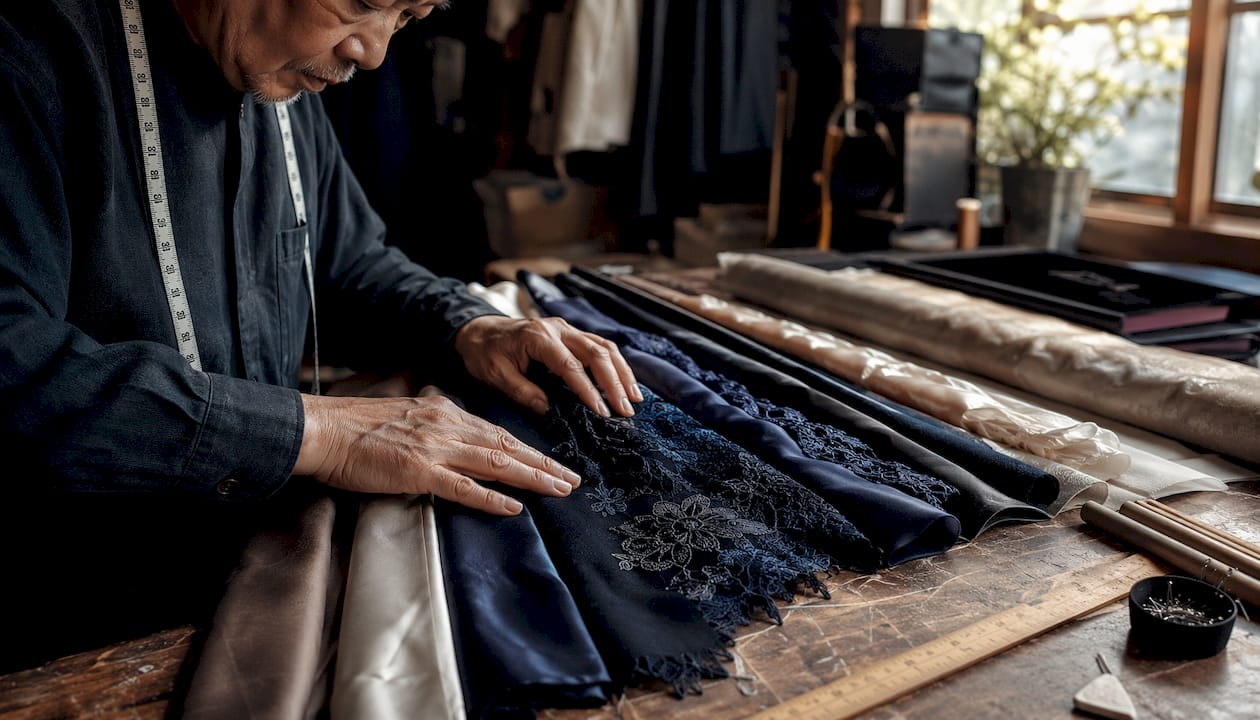
Textured fabrics like lace and velvet create dimension by catching light across their surface, while smooth fabrics like satin and silk produce a polished, reflective finish. That difference shapes everything from how a silhouette photographs to how it reads from across a ballroom. A velvet gown absorbs light and creates depth, making color look richer and more saturated. A satin gown bounces light back, which creates that classic glamour effect but can also highlight every curve and seam.
Smooth fabrics tend to elongate the figure and look sleek in photos. Textured fabrics add visual interest and warmth, which is why lace overlays are so popular for bridal looks and velvet is a perennial favorite for winter galas. The choice between the two isn’t just aesthetic. It’s practical.
Pro Tip: If your event is in a dimly lit venue with warm, ambient lighting, lean toward smooth fabrics like satin or silk charmeuse. They catch and reflect even low light beautifully. For brightly lit ballrooms or outdoor daytime events, textured fabrics like lace or crepe tend to look more refined because they don’t over-reflect.
Think about the silhouette you want, too. Structured fabrics like organza and duchess satin hold a clean line through a long dinner, while flowing fabrics like chiffon and silk charmeuse move with you. If you want drama in the photos and a crisp shape all evening, go structured. If you want to feel effortless and dance-ready, go fluid.
How to care for your formal dress based on its fabric
The way you care for a formal dress after the event matters as much as how it looks on the night. Different fabrics have very different needs, and getting this wrong can permanently damage a gown.
Delicate fabrics like lace and silk require careful storage and often dry cleaning, while heavier fabrics like duchess satin resist wrinkles better but still need proper handling. Here’s what to keep in mind for each major fabric type:
- Silk and silk charmeuse: Dry clean only. Store flat or loosely rolled in acid-free tissue paper. Never hang on a wire hanger, as the weight of the fabric will distort the shoulders over time.
- Chiffon: Hand wash in cool water with a gentle detergent, or dry clean. Lay flat to dry. Avoid wringing, which can permanently distort the weave.
- Velvet: Dry clean only. Store hanging to prevent crushing the pile. Never fold velvet for long periods, and keep it away from direct sunlight to preserve color depth.
- Lace: Dry clean for structured lace overlays. For stretch lace, a gentle hand wash may work, but always check the care label. Store flat in tissue paper to prevent snagging.
- Satin and duchess satin: Dry clean for best results. Steam rather than iron directly; a pressing cloth protects the surface from heat marks. Duchess satin resists wrinkles better than lightweight satin, but both benefit from proper hanging storage.
- Organza: Dry clean or hand wash carefully. The crisp finish can be damaged by heat, so avoid high-temperature ironing. Store hanging to maintain the fabric’s structure.
- Crepe: Most crepe can be hand washed in cool water, but silk crepe should be dry cleaned. Steam works well for removing wrinkles without flattening the texture.
One universal rule: always air out a formal dress before storing it, and never seal it in a plastic garment bag for long periods. Breathable cotton garment bags protect the fabric while allowing air circulation.
Expert insights on choosing the right fabric for your event
Fabric choice isn’t just about what looks good in a photo. The environment you’ll be wearing the dress in should drive the decision just as much as the silhouette.
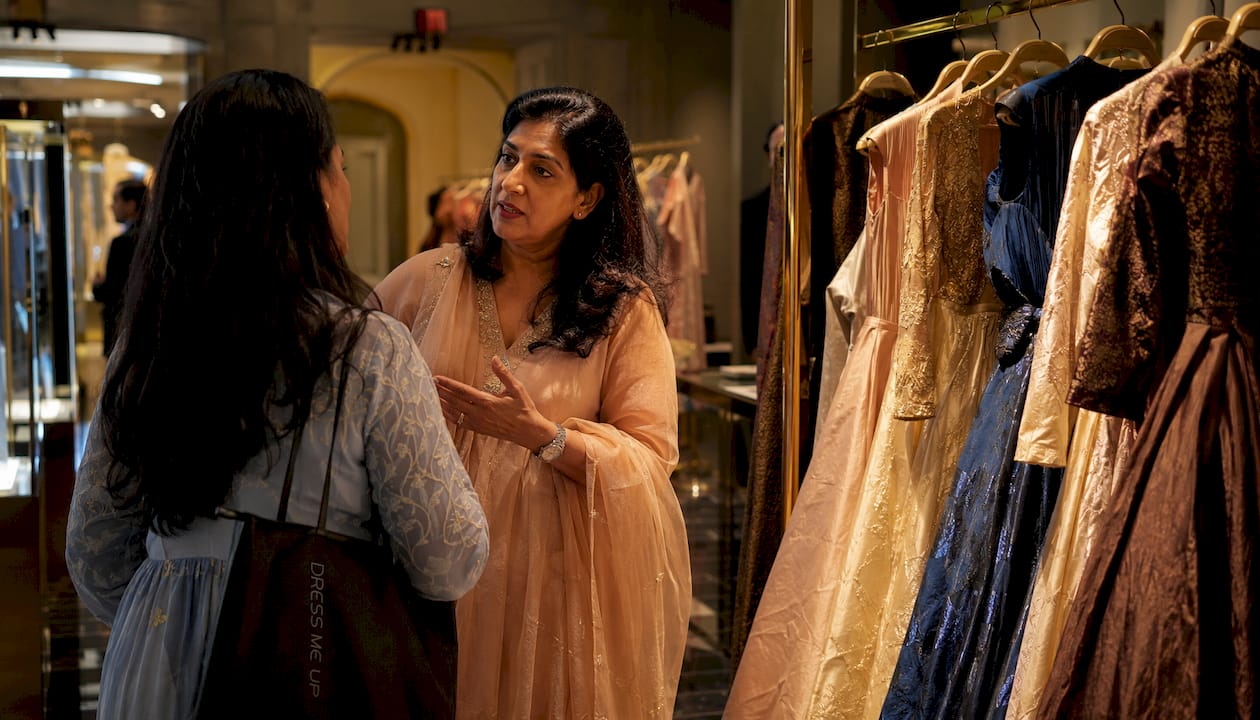
Structured, heavier fabrics like duchess satin, velvet, and taffeta photograph beautifully and maintain shape best in air-conditioned ballrooms. For black tie galas, charity dinners, or any indoor formal event with climate control, these are the fabrics that hold up through a long evening and look polished in every photo. The structure keeps the silhouette clean even after hours of sitting and standing.
Outdoor events call for a completely different approach. Lightweight, breathable fabrics like chiffon, georgette, and crepe are best for outdoor or daytime formal events, especially in warmer climates. If you’re attending a garden wedding, an outdoor prom, or a summer cocktail party, a heavy velvet or structured duchess satin gown will feel uncomfortable within the first hour. Chiffon or a light crepe will keep you comfortable and still look polished.
Pro Tip: When you’re torn between two fabrics, ask yourself where you’ll be standing at 4 in the afternoon. If the answer is outside in the sun, go lightweight and breathable. If it’s inside a climate-controlled venue, you have the freedom to go heavier and more structured.
Seasonal suitability also shapes the choice. Velvet and heavier satins are natural fits for fall and winter events. Chiffon, organza, and silk charmeuse shine in spring and summer. For formal dress trends in 2025 and 2026, lightweight layered fabrics and textured crepes have been especially popular for cocktail and evening styles, reflecting a broader shift toward comfort without sacrificing elegance. Checking current evening dress types can also help you match the right fabric to the right silhouette for your specific occasion.
If you’re shopping with sustainability in mind, the conversation around eco luxury fabrics is worth exploring. Tencel, bamboo silk, and recycled polyester satin are increasingly appearing in formalwear, offering a lower environmental footprint without sacrificing drape or sheen.
Find your perfect formal dress at Dressmeupny
When you already know what fabric you want, the next step is finding a dress that actually delivers it beautifully. Dressmeupny makes that part easy.

Dressmeupny is an online destination for women’s formal and special occasion dresses, with a catalog that spans evening gowns, prom dresses, wedding guest styles, and designer collections. Whether you’re looking for a fluid chiffon gown for a summer wedding or a structured satin dress for a black tie event, the selection covers the full range of formal fabrics and silhouettes. You’ll find evening gowns across every price point, with promotional offers including discounts and free shipping on qualifying orders. Browse the full collection at Dressmeupny and find the dress that matches both your fabric preference and your occasion.
Key Takeaways
The single most important factor in choosing a formal dress fabric is matching the material’s weight and breathability to your event’s environment and season.
| Point | Details |
|---|---|
| Top formal fabrics | Satin, chiffon, velvet, organza, lace, silk charmeuse, and crepe each suit different silhouettes and occasions. |
| Environment drives fabric choice | Heavier fabrics like duchess satin and velvet suit air-conditioned ballrooms; chiffon and crepe work best outdoors. |
| Texture affects light and photos | Smooth fabrics reflect light for glamour; textured fabrics like lace and velvet absorb it for depth and richness. |
| Care varies by fabric | Silk and lace typically need dry cleaning; crepe and chiffon can often be hand washed with care. |
| Dressmeupny for formal shopping | Dressmeupny offers evening gowns, prom dresses, and designer styles across all major formal fabric types. |
Recommended
- Types of formal dresses for ladies: 2026 style guide - DressMeUpNY
- Formal Evening Gowns With Sleeves: Complete Guide - DressMeUpNY
- Formal Quinceanera Dresses: Your Style Guide for 2026 - DressMeUpNY
- Cheap Long Formal Dresses: Complete Buyer’s Guide - DressMeUpNY