
Fit First Black Gala Dresses for Plus Size Shoppers from Dress Me Up NY
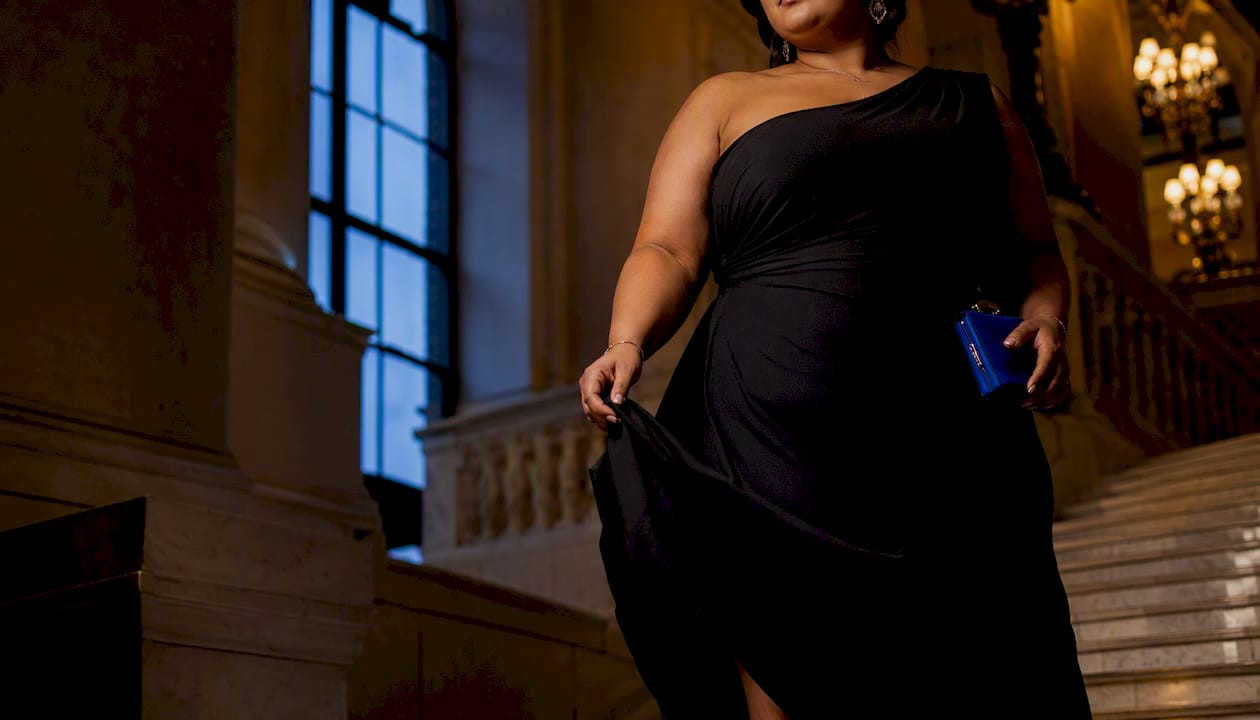
Fit First Black Gala Dresses for Plus Size Shoppers from Dress Me Up NY
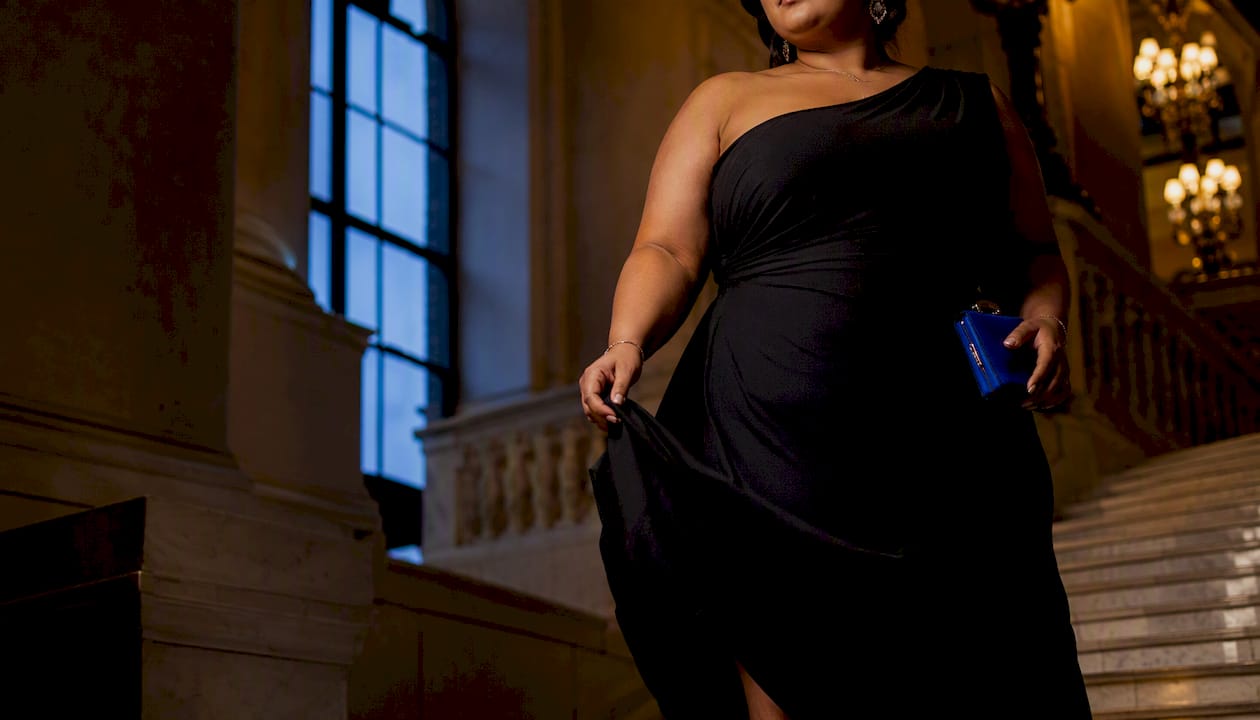
The best black gala dress for a curvy figure starts with a forgiving silhouette, not a trend. Go with an A-line, fit-and-flare, or empire waist that matches your proportions, then take accurate measurements before you shop. From there, choosing a supportive fabric and budgeting time for tailoring turns a good dress into the one you feel unstoppable in.
TL;DR:
- Choosing the right silhouette is crucial, with A-line and fit-and-flare styles offering forgiving fits that skim over hips and thighs.
- Accurate measurements of the bust, waist, hips, shoulder-to-hem, and torso length are essential for a proper fit and to avoid hem or gathering issues.
- Fabric selection impacts comfort and appearance, with stretch crepe, chiffon, and jersey blends being ideal for curvy bodies, while built-in support features enhance fit.
- Proper styling with neckline and sleeve choices can balance broader shoulders or fuller arms, emphasizing confidence and comfort.
- Ordering on time from the right brand’s size chart and allowing for professional alterations ensures a flawless look without last-minute panic.
Table of Contents
- Best Silhouettes for a Black Gala Dress Plus Size Shoppers Can Count On
- Fit and Measuring: The Numbers That Actually Matter
- Fabrics and Structure That Do the Heavy Lifting
- Styling and Accessories That Elevate a Black Gala Dress
- Shopping, Sizing, and Ordering Without the Last-Minute Panic
- Body Confidence and Embracing Your Shape in a Black Gala Dress
- Common Fit Challenges for Plus-Size Gala Dresses and How to Fix Them
- Seasonal Considerations for Fabric Choice and Dress Style
- Care and Maintenance Tips for Plus-Size Formalwear Fabrics
- Why We Think Plus-Size Gala Dressing Deserves Better Advice
- Find Your Black Gala Dress Plus Size Fit at Dress Me Up NY
- Sources
Best Silhouettes for a Black Gala Dress Plus Size Shoppers Can Count On
Not every silhouette earns its place in your closet for a black-tie night, but a handful consistently work across body types. If you remember nothing else from this guide, keep these four shapes in mind.
A-line and fit-and-flare dresses skim over the hips and thighs while cinching at the natural waist, which is why they show up so often in plus-size gala collections. The line does the work your shapewear used to do. Empire waist styles gather right under the bust, which makes them a smart pick if you want to balance a fuller chest or simply skip the waist-defining seam altogether. Sheath dresses run straighter and closer to the body, delivering a sleeker, more modern look, though they demand more precise measurements to avoid pulling at the hip. Mermaid and trumpet gowns flare dramatically below the knee for serious red-carpet drama, but they restrict stride length, which matters if your event involves a lot of standing or dancing.
Pair each silhouette with the right details:
- A-line and fit-and-flare work beautifully with off-shoulder or sweetheart necklines and cap or 3/4 sleeves.
- Empire waist looks polished with a V-neck or boat neck and flows well in long sleeves for cooler venues.
- Sheath styles pair naturally with a high neckline or illusion mesh and short sleeves for a clean line.
- Mermaid and trumpet gowns tend to favor a strapless or halter top, since the drama is meant to live below the waist.
Sleeve choice isn’t just about coverage. A 3/4 or long sleeve can visually balance broader shoulders or fuller upper arms, while a cap sleeve softens the shoulder line without adding bulk. If your gala involves a cocktail hour, a receiving line, or dancing that lasts past midnight, skip anything boned tight through the hip. Comfort over four or five hours matters more than an extra inch of definition.
Fit and Measuring: The Numbers That Actually Matter
A gala gown lives or dies on eight measurements, and skipping even one is how “true to size” turns into a return.
- High bust — measured across the chest above the fullest part, useful for bodices with structured tops.
- Full bust — the fullest point, typically the number size charts lead with.
- Underbust — right under the bust line, critical for built-in support and boning placement.
- Natural waist — the smallest point of your torso, not where your jeans sit.
- Low waist or empire point — where an empire seam or drop waist will actually fall.
- Hip — the fullest point, usually seven to nine inches below the natural waist.
- Shoulder-to-waist — determines whether a bodice will hit correctly before the skirt begins.
- High point shoulder (HPS) to hem — your true torso and leg length combined.
That last measurement is the one most shoppers skip, and it’s the one that causes the most hem disasters. Torso length is often the single most overlooked measurement, and it’s the main reason a “floor length” dress ends up pooling at your ankles or stopping short.
Bust and shoulder-to-waist numbers matter most for how the bodice sits; hip and HPS-to-hem numbers matter most for how the skirt falls. Compare both sets against a brand’s actual size chart rather than your usual ready-to-wear size, since formalwear sizing runs differently than everyday clothing.
Tailors most commonly adjust bust darts, side seams, hem length, and sleeve length on plus-size gowns. Book that appointment two to three weeks before your event; a rushed alteration is where bodices get overtightened and hems get taken up unevenly.
Pro Tip: Measure yourself in the undergarments and shoes you’ll actually wear to the gala. A half-inch heel changes hem length more than people expect.
Fabrics and Structure That Do the Heavy Lifting
The fabric decides whether a dress skims or clings, and that difference matters more on a curvy frame than almost anything else you’ll choose.
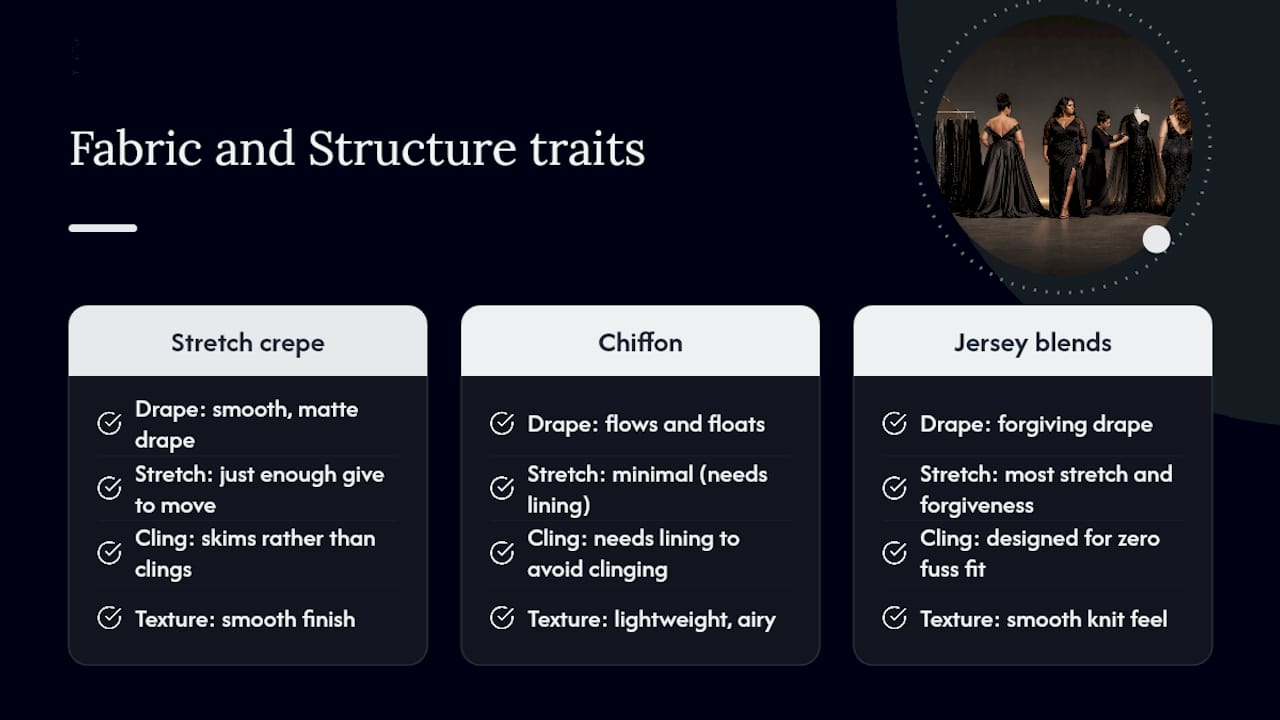
Stretch crepe gives a smooth, matte drape with just enough give to move comfortably through a long event. Chiffon flows and floats, ideal for empire and A-line skirts, though it needs a lining to avoid clinging in humidity. Jersey blends offer the most stretch and forgiveness, a strong pick if you’re new to formalwear and want zero fuss. Lace overlays add texture and visual interest over a solid lining, softening the silhouette without adding bulk. Sequins and net bring the sparkle a gala calls for, but they run heavier and warmer, so factor that into a long night on your feet.
Built-in structure changes everything about how a formal gown wears. Linings, boning, and mesh panels improve fit and comfort on their own, often reducing how much shapewear you need underneath. If a dress lists a sewn-in bra or side boning, that’s a signal it was engineered with support in mind, not just draped and hoped for.
Delicate finishes like sequins, lace, and beading almost always call for dry cleaning and a garment bag for transport, never a folded suitcase.
Styling and Accessories That Elevate a Black Gala Dress
Accessories should finish the silhouette you chose, not compete with it. Match your jewelry to the neckline first.
- An off-shoulder or strapless neckline can carry statement earrings and a bare neck.
- A V-neck calls for a single pendant necklace that follows the line down.
- A high or illusion neckline looks best with earrings alone, skipping the necklace entirely.
For shoes, a block heel gives you height and stability for a long night of standing, a stiletto sharpens a sheath or mermaid silhouette, and a dressy wedge is the most forgiving option if your gala involves grass, cobblestones, or hours of dancing.
A structured wrap or shawl adds warmth and visual interest without hiding your shape, and it solves the “what do I do with my arms” problem in every photo. Choose shapewear that smooths rather than compresses. Over-compression under a well-structured gown often creates more bulges than it hides.
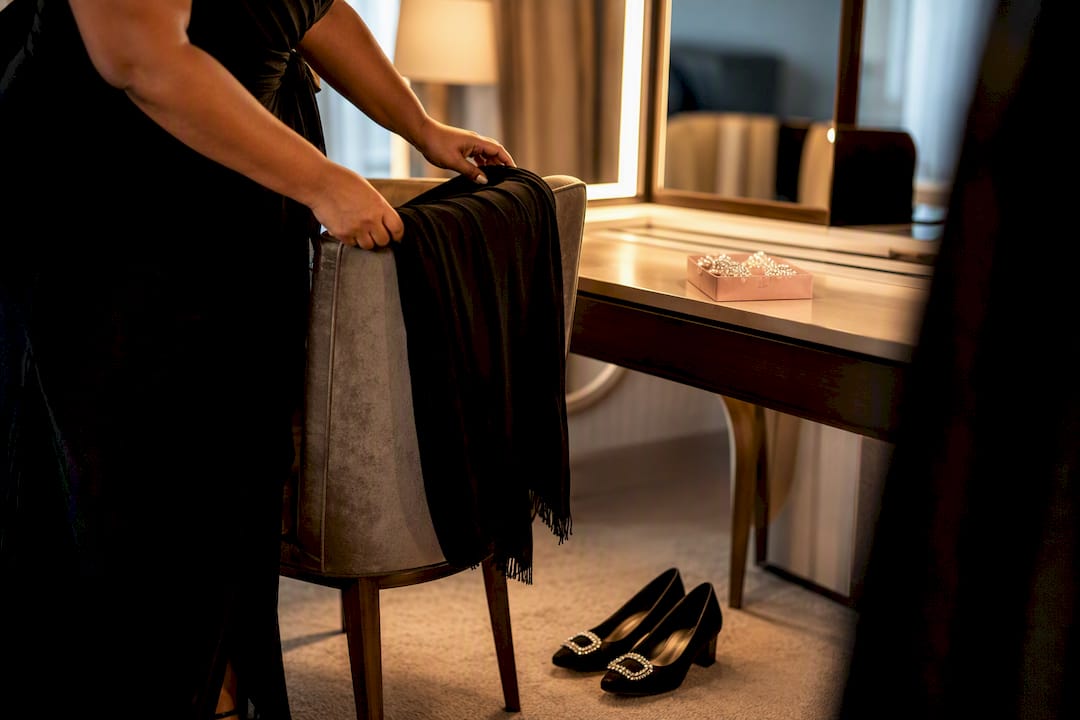
Pro Tip: Try on your full look, shoes included, at least once before the event. Heel height changes how a hem sits and how a wrap drapes.
Shopping, Sizing, and Ordering Without the Last-Minute Panic
Buying a gala gown online works fine when you follow the order in the right sequence, and you can also explore Pluscurves for additional plus-size clothing options to complement your gala look.
- Confirm the return window and alteration policy before you order, and build in lead time: order, then alter, then do a final fitting, ideally with three to four weeks total between order date and event.
- Consider a separates or two-piece set if your bust and hip proportions differ significantly from standard grading. A separate top and skirt let you size each piece independently, which solves a fit problem a one-piece gown can’t.
Body Confidence and Embracing Your Shape in a Black Gala Dress
The right black dress doesn’t hide your body. It works with the shape you actually have.
A lot of plus-size shoppers start the process looking for a dress that disguises something, and that mindset almost always backfires. Fabric that’s too loose in an attempt to “hide” the midsection often reads as shapeless in photos, while a dress cut to your real measurements tends to look sharper and more intentional, even in the exact same size. The silhouette guidance earlier in this article works because it’s built around proportion, not concealment.
Confidence at a gala usually comes down to three practical things: a dress that fits without tugging, shoes you can stand in for hours, and one feature you feel genuinely good about, whether that’s your arms, your collarbones, or your waistline. Dress toward that feature instead of away from a perceived flaw. If you love your shoulders, an off-shoulder A-line does more for your confidence than a long-sleeve style chosen to cover them.
Black works in your favor here more than any other color. It reads as elegant and intentional at every size, and it never competes with the cut of the dress for attention. Let the silhouette and the fit carry the look, and treat every accessory decision as a way to highlight what you already like, not a patch for what you don’t.
Common Fit Challenges for Plus-Size Gala Dresses and How to Fix Them
Most fit complaints trace back to one of four recurring problems, and each one has a fairly direct fix.
Gapping at the bust or underarm usually means the size chosen fits the hip correctly but runs small through the shoulders and bust. Size to your fullest measurement, then have a tailor take in the waist and hip rather than sizing down and hoping the top stretches.
Pulling or straining across the hips in a fitted sheath or mermaid style often means the size chart’s hip allowance doesn’t match your actual shape. A dress with a bit of stretch content in the fabric blend absorbs this far better than a rigid weave.
Hems that sit wrong almost always come back to skipping the shoulder-to-hem measurement discussed earlier. This is the fastest fix on the list: measure it, compare it to the garment’s listed length, and plan a hem alteration if the numbers don’t line up.
Digging at the underbust or waist seam usually points to boning or structure that was sized for a different bust-to-waist ratio than yours. If this happens repeatedly across brands, look specifically for dresses with adjustable or soft boning rather than rigid framework, or consider a style with a fabric belt instead of a built-in structured seam.
Seasonal Considerations for Fabric Choice and Dress Style
Gala season doesn’t stick to one time of year, and the right fabric changes with the calendar and the venue.
For spring and summer galas, especially outdoor or tented events, chiffon and lightweight crepe breathe better and won’t trap heat the way sequined or heavily lined fabrics do. A sleeveless or cap-sleeve A-line in a breathable blend keeps you comfortable through a warm evening without sacrificing formality.
For fall and winter events, jersey blends with more structure, lace overlays, and long-sleeve silhouettes add both warmth and visual weight appropriate for the season. A wrap or shawl becomes more of a necessity than an accessory here, particularly for outdoor cocktail hours before an indoor reception.
Venue matters as much as the calendar. A rooftop or garden gala in July calls for different fabric than a ballroom in January, even if both are technically formal events. If you’re unsure which season your fabric choice should lean toward, err on the side of a lighter weight; you can always add a wrap for warmth, but you can’t remove bulk from a fabric that runs too heavy for the room.
Care and Maintenance Tips for Plus-Size Formalwear Fabrics
A gala dress is an investment piece, and how you store and clean it determines whether it looks event-ready the second or third time you wear it.
Sequins, beading, and lace almost always require professional dry cleaning rather than a home wash cycle, which can loosen embellishments or dull the fabric’s finish. Crepe and jersey blends are more forgiving and sometimes allow a gentle hand wash, but check the garment’s care label before assuming that’s safe for your specific dress.
Storage matters as much as cleaning. Hang delicate or structured gowns in a garment bag rather than folding them into a drawer, since folding creates creases that are hard to steam out of heavier fabrics like sequined net or beaded lace. For travel, a garment bag laid flat in a car trunk or checked separately on a flight protects the shape far better than a rolled suitcase.
Address any spills or stains immediately rather than waiting until after the event ends. Blotting, never rubbing, keeps a stain from setting into fabric like chiffon or lace, where the weave holds onto liquid more than a tighter crepe would.
Why We Think Plus-Size Gala Dressing Deserves Better Advice
Most articles about plus-size formalwear treat sizing as an afterthought, tacked onto generic style tips written for a straight-size body first. We think that’s backwards. The fit challenges curvy shoppers face, from torso length to bust-to-waist ratio, aren’t a footnote. They’re the whole conversation.
We’ve built our fit guides around that belief, prioritizing the measurements that actually predict how a dress will behave in real life over the ones that just look good on a size chart. A dress that photographs well on a hanger and a dress that moves well through a five-hour gala are two different products, and we’d rather you know the difference before you check out than after.
Confidence in a black gala dress comes from fit, not from finding a way to hide. Our plus-size formal collection exists because that distinction matters to us as much as it matters to you.
— Dressmeup
Find Your Black Gala Dress Plus Size Fit at Dress Me Up NY
A plus-size gala collection addresses specific fit problems rather than using a one-size-fits-most template. This includes A-line, empire, sheath, and fit-and-flare options with various sleeve lengths, linings, and structural details included, allowing choice among different fit features.
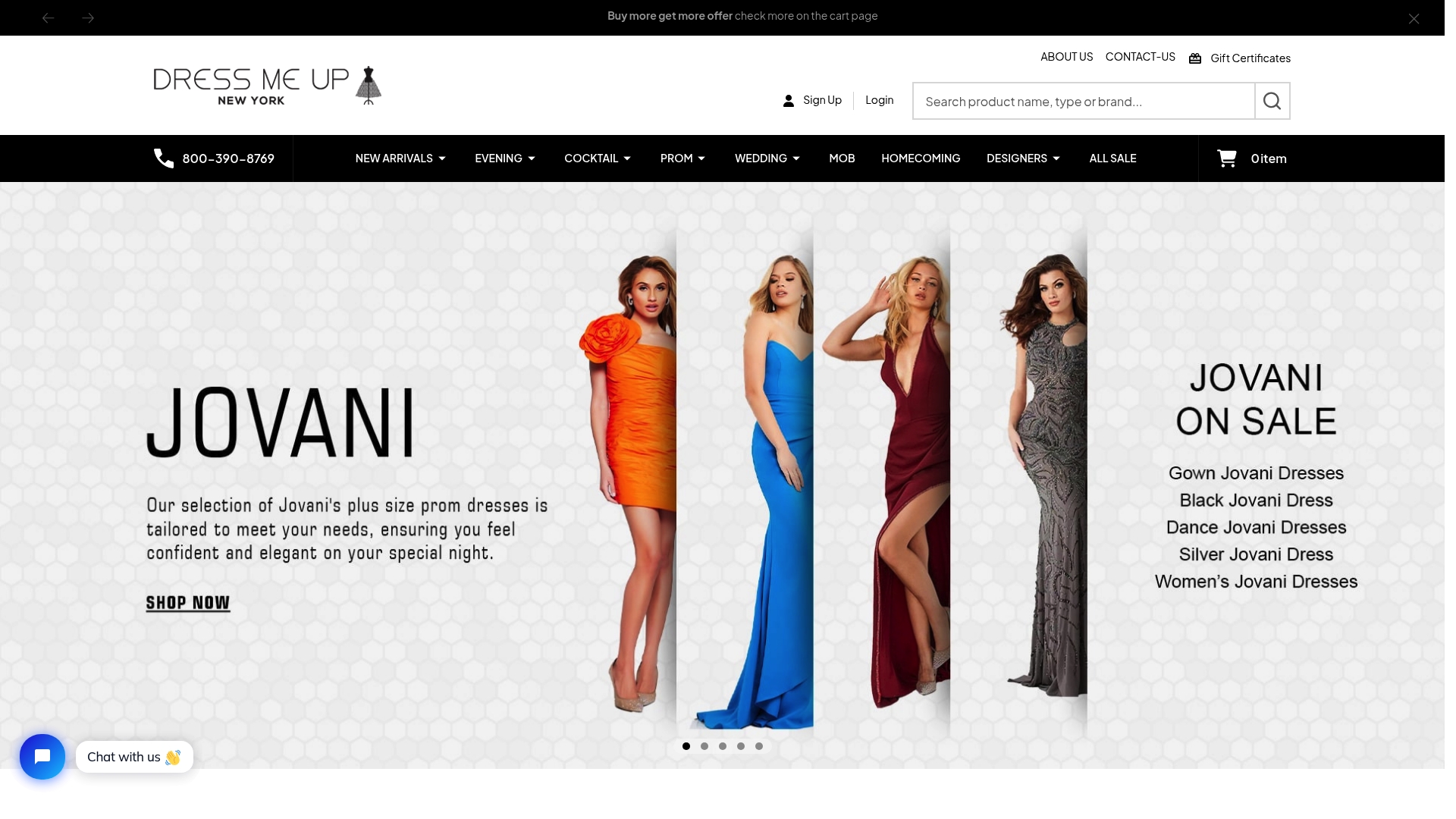
Before you order, run through a short checklist: take your eight measurements, compare them against the size chart on the plus-size evening gown collection, and confirm the alteration timeline against your event date. If you want styling direction first, the formal dress style tips guide walks through pairing accessories to your chosen silhouette. Start your measurements today, then browse the collection at Dress Me Up NY to find the black gala dress that’s actually built for your shape.
Sources
For deeper measurement guidance and tailoring lead times, the Plus Size Gala Attire Style and Fit Guide covers the full checklist referenced throughout this article.
For visual silhouette examples and styling inspiration, browse Elegant Plus Size Clothes for Every Formal Occasion.
If you want a second opinion on sizing across brands, PlusCurves’ size guide offers an external comparison point, and their plus-size collection is worth a look if you’re shopping around for additional options.
- Størrelsesguide til Plus Size Tøj | PlusCurves
Recommended
- Plus Size Formal Evening Gowns for Special Occasions
- Fit First: Measure Bust, Waist, Hips for Plus Size Formal Wear
- Women’s Plus Size Special Occasion Dresses: Your Fit Guide