
Black Tie Event Dresses: What to Wear and Where to Shop
Black Tie Event Dresses: What to Wear and Where to Shop
TL;DR:
- A floor-length evening gown in a formal fabric is the most reliable choice for black tie events, with silhouettes like A-line or column offering versatility. Fabrics such as silk, satin, and velvet signal formality, while colors like black, navy, and jewel tones are always appropriate. Proper fit and careful alteration are essential, and accessories should be understated to maintain elegance.
A floor-length evening gown is the clearest, safest answer for black tie event dresses — full stop. Emily Post and Vogue both back this up, and for good reason: a formal gown in an evening fabric removes all guesswork. Modern interpretations do allow for high-end midi-length dresses or tailored jumpsuits in silk or satin when the silhouette reads equally formal, but the floor-length gown remains the default. For the easiest shopping path, look for a classic silhouette in a formal fabric at Dressmeupny, where detailed size charts and fit notes make buying online far less stressful.
Table of Contents
- What silhouettes work best for black tie event dresses?
- Which fabrics and colors actually read as formal?
- How do you choose between a wedding, gala, or black-tie optional look?
- Sizing, fit, and alterations: getting a formal fit that lasts the evening
- How to style a black-tie gown from head to toe
- Where to buy black-tie dresses: shopping routes and what to check first
- How to care for your gown before and after the event
- Does black tie vary by region or culture?
- How to accessorize by dress color and neckline
- What should you budget for a black tie dress?
- Key Takeaways
- A note on curation from Dressmeupny
- Dressmeupny’s black-tie collection is ready for your next event
- Authoritative sources and further reading
What silhouettes work best for black tie event dresses?
Not every gown shape carries the same weight at a formal event. Here are the silhouettes that reliably read “black tie” and the occasions or body types they suit best:
- Column/sheath: Sleek and minimal, this works beautifully for galas and seated dinners. It flatters a straight or athletic frame and keeps movement clean.
- A-line: The most forgiving silhouette across body types. It skims the waist and flows out gently, making it ideal for wedding guests who want to look polished without competing with the bridal party.
- Mermaid/trumpet: Fitted through the bodice and hips, then flaring at the knee. A strong choice for galas and red-carpet-style events; less practical for long dinners or dancing.
- Ballgown: Maximum drama. Reserve this for grand venues like ballrooms or opera houses where the volume makes sense.
- Bias-cut: Elegant and understated, with a fluid drape that photographs beautifully. Best for slender or hourglass frames.
On hem length: floor-length is the safest choice for any black tie occasion. A midi can work if the fabric is clearly evening-weight (think structured crepe or heavy satin) and the styling is intentional. Casual cocktail-length dresses generally fall short of the dress code unless the invitation explicitly says “black tie optional.” For curvy silhouette guidance, an A-line or structured column tends to offer the best combination of comfort and formality.
Overly voluminous skirts and long trains can become a real liability in crowded reception spaces. If you love a full skirt, choose a manageable volume or a gown with an integrated bustle for sit-down dinners.
Pro Tip: If your evening includes dinner, dancing, and photos, an A-line or column gown gives you the most freedom of movement without sacrificing formality.
Which fabrics and colors actually read as formal?
Fabric is what separates a formal evening gown from a dressed-up day look. The right material catches light, holds structure, and signals intention the moment you walk in.
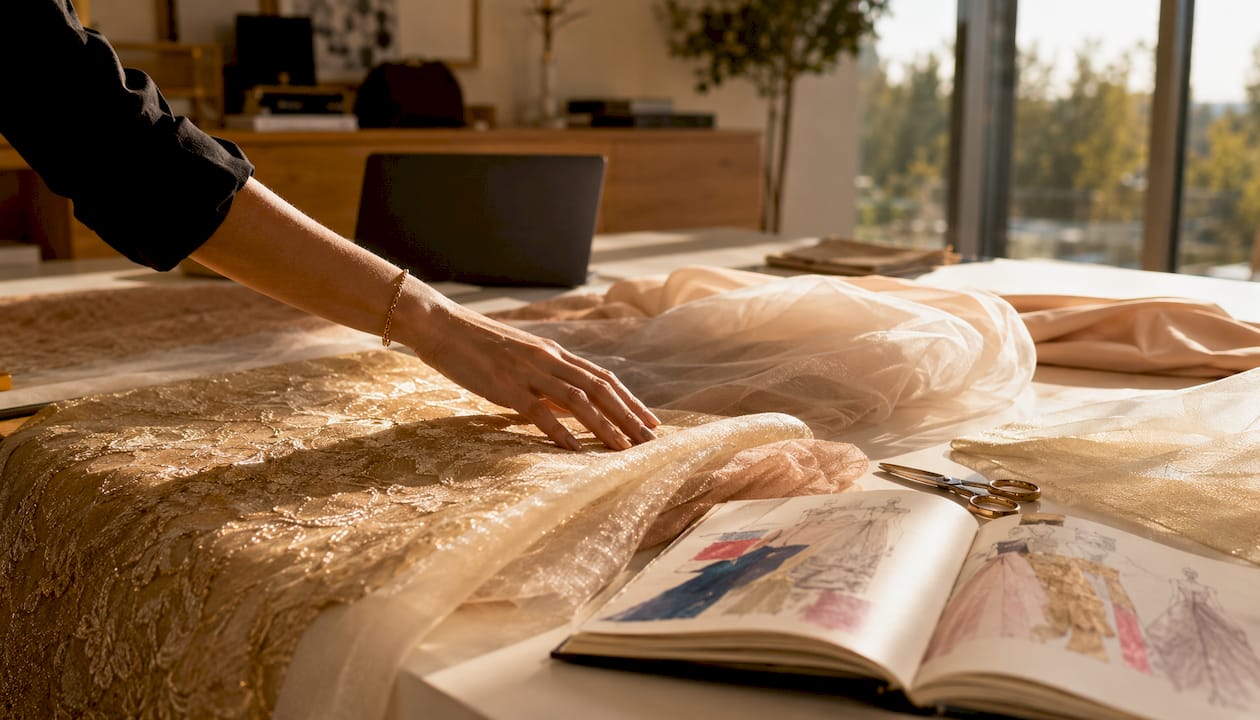
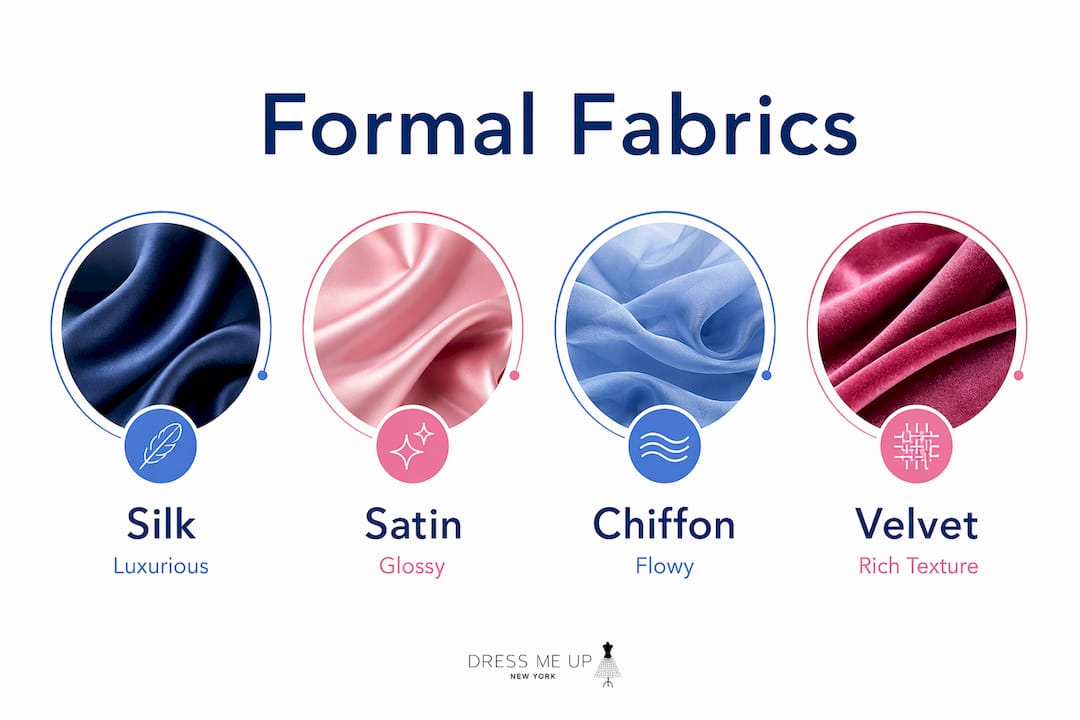
Formal fabrics to reach for: silk, satin, chiffon, velvet, and structured crepe. These materials behave beautifully under event lighting, whether that’s candlelight at a gala or the flash of a photographer’s camera. Beading, sequins, embroidery, and feather trim all read as evening-appropriate embellishments, but proportion matters. A heavily beaded bodice pairs best with a clean, unembellished skirt. Stacking embellishments from neckline to hem tends to read as too much.
Fabrics to avoid: linen, casual jersey, thin cotton, and anything with a matte, daytime finish. These materials simply don’t carry the weight of a formal dress code, no matter how elegant the cut.
Colors are more flexible than many people expect. Classic black, navy, and deep jewel tones are always appropriate. Blush, champagne, and ivory work well for wedding guests (though pure white is traditionally reserved for the bride). Bold reds and emerald greens photograph strikingly at galas. The one rule: keep the fabric formal regardless of the color.
How do you choose between a wedding, gala, or black-tie optional look?
The occasion shapes everything. Here’s how to calibrate:
- Wedding guest: Avoid white, ivory, and anything that could be mistaken for bridal. Floor-length is safest. Steer clear of overly dramatic trains or splits that might draw attention away from the couple. An A-line or column gown in a jewel tone or soft neutral is almost always the right call.
- Gala or charity event: More latitude for drama. A mermaid silhouette, a bold color, or a statement embellishment is appropriate here. The goal is to look intentional and polished, not understated.
- Black tie optional: This widens acceptable options — a formal midi or a dressy cocktail dress in an evening-weight fabric can work. But “optional” doesn’t mean casual. The fabric and styling still need to read evening-appropriate.
- Creative black tie: Expect more personality. Structured separates, formal jumpsuits in silk or satin, or a gown with an unexpected detail (bold print, architectural neckline) all fit here.
When the invitation leaves you uncertain, ask the host. Many hosts now supply mood boards or visual examples to guide guests. A quick message removes all the guesswork. Also scan the invitation itself: engraved or letterpress printing, a formal venue name, and an evening start time are all signals that the dress code is being taken seriously.
Sizing, fit, and alterations: getting a formal fit that lasts the evening
Fit matters more than price at a black tie event. A $200 gown that fits perfectly reads more polished than a $1,000 dress that gaps at the bust or pools at the hem. The high-impact fit points for evening gowns are the bust, waist, hem length, and strap placement. Get those right and the rest follows.
Typical alterations for formal gowns include hem shortening, strap adjustment, side seam taking-in, and adding a bustle. Budget at least three to four weeks for alterations before your event, and six weeks if the gown is heavily structured or beaded. Rushing a seamstress on a formal gown rarely ends well.
When shopping online, always use the brand’s size chart rather than your usual dress size. Formalwear sizing varies widely between designers. Look for product pages that include actual body measurements (bust, waist, hip) alongside the size label, and read customer fit notes for real-world feedback on whether a style runs large, small, or true to size.
Pro Tip for bias-cut gowns: These styles have very little room for alteration because adjusting the drape changes the whole silhouette. Prioritize accurate body measurements over the size label, and order earlier than you think you need to.
How to style a black-tie gown from head to toe
The principle of restraint is your best friend here. One strong, sculptural accessory consistently reads as more sophisticated than a collection of smaller pieces competing for attention. It also photographs better.
Shoes:
- Classic heels (strappy sandals, pointed pumps) in satin, metallic, or patent leather
- Sculptural mules in a formal material
- Formal flats in velvet or satin — comfort and intention both count, and a well-chosen flat is entirely appropriate for black tie
- Avoid open-toe platforms, casual block heels, or anything with a sporty finish
Bags: A small evening clutch in metallic, satin, or beaded fabric. Size matters here — an oversized bag undermines the formality of the look.
Outerwear: An evening coat, a tailored wrap, or a faux-fur stole. Avoid casual coats or puffer jackets, even in cold weather.
Jewelry: One statement piece. Bold earrings with a simple neckline, or a statement necklace with a strapless or V-neck gown. Don’t layer both. For wedding accessories that translate well to formal events, a single refined piece almost always outperforms a full set.
Hair and makeup: Match the formality of the dress. An updo or sleek blowout reads more intentional than loose, casual waves. Makeup can be bold or minimal, but it should look finished.
Pro Tip: If your gown is heavily embellished, skip the statement necklace entirely and let the dress do the work. Simple stud earrings or small hoops keep the focus where it belongs.
Where to buy black-tie dresses: shopping routes and what to check first
You have several solid routes depending on your budget, timeline, and how much you want to spend:
| Route | Best for | Key consideration |
|---|---|---|
| Specialty online retailers (e.g., Dressmeupny) | Wide selection, fit support, clear size charts | Check returns policy and alteration timeline |
| Designer boutiques | Investment pieces, expert fitting | Higher price point; longer lead time |
| Rental services | One-time wear, budget-conscious | Sizing flexibility is limited; condition varies |
| Formal resale platforms | Budget, sustainable option | Condition and alterations history unknown |
Before you check out anywhere online, run through this quick list: Does the product page include a full size chart with body measurements? Are there multiple photos showing the gown from different angles? Is the fabric clearly described? Are there customer fit notes or photos? What is the returns policy, and does it allow enough time for alterations?
Dressmeupny covers all of these. The site publishes detailed size charts, customer photos, and fit guidance alongside its collections, which makes it a practical first stop for buying a formal gown online with confidence.
How to care for your gown before and after the event
Formal fabrics need a little attention before and after wear. Before the event, steam rather than iron your gown, especially if it’s chiffon, satin, or velvet. Ironing directly can crush the pile on velvet or leave sheen marks on satin. Hang the dress on a padded hanger in a cool, dry space for at least 24 hours before wearing to let any travel creases fall out.
After the event, don’t leave the gown crumpled in a bag. Spot-clean any stains as soon as possible, then take it to a dry cleaner who specializes in formal or bridal wear. Mention the fabric and any embellishments upfront. Store the cleaned gown in a breathable garment bag, not plastic, which can trap moisture and yellow delicate fabrics over time.
Does black tie vary by region or culture?
Yes, and it’s worth knowing before you pack. In the United States, black tie is typically reserved for evening events after 6 p.m., and floor-length gowns are the standard expectation for women. In the UK and much of Europe, the dress code carries similar expectations, though British events sometimes allow slightly more creative interpretation, particularly in arts or fashion circles.
In parts of Asia and the Middle East, modesty considerations may influence what reads as appropriate, with covered shoulders or longer sleeves preferred at certain events. South American black tie events, particularly in Brazil and Argentina, tend to embrace bolder colors and more dramatic silhouettes than their North American counterparts. If you’re attending an international event or a culturally specific celebration, a quick check with the host or a local contact removes any uncertainty.
How to accessorize by dress color and neckline
Your dress color and neckline are the two biggest guides for accessory choices. Here’s how to read them:
By neckline:
- Strapless or sweetheart: a statement necklace or bold earrings, not both
- V-neck: a pendant necklace that follows the line, or drop earrings
- High neck or halter: skip the necklace entirely; focus on earrings and a cuff or bracelet
- Off-shoulder: chandelier earrings work beautifully; keep the neck bare
By color:
- Black gown: gold, silver, or diamond jewelry all work; a metallic clutch adds contrast
- Navy or deep jewel tones: gold jewelry reads warmer and richer; silver reads cooler and more modern
- Blush or champagne: rose gold or delicate pearl jewelry keeps the palette cohesive
- Bold red or emerald: minimal jewelry lets the color speak; a simple gold stud or thin bangle is enough
For statement earrings with a minimalist gown, the earring becomes the focal point of the whole look. Choose one that genuinely earns that role.
What should you budget for a black tie dress?
Black tie gowns span a wide price range, and the good news is that budget doesn’t determine how polished you look. Fit and fabric do.
- Under $150: Accessible options exist, particularly from online specialty retailers. Focus on fabric quality and fit over brand name.
- $150–$400: The sweet spot for most shoppers. This range covers well-made gowns in quality fabrics with good construction. Dressmeupny’s collection sits comfortably in this range.
- $400–$800: Designer-adjacent pieces and higher-end specialty brands. Worth considering for a recurring event or a milestone occasion.
- $800 and above: Designer labels and couture-adjacent pieces. Investment-level purchases that make sense if you’ll wear the gown more than once.
Factor in alteration costs (typically $50–$200 depending on the work needed) and dry cleaning when you’re setting your total budget. A $250 gown with a $75 hem alteration still comes in well under a $400 off-the-rack piece that fits perfectly from the start.
Key Takeaways
A floor-length evening gown in a formal fabric is the clearest, most reliable choice for black tie events, and checking size charts, fit notes, and returns policies before you buy protects your investment.
| Point | Details |
|---|---|
| Floor-length is the default | A full-length gown in silk, satin, chiffon, or velvet meets the dress code at every black tie event. |
| Fabric signals formality | Evening-weight materials do more work than silhouette alone; avoid linen, casual knits, and thin jersey. |
| Fit beats price | High-impact fit points are bust, waist, hem, and strap placement; budget time for alterations. |
| One accessory, not many | A single statement piece reads more sophisticated and photographs better than layered jewelry. |
| Dressmeupny for online shopping | Detailed size charts, customer fit notes, and a curated formal collection make it a reliable starting point. |
A note on curation from Dressmeupny
At Dressmeupny, we put fit and fabric first when we curate our formal collections. Every gown we carry is chosen with real events in mind, whether that’s a wedding, a gala, or a milestone celebration. We know that buying a formal dress online can feel uncertain, which is why we publish detailed size charts, fabric descriptions, and fit notes on every product page. If you’re between sizes or working with a specific silhouette, our customer service team is genuinely happy to help you find the right fit before you order. We also point shoppers to our black tie styling guide for dress code questions and our alteration guidance for post-purchase fit adjustments.
Dressmeupny’s black-tie collection is ready for your next event
Finding a formal gown that fits the dress code, flatters your figure, and arrives in time for your event shouldn’t be complicated. Dressmeupny carries a curated selection of floor-length evening gowns and formal alternatives across a range of budgets, all with detailed size charts, customer photos, and clear fabric descriptions so you can shop with confidence.
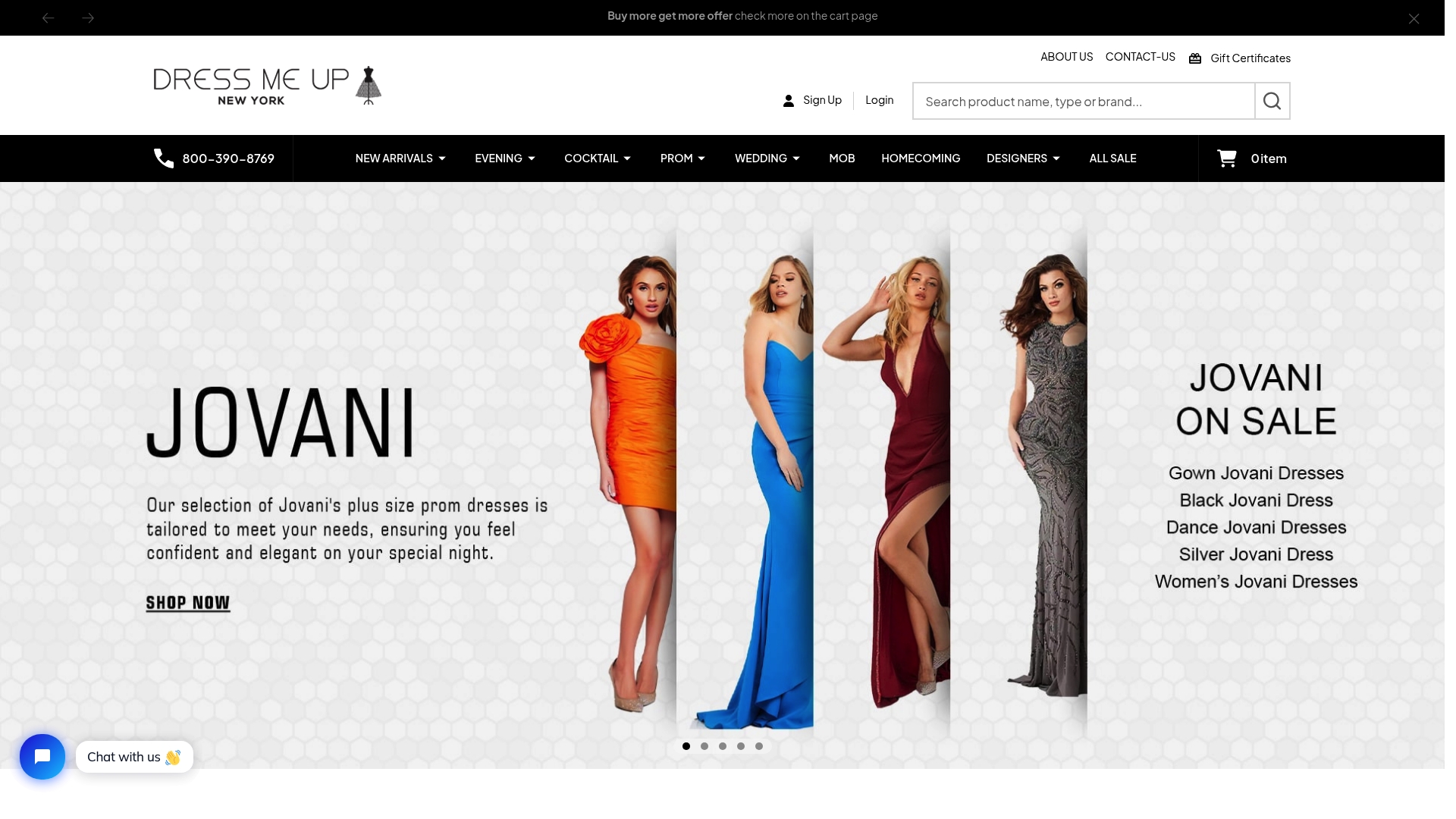
Whether you need next-day delivery or have a few weeks to plan, the collection is built to support you at every stage. Returns guidance and alteration resources are available so your gown fits exactly the way it should. Browse the full black-tie collection and find your gown today.
Authoritative sources and further reading
- Emily Post: Black Tie Dress Code Guide — The definitive etiquette authority on what floor-length and formal fabric requirements mean in practice.
- Vogue: Black-Tie Dress Code for Women — Modern styling perspective on navigating ambiguous invitations and contemporary interpretations.
- Coveti: How to Dress for a Black Tie Event — Practical guidance on the restraint principle for accessories and footwear choices.
- CNN Underscored: Black Tie Attire — Journalism-backed coverage of black tie optional variations and venue-appropriate silhouette choices.
- The Standard: Black Tie Dress Code Decoded — Etiquette-informed reporting on modern alternatives including jumpsuits and formal separates.
- Dressmeupny: Dressing for a Black Tie Event — Practical shopping and styling advice with fit resources for formal occasions.
Recommended
- Dressing for a Black Tie Event: Tips for Women in 2025 - DressMeUpNY
- Black Tie Dresses with Next Day Delivery: Top US Picks - DressMeUpNY
- How to Shop Formal Wear Boutiques for Event Dresses - DressMeUpNY
- Special Occasion Dress Shops: Fashion for Life’s Events - DressMeUpNY