
Under $100 Formal Gowns That Look High End, Curated by DressMeUpNY
Under $100 Formal Gowns That Look High End, Curated by DressMeUpNY
You can absolutely find a polished, event-ready formal gown for under $100, and you don’t have to gamble on a mystery site to do it. DressMeUpNY curates budget formalwear with size filters and clear pricing, which makes it a smart place to start. Head to the “under $100” collections, use the price filter, and check the return window before you buy.
TL;DR:
- Most budget formal gowns under $100 are simple styles such as satin slip dresses, sequin midis, and chiffon maxis, which cost less to produce.
- Choosing a classic silhouette with fabrics that drape well, like satin or chiffon, can make a dress look expensive despite a low price.
- Fitting details, such as a good silhouette and minor tailoring, generally matter more for appearance than the fabric quality or price.
- Shopping in dedicated price collections, checking sale sections, and ordering at least three weeks in advance improves chances of finding and fitting a gown.
- Beware of scam sites that use stolen images or inconsistent contact info; pay with a credit card and verify return policies before purchasing.
Table of Contents
- Where to Find Cheap Formal Gowns Online
- How to Choose a Cheap Formal Gown That Still Looks High-End
- Styling Tricks That Make an Affordable Gown Look Expensive
- Sizing, Shipping, and Returns to Check Before You Buy
- Why Trust DressMeUpNY for Budget Formalwear
- Should You Buy a Short or Long Formal Gown?
- Finding Formal Gowns at Local Clearance Sales and Outlets
- Comparing Popular Places to Buy Affordable Formal Gowns
- When to Order Your Formal Gown Before the Event
- How to Spot a Low-Quality Dress or Scam Before You Buy
- Our Take: What Actually Makes a Cheap Gown Look Expensive
- Shop DressMeUpNY’s Under $100 Formal Collection
- Sources
Where to Find Cheap Formal Gowns Online
The trick to finding cheap formal gowns isn’t luck. It’s knowing which pages on a retailer’s site actually carry the good stuff, and searching in a way that surfaces it.
Start with dedicated price collections instead of scrolling an entire catalog. Most retailers, including DressMeUpNY’s evening dress collection, organize gowns by price band, so you’re not wading through $300 designer pieces to find the $60 ones. Macy’s runs a standing Formal Dresses Under 100 page with dozens of options between roughly $40 and $100, which gives you a solid sense of what “affordable” actually looks like across styles.
A few tactics that consistently work:
- Search with price-specific terms like “prom dress under $100” or “formal dress under 100” instead of generic queries.
- Check sale and clearance tabs separately from the main collection. Off-season inventory (last spring’s proms, last winter’s holiday parties) gets marked down hard.
- Read the fine print on “final sale” versus regular sale items. Final sale usually means no returns, so factor that risk into the price.
- Try boutique-style retailers like Petal & Pup, which rotate frequent markdowns on formal styles and often list fabric details right on the product page.
You’ll typically see the same handful of style categories repeating in the under $100 range: satin slip gowns, sequin midi dresses, flowy chiffon maxis, and simple sheath dresses. That’s not a coincidence. These styles use less fabric or simpler construction than heavily beaded or structured ball gowns, so they cost less to produce and price lower without necessarily sacrificing how they look on you.
How to Choose a Cheap Formal Gown That Still Looks High-End
Price and quality aren’t as tightly linked as most shoppers assume. What actually separates a $60 dress that looks like $300 from one that looks like a costume comes down to a short list of details you can check before you buy.
- Pick a classic silhouette over a trendy one. A-line, sheath, and column cuts flatter more body types and photograph better than fussy, trend-driven shapes that can look cheap the moment the trend fades.
- Favor fabrics with real drape. Satin and chiffon fall and move in a way that reads as expensive. Stiff polyester blends tend to give away the price point instantly.
- Zoom in on product photos. Look for visible seams, a lining layer, and close-up shots of the fabric texture. Windsor’s Janine Glitter Mermaid Formal Dress, priced at $99.90, is a good example of a listing that shows fabric and fit detail clearly enough to judge before you buy.
- Read reviews with an eye for fit and fabric complaints, not just star ratings. A 4-star average can still hide a pattern of “runs small” or “fabric is see-through” comments.
- Budget for one small tailoring fix. Hemming a maxi length or taking in the side seams often costs $20 to $40 and can make an off-the-rack gown look custom-fitted.
Pro Tip: A cheap dress in a great silhouette will always beat an expensive dress in the wrong one. Fit does more visual work than fabric cost ever will.
Styling Tricks That Make an Affordable Gown Look Expensive
The dress is only part of the equation. What you pair it with, and how you finish it, changes how expensive the whole look reads.
- Choose one or two timeless accessories rather than a pile of trendy ones. A simple clutch, small drop earrings, and neutral heels do more for you than five statement pieces competing for attention.
- Wear real shapewear or a strapless bra suited to the neckline. A budget gown with a smooth, supported silhouette underneath looks dramatically more polished than the same dress worn without it.
- Keep hair and makeup intentional but simple. A polished updo or a loose wave blowout signals “put together” faster than an elaborate style that reads as trying too hard.
- Steam the dress the night before, and consider a quick $15 hem adjustment if it’s dragging on the floor. Wrinkles and uneven hems are the fastest way to make any dress look inexpensive.
For finishing touches, this affordable formal dress styling guide walks through more pairing ideas, and a light, well-chosen scent rounds things out. These discount perfume buying tips are worth a look if you want a nice fragrance without paying department-store markup.
Sizing, Shipping, and Returns to Check Before You Buy
A great deal on paper turns into a bad deal fast if the dress doesn’t fit or the return policy works against you. Check these before you check out, not after.
- Compare your actual body measurements against the retailer’s size chart, not the size you normally wear. Sizing varies wildly between brands, and model measurements listed on the product page can help you judge fit more accurately.
- Look for restocking fees and final-sale labels on discounted items. A $100 gown with no return option is a bigger gamble than an $80 gown with a two-week window.
- Add shipping to your total before you decide it’s a deal. Windsor, for instance, unlocks free shipping over a certain order threshold, so a single dress under that line can quietly cost more once shipping is added.
- If you need a plus size, search the extended-size collection directly instead of filtering the general catalog, since plus sizes often live in a separate section with their own stock. This plus-size evening gown guide breaks down where fit tends to vary most by brand.
Why Trust DressMeUpNY for Budget Formalwear
DressMeUpNY built its catalog around exactly this problem: shoppers who want a gown that looks intentional, not cheap, without paying designer prices.
- Detailed category filters let you narrow by price, length, and size instead of scrolling an entire inventory.
- Editorial guides like how to find stylish formal attire on a budget and the local affordable dress guide walk shoppers through selection, not just sales.
- Plus-size and extended-length options are organized separately, so fit isn’t an afterthought.
- Clear pricing and account tools mean you can track an order or return without digging through email confirmations.
Should You Buy a Short or Long Formal Gown?
Length changes the whole feel of a formal gown, and it’s worth deciding this before you start filtering by price.
Long gowns read as more formal by default. They’re the safer choice for weddings, galas, and formal proms where the dress code leans traditional. A floor-length satin or chiffon gown in a simple silhouette photographs beautifully and tends to hide budget fabric better than a short dress, since the flow of the fabric does most of the visual work.
Short and midi formal dresses work well for cocktail-style events, less formal wedding guest situations, or proms with a more modern dress code. They’re often cheaper to produce, since they use less fabric, so you’ll find a wider selection of sequin and satin midi styles specifically in the under $100 range. They also tend to be easier and cheaper to alter, since hemming a knee-length dress costs less than hemming a floor-length one.
If you’re not sure which the event calls for, check the invitation or venue for cues. “Black tie” or “formal” almost always points toward long. “Cocktail attire” or “dressy casual” gives you room to go short. When in doubt, a long gown rarely looks out of place at an event that turns out to be more casual than expected, while a short dress at a black-tie event can feel underdressed.
Finding Formal Gowns at Local Clearance Sales and Outlets
Online shopping isn’t the only route to a cheap formal gown, and local clearance racks can beat online prices when timing lines up right.
Department store outlet locations often carry the same formal dress lines as their full-price stores, marked down after prom and wedding seasons peak. Late spring, right after prom season winds down, and early winter, after the holiday party rush, tend to bring the deepest markdowns since retailers need to clear seasonal inventory. Outlet malls specifically built around off-price retail also rotate formalwear sections that change stock frequently, so a visit every few weeks can turn up something new.
The trade-off is selection. Clearance racks are picked over by size and color, so you’re less likely to find your exact size in a specific style. Try on anything close to your size rather than skipping it. In-store, discounted formalwear can also be tailored on the spot in some locations, which saves you a separate trip to a tailor later.
Check store return policies before you buy in person, since clearance and final-sale racks often carry stricter (or nonexistent) return terms than the store’s regular merchandise.
Comparing Popular Places to Buy Affordable Formal Gowns
Not every retailer approaches budget formalwear the same way, and knowing the differences saves you time.
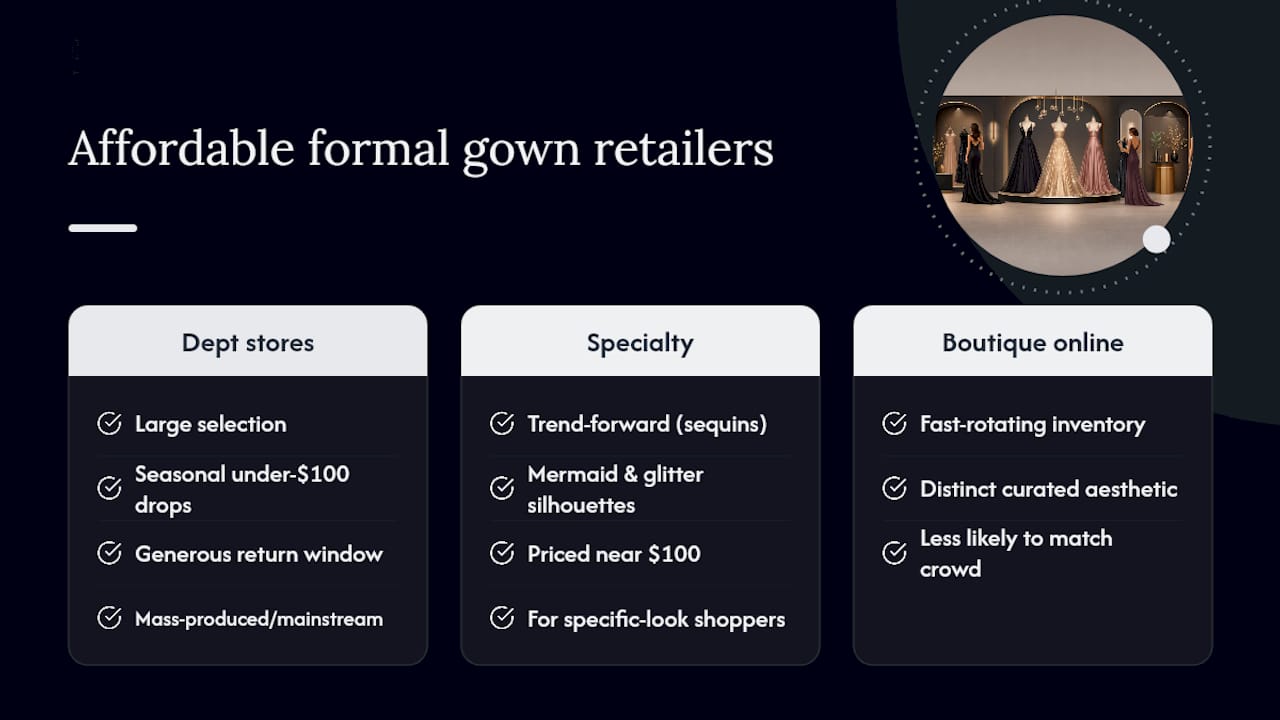
Large department stores like Macy’s carry a high volume of formal styles across price points, with dedicated under-$100 collections that update seasonally. The advantage is selection and often a generous return window; the trade-off is that styles can feel more mainstream since they’re mass-produced. Specialty formalwear retailers like Windsor lean into trend-forward glitter, sequin, and mermaid silhouettes specifically priced near the $100 mark, which suits shoppers chasing a specific look rather than browsing broadly. Boutique-style online shops like Petal & Pup tend to rotate inventory faster and lean into a distinct aesthetic, which works well if you want something that doesn’t look identical to what everyone else is wearing.
Curated publisher guides fill a different gap. Many boutique collection pages list dresses with little context beyond a price tag, which leaves you comparing fabric and fit blind. That’s where a guide that actually explains what separates a good $70 dress from a disappointing one earns its place, rather than just linking to another list.
For shoppers specifically hunting seasonal deals, this roundup on smart ways to find cheap winter formal dresses breaks down which retailers tend to discount earliest each season.
When to Order Your Formal Gown Before the Event
Timing matters more with a budget gown than a full-price one, mostly because return and exchange windows on discounted items tend to be shorter.
Order at least three to four weeks before your event if you’re buying online. That window covers standard shipping time, gives you room to try the dress on and request an exchange if the size is off, and still leaves time for a quick alteration if needed. If you’re ordering a plus size or a less common length, add another week, since those sizes sometimes ship from separate warehouse stock and can take longer to process.
Two weeks out is workable if you already know your size well with a specific brand and don’t anticipate needing an exchange. Anything under ten days out is risky for anything other than local, in-store shopping, since even standard shipping delays can leave you without a dress on the day you need it.
Build your tailoring appointment into this timeline too. A simple hem takes most tailors a few days to a week, but that week needs to happen after the dress arrives and fits everything else, not before.
How to Spot a Low-Quality Dress or Scam Before You Buy
Cheap and low-quality aren’t the same thing, but scam sites work hard to blur that line. A few checks separate a legitimate bargain from a bad purchase.
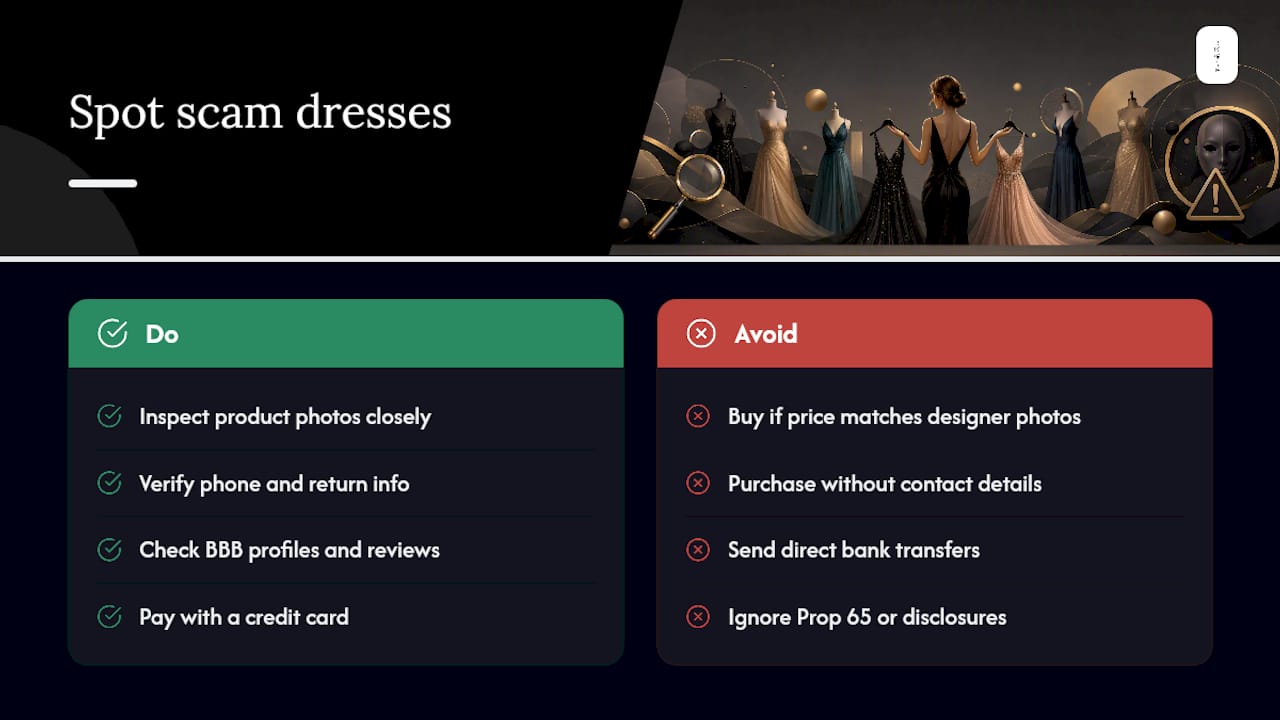
Look at the product photos closely. Scam sites frequently use stolen designer photos paired with prices too good to be true, then ship a poor imitation that doesn’t match what you ordered. If a $60 dress looks identical to a $400 designer gown in every photo, that’s a red flag, not a lucky find.
Check the retailer’s return and contact information before buying. A site with no phone number, no clear return address, and only a contact form is worth a second look. Better Business Bureau profiles can reveal patterns of complaints about sizing accuracy or refund disputes that don’t show up in curated review sections on the retailer’s own site, and they’re worth checking for any retailer you haven’t bought from before. If you’re shopping from or shipping to California, scan the product page for any Proposition 65 warning language, since apparel sold there sometimes carries required chemical exposure notices that legitimate retailers disclose.
Pay by credit card rather than direct bank transfer when possible, since that gives you a dispute option if the dress never arrives or arrives dramatically different from the listing.
Our Take: What Actually Makes a Cheap Gown Look Expensive
Most advice on budget formalwear focuses entirely on where to find deals, and almost none of it addresses what to do with the dress once it arrives. That’s backward. The research behind this guide points to a clear pattern: fit and silhouette do more visual work than fabric cost, and styling choices close whatever gap remains.
The conventional wisdom, “spend more to look better,” doesn’t hold up against the evidence. A $90 satin sheath with a $25 hem adjustment consistently reads as more expensive than a $200 dress in an unflattering cut. Shoppers overspend trying to solve a fit problem with a price tag, when a tailor solves it for a fraction of the cost.
If you take one thing from this guide, prioritize silhouette first, fabric drape second, and price dead last. Everything else, the accessories, the hem, the undergarments, is finishing work on a foundation that either fits or doesn’t.
— Dressmeup
Shop DressMeUpNY’s Under $100 Formal Collection
Finding a formal gown that fits your budget shouldn’t mean settling for something that looks like it. DressMeUpNY’s curated under $100 collection groups gowns by price, length, and size, including extended sizes, so you’re browsing dresses that actually fit your event and your wallet instead of hoping a filter catches up eventually.
Start by browsing the under $100 formal dress collection to see current styles across lengths and silhouettes, or check the budget formalwear guide for more selection tips before you commit. Once you’ve found a style you like, check the size chart against your own measurements, confirm the return window, and place your order with enough lead time before your event. That’s the whole process, and it’s built to get you into a dress you’ll actually feel good wearing.
Sources
Recommended
- Affordable Plus Size Evening Gowns That Actually Fit
- Prom Dress Under $100: Affordable Glamour for Events