
Discover High Couture Dresses: Your Guide to Elite Fashion
Discover High Couture Dresses: Your Guide to Elite Fashion
TL;DR:
- Haute couture is a legally protected, exclusive category of custom-fitted, handcrafted high fashion regulated by French law.
- Creating a couture gown involves over 100 hours of meticulous handwork, custom fabrics, and multiple precise fittings.
- Understanding couture helps consumers evaluate quality and authenticity, making high-end fashion more accessible and meaningful.
Most people assume “high couture” just means expensive. It doesn’t. Haute couture is legally protected custom-fitted high fashion, regulated by the French government and granted only to a select group of Parisian fashion houses. Think of it less like a luxury price tag and more like a protected designation, similar to how champagne can only come from one region in France. If you’ve ever wondered what separates a true couture gown from a beautiful designer dress at a department store, you’re about to find out. This guide walks you through everything: what qualifies as couture, how these gowns are built, what they cost, and how to find one for your most important moments.
Table of Contents
- What defines high couture dresses?
- How high couture dresses are made: The process from sketch to runway
- Comparing high couture and prêt-à-porter: What buyers need to know
- Choosing your high couture dress: Finding styles for weddings, proms, and upscale events
- Why most people misunderstand high couture — And how you can make it work for you
- Find your perfect high couture dress with DressMeUpNY
- Frequently asked questions
Key Takeaways
| Point | Details |
|---|---|
| True couture is exclusive | Legal protections and custom craftsmanship set high couture apart from ordinary luxury fashion. |
| Hand-made process is complex | Each couture dress involves detailed steps, hundreds of hours, and multiple fittings for a unique result. |
| Prices reflect artistry | Entry prices start at $10,000, with top gowns exceeding $300,000 due to the level of skill involved. |
| Bridal leads couture demand | Most couture sales center around weddings, making the bridal segment the market leader. |
| Practical access is growing | Digital platforms and resale markets are making high couture dresses more accessible for savvy buyers. |
What defines high couture dresses?
The word “couture” gets thrown around constantly in fashion, but its real meaning is far more specific and surprisingly strict. Not every expensive, handmade, or runway dress qualifies. True high couture is a legal designation governed by French law and administered by the Chambre Syndicale de la Haute Couture in Paris.
To earn the title, a fashion house must meet strict standards including a Paris-based atelier, a full-time staff of skilled workers, and the presentation of at least two annual collections. These collections must feature a minimum number of original designs for both daywear and evening wear. As of 2026, only around fifteen houses hold full haute couture membership, including names like Chanel, Dior, Givenchy, and Valentino. That exclusivity is intentional and protected.
What does this mean for the actual dress? Everything. Here’s what separates a genuine couture gown from even the most luxurious ready-to-wear piece:
- Made-to-order: Every couture dress is created specifically for one client. There is no standard sizing. The dress is built around your exact measurements, posture, and proportions.
- Handcrafted construction: Seams are sewn by hand. Embellishments are applied by hand. Even the finishing work, like pressing and hemming, is done manually by trained artisans.
- Exclusive fabrics: Couture houses often commission custom fabrics from specialty mills, meaning the material in your gown may not exist anywhere else in the world.
- Limited production: A single fashion house might produce only a few dozen couture pieces per season. This is not mass production by any definition.
- Creative experimentation: Couture collections are where designers push boundaries. Techniques, silhouettes, and materials are tested at the highest level of craft before any idea filters down to ready-to-wear.
“Haute couture is not simply a category of fashion. It is a protected art form, a living tradition of craft that has been practiced in Paris for over 150 years and is legally preserved to ensure its survival.”
Understanding this distinction matters enormously when you’re shopping for a gown for your prom, wedding, or a major event. The word “couture” on a label does not automatically mean the dress meets these standards. Learning to read between the lines is a skill worth developing early. For a deeper breakdown of what qualifies, our haute couture guide walks through the key distinctions with real examples.
How high couture dresses are made: The process from sketch to runway
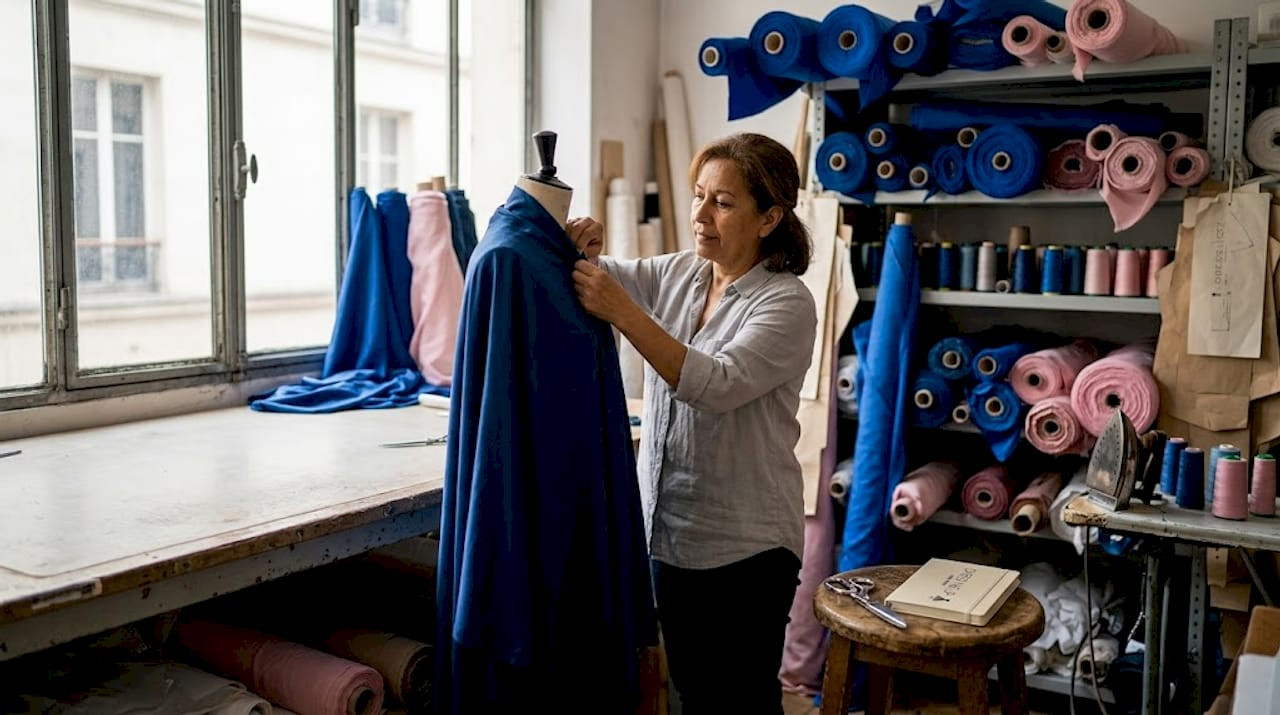
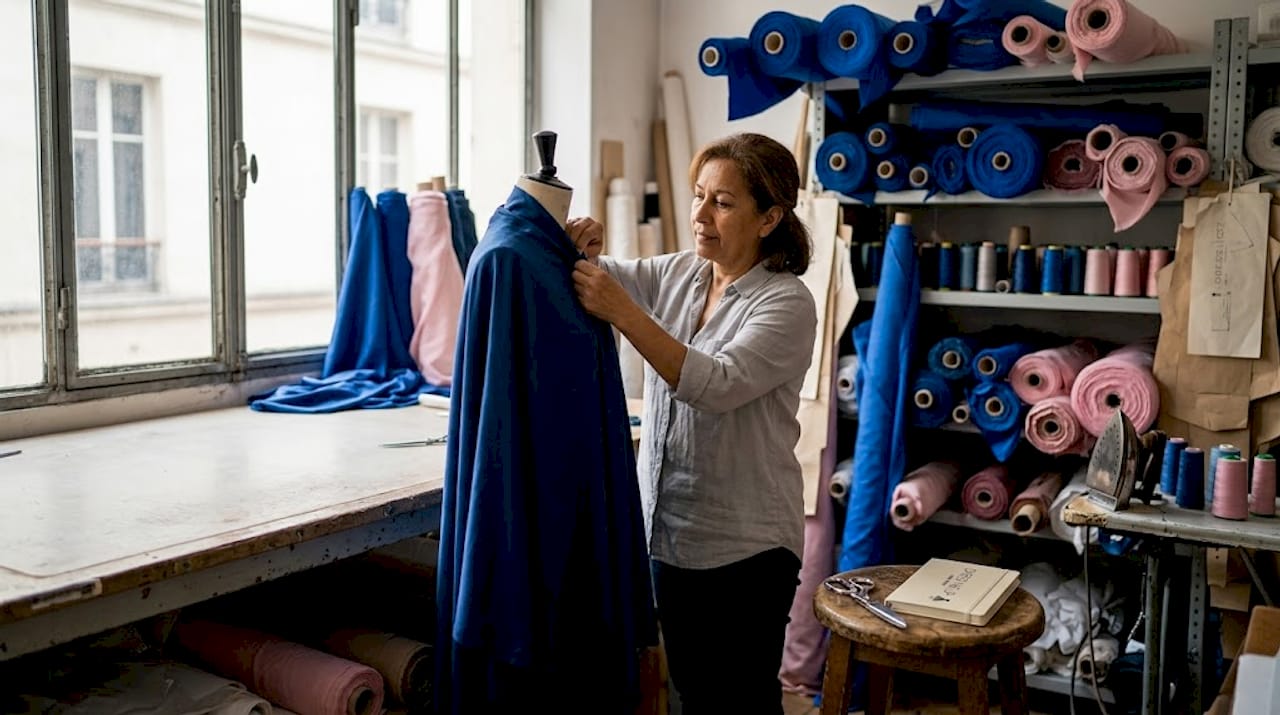
Knowing a dress is handmade is one thing. Understanding exactly what that involves changes how you see every stitch. The creation of a single couture gown can take anywhere from 100 to over 700 hours of labor, depending on the complexity of the embroidery and embellishment. That number is not an exaggeration.
The 7-step production process moves from initial sketch to final pressing, and each stage requires a different team of specialists working in close coordination. Here’s how it unfolds:
- Sketch and concept: The designer creates detailed illustrations of the gown, including fabric choices, color palette, and structural details. This is the creative blueprint.
- Fabric selection and sourcing: Specialty fabrics are chosen or commissioned. Some houses work with mills that produce exclusive weaves or prints that will never appear in any other collection.
- Toile creation: A toile (a test version of the dress made in inexpensive fabric, usually muslin) is constructed to test the silhouette and structure before cutting into the final material.
- Client fitting for the toile: The client comes in for a fitting of the toile, and adjustments are made. This step can happen multiple times before the team moves forward.
- Assembly in final fabric: Once the toile is perfected, the actual gown is cut and assembled. Seamstresses work by hand, often using techniques passed down through generations.
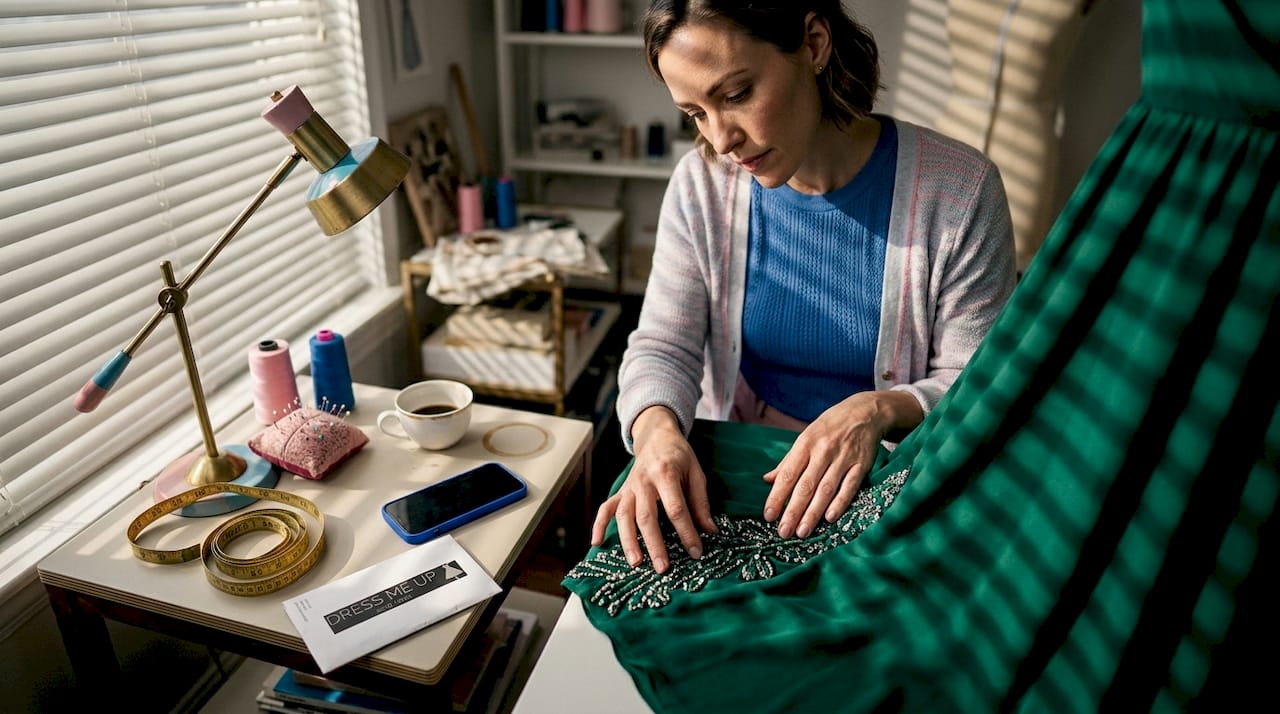
- Embroidery and embellishment: Specialized artisans, sometimes from separate ateliers that focus exclusively on beadwork or embroidery, apply decorative elements by hand. This stage alone can account for hundreds of hours.
- Final fitting and pressing: The finished gown is fitted on the client one last time. Adjustments are made, and the dress is pressed and prepared for delivery.
This level of care is why second-hand couture holds its value so remarkably well. A gown built to this standard does not fall apart after one wear. The internal structure, the hand-stitching, and the quality of materials mean the dress can last decades with proper care.
Pro Tip: If you’re exploring more accessible options for special occasions, dress outlet shopping can surface designer-quality gowns at significantly reduced prices, especially for styles inspired by couture silhouettes.
The emotional weight of wearing a dress that took this much human effort to create is real. When you understand the process, you stop seeing it as just a garment. It becomes something closer to wearable sculpture.
Comparing high couture and prêt-à-porter: What buyers need to know
Prêt-à-porter, or ready-to-wear, is the fashion category most of us interact with every day. It includes everything from fast fashion to high-end designer collections sold in boutiques and department stores. The difference between ready-to-wear and haute couture is not just about price. It’s about an entirely different philosophy of production.
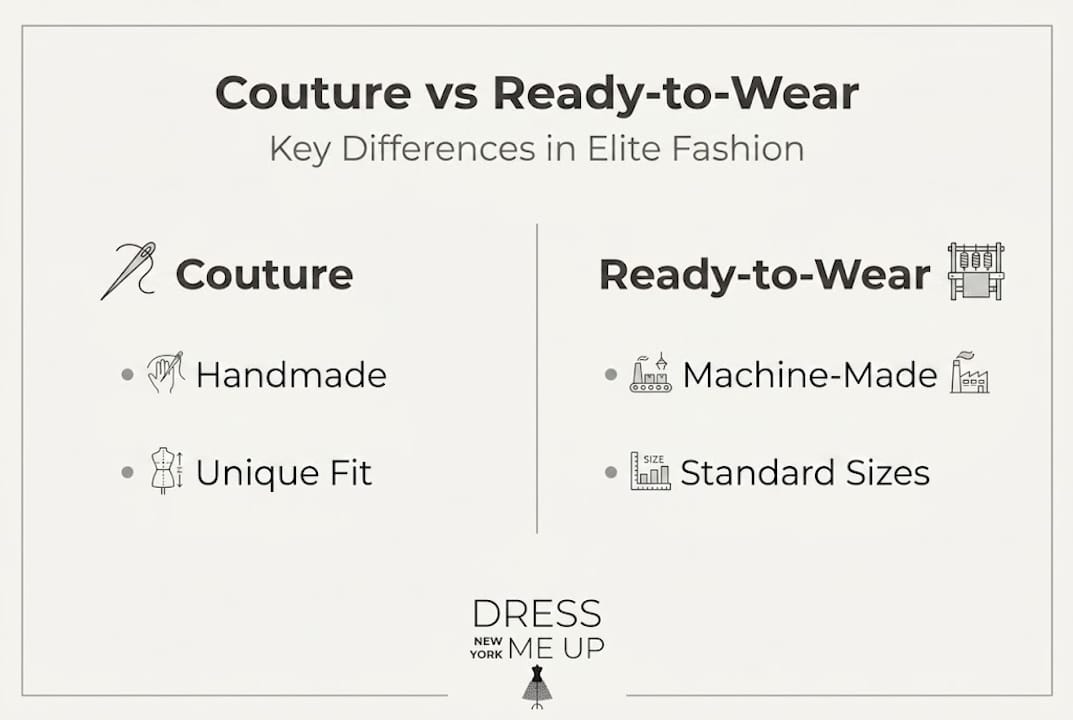
Haute couture is exclusive and handmade with no mass production, while prêt-à-porter is faster, more affordable, and widely accessible but lacks the bespoke fit and intricate craftsmanship of couture. Here’s a side-by-side look:
| Feature | High couture | Prêt-à-porter |
|---|---|---|
| Production method | Entirely handmade, one at a time | Machine-assisted, produced in batches |
| Fit | Custom to individual measurements | Standard sizing (XS to XXL) |
| Price range | $10,000 to $300,000+ | $50 to $10,000+ |
| Availability | Commission-only, by appointment | Available in stores and online |
| Turnaround time | Several months | Immediate or seasonal |
| Creative scope | Experimental, boundary-pushing | Commercial, trend-focused |
| Longevity | Decades with proper care | Varies widely |
Haute couture gown prices start at around $10,000 at the entry level and can exceed $300,000 for top houses working with complex embroidery and rare materials. That price reflects the labor, the materials, and the exclusivity. It’s not markup for the sake of a logo.
For most shoppers, ready-to-wear is the practical reality. And that’s completely fine. The goal isn’t to make you feel like couture is the only valid choice. It’s to help you understand what you’re actually buying when you invest in a gown for a major occasion. When you’re shopping for something like a prom dress or a wedding guest look, knowing what “couture-inspired” actually means helps you evaluate quality more accurately.
A few situations where ready-to-wear makes more sense:
- You need the dress within a few weeks
- Your budget is under $5,000
- You want the flexibility to return or exchange
- You’re attending multiple events and need variety
For those moments, finding a chic boutique dress with strong construction and a flattering silhouette is the smarter move. And using a shopping checklist before you buy ensures you don’t overlook fit, fabric quality, or occasion-appropriateness.
Choosing your high couture dress: Finding styles for weddings, proms, and upscale events
Now that you understand the world of couture, the real question is how to apply this knowledge to your own life and your own occasions. Whether you’re planning for prom, a wedding, or a black-tie event, the principles of couture can guide better decisions even when you’re not buying a full couture gown.
Bridal fashion dominates the haute couture market, with growth driven by emerging markets and digital platforms, though the segment remains challenged by high costs and a small client base. This tells you something important: the most emotionally significant dress purchases in a woman’s life tend to push toward the highest quality available. Weddings are the moment where investment in a gown feels most justified.
Here’s a breakdown of how couture thinking applies to different occasions:
| Occasion | Couture approach | Accessible alternative |
|---|---|---|
| Wedding | Commission a couture bridal gown | Invest in a designer bridal gown with custom alterations |
| Prom | Couture-inspired ball gown with hand embroidery | Designer prom dress in structured fabric |
| Black-tie event | Couture evening gown or column dress | Luxury ready-to-wear in silk or chiffon |
| Quinceañera | Full couture ball gown with custom embellishments | Custom-ordered formal gown from a specialty boutique |
Some of the most recognizable couture designers for these occasions include Elie Saab (known for ethereal embroidered gowns), Zuhair Murad (famous for intricate beadwork), and Valentino (celebrated for romantic silhouettes and rich color). Their ready-to-wear lines offer a more accessible entry point to their aesthetic.
Pro Tip: Resale platforms like The RealReal and Vestiaire Collective carry authenticated couture pieces at a fraction of their original price. A gown that cost $40,000 new might sell for $8,000 to $12,000 secondhand, still in exceptional condition because of how well it was built.
For wedding planning specifically, exploring bridesmaid dress trends alongside your bridal look helps create a cohesive visual story. If you’re still deciding on your bridal silhouette, the guide on finding your perfect wedding dress style offers practical direction. And for outdoor or travel-based celebrations, destination wedding dress ideas can help you balance elegance with practicality.
If you’re drawn to a more daring look, an open back dress can bring couture-level drama to any formal occasion without the couture price tag.
Why most people misunderstand high couture — And how you can make it work for you
Here’s the honest truth: the fashion industry has done a poor job of explaining haute couture to anyone outside a very small circle. The result is that most people either dismiss it as irrelevant to their lives or romanticize it into something untouchable. Both reactions miss the point.
Haute couture’s elitism is real, but it’s also changing. Digital platforms and emerging markets are reshaping access, even as high costs and a limited client base keep the core market small. What this means for you is that the knowledge, the aesthetics, and even some of the pieces are becoming more reachable than they were ten years ago.
The more important shift, though, is internal. When you understand what couture actually is, you stop being intimidated by the language and start using it as a tool. You can walk into a boutique, look at a dress described as “couture-inspired,” and actually evaluate whether the construction justifies the price. You can spot quality stitching, recognize structured boning, and understand why a hand-beaded bodice costs more than a printed one.
For young women navigating formal fashion for the first time, confidence in your knowledge matters more than your budget. Start with trusted sources, learn the vocabulary, and use resources like outlet shopping for specials to find elevated looks at prices that make sense for where you are right now. The goal isn’t to spend the most. It’s to choose with intention.
Find your perfect high couture dress with DressMeUpNY
You’ve just covered more ground on haute couture than most fashion lovers learn in years. Now it’s time to put that knowledge to work.

At DressMeUpNY, we curate collections of formal and special occasion dresses that bring couture-level elegance within reach for real occasions: proms, weddings, Quinceañeras, and red carpet events. Whether you’re looking for a structured ball gown, a sleek evening dress, or something with hand-embellished details that feels truly special, our curated couture dresses are selected with your most important moments in mind. Browse our collections, use our style guidance, and find the gown that makes you feel exactly the way you deserve to feel.
Frequently asked questions
What makes a dress officially high couture?
A dress is officially high couture if it meets strict Paris standards, including made-to-order design, an exclusive atelier with full-time staff, and presentation in biannual collections regulated by the Chambre Syndicale de la Haute Couture.
How much does a high couture dress typically cost?
Prices start at $10,000 at the entry level and can exceed $300,000 for top fashion houses, depending on the complexity of embroidery, the rarity of materials, and the prestige of the designer.
Can anyone buy a high couture dress, or is it limited to celebrities?
While the market mainly serves ultra-wealthy clients and public figures, anyone who meets the house’s requirements and budget can commission or purchase couture. Secondhand platforms also make authenticated pieces more accessible.
Why do bridal fashion and weddings dominate the couture market?
Weddings are prestige occasions where clients are most willing to invest in a one-of-a-kind gown, which is why bridal dominates couture segments and consistently drives the highest revenue within the haute couture market.
How does ready-to-wear differ from high couture for special occasions?
Ready-to-wear is machine-assisted and sized for the mass market, while haute couture is handmade and custom-fitted, offering a level of craftsmanship, exclusivity, and personalized fit that no mass-produced garment can replicate.
Recommended
- Designer Long Dresses: Elevating Special Occasions - DressMeUpNY
- High-low dresses: the trendy formal dress for any occasion - DressMeUpNY
- What is a Designer Dress? Understanding Its Appeal - DressMeUpNY
- Beautiful Special Occasion Dresses: Elevate Your Event Style - DressMeUpNY