
Dress Shoes for Formal Occasions: Style Guide 2026
Dress Shoes for Formal Occasions: Style Guide 2026
TL;DR:
- Choosing the right dress shoes involves prioritizing fit, material, and construction over style alone to ensure comfort and longevity.
- For formal events, options like Oxfords, Derbys, and pumps should be selected based on precision fit, appropriate design details, and dress code requirements for optimal elegance and practicality.
Finding the right dress shoes for formal occasions is harder than most people expect. You can have the perfect outfit, but the wrong shoes will undercut everything. The challenge isn’t just style. It’s balancing elegance, comfort, and event-appropriateness in a single purchase. This guide walks you through what to look for, which styles work best for which events, and how to avoid the most common mistakes people make when shopping for formal footwear. Whether you’re headed to a wedding, a gala, or a black tie dinner, you’ll leave with a clear plan.
Table of Contents
- Key takeaways
- What to look for in dress shoes for formal occasions
- 1. Oxford shoes
- 2. Derby shoes
- 3. Patent leather shoes
- 4. Loafers
- 5. Monk strap shoes
- 6. Women’s formal heels and pumps
- 7. Black tie shoes: what’s actually required
- 8. Comparing your options side by side
- 9. Situational shoe picks for specific events
- My honest take on getting formal shoes right
- Find your perfect formal pair at Dressmeupny
- FAQ
Key takeaways
| Point | Details |
|---|---|
| Fit matters most | Measure your feet in the afternoon and check heel security before committing to any pair. |
| Lacing style signals formality | Oxfords read as more formal than Derbys because of how their lacing systems are constructed. |
| Black tie demands plainness | Plain, undecorated shoes in black patent or polished calf leather are the only correct choice for strict formal events. |
| Block heels beat stilettos | For long events like weddings, a 2.5-inch block heel provides stability without sacrificing elegance. |
| Construction predicts longevity | Goodyear-welt construction allows resoling and water resistance, making it the smartest investment in formal footwear. |
What to look for in dress shoes for formal occasions
Before you fall in love with a style, you need to understand the criteria that separate a good formal shoe from a great one. These are the factors that determine whether you’ll be comfortable at hour six of a gala or limping to the coat check.
Fit and sizing
Measure your feet in the afternoon, when natural swelling peaks, and leave roughly a thumb’s width between your longest toe and the front of the shoe. Your heel should sit snugly with no lifting or slipping when you walk. Most fitting problems come from people ignoring heel slip because the toe box feels right.
Material and construction
Full-grain leather is the standard for formal footwear. It polishes well, holds its shape, and ages better than corrected-grain or synthetic alternatives. If you’re buying shoes you intend to keep for years, look for Goodyear-welt construction, which creates a water-resistant seal and allows the shoes to be resoled multiple times. That single construction detail can double or triple the lifespan of a quality pair.
Color
Black is the most formal and the most versatile. It works for black tie events, weddings, and business formal settings without question. Dark burgundy and deep brown are one step down in formality and work well for galas, proms, and cocktail events. Avoid tan or light-colored shoes at any event with a strict dress code.
Design details
Plain-toe and cap-toe designs read as more formal. Brogue detailing, which includes decorative perforations along the seams, moves the shoe toward semi-formal territory. For the strictest events, simpler is always more appropriate.
Pro Tip: If you’re buying heels for a wedding or ceremony, check whether the venue has grass or gravel. Thin stiletto heels sink into soft ground. Block heels or a wider heel base are the practical choice for outdoor events.
1. Oxford shoes
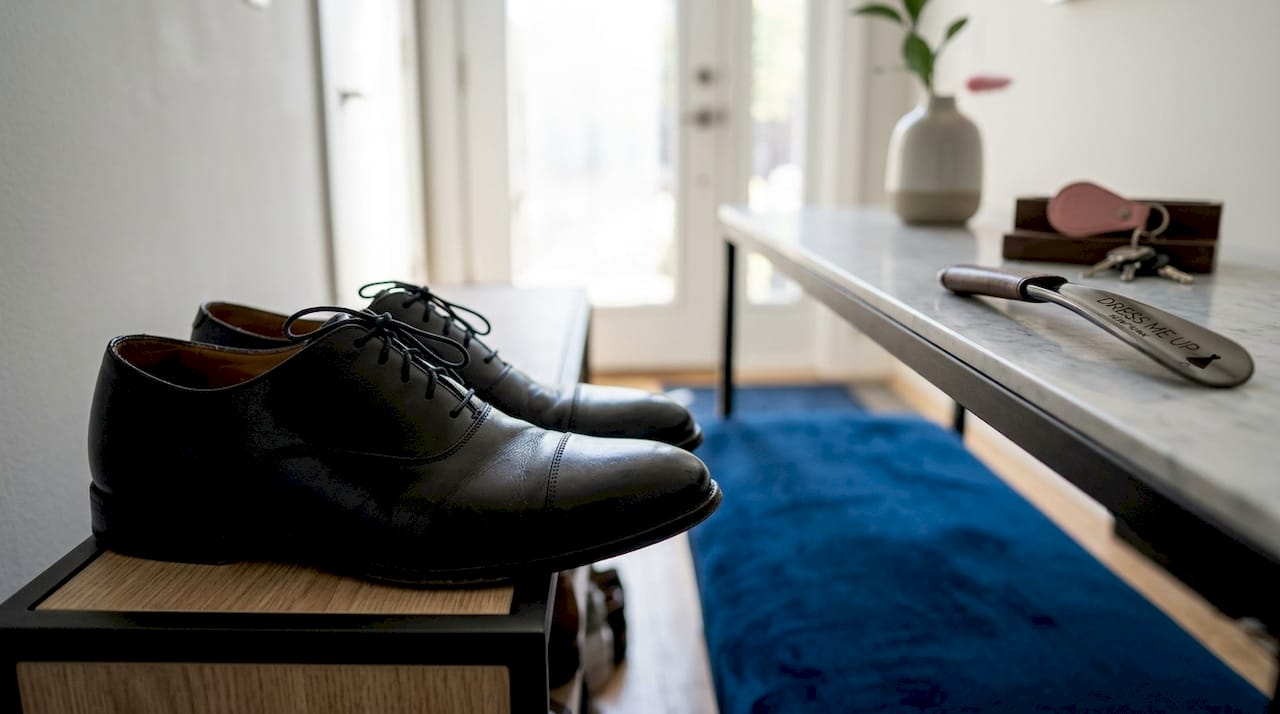
The Oxford is the most formal shoe in any dress shoe lineup. Oxfords use a closed lacing system where the eyelet tabs are stitched under the vamp, creating a sleeker, flatter profile than any other lace-up style. That construction is what gives Oxfords their reputation for formality.
For black tie events, a plain-toe or cap-toe Oxford in black polished calf leather is the standard. No brogue detailing, no contrasting soles. The silhouette should be slim and uncluttered. Women’s Oxford-inspired flats and low-heeled versions are a strong, underused alternative to heels for formal events, particularly for guests who prioritize comfort.
2. Derby shoes
Derbys look nearly identical to Oxfords from a distance, but the lacing is different. The eyelet tabs sit on top of the vamp rather than underneath it, which means the shoe opens wider. That open lacing gives more adjustment and comfortably accommodates wider feet or high-volume insteps that Oxfords can’t always fit well.
Derbys are slightly less formal than Oxfords but still entirely appropriate for weddings, galas, and business formal settings. If you have wider feet and have struggled to find Oxfords that don’t pinch, Derbys are the smarter choice. The difference in formality is subtle enough that most guests won’t notice it. You will, because your feet will feel better at the end of the night.
3. Patent leather shoes
Patent leather is reserved for evening wear, and for good reason. The mirror-like finish reads as ultra-formal and requires almost no maintenance between wearings. For black tie events and galas, patent leather Oxfords or pumps are the gold-standard choice.
One practical advantage of patent leather is that it doesn’t require regular polishing the way calf leather does. A quick wipe with a damp cloth keeps the shine intact. The tradeoff is that patent leather doesn’t breathe as well, so moisture inside the shoe builds up faster during long events. Wear moisture-wicking dress socks or hosiery to compensate.
4. Loafers
Loafers occupy an interesting middle ground in formal footwear. They’re slip-ons, which signals informality, but a well-made penny loafer or horsebit loafer in black or dark burgundy leather can work beautifully at business formal events, proms, and some wedding receptions. The key is construction quality and the absence of casual details like rubber lug soles.
Loafers are also the most practical choice for events where you’ll be on your feet for extended periods. No laces means no pressure points from knots, and the entry and exit are easier. For women, loafer-inspired formal flats with a structured silhouette and quality leather have become one of the most stylish formal footwear options available in 2026.
5. Monk strap shoes
Monk straps are the most distinctive-looking of the classic dress shoe styles. Instead of laces, they fasten with one or two buckled straps across the instep. Single monks are more formal; double monks are more expressive. Both styles work for weddings, galas, and cocktail events.
The buckle fit is adjustable, which makes monk straps a good option for people who fall between standard widths or have slightly asymmetrical feet. They’re also one of the few dress shoes that look genuinely interesting without brogue detailing, which helps when you want to stand out slightly without breaking formality rules.
6. Women’s formal heels and pumps
Heels are the default formal footwear option for women at weddings, proms, and galas, but not all heels are created equal when comfort matters. Podiatrist advice consistently points to a heel height around 2.5 inches with a block base as the sweet spot for stability during long events. Stilettos are striking but punishing past the two-hour mark.
Patent leather pumps in black or nude are the most versatile formal heels you can own. They pair with virtually every dress color, read as formally appropriate at almost any event, and photograph well. For an outdoor wedding or a venue with uneven flooring, a block heel or a wedge heel with a formal silhouette is the wiser call. You can read more on pairing shoes with your outfit in this guide on matching dresses with shoes.
Pro Tip: Buy heels a half size up from your usual if you’ll be wearing them for four or more hours. Feet swell with heat and prolonged standing. A slightly roomier fit at purchase means a comfortable fit when it counts.
7. Black tie shoes: what’s actually required
Black tie is the strictest dress code most people will encounter outside of white tie events. Plain black Oxfords without brogue detailing in patent or highly polished calf leather are the only universally accepted choice for men. No suede, no decorative cuts, no contrasting soles.
For women, black tie shoes should mirror the same principles. Minimal design, high-quality material, and a silhouette that doesn’t compete with the dress. A pointed-toe patent pump or a simple satin heel in black or metallic tones works consistently well. You can learn more about navigating this dress code in the black tie attire guide on Dressmeupny.
8. Comparing your options side by side
Here’s a practical look at how the major dress shoe styles compare across the factors that matter most for formal occasions:
| Style | Formality level | Fit accommodation | Best event type | Comfort for long wear |
|---|---|---|---|---|
| Oxford | Very high | Narrow to standard | Black tie, galas | Moderate |
| Derby | High | Standard to wide | Weddings, business formal | Good |
| Patent pump | Very high | Standard | Black tie, galas | Low to moderate |
| Block heel pump | High | Standard | Weddings, proms | Good |
| Monk strap | High | Adjustable | Weddings, cocktail events | Good |
| Loafer | Moderate to high | Standard to wide | Business formal, proms | Very good |
Pro Tip: If you’re between styles, prioritize the one that fits your foot’s width most naturally. A perfectly fitted Derby will always look more polished than a pinching Oxford, regardless of what the formality charts say.
9. Situational shoe picks for specific events
Choosing dress shoes for formal occasions gets easier when you match the shoe to the specific event rather than a general formality tier.
- Wedding as a guest: A black or nude patent pump for women, or a Derby in black or dark burgundy for men, covers nearly every wedding scenario. Check the venue before committing to heel height.
- Prom: This is one of the few formal events where you have real creative latitude. Metallic heels, embellished sandals, and bold color pumps are all fair game alongside the classics.
- Gala or charity event: Lean toward the higher formality end. Patent leather, minimal design, and polished construction signal that you understand the room.
- Wide or high-volume feet: Derbys over Oxfords every time, unless the brand specifically offers wide-width Oxfords. Sizing up in length to compensate for width creates a different set of problems.
- Long ceremonies or all-day events: Block heels with ankle straps provide the most stability and reduce fatigue compared to stilettos or thin heels.
- First-time formal shoe buyers: Start with a plain black cap-toe Oxford or a simple black pump. They work everywhere, never look wrong, and give you a benchmark for future purchases.
My honest take on getting formal shoes right
I’ve spent a lot of time thinking about what actually makes formal shoes work, and the most consistent mistake I see is prioritizing brand recognition over fit. A recognizable name in shoes that’s slightly too narrow is going to ruin your event. A well-fitted mid-range shoe you found through careful measurement will serve you far better.
The second thing I’ve learned: construction details matter more than aesthetics in the long run. A Goodyear-welted shoe that costs twice as much as a glued alternative will outlast it by a decade with proper care. When you factor in cost per wear, quality construction is almost always the more economical choice.
The advice I give most often is this: buy less frequently and buy better. One pair of well-made, well-fitted black Oxford or a classic pump in patent leather will do more work for you across weddings, galas, and formal events than three pairs of trend-driven shoes that don’t fit properly. Personal style absolutely has a place within formal guidelines. But fit is what makes elegance believable.
— Dressmeup
Find your perfect formal pair at Dressmeupny
When you’re putting together a look for a wedding, prom, or gala, the shoes are the finishing detail that ties everything together. Dressmeupny offers a carefully curated selection of formal dresses and accessories designed to help you build a complete, polished look for any special occasion.
From elegant evening gowns to prom-ready styles, the collections at Dressmeupny are built around the events you’re actually dressing for. Whether you’re searching for inspiration on pairing your shoes with the right dress or need help finding your formal fit, the style guides and product pages give you everything you need in one place. Explore the current collections and find the formal look that works for you, from the dress down to the shoes.
FAQ
What are the best shoes for a black tie event?
Plain black Oxfords in patent or polished calf leather are the correct choice for men. Women should opt for a simple patent pump or satin heel in black or metallic tones with minimal decoration.
What heel height is best for weddings and long events?
Podiatrists recommend a block heel around 2.5 inches for stability and reduced fatigue during ceremonies and receptions that last several hours.
Are Derbys appropriate for formal occasions?
Yes. Derbys are one step below Oxfords in formality but work well for weddings, galas, and business formal events. They’re particularly good for people with wider feet because the open lacing allows more adjustment.
What’s the difference between Oxfords and Derbys?
Oxfords use a closed lacing system stitched under the vamp, creating a sleeker and more formal look. Derbys have an open lacing system that sits on top, offering more width adjustment and a slightly less formal profile.
How do I find dress shoes that fit correctly?
Measure your feet in the afternoon when swelling peaks, leave a thumb’s width at the toe, and confirm your heel sits snugly without slipping. These three checks catch the most common fit errors before you buy.
Recommended
- How to Match Dress Shoes for Your Next Formal Event - DressMeUpNY
- What Shoes With Maxi Dress: 2025 Event & Fashion Guide - DressMeUpNY
- How to Match Dresses with Shoes for Every Formal Event - DressMeUpNY
- Best Shoes for Evening Gowns: Top Choices for 2025 - DressMeUpNY