
Efficiently Filter Dress Options by Style and Occasion Online: A Comprehensive Guide

Introduction
Picture this: you’re scanning through hundreds of dresses online, each promising to meet your mood, style, or event—but do you really have time for that? With shoppers increasingly expecting seamless discovery, mastering how to efficiently filter dress options by style and occasion online? isn’t just a convenience—it’s a competitive advantage.
Recent data shows that 42% of fashion shoppers begin refining their search with filters immediately upon landing on product pages, underscoring the essential role of well-designed filtering tools in steering purchase decisions Best Colorful Socks browsing behavior report bestcolorfulsocks.com. Furthermore, occasion-based filters—like "cocktail," "wedding guest," or "workwear"—have been demonstrated to raise conversion rates by as much as 17% when implemented effectively Best Colorful Socks filter usage statistics bestcolorfulsocks.com. These numbers aren’t abstract—they’re tangible improvements in engagement and sales.
By narrowing results by style and occasion you’re honoring shopper psychology: they typically frame their intent around context (“What kind of event am I dressing for?”) rather than taxonomy (“Show me A-line or sheath”). Smart retailers mirror this behavior with thematic filters that align with real-world decision-making. Exemplary sites, like Macy’s, showcase how occasion and style filters drive efficiency. Users can pinpoint “prom dress” or “summer wedding guest” instantly rather than wade through irrelevant options drip.com.
In this introduction, we'll lay the groundwork for understanding how occasion-based and stylistic filters not only improve user experience but also deliver measurable business results. Expect to learn best practices like promoting popular filter categories, combining multiple filter values without confusion, and ensuring the filter logic aligns with shopper mental models. These foundational strategies enable both marketers and UX designers to build intuitive, high-performing product discovery paths—saving time for shoppers and increasing conversions for retailers.
Leveraging Filter Tools for Optimal Dress Selection
When shopping for dresses online, filters are your best friend. They allow you to quickly narrow down overwhelming choices and focus on the styles and occasions that matter most. Understanding how to efficiently filter dress options by style and occasion online can drastically improve your shopping experience. A well-designed filter system not only saves time but also ensures you find the perfect attire, whether it’s for a formal event or a casual brunch.
Understanding Filter Categories
The first step is to familiarize yourself with common filter categories. These usually include options like size, color, price range, style, and occasion. For example, if you're looking for a cocktail dress, you might filter by occasion and select "formal" to see a curated list of suitable dresses. Additionally, filtering by style—such as A-line or sheath—can help refine your search based on personal preference. According to a recent survey by Shopify, retailers who optimize their filtering systems see a 26% increase in conversion rates Shopify Blog.
Combining Multiple Filters Effectively
Combine multiple filters to zero in on the exact dress you need. For instance, selecting both "maxi" and "evening" under the style and occasion filters, respectively, will help you find the perfect long dress for a night out. It's crucial to understand how to layer these filters without causing confusion. Ensure filters reset or update automatically when a new category is chosen to avoid mixing unrelated options. This ease of use is highlighted by major retailers like Nordstrom, who prioritize intuitive filter logic to enhance user experience Nordstrom.
Utilizing Visual Cues
Visual cues such as thumbnail views and filter badges play a significant role in the filtering process. They provide immediate visual feedback on the choices made, making it easy to track selected filters. These features support quicker decision-making by showcasing filtered results prominently on the page. Moreover, dynamic filters that adjust based on previous selections can streamline the shopping journey even further, offering a more personalized experience.
Implementing these strategies can transform your online dress shopping into a delightful experience. By learning how to efficiently filter dress options by style and occasion online, consumers not only enjoy a smoother browsing process but also increase their chances of finding the perfect dress—boosting satisfaction and loyalty to the retailer.
Leveraging Online Platforms for Efficient Dress Filtering
When exploring how to efficiently filter dress options by style and occasion online, understanding and utilizing specialized features and platforms can save both time and effort. The digital landscape offers many tools designed to enhance your shopping experience. These platforms provide a broad range of filters that allow potential buyers to pinpoint the most suitable dresses for their unique needs.
Utilizing Advanced Filtering Options
Many e-commerce stores provide robust filtering capabilities that help streamline the search process. By selecting aspects like size, color, price range, and preferred designers, shoppers can narrow down endless choices into manageable selections. For example, leading fashion sites such as dressmeupny provide personalized filters, enabling users to specify the occasion—is it for a formal wedding or a casual brunch? The platform's use of AI-enhanced algorithms refines searches, suggesting tailored recommendations based on previous browsing behavior.
Exploring Innovative Technologies
Artificial intelligence continues to revolutionize online shopping by predicting customer needs and preferences. According to a study by Business Insider, retailers implementing AI increase their sales by up to 30%. This technology powers visual search features, allowing users to upload images of desired dress styles and receive immediate matches. Such innovations not only enhance convenience but also introduce new avenues for discovering unique and stylish attire online.
Case Study: Success in Streamlined Shopping
An illustrative case involves a professional event planner who frequently uses digital resources to find outfits quickly for various business gatherings. By leveraging dressmeupny's cutting-edge filtering functions, they consistently access appropriate options without being overwhelmed. This capability underscores the importance of aligning modern technology with customer-focused design, ensuring a seamless shopping journey.
Maximizing Social Media and Reviews
Beyond specialized retail sites, social media platforms are invaluable for discovering trending styles and trusted reviews. Platforms like Instagram and Pinterest host vast communities sharing outfit ideas and personal recommendations. Potential buyers often find authenticity in customer reviews or styled photos that contribute to informed choices. As research from Pew Research indicates, 69% of adults use social networks, highlighting their critical role in modern purchasing decisions.
In conclusion, the digital age offers various methods to efficiently filter dress options by style and occasion online, empowering buyers to make confident and targeted purchases. By embracing these technological advancements, platforms like dressmeupny simplify the process, making fashion exploration more personalized and efficient.
Optimizing Filter Strategies for Style and Occasion
To build upon the previous insights, understanding how to efficiently filter dress options by style and occasion online? involves both user-centered design and intelligent backend technology. Users typically decide within seconds whether to stay and browse—65% engage with site search or filters within the first two minutes of arriving on a fashion e-commerce site—and this behavior underscores the critical importance of intuitive filters and speedy search functionality (Best Colorful Socks, Fashion e‑Commerce Statistics 2025)
Faceted Navigation with Real-Time Feedback
Implementing faceted navigation that updates results in real time empowers users to narrow dress selections by attributes like silhouette, fabric, occasion (e.g., cocktail, wedding, office), and neckline. A case study involving an Elasticsearch-powered fashion platform demonstrated sub-100ms response times and a 3.2x increase in facet usage, with a remarkable 58% lift in conversion rate from search interactions (Ensar Solutions, Fashion Search & Discovery)
Intelligent Filtering via AI and Visual Recognition
Sometimes product metadata lacks completeness—patterns like striped or graphic aren’t always supplied by vendors. Using deep learning for image classification can fill that gap. One retailer leveraged AI vision models trained via transfer learning to classify garment patterns, achieving over 90% accuracy in production filters—leading to more reliable user experiences when filtering by visual attributes (Mosaic Data Science, Improving eCommerce Search with AI)
Personalized Recommendations Complement Filters
While filter systems guide users based on explicit needs, machine learning engines can complement this with recommendations tailored to individual style preferences. In one deployment for a fashion retailer, personalized carousels boosted product discovery by 45% and conversion rates by 22% through real‑time, behavior‑driven suggestions (Durga Analytics, Fashion Recommender Case Study)
Practical Actions for Retail Platforms
- Design filters grouped by high-demand criteria: style (e.g., A-line, sheath), occasion (e.g., bridal, evening), and fabric or pattern.
- Ensure filters update counts and results dynamically to reduce guesswork—a feature shown to significantly boost engagement and add-to-cart rates.
- Augment traditional filters with AI-driven visual classification for attributes like pattern or texture when metadata is missing.
- Integrate personalized suggestions once a user applies filters—this layered approach keeps users exploring within their desired criteria.
By combining rapid faceted navigation, smart visual AI classification, and personalized recommendations, platforms can elegantly demonstrate how to efficiently filter dress options by style and occasion online?—delivering a shopping experience that’s both targeted and delightfully seamless.
Conclusion: Your Path to Seamless Dress Selection
In conclusion, mastering how to efficiently filter dress options by style and occasion online is not just a skill but a powerful tool that can transform your shopping experience. By leveraging sophisticated filter systems on e-commerce platforms, you can save time, reduce stress, and enhance your wardrobe with pieces perfectly suited to your style and specific events. Implementing these strategies allows you to navigate through vast dress collections with ease, honing in on the ideal selections for any occasion.
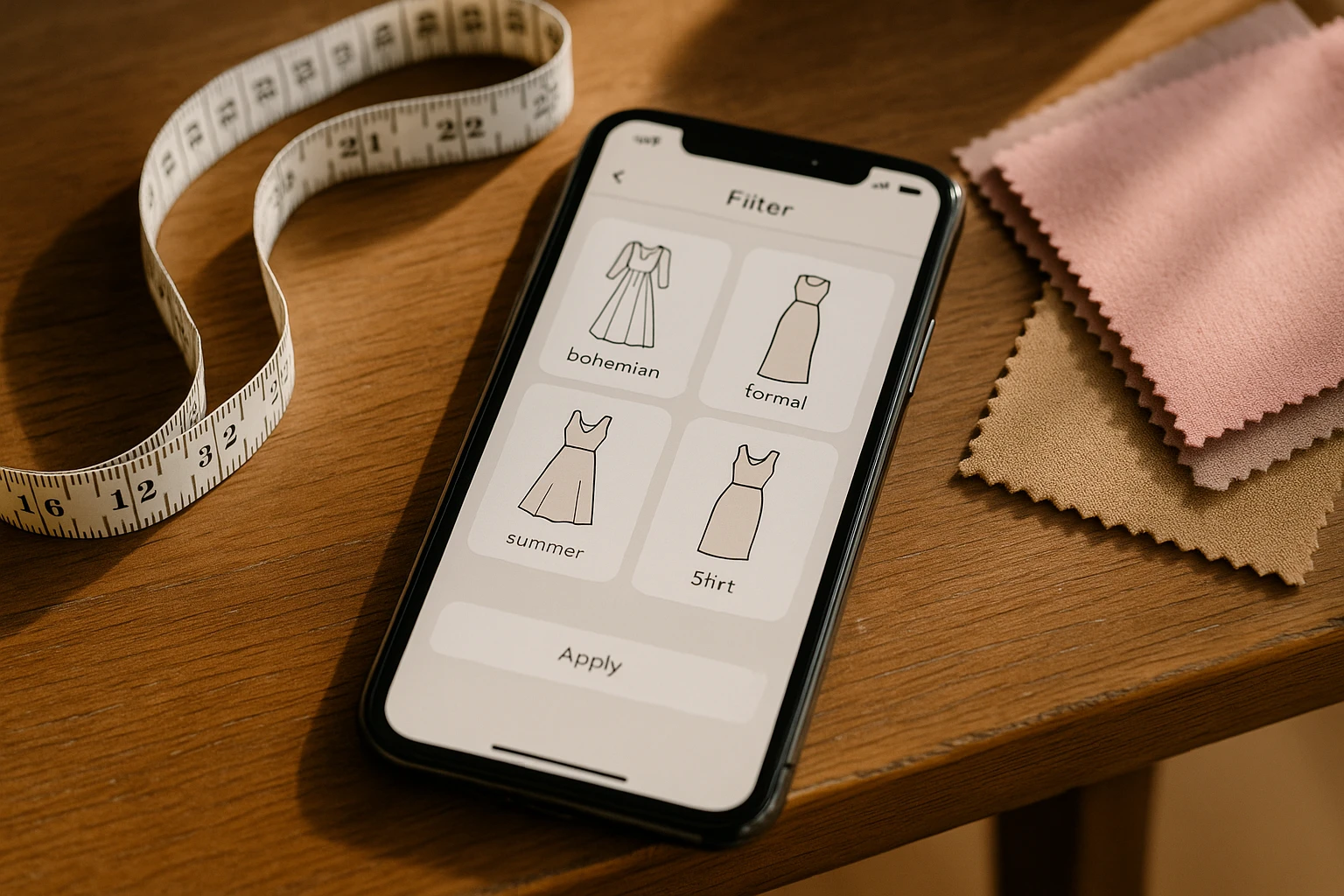
An actionable insight from exploring these techniques is the importance of having a clear understanding of your own style preferences and the nuances of the occasions you are dressing for. Whether you're leaning towards a bohemian festival look or a sleek formal ensemble, defining these parameters beforehand allows filters to work to their full potential. This targeted approach to online shopping ensures that every piece resonates with your personal taste and wardrobe needs.
For a practical application of these strategies, consider utilizing platforms known for their robust filtering options. Websites like dressmeupny provide a comprehensive range of filters to help you refine your search down to the most minute detail. These tools empower you to quickly zero in on dresses that not only match your style aesthetic but also fit the occasion perfectly, turning a potentially overwhelming process into a seamless adventure.
If you’re ready to enhance your shopping experience, starting with dressmeupny will give you access to user-friendly filtering options coupled with an expansive dress collection. This ensures you have the best possible start on your journey to efficient online shopping. As more platforms continue to refine their technology and provide intuitive shopping experiences, applying these insights will make you a savvy, efficient shopper ready to tackle any fashion need with confidence.
Embrace these findings and equip yourself with these advanced techniques for an enriching, time-saving, and tailor-focused online shopping adventure. Your next step is simple: explore a platform like dressmeupny and put your newfound skills into practice. Happy shopping!
Article Generated by Rankaria