
Shop Ready Evening Dresses for Women 50+: Fit, Fabric and Formality
Shop Ready Evening Dresses for Women 50+: Fit, Fabric and Formality

The most reliable evening dresses for older women share three silhouettes: A-line, empire waist, and sheath, each built to work with a mature figure instead of against it. For black-tie events, floor-length is the rule; for formal or cocktail invitations, a midi or tea-length gown is often perfectly appropriate. Stretch crepe or lined chiffon should top your fabric list, since both drape well and survive a three-hour dinner without wrinkling.
TL;DR:
- A-line and empire waist dresses are the most forgiving silhouettes for mature figures, offering gentle shaping without clinging.
- Floor-length gowns are the standard for black-tie events, while midi or tea-length dresses can work for less formal occasions, depending on fabric and length.
- Stretch crepe and lined chiffon are the most practical fabrics for long wear, resisting creases and maintaining a polished appearance throughout the event.
- Proper fit relies on accurate measurements of the bust, waist, hips, and shoulders, with alterations often necessary for optimal comfort and silhouette.
- Choosing deep jewel tones or navy enhances skin tone flattering effects, while accessories should support the gown rather than distract from it.
Table of Contents
- Which Silhouettes Flatter Mature Figures Best?
- Matching Dress Length to the Formality of the Event
- Sleeves, Necklines, and Coverage That Still Feel Elegant
- Which Fabrics Hold Up Through a Long, Photographed Evening
- Getting the Fit Right: Measurements, Alterations, and Shapewear
- Colors and Prints That Flatter Mature Skin Tones
- Accessories and Finishing Touches That Complete the Look
- A Pre-Event Checklist Before You Buy
- Why Dressmeup’s Fit Advice Comes From Real Fitting-Room Conversations
- Shop Evening Gowns and Formal Dresses at Dressmeup NY
- Dressing for Who You Are Now, Not Who You Used to Be
- Sources
- FAQ
Which Silhouettes Flatter Mature Figures Best?
Silhouette does more work than any other single choice you’ll make. Get it right, and the fabric and color decisions get easier because you’re not fighting the dress to begin with.
The A-line skims past the hips and thighs without clinging, which makes it the safest bet for pear and apple shapes alike. It nips in slightly at the waist, then flares gently, so you get definition without anything pulling tight after a meal. The empire waist sits just under the bust and falls straight from there, and that raised seam does something clever: it lengthens the whole body visually, which is why it works so well on shorter frames or anyone who wants to soften a midsection. The sheath is the most tailored of the three, following the body’s natural line, and it rewards women with a defined waist or an hourglass shape who want structure rather than flow.
A few adjustments make each of these work harder for you:
- On an A-line, ask for the waist seam to sit at your natural waistline rather than higher, which avoids a maternity-style effect.
- On an empire gown, a thin self-fabric belt just under the bust adds shape without disrupting the line.
- On a sheath, built-in boning or a light interior liner does more for posture and smoothing than a separate shapewear layer, and it stays put through dinner and dancing.
- Rectangular body shapes tend to do best in structured sheaths with a defined waist seam, since the dress creates the curve the body doesn’t.
- Plus-size shoppers should look for A-line and empire cuts with side ruching or a built-in liner, since both add definition without adding bulk.
Dressmeup’s own fit guide for formal gowns walks through these three cuts in more detail, including how each one photographs from different angles, which matters more than most shoppers expect once the evening’s photos start circulating.
Matching Dress Length to the Formality of the Event
The invitation tells you almost everything you need to know, and reading it correctly saves you from either underdressing or showing up in a gown that’s technically too formal.
Black-tie means floor-length, full stop. That’s the standard across formalwear guides, and it holds whether the event is a wedding, a gala, or a corporate awards dinner. Black-tie optional loosens things slightly, allowing a polished midi gown if it’s in an evening-appropriate fabric. Formal events without the black-tie label usually expect floor-length or tea-length, while cocktail attire opens the door to knee-length or midi dresses in lighter, less structured fabrics.
Fabric signals formality just as much as length does. A few quick rules:
- Satin, silk, velvet, and sequined fabrics read as evening-appropriate and formal.
- Chiffon works for warm-weather formal events, especially outdoor summer weddings, but pick a lined version so it doesn’t look flimsy under evening light.
- Velvet and heavier crepe suit fall and winter galas, where the fabric’s weight also adds warmth.
- Avoid daytime fabrics like linen or cotton poplin for anything after 6 p.m., regardless of length.
Formal and black-tie dress codes consistently exclude cocktail-length hemlines, so if you’re unsure which category your event falls into, floor-length is the safer default. Outdoor summer events call for lighter linings and breathable structure underneath, while a winter gala gives you permission to add a velvet wrap or cape without looking out of place.
Sleeves, Necklines, and Coverage That Still Feel Elegant
Coverage doesn’t have to mean concealment, and the right sleeve or neckline can do more flattering work than the dress itself.
Long fitted sleeves offer the most coverage and read as the most formal option, ideal for black-tie events. Three-quarter sleeves are often the safest middle ground: enough coverage for comfort in air-conditioned ballrooms, without the heaviness of a full sleeve. Illusion mesh and lace-yoke sleeves give the appearance of a bare arm while still smoothing the silhouette, a favorite for women who want coverage that doesn’t look like coverage.
For necklines, a V-neck does more than look elegant. It elongates the neck and frames the face, which becomes especially noticeable during a long seated dinner when your upper body is what everyone actually sees for hours.
- Long fitted sleeves: most formal, warmest, best for black-tie.
- Three-quarter sleeves: the most versatile choice across event types.
- Flutter sleeves: soft movement, best for empire and A-line cuts.
- Illusion mesh: coverage without visual weight.
Pro Tip: If your event moves from an outdoor ceremony to an indoor reception, a detachable bolero or cape lets you adjust for temperature and formality without changing the whole outfit.
Which Fabrics Hold Up Through a Long, Photographed Evening

Fabric behavior under real conditions, sitting for hours, moving through a receiving line, standing under flash photography, matters more than how a dress looks on a hanger.
Stretch crepe and stretch jersey are the workhorses here. Both resist creasing after long stretches of sitting and forgive a full dinner without the fabric pulling or bunching. Lined chiffon is the better choice for warm venues, since it breathes while still holding a formal drape. Satin photographs beautifully under good lighting but shows every seam line and body contour underneath, so pair it with a smoothing layer if you go that route. Velvet delivers the most visual polish for cold-weather events, though it’s heavier and can feel warm indoors.
- Stretch crepe or jersey: best all-around choice for comfort and creasing.
- Lined chiffon: best for warm or outdoor formal events.
- Satin: best photography impact, needs a smoothing layer underneath.
- Velvet or taffeta: best for fall and winter galas.
Heavier fabrics like velvet and structured satin reduce how much you need underneath, since the fabric itself holds shape. Lighter fabrics like chiffon rely more on a built-in liner or light shapewear to keep the silhouette clean.
Getting the Fit Right: Measurements, Alterations, and Shapewear
A gown that fits at the shoulders and hangs wrong everywhere else is the single most common evening-wear complaint, and it’s almost always fixable before you ever put the dress on for the event.
Confirm these measurements before you order anything:
- High bust and full bust — determines whether you need a smaller top size with room let out at the bust, a common adjustment for fuller busts.
- Natural waist — the most frequently altered point on any gown, since ready-to-wear sizing rarely accounts for where your waist actually sits.
- Hip — especially important for sheath and mermaid-adjacent cuts, where too little ease creates visible pulling.
- Shoulder width — hard to alter after the fact, so this measurement should guide your starting size more than any other.
Standard alterations include hemming to your exact heel height, taking in or letting out the waist, and tapering sleeve width for a cleaner line at the wrist. Give a tailor three to six weeks for anything beyond a simple hem, especially around wedding and holiday seasons when formalwear tailors book up fast.
Pro Tip: A gown with built-in boning or a corselette lining often does more shaping than a separate shapewear layer, and it won’t bunch, roll, or dig in through a long seated dinner the way compression garments can.
Colors and Prints That Flatter Mature Skin Tones
Color choice under evening lighting behaves differently than it does in daylight, and a shade that looks great in a dressing room can wash out completely under a venue’s warm bulbs or camera flash.
Deep jewel tones, emerald, sapphire, burgundy, tend to flatter mature skin tones more reliably than pastels, which can read as faded under evening light. Navy works as a softer alternative to black, offering the same slimming effect with less harshness near the face. If you do wear black, add a luminous accessory near your face, a pearl drop earring or a metallic wrap, to keep it from flattening your complexion.
- Choose smaller-scale prints over large, bold motifs, which tend to add visual bulk.
- Vertical patterns or seaming create a lengthening effect better than horizontal detail.
- Monochrome palettes (one color family head to toe) read as more polished than mixed prints.
- Sequins and metallics work best concentrated in one area, a bodice or hem, rather than spread across the whole gown.
Accessories and Finishing Touches That Complete the Look
The right accessories should support the dress, not compete with it, and mature evening style tends to reward restraint over volume.
A clutch sized for your phone, keys, and a lipstick is almost always the right call; anything bigger looks like a daytime bag. On heels, choose the height you can comfortably stand in for three or more hours, since a stunning shoe that has you limping by 9 p.m. undercuts the whole outfit. A low block heel or a dressy flat is a legitimate formal choice, not a compromise.
- Pick one statement area, either a bold necklace or statement earrings, never both at once.
- Coordinate metal tones with any beading or hardware already on the dress.
- An updo pairs well with a high neckline; loose waves balance a strapless or V-neck cut.
- A cashmere wrap or tailored bolero should match the dress’s formality level, not just its color.
A Pre-Event Checklist Before You Buy
Buying an evening dress from a photo is a gamble, since the fabric’s actual behavior only shows up once you’re moving in it.
Before committing to a gown, run this test at home in the exact shoes you plan to wear:
- Sit down and check whether the fabric creases sharply or bounces back smoothly.
- Cross your legs and confirm the hem doesn’t ride up uncomfortably or expose more than you intended.
- Reach both arms overhead to check that the bust and underarm area don’t strain or gap.
- Climb a short flight of stairs to test the hem length against your heel height.
- Sit for ten minutes, then stand, and check the fabric for lasting wrinkle lines.
Home dry runs like this catch problems that never show up in a fitting-room mirror, where you’re standing still for two minutes instead of moving for three hours. Order with enough lead time to allow for alterations, ideally three to six weeks before the event, and when a retailer’s return policy allows it, order two sizes and send back whichever fits worse. That small buffer solves more fit disasters than any amount of guessing from a size chart ever will.
Why Dressmeup’s Fit Advice Comes From Real Fitting-Room Conversations
These recommendations aren’t theoretical. They come out of common fit questions: which sleeve hides upper-arm concerns, which fabric survives a wedding reception without creasing, which silhouette works when waist and hips don’t match a standard size chart.
A few resources go deeper than this guide has room for:
- The evening wear style and fit guide covers silhouette and sleeve pairing in more depth.
- Our sleeve style guide breaks down coverage options by arm shape and comfort.
- The ball gown comfort guide addresses fuller silhouettes for very formal occasions.
If your measurements fall between standard sizes or you’re unsure which cut suits your shape, a size guide and customer support team can walk through specifics with you directly.
Shop Evening Gowns and Formal Dresses at Dressmeup NY
This store is built for searches like yours: a catalog organized by event and style, so you’re not scrolling through hundreds of daytime dresses to find the gowns that fit a black-tie invitation.
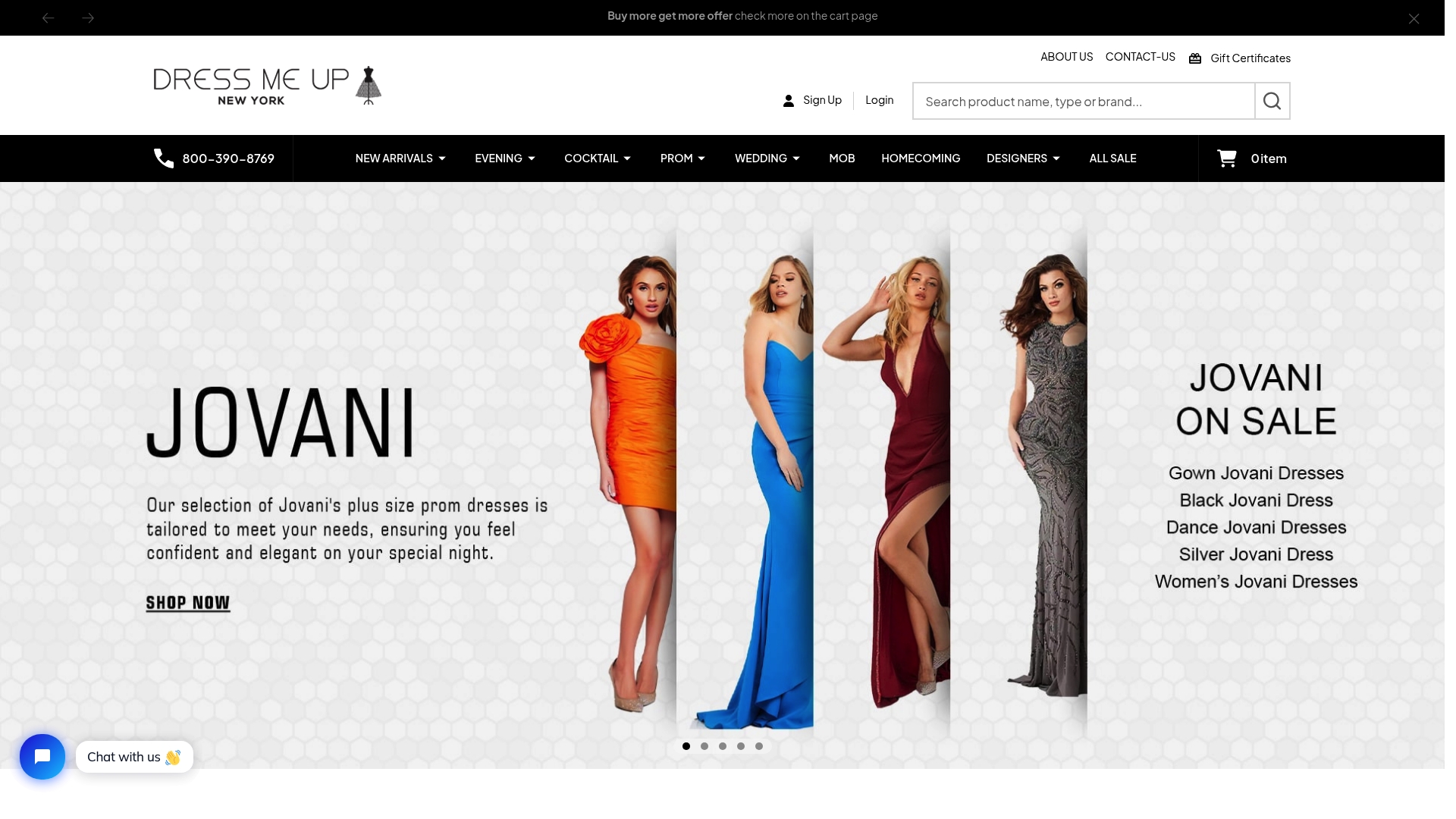
Start with the Evening Dresses collection for the broadest catalog of silhouettes and fabrics discussed here, or head straight to Formal Gowns if your invitation specifies floor-length and evening-grade fabric. Both categories let you filter by sleeve length, silhouette, and fabric, which turns a vague search like “flattering evening dress” into a short, manageable list in a few clicks. If your event calls for something shorter and less structured, the cocktail and party category covers midi-length options for cocktail attire.
Whichever gown catches your eye, save two candidates and run the home dry run described above before you finalize anything. Between the size guide, the filtered categories, and the option to order across sizes where the retailer’s return policy allows, you can shop with greater confidence in the fit.
Dressing for Who You Are Now, Not Who You Used to Be
The silhouette rules, fabric guidance, and length charts in this piece exist to serve one goal: making you look and feel confident at your event. They’re not restrictions on your personal style.
Once you’ve nailed the formality and fit basics, there’s real room to play. A jewel-toned gown with a bolder sequined bodice, an unexpected sleeve detail, a color you haven’t worn in years, these choices are where your personality shows through, and style advice for women over 50 increasingly pushes back against rigid age-based dressing in favor of dressing for the woman you are today. Use the fit and formality checks in this guide as your foundation, then build your own statement on top of them. For more ideas, our blog’s styling guides are a good next stop.
— Dressmeup
Sources
This guide draws on formalwear dress code standards from Black Tie Attire and FashionInformed, styling guidance from AARP, and neckline research from 50 Is Not Old. Detachable coverage insight comes from Jovani’s styling blog, alongside Dressmeup’s own fit and sleeve guides referenced throughout the article.
- Black Tie Attire – Complete guide
- The best evening wear looks for women over 50 — AARP
- Formal and black-tie dress rules — FashionInformed
FAQ
How Can I Look Thinner in an Evening Gown?
An A-line or empire waist silhouette does the most visual slimming work, since both skim past the hips instead of clinging. Deep jewel tones and vertical seaming add to the effect, and a fabric like stretch crepe holds its shape better than clingy satin through a long event.
What Is the Cocktail Dress Code for Older Women?
Cocktail attire generally allows knee-length to midi dresses in lighter fabrics, a step down in formality from black-tie’s floor-length requirement. Sleeves, coverage, and color are entirely your choice at this formality level, so a three-quarter sleeve sheath or an A-line midi both work well.
How Do I Choose an Evening Dress?
Start with the event’s dress code to set your length and fabric expectations, then choose a silhouette, A-line, empire, or sheath, based on what you want to highlight or smooth. From there, Dressmeup’s evening dress collection lets you filter by sleeve length and fabric to narrow the search to your exact fit.
What Fabric Holds Up Best Through a Long Formal Event?
Stretch crepe and stretch jersey resist creasing better than satin during hours of sitting and standing, which makes them the most reliable choice for weddings and galas. Lined chiffon is the better option for warm or outdoor formal events where breathability matters more.
Does Dressmeup NY Carry Plus-Size Evening Dresses?
Yes, Dressmeup NY’s evening dress and formal gown categories include plus-size options across the A-line and empire silhouettes covered in this guide. Use the site’s filters and size guide to narrow results to your measurements before ordering.
Recommended
- Evening Wear for Mature Women: Style and Fit Guide
- Women’s Plus Formal Dresses: Style & Fit Guide 2026
- Petite Formal Evening Dresses: Silhouettes That Actually Fit
- Measure These 6 Numbers Before Buying a Plus Evening Dress