
Floral Formal Dress Styling: How to Dress Up Florals
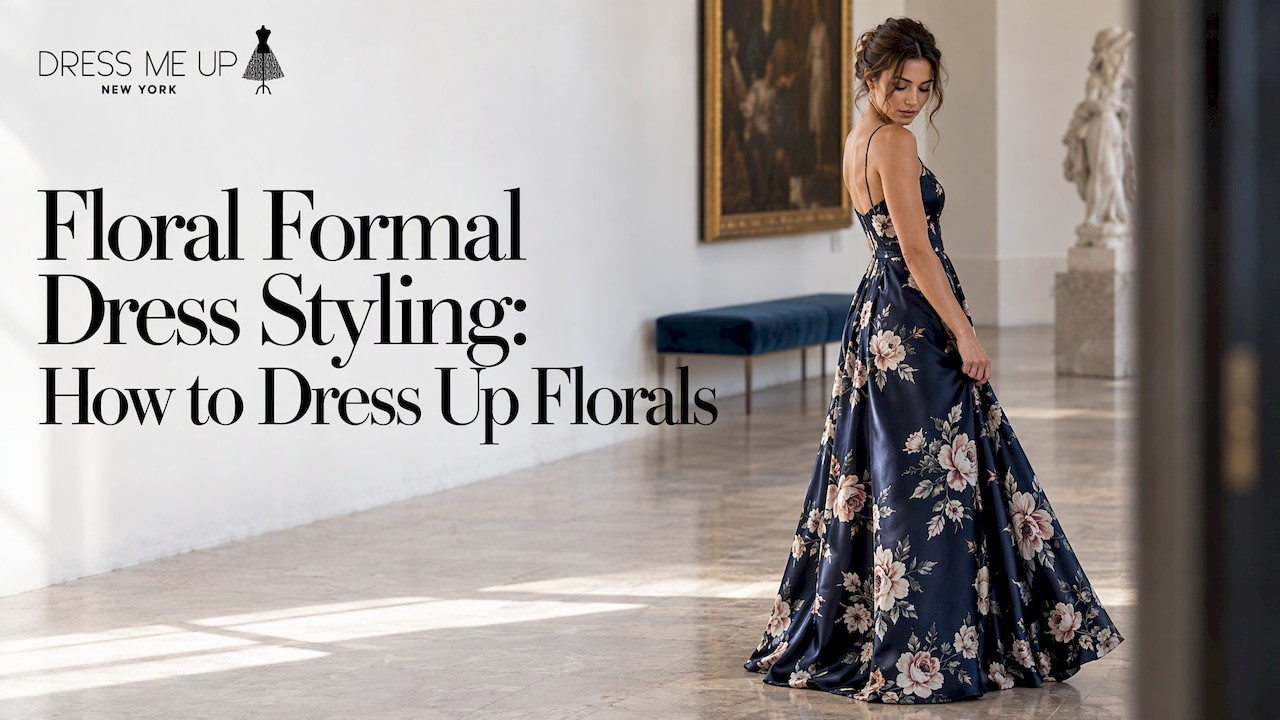
Floral Formal Dress Styling: How to Dress Up Florals

Yes, a floral dress can be completely formal. The trick is to let fabric, silhouette, length and print scale do the dressing up, then keep everything around the dress polished and quiet. Choose a floor-length or well-below-the-knee style in satin, crepe or tulle, pick a print that suits the time of day, and add sleek shoes, a structured bag and a refined layer. Below, we walk you through each choice, so you can walk into a wedding, prom or gala feeling sure of your look.
TL;DR
- Fabric first: silk-like satin, crepe and tulle read formal, while cotton poplin and gauzy linen read daytime.
- Go long and structured: floor-length or well-below-the-knee in an A-line, fit-and-flare or sheath shape.
- Match the print to the hour: lighter grounds for daytime and spring, deep navy, black, emerald or plum grounds for evening.
- Keep accessories sleek: a structured clutch, strappy heels or pumps, and a wrap or capelet instead of a denim jacket.
- Pick one statement, such as bold jewelry or a bold lip, and let the dress stay the star.
Table of Contents
- Can a Floral Dress Really Be Formal?
- Start With the Fabric
- Choose a Silhouette That Looks Intentional
- Read the Print: Scale, Color and Background
- Match the Dress to the Dress Code
- Time of Day and Season
- Shoes and Bags That Keep It Formal
- Layers for Cooler Weather
- Hair, Makeup and Jewelry
- When a Floral Dress Is Too Casual
- Three Floral Looks, Start to Finish
- Our Take on Floral Formalwear
- Ready to Find Your Floral Gown?
- FAQ
- Sources
Can a Floral Dress Really Be Formal?
Absolutely, and it has been for a long time. Florals show up on red carpets, in black-tie guest lists and on prom stages every year. What makes a floral dress feel casual is rarely the flowers themselves. It’s the cotton, the short hem, the busy print and the sundress shape that often come with them.
So think of the print as one ingredient. Vogue’s advice on black-tie dressing says a botanical print can read formal in any setting as long as the color suits the season and the silhouette is appropriate. Its example is a floor-length column dress in a moody palette. That one idea is a good compass for everything that follows: dark, rich, long and sleek.
Start With the Fabric
Fabric is the quickest way to move a floral from “garden brunch” to “ballroom.” Vogue’s formal attire guide says that, unless you’re attending a beach ceremony, you should skip cotton poplin and gauzy linen and consider tulle, duchess satin or crepe de chine instead.
Here’s how each fabric tends to behave with a floral print:
- Satin: Deepens the colors and gives the print a rich, glossy texture, which is why it’s a favorite for evening. Style blogger Kristin Link makes the same point in her 2026 floral dress roundup, noting that satin deepens color while chiffon softens the visual impact.
- Chiffon: Soft and floaty. It suits daytime formal events, garden ceremonies and prom looks with movement, especially in layers.
- Crepe: Matte, structured and flattering. A crepe floral sheath is an easy, grown-up choice for a city venue.
- Tulle: Romantic and full. A floral tulle gown is a natural for prom and Quinceañera celebrations.
- Embroidered or metallic-accented fabrics: Floral embroidery or metallic threads add dimension and make a dress feel special. Styling writer Edwin Vonholy recommends metallic accents or embroidery as a way to elevate a floral.
A quick test in the fitting room: hold the fabric to the light. If it’s thin, wrinkles when you squeeze it, or looks like a summer sundress, it will probably feel casual no matter how pretty the print is.
Choose a Silhouette That Looks Intentional
Structure signals formality. An A-line gown, a fit-and-flare dress or a sleek sheath all work well for elevated florals, because they hold their shape and look tailored rather than relaxed.
A few ways to think about shape:
- A-line gowns flatter almost everyone and give a print room to show off. They’re a great match for larger, more dramatic florals.
- Fit-and-flare defines the waist and adds movement, which photographs beautifully at a wedding or prom.
- Sheaths and columns are streamlined and modern. They pair well with a bold or moody print and very little else.
- Wrap and slip styles can work for cocktail attire, but look for a heavier fabric and a longer hem if the invitation says formal.
Mind the length
For formal events, length matters as much as print. Vogue’s guide says women should choose dresses that fall well below the knee, and in some cases floor- or ankle-length styles are the most appropriate. If your invitation says black tie, go full length. If it says cocktail or semi-formal, a midi or a polished knee-length dress can work, and our cocktail collection is built for exactly that.
Read the Print: Scale, Color and Background
Two dresses can both be “floral” and feel worlds apart. Here’s what to look at.
Scale
Kristin Link observes that print scale changes how formal a dress feels: small repeats read as refined, while oversized blooms look bolder and suit simpler dress cuts. That gives you an easy rule of thumb. Small or medium print? You can handle a more detailed neckline or sleeve. Oversized, painterly or abstract bloom? Keep the cut clean and let the print speak.
Large, abstract patterns are also one of the ways Vonholy suggests to make a floral feel more luxe. The key word is abstract, a watercolor or artistic look rather than a cartoonish, high-contrast daisy.
Background color
The ground color, meaning the shade behind the flowers, often tells you the time of day. Link’s guidance is that light-ground florals suit daytime and spring, while black, navy or deep green backgrounds suit evening and fall.

If you’re deciding between shades, our guide to choosing your evening dress color can help you narrow it down by skin tone, event and season.
Keep it muted for the most formal rooms
Soft, tonal palettes tend to feel calmer and more refined than bright, high-contrast ones. If you aren’t sure, choose the dress where the flowers sit close in tone to the background, such as navy on navy, blush on ivory or plum on wine. It’s a safe, elegant route for a formal wedding.
Match the Dress to the Dress Code
A floral that’s perfect for one invitation can be wrong for another. Here’s a simple guide.
| Dress code | What works in a floral | Length | Fabric and color |
|---|---|---|---|
| White tie | Rarely the best choice. Stick with a solid formal gown unless the host says otherwise. | Floor-length | Rich, heavy fabrics |
| Black tie | A dark-ground floral gown with a clean cut | Floor-length | Satin, crepe, tulle, deep tones |
| Formal / black-tie optional | Floral gown or a long, structured floral dress | Floor-length or well below the knee | Satin or crepe, jewel tones or muted tonal prints |
| Cocktail | Floral midi or a polished knee-length dress | Midi to knee | Satin, crepe, lightweight jacquard |
| Prom | Floral gown, mini or high-low, as your school allows | Your choice | Tulle, satin, embroidered or sequined florals |
| Quinceañera guest or court | Floral gown with dramatic skirt | Floor-length | Tulle, organza, satin |
Elle’s wedding dress code guide notes that black-tie weddings give guests more freedom with prints and color than white-tie events, but the venue still matters. A refined, structured option suits a city hotel ballroom, while a tropical destination wedding calls for something lighter. The same guide’s advice for themed dress codes also applies to florals: choose one or two strong elements and keep the rest of the outfit wedding-appropriate.
If you’re still shopping for the event itself, our wedding guest dresses are sorted by occasion, so it’s easy to see what suits a ceremony versus a reception.
Time of Day and Season
Daytime and evening floral dresses call for different palettes. Pale grounds, pastels and soft greens feel right for a spring afternoon ceremony. After dark, deeper shades such as midnight blue, emerald, plum and black look richer, especially in satin.
Fall and winter are wonderful seasons for florals too. Think moody blooms on dark grounds, velvet or heavier crepes, and accents in burgundy, rust or deep green. Link suggests you can rotate accessories to carry one floral dress across seasons: pastel accents with a neutral-based floral in spring, rust or burgundy for fall.
That’s a smart way to make one dress earn its place in your closet, and it’s a nice idea for wedding guests who attend more than one event a year.
Shoes and Bags That Keep It Formal
Choose accessories that look sleek rather than casual. For a formal floral, Vonholy recommends heeled sandals, sleek pumps or strappy stilettos with a structured clutch or minaudière.
Some practical pairings:
- Metallic sandals in gold, silver or champagne work with almost every floral, light or dark.
- Satin or suede pumps in a shade pulled from the print look intentional without being matchy.
- Nude heels lengthen the leg and keep attention on the dress.
- A structured clutch in a solid color or with metallic hardware reads more formal than a slouchy bag.
Solid, simple accessories are the classic route. The Knot notes that maximalist styling that mixes patterns through accessories can be a fun and valid choice if it’s balanced well. If you’re going that way, keep everything else quiet: one patterned piece, not three.
Layers for Cooler Weather
A denim jacket or casual cardigan is the fastest way to undo all your good work. For a formal floral, Vonholy suggests a capelet, sheer shawl, wrap or cropped evening jacket instead.
A shawl is especially handy for ceremonies in air-conditioned halls or chilly evening receptions. If you’re new to wearing one, start with our walkthrough on how to choose the right shawl for your outfit. With a busy print, pick a solid shawl in a shade pulled from the dress. With a simple solid-toned floral, a textured wrap in a matching tone adds depth. We also cover fabric and material considerations so your wrap and dress look like they belong together.
Hair, Makeup and Jewelry
The final polish often decides whether a floral looks formal or just pretty. Vonholy points to a sleek low bun or chignon, or a bold lip, as ways to keep the tone elevated. Vogue’s guide stresses that attention to detail, including grooming and accessories, is part of what makes formal dressing feel formal.
A simple way to balance things:
- Pick one focal point. If your dress has a bold bloom print, choose delicate earrings or a slim bracelet.
- Echo one color from the print. A lip, a stone in your earrings or a shoe can pick up a shade from the flowers.
- Keep hair off the shoulders when the neckline is detailed. A low chignon or sleek ponytail shows off the neckline.
- Choose metal tones that suit the dress. Gold warms up creams, olives and rusts. Silver cools down blues, plums and grays.
When a Floral Dress Is Too Casual
Watch out for these common issues:
- A cotton or eyelet fabric. It tends to feel more beach or brunch than ballroom.
- Large, high-contrast florals on a white background. They can look like a sundress.
- A very short or loose, unstructured cut. Fine for a cocktail hour, less so for a formal ceremony.
- Casual shoes. Flat sandals, wedges and sneakers pull the whole look down.
The fix is usually simple. Swap in a heavier fabric, choose muted or deeper colors, and go minimal and tonal with accessories. Often, you don’t need a new dress at all. A sleek updo, a structured clutch and metallic heels can change the entire feel.
Three Floral Looks, Start to Finish
1. The evening wedding guest. A floor-length satin gown with deep navy background and a mid-scale bloom print. Gold strappy sandals, a structured clutch, a sheer shawl in a soft neutral, and a low chignon. Add a berry lip and small drop earrings.
2. The prom look. A floral tulle ball gown or A-line with embroidered flowers. Keep jewelry simple, choose a metallic heel you can dance in, and let the skirt be the star. A sleek half-up style keeps the focus on the bodice.
3. The daytime formal ceremony. A midi or longer chiffon fit-and-flare in a light ground with a small-scale print. Nude pumps, a slim clutch, a lightweight wrap, and soft waves or a low bun. Choose a muted lip for a gentle finish.
Perspective
Our Take on Floral Formalwear
We see floral gowns as one of the most flexible choices in formalwear. They photograph beautifully, they flatter many body types, and they let you show personality without breaking the dress code.
Our catalog is organized by event, designer and style, so you can start with the occasion, whether that’s a wedding, a prom or a Quinceañera, and then look for the print, silhouette and length that fit it. Our team of fashion professionals is here to help if you aren’t sure where to begin, and our collections draw from New York’s fashion district and global designers.
Our advice is to choose the shape and fabric first, then fall in love with the print. A dress that fits well and feels like you will always look more formal than one that only checks the rules.
Dressmeup
Ready to Find Your Floral Gown?
If you’re ready to start looking, browse our formal gowns for floor-length floral styles, or explore our evening dresses if you want something sleek and dark for after-sunset events. Attending a wedding? Our wedding guest and bridesmaid collection makes it easy to compare styles by occasion.

For a Quinceañera, our Quinceañera dresses are a good place to look for voluminous, romantic styles. And if you want to see how elegant gowns work for weddings in general, our guide to evening gowns for weddings has more ideas.
FAQ
How do you make a floral dress formal?
Start with a long length, a structured silhouette and a fabric like satin, crepe or tulle. Choose a print in deep or muted tones, then add sleek heels, a structured clutch and polished hair. Those few changes do most of the work.
What goes well with a floral dress?
Solid, simple accessories are the classic partner: metallic sandals or pumps, a clutch in a color pulled from the print, and understated jewelry. For cooler weather, add a wrap, capelet or cropped evening jacket rather than denim.
How do you elevate a floral dress?
Choose a dress with a larger, more abstract print or with metallic or embroidered details, and keep the cut structured. Then finish with a sleek hairstyle, a bold lip and one standout accessory instead of several competing ones.
Can I wear a floral dress to a black-tie wedding?
Yes, if the dress is floor-length, made of a rich fabric and has a deeper palette or dark background. Black-tie gives guests more flexibility with prints than white-tie. When in doubt, check the venue and the couple’s wording, and choose a more refined option for a city ballroom.
Sources
- The Vogue Guide to Formal Attire
- 8 Black-Tie Outfit Ideas for Your Most Glamorous Events
- Wedding Dress Codes Explained: A Guest’s Guide
- How to Style a Floral Wedding Guest Dress for a More Formal Event
- 25 Wedding Guest Outfit Ideas: Floral Dress Trends 2026
- What Shoes to Wear With Dresses of Every Color
Recommended
- How to Style a Wrap Dress for Formal Events
- How to layer formal outfits: elegant styling for events
- How to Wear Statement Earrings for Formal Occasions
- How to Match Dresses with Shoes for Every Formal Event