
Stay Comfortable 4–5 Hours: Formal Dresses for Women Over 50
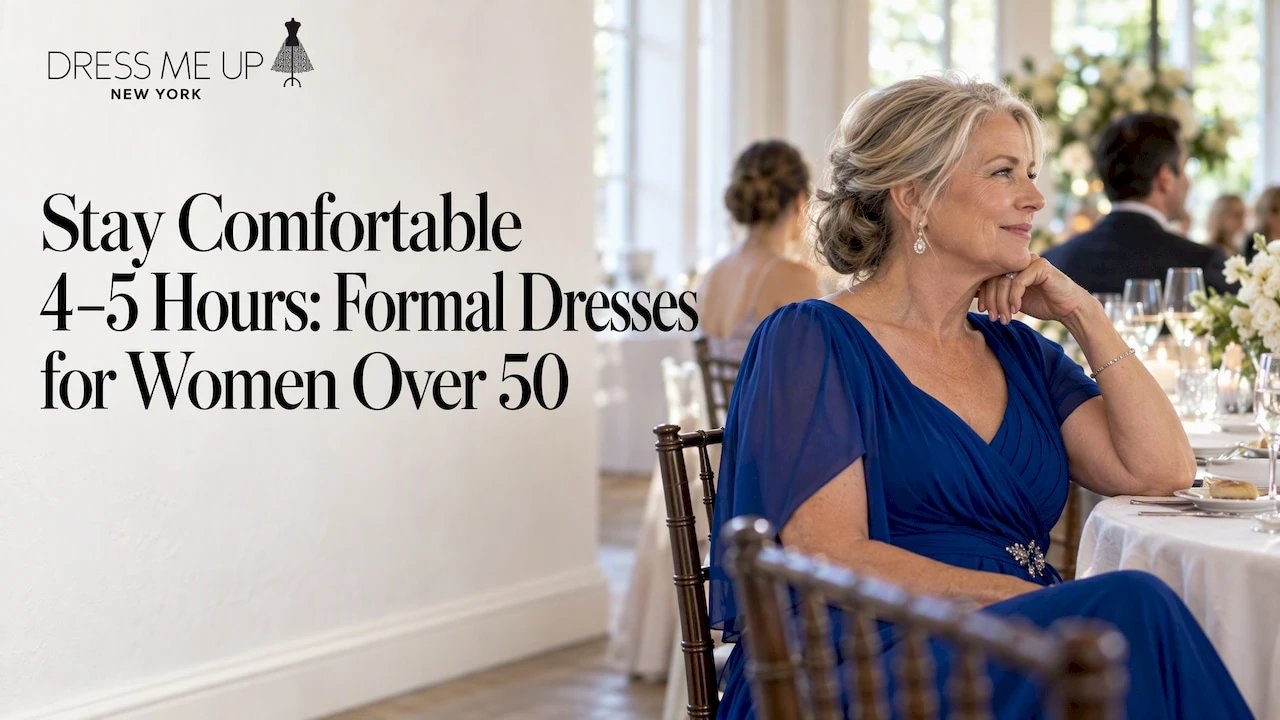
Stay Comfortable 4–5 Hours: Formal Dresses for Women Over 50

The most reliably flattering formal dresses for women over 50 share one trait: structure that holds its shape without squeezing. A-line, wrap, fit-and-flare, sheath, and tailored jumpsuit silhouettes all work because they skim rather than cling. Save sheath and fit-and-flare for cocktail parties, lean on A-line and wrap styles for weddings, and choose a structured gown for black tie. We curate all of these at Dress Me Up NY.
TL;DR:
- For weddings, choose midi or tea length wrap dresses; cocktail parties suit knee length sheath dresses, while black tie calls for floor length gowns.
- Crepe, lined chiffon, stretch satin, and quality knits move comfortably through long events; avoid coarse tulle and unlined sequins, which can irritate or snag.
- Test the fit by sitting, crossing your legs, raising your arms, and walking; pulling or riding up calls for tailoring, while gaping may need downsizing.
- Choose shapewear by silhouette: a fitted sheath needs firmer midsection coverage, while a flowing wrap dress may need only a smoothing slip.
Table of Contents
- What to wear by event: weddings, cocktail parties, and black tie
- Why these silhouettes flatter mature bodies
- Fabrics and construction that balance elegance with comfort
- Necklines, sleeves, and the length that works sitting or standing
- Your at-home fit checklist before you commit to a dress
- Finishing the look: jewelry, shoes, and accessories
- Choosing undergarments and shapewear that actually help
- Dressing for the season: fabric weight and layering
- Where to shop for formal dresses that fit and flatter
- Perspective: style after 50 is about choice, not rules
- Let us help you find the one
- FAQ
- Sources
What to wear by event: weddings, cocktail parties, and black tie
Every formal event has its own dress code logic, and matching silhouette to occasion saves you from either underdressing or feeling stiff all night.
- Weddings as a guest: an A-line or wrap dress in midi or tea length reads polished without competing with the bridal party; best pick if you want ease of movement through a long reception.
- Cocktail parties: a fit-and-flare or sheath in knee-length or just below hits the formality mark while staying comfortable for standing conversations; best pick for a flattering, put-together look without extra fabric to manage.
- Black tie or formal galas: a floor-length gown with clean lines, whether fitted through the waist or softly draped, delivers the gravity these events call for; best pick for head-turning elegance.
- Formal dinners: a tailored jumpsuit or sheath dress with a dressy jacket works when you want sophistication without the full ball gown commitment.
Modesty notes matter too. Weddings and family formal dinners often call for more coverage through the shoulders and neckline, while cocktail parties and black-tie events typically allow more skin at the arms or a deeper neckline if you prefer it.
Why these silhouettes flatter mature bodies
A-line dresses work because they skim past the midsection and hips without clinging, which keeps the eye moving in a long, even line. Wrap dresses do something similar while also defining the waist, since the crossover front naturally nips in at the smallest point of your torso. Fit-and-flare pieces add shape through the bodice and then release into a skirt, which flatters because it offers definition up top and freedom below. A sheath dress, by contrast, is the most streamlined option: choose it when your event calls for a cleaner, more architectural look. Tailored jumpsuits give the same polish as a gown but distribute attention across a wider silhouette, which some women find more comfortable for sitting and dancing.
Proportion is the real lever here. Adding structure at the shoulders (a cap sleeve, a tailored seam) balances a fuller hip, while a defined waist, whether through a wrap, a belt, or princess seams, creates shape without tightness. Small tailoring adjustments such as shortening a hem, nipping in a side seam at the waist, or adjusting a sleeve length often cost far less than returning a dress and make an off-the-rack piece look custom-made, according to AARP’s style editors.
Fabrics and construction that balance elegance with comfort
The fabric does more work than most shoppers realize. Crepe holds structure without stiffness, which makes it forgiving through the midsection and comfortable for sitting. Lined chiffon gives you movement and softness while the lining underneath prevents clinging or see-through moments. Stretch-satin and quality knits move with your body through a long event, and velvet adds warmth and visual richness for cooler months or evening galas.
Construction details matter as much as fabric choice. Bias-cut panels skim the body rather than pulling across it, and double-faced finishes give a dress enough body to hold its shape without feeling heavy. Seam placement at the waist or under the bust can create definition exactly where you want it.
A few fabrics are worth avoiding for long wear: coarse, scratchy tulle can irritate skin after a few hours, and unlined sequin fabric tends to snag on tights, chairs, and even your own jewelry. If you love the sparkle, look for sequins sewn onto a lined base.

Necklines, sleeves, and the length that works sitting or standing
A V-neckline is one of the most flattering choices for formal events because it elongates the neck and torso, creating what stylists call “tabletop appeal”: the view that matters most when you’re seated at a dinner table, according to AARP. If you prefer more coverage, a scoop neck or a modest V with a bit of lace overlay gives a similar lengthening effect without exposing as much skin.
Sleeves depend on climate and personal comfort. Cap sleeves suit warm-weather events and give light shoulder coverage, three-quarter sleeves hit a sweet spot between formality and comfort for most indoor events, and long sleeves in a lightweight fabric work well for cooler seasons or when you prefer fuller arm coverage.
Hemlines deserve real thought. A midi or tea-length hem that falls just above or below the widest part of the calf tends to be the most flattering length, while a hem that cuts right across the widest point can work against you, per AARP’s fit guidance. Floor-length makes sense for black-tie events and formal galas, where the extra drama matches the occasion.
Your at-home fit checklist before you commit to a dress
A dress that looks perfect in the mirror can still fail you three hours into a reception, so a home test run before an event is worth the ten minutes it takes.
- Sit down in the dress and check whether the fabric pulls across your lap or rides up.
- Cross your legs and notice whether the hem stays in place or exposes more than you’d like.
- Raise both arms overhead to confirm the bodice and sleeves don’t restrict movement.
- Walk across the room to see how the skirt moves and whether the hem catches underfoot.
- If you’ll be dancing, try a few turns to make sure nothing shifts or gapes.
AARP’s style coverage points to this walk-sit-cross-reach routine as the most reliable way to predict comfort over a 4 to 5 hour event. If a dress pulls or rides up during any step, that’s a sign it needs tailoring rather than a size change; if it gaps or slides, you may simply need a smaller size or a slip to hold things in place.
Pro Tip: Leave a little ease through the waist and hips for long events, and choose a dress that layers easily with a shawl or jacket if the venue’s temperature is unpredictable.
Finishing the look: jewelry, shoes, and accessories
The right accessories complete a formal look without fighting it for attention. Scale matters most: a heavier fabric like velvet or a bold neckline can carry one statement piece, while a simpler sheath leaves room for a bit more jewelry.
- Choose one statement piece, whether earrings, a necklace, or a cuff, rather than layering several bold items at once.
- For shoes, block heels, kitten heels, or dressy flats offer the same polish as a stiletto with far more comfort over a long night.
- A structured clutch keeps your proportions balanced better than an oversized bag.
- A tailored jacket, wrap, or shawl adds warmth and can be removed as the room warms up.
Choosing undergarments and shapewear that actually help
The right foundation garments do more for a formal dress than almost any other styling decision, and the goal is support, not restriction. Start with the dress itself: a bodycon sheath calls for firmer, full-coverage shapewear through the midsection, while a flowing A-line or wrap dress may only need a smoothing slip to prevent fabric from clinging in the wrong places.
Pay attention to the neckline and back when choosing a bra. A deep V or a dress with an open back calls for a low-back or convertible bra, while a strapless gown needs a strapless bra with real grip, not just elastic, so it doesn’t slide during a long event. If the dress has built-in support, you may not need a bra at all, which is worth checking before you buy additional undergarments.
Shapewear should smooth, not compress to the point of discomfort. Choose a size that matches your actual measurements rather than sizing down for extra control, since overly tight shapewear creates visible lines and can become unbearable after a few hours of sitting and standing. Look for breathable, moisture-wicking fabric if your event runs long or the venue tends to run warm. A slip in a color close to your skin tone or the dress fabric also prevents static and keeps the silhouette clean under lighter materials like chiffon or crepe.

Dressing for the season: fabric weight and layering
The season your event falls in should shape your fabric choice as much as the dress code does. For spring and summer formal events, lighter fabrics like chiffon, lightweight crepe, or stretch-satin keep you comfortable without sacrificing polish, and shorter or flutter sleeves make sense when the venue is warm.
Fall and winter formal wear benefits from richer, heavier fabrics: velvet, brocade, or a lined, structured crepe both look seasonally appropriate and provide warmth through an evening event. Long sleeves or three-quarter sleeves make more sense in cooler months, and a dress with some natural weight to the fabric tends to hold its shape better in heated indoor venues.
Layering solves the biggest seasonal challenge, which is moving between a cold car, a warm venue, and an outdoor photo session. A tailored jacket or wrap in a complementary fabric lets you adjust without changing your whole look, and a pashmina or shawl works for nearly any formal dress regardless of season. If your event spans outdoor and indoor spaces, such as a garden wedding ceremony followed by an indoor reception, choose a dress fabric that breathes but pack a cover-up for the transition.
Where to shop for formal dresses that fit and flatter
Finding formal dresses designed with mature figures in mind takes more than browsing a general department store rack. Look for retailers that organize their catalog by event type and offer detailed sizing information, since that structure makes it far easier to narrow down options before you try anything on.
Online retailers with size-inclusive ranges and clear fabric descriptions tend to save the most time, especially when they offer flexible returns in case a dress needs a different size once it arrives. We organize our own catalog this way at Dress Me Up NY, with formal gowns, cocktail dresses, and wedding guest dresses grouped separately so you can shop by occasion rather than scrolling through unrelated styles.
Local boutiques and department store formal sections remain useful for trying on fabrics and silhouettes in person before buying online, and a trusted tailor in your area is worth having on hand regardless of where you shop, since even a well-fitting dress often benefits from small adjustments. Whichever route you choose, prioritize retailers that provide real sizing guidance over those relying on vague “one size flatters all” marketing.
Perspective: style after 50 is about choice, not rules
We think the “dress your age” rule has done more harm than good. Fashion psychologists increasingly push back on rigid age-based dressing, encouraging women to dress for the identity they want to project rather than a number. Comfort and glamour were never opposites. A well-built dress proves that daily, and our own fit and style guides exist to help you find that balance with less guesswork.
— Dressmeup
Let us help you find the one
A well-organized catalog can help ensure that finding a formal dress doesn’t mean choosing between comfort and style. Collections of evening gowns, cocktail dresses, and wedding guest dresses are often organized by event, so you can shop with a specific occasion in mind instead of scrolling endlessly.
- Browse our Evening Dresses collection for galas, formal dinners, and black-tie events.
- Shop Formal Gowns for floor-length options with the structure and coverage you’re after.
- Check our Wedding Guest Dresses for midi and tea-length styles suited to ceremonies and receptions alike.
Customer service teams at some retailers assist with sizing questions and returns if a dress needs a different fit once it arrives, helping customers shop with less risk and more confidence.
FAQ
What is the most flattering dress silhouette for women over 50?
A-line and wrap dresses tend to be the most universally flattering because they skim the body rather than cling, and a wrap style also defines the waist naturally. Fit-and-flare and sheath styles work well too, depending on how streamlined or structured you want the look.
How long should a formal dress be for an older woman?
A midi or tea-length hem that falls just above or below the widest part of the calf is often the most flattering choice, according to AARP’s style guidance. Floor-length gowns remain the right call for black-tie events and formal galas where more drama fits the occasion.
What fabrics work best for formal dresses at long events?
Crepe, lined chiffon, stretch-satin, and quality knits hold their shape while still moving comfortably through hours of sitting, standing, and dancing. Velvet adds warmth and richness for cooler-season events, while coarse tulle and unlined sequin fabrics are worth avoiding for long wear.
How can I test whether a formal dress will stay comfortable all night?
Try a home test run before the event: sit down, cross your legs, raise your arms overhead, and walk across the room to see how the dress moves. This walk-sit-cross-reach check is one of the most reliable ways to catch fit problems before a 4 to 5 hour event, per AARP.
Where can I buy formal dresses designed for mature women?
Look for online retailers that organize their catalog by event and offer clear sizing details, since that makes it easier to shop with confidence. We offer curated collections of evening gowns, cocktail dresses, and wedding guest dresses at Dress Me Up NY, grouped by occasion to simplify the search.
Sources
- The Biggest Outfit Mistakes for Women Over 50 — AARP
- The 5 Spring 2026 Trends Stylish People Over 50 Are Wearing — Who What Wear
Recommended
- Formal Gowns for Older Women: Style and Fit Guide
- Shop Ready Evening Dresses for Women 50+: Fit, Fabric and Formality
- Evening Wear for Mature Women: Style and Fit Guide
- 7 Stylish Evening Dresses for Mature Women to Shine