
5 Measurements Tall Women Should Take Before Buying Formal Dresses
5 Measurements Tall Women Should Take Before Buying Formal Dresses

For most women 5’10" and taller, floor-length column, mermaid, and controlled A-line or wrap maxi dresses are the most flattering formal options. Before you fall for any of them, measure shoulder-to-floor and waist-to-floor while wearing your event shoes. When you’re torn between two options, go with a brand’s tall collection or plan for tailoring instead of guessing.
TL;DR:
- Tall women should opt for floor-length satin or crepe dresses that create a continuous vertical line and avoid styles with flare points starting above the knee.
- Hemlines should hit mid-calf for midi dresses and skim the floor with heels on, with specific measurements needed to prevent excessive pooling or too-short lengths.
- Necklines such as V-necks and angled shapes elongate the torso, while waist seams should sit at your natural waist to avoid shortening your appearance.
- Prioritize shopping from dedicated tall collections, check model and garment measurements carefully, and consider tailored adjustments to ensure a proper fit.
- Fabric choices like satin and silk crepe support a long, sleek silhouette, and altering a dress to match exact tall proportions is often more cost-effective than buying the wrong size.
Table of Contents
- Which Silhouettes Actually Flatter a Tall Frame?
- How Should Midi, Maxi, and Floor-Length Hems Land on You?
- Getting the Neckline and Waistline Right for Your Height
- Fabrics That Keep the Line Long, Season by Season
- The Measurements and Alterations That Prevent Fit Regret
- Smart Shopping Tactics for Tall-Friendly Formalwear
- How Dress Me Up NY Helps Tall Shoppers Buy With Confidence
- Why Fit Investment Beats Guessing Every Time
- Ready to Shop? Start With These Tall-Friendly Categories
- Sources
- FAQ
Which Silhouettes Actually Flatter a Tall Frame?
Height is an advantage in formalwear, but only if the silhouette works with your proportions instead of fighting them. The goal is a continuous vertical line from shoulder to hem, and certain shapes deliver that far more reliably than others.
Column and sheath dresses do this best. They skip the fabric volume that can make a tall body look boxy and instead trace your natural line straight down, which is why they’re the default recommendation in most fit and silhouette research for tall frames. Slip dresses work the same way through fabric weight rather than structure, using bias-cut satin or crepe to skim the body without adding bulk.
Mermaid gowns bring drama without sacrificing that vertical line, but the flare point matters more for tall women than for anyone else. A flare that starts at the knee or below keeps the silhouette elongated. One that starts higher, near the mid-thigh, can visually shorten your torso and make a 5’10" frame look boxier than a much shorter one wearing the same style.
A-lines and ballgowns can absolutely work on tall bodies, contrary to the myth that volume is off-limits above a certain height. The trick is proportion. A moderate A-line flare that starts at or just below the natural waist reads as elegant; one that starts high on the ribcage adds width in exactly the wrong place and can shorten your appearance. Tall women often have the vertical room to carry a fuller skirt gracefully, something shorter frames can struggle with.
Here’s how silhouette choice tends to map to occasion:
- Black-tie galas: Floor-length column or mermaid in satin or crepe, minimal embellishment above the waist.
- Cocktail-formal events: Fitted midi sheath or a slip dress with a slit for movement.
- Prom: Mermaid or fitted A-line, since these photograph well and hold up through a night of dancing.
- Bridesmaid duty: Column or soft A-line in a shared fabric, chosen to complement rather than compete with the bride’s silhouette.
- Wedding guest: Midi or maxi wrap dress, which flatters a range of body types standing next to you in photos.
Pro Tip: If you’re unsure between two silhouettes, choose the one with a defined waist seam over one that’s cut straight through the torso. A visible waistline breaks your height into proportional sections instead of reading as one long, undifferentiated column.
Wrap dresses deserve a specific mention because they solve two problems at once: they create waist definition automatically, and the diagonal wrap line adds visual interest without disrupting the vertical flow. A wrap maxi in a fluid fabric is one of the most forgiving formal options for a tall frame, particularly for readers who feel boxed in by rigid, structured gowns.
How Should Midi, Maxi, and Floor-Length Hems Land on You?
Standard hem categories were built around average height, which means they behave differently once you’re 5’10" or above. Knowing exactly where each length is supposed to hit changes how you shop.
A midi should hit mid-calf, not the ankle. If a midi you’re considering online is modeled on someone 5’4" and photographed as mid-calf, it will likely land closer to your ankle. A maxi should reach somewhere between the ankle and the floor depending on the cut, and a true floor-length gown should finish close to the foot with minimal pooling, according to tall-specific styling guidance built specifically around these hit points.
| Length category | Target hit point on 5’10"+ frame | Common mistake |
|---|---|---|
| Mini | Mid-thigh to just above the knee | Runs shorter than intended, reads as too casual for formal events |
| Knee-length | At or just below the kneecap | Hits mid-thigh instead, changing the formality of the look |
| Midi | Mid-calf | Lands at the ankle, closer to a maxi than intended |
| Maxi | Ankle to just above the floor | Pools excessively or drags without hemming |
| Floor-length | Skims the floor with heels on | Too short with flats, too long with heels, depending on shoe choice |
Product pages usually list two numbers that matter more than the size chart: the model’s height and the garment’s length as worn, sometimes alongside heel height. If a size medium is shown on a 5’9" model wearing 3-inch heels and described as “floor-length,” you can reasonably expect it to hit a few inches above your floor if you’re 5’11" in flats. Research on tall fit satisfaction found that too-short hemlines and hiplines are among the most common complaints tall shoppers report in ready-to-wear, which is exactly why these specs are worth reading closely instead of skimming past them.
When you do need a tailor, give them specifics instead of a vague “take it up”:
- Bring the exact shoes you’ll wear to the event, not a similar pair.
- Ask for a straight hem for column and sheath styles, and a curved hem for A-lines and gowns with volume.
- Specify whether you want the hem taken up from the bottom or altered at the waist seam, since the second option preserves design details like lace trim or a scalloped edge.
- Budget one to two weeks for formalwear alterations, longer during prom and wedding season.
Getting the Neckline and Waistline Right for Your Height
Neckline and waist placement do more visual work than most shoppers expect, and getting them wrong can undercut an otherwise great silhouette.
V-necks are the most reliable choice for tall women because the downward point draws the eye vertically instead of horizontally, reinforcing the long line you’re already working to create. Styling guidance from formalwear specialists consistently points to V-necks, sweetheart necklines, and other angled shapes as the strongest options for elongation. High necklines and boat necks aren’t off-limits, but they read best when the rest of the dress is doing vertical work elsewhere, like a column skirt or a deep back.
Waist placement is where a lot of formal dresses quietly go wrong for tall bodies. A dress designed for an average torso length often places its waist seam higher than your natural waist actually sits, which can make your torso look shorter and your legs look disproportionately long in an unflattering way. Check product photos closely:
- Look at where the waist seam sits relative to the model’s belly button, not just her hips.
- If the seam sits noticeably above the belly button on the model, expect it to sit even higher on you.
- Empire waists should be approached carefully. They can work beautifully but only when the bodice length is generous enough to reach your natural ribcage, not a shorter frame’s ribcage.
Sleeve and shoulder details need the same scaling logic as everything else. A cap sleeve or shoulder ruffle sized for a petite frame can look undersized and slightly off on broader, taller shoulders. Look for dresses with proportionally sized sleeve details, or choose sleeveless and strapless styles where scale isn’t a factor at all.
Fabrics That Keep the Line Long, Season by Season
Fabric choice either supports the vertical line you’re building or quietly undoes it, regardless of how well the silhouette is cut.
Satin has weight and structure, which makes it excellent for column and mermaid gowns where you want the fabric to hold its shape and skim the body cleanly. Silk crepe drapes with a matte finish and works across nearly every silhouette, from fitted sheaths to flowing maxis, because it moves without clinging. Chiffon, especially when lined, is the go-to for A-line and wrap maxi dresses that need to flow rather than hug. Fabric behavior guidance for tall-friendly formalwear notes that chiffon and silk crepe are particularly suited to maxi silhouettes precisely because their drape supports movement without adding visual bulk.
Ponte and other structured knits are worth considering for midi lengths and fitted bodices, since they hold a clean line without the bagginess a lighter fabric might develop over a longer torso. Velvet adds richness for winter formal events but carries visual weight, so it works best in column or slim A-line cuts rather than voluminous ballgown shapes that could overwhelm a tall frame.
Construction details matter as much as fabric type. A structured, boned bodice keeps the upper body defined even in a soft, flowing skirt, which prevents the whole look from reading as shapeless. Lining is non-negotiable for chiffon and lightweight crepe, both for opacity and because an unlined skirt tends to cling in the wrong places under event lighting.
Statistic Callout: Research on tall women’s ready-to-wear satisfaction found that hipline and hemline problems are among the most frequently cited fit complaints in this group, which is exactly the failure point that thoughtful fabric and lining choices are designed to solve, according to fit research from Virginia Tech.
Seasonally, swap heavier crepe and velvet for chiffon and lightweight satin as temperatures rise, and pair either with heel heights that match the hem length you’re working with. A floor-length gown hemmed for a 3-inch heel will drag noticeably if you switch to flats on the day of the event.

The Measurements and Alterations That Prevent Fit Regret
A dress that looks perfect on a screen can fall apart in real life if it’s built around the wrong numbers. Taking your own measurements before you shop removes most of the guesswork.
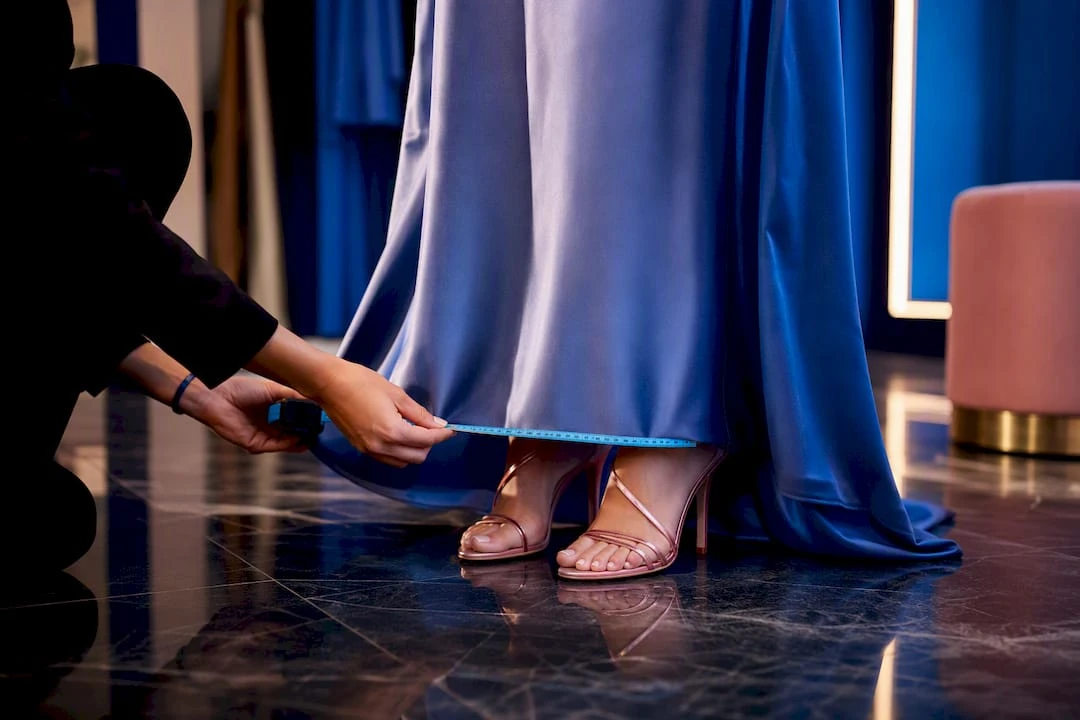
- Shoulder-to-floor: Stand in the shoes you’ll wear to the event and measure from the top of your shoulder straight down to the floor. This is the single most useful number for judging whether a “floor-length” listing will actually reach your floor, and it’s the measurement fit researchers consistently recommend prioritizing over standard size charts.
- Waist-to-floor: Measure from your natural waistline to the floor, again in your event shoes. This tells you how much length a dress needs below the waist seam specifically.
- Bust and hip: Standard circumference measurements, taken at the fullest point of each.
- Sleeve length: From shoulder point to wrist, useful for any dress with fitted or three-quarter sleeves.
- Shoulder width: Measured seam to seam across the back, which matters most for structured necklines and cap sleeves.
Once you have these, compare them against the product’s listed model height and garment length rather than relying on the size label alone. If a brand lists its model at 5’8" wearing a size 6 in a dress described as 58 inches long, you can estimate how that will land on your own shoulder-to-floor measurement.
Pro Tip: Always hem formal fabric while wearing the exact shoes you’ll wear to the event, not a stand-in pair. Chiffon typically needs a narrow rolled hem around an eighth to a quarter of an inch, while satin needs careful pressing with a stabilizer underneath so the seam doesn’t flatten the fabric’s sheen.
Beyond hemming, prioritize alterations in this order: hem length first, since it has the biggest visual impact; bodice or torso length second, especially for empire waists or fitted sheaths; and strap or shoulder repositioning last, since it’s a smaller fix that most tailors can handle quickly. Budget accordingly. A simple hem might take a few days, while repositioning boning or restructuring a bodice can take a week or more.

Smart Shopping Tactics for Tall-Friendly Formalwear
The fastest way to avoid a fit disappointment is to shop where the odds are already in your favor, rather than filtering through general inventory and hoping.
Start with any retailer’s dedicated tall collection or length filter before browsing the general catalog. These sections exist because industry data shows tall-specific specs and model height information measurably improve buyer confidence and reduce returns, which benefits you directly as a shopper trying to avoid a second order.
- Use search filters for “long” or “extended” lengths, not just the standard length category.
- Check every product page for model height and heel height before assuming a length will work.
- When a dress you love isn’t offered in a longer length, ask about custom ordering or made-to-measure options, and be ready to specify your shoulder-to-floor and waist-to-floor measurements exactly.
- Treat vague sizing information as a red flag, especially when a page lists no length measurement at all.
- Be cautious of listings that show only petite models, since you have no reliable way to judge how the garment will actually sit on a 5’10"+ frame.
- Read the return and alteration policy before buying, particularly for special-order or final-sale formal pieces.
Custom ordering deserves a second look if you consistently run into short hems. When you request a custom length, give the seller your exact shoulder-to-floor measurement, the heel height you plan to wear, and a note on whether you prefer the extra length added evenly through the skirt or concentrated below the knee.
How Dress Me Up NY Helps Tall Shoppers Buy With Confidence
An organized catalog by event type can help when you’re height-conscious and shopping under a deadline. Instead of scrolling through a single undifferentiated dress category, you can go straight to Evening Dresses, Formal Gowns for black-tie occasions, Wedding Guest and Bridesmaid Dresses, or the Cocktail and Party section for shorter formal events and prom. Each category groups styles by the occasion they’re actually built for, which narrows your search to silhouettes and lengths that make sense for your event before you even start filtering by length.
Dressmeupny’s visual catalog lets you browse full-length product photography and compare silhouettes side by side, which is especially useful when you’re trying to judge how a column gown’s flare point or a wrap dress’s neckline will actually look before you commit. Periodic promotional offers, including possible free shipping on qualifying orders, are often available and worth checking before checkout, particularly if you’re ordering more than one option to compare fit at home.
Some retailers include teams of fashion professionals who can offer guidance on fit and styling questions when you order, so it’s worth reaching out through customer service if you’re unsure whether a specific gown’s length or bodice construction will work for your measurements. That conversation before you buy tends to save far more time than an exchange after.
Why Fit Investment Beats Guessing Every Time
Off-the-rack tall collections have gotten genuinely better, but they still can’t account for every torso length or every event’s heel height. That’s where tailoring closes the gap: a $30 hem adjustment on a dress that already fits your shoulders and bust is almost always a better investment than chasing a “perfect” dress that fits nowhere and needs restructuring.
The mistake we see most often isn’t choosing the wrong silhouette. It’s skipping the measurement step entirely and trusting a size label built around average proportions. Shoulder-to-floor and waist-to-floor measurements take five minutes and prevent the two most common regrets: a floor-length gown that stops at the ankle, and a waistline that sits at your ribcage instead of your natural waist.
Treat tailoring as part of the budget, not a backup plan. A dress that’s 90% right and altered by a good tailor will outperform one that’s “perfect” off the rack but never actually fit your torso length to begin with.
— Dressmeup
Ready to Shop? Start With These Tall-Friendly Categories
Dressmeupny gives tall shoppers a direct path to formalwear built around real events instead of a single generic dress wall. If black-tie is on your calendar, Formal Gowns is where you’ll find the floor-length mermaid, column, and ballgown styles this guide recommends prioritizing. Heading to a wedding as a guest or standing up in one as a bridesmaid, the Wedding category groups both needs in one place, so you can compare midi and maxi lengths side by side. For prom, cocktail parties, or anything requiring a shorter formal silhouette, the Cocktail Dresses, Designer Jumpsuits, and Designer Mini Dresses category covers that range, and Quinceañera shoppers have a dedicated space at Quinceañera Dresses.
Before you check out, take five minutes for your shoulder-to-floor and waist-to-floor measurements in the shoes you’ll actually wear, then compare them against the product length and model height listed on each page. Watch for free shipping thresholds and current promotional offers at checkout, and if a gown needs a hem or bodice adjustment, plan that alteration into your timeline rather than leaving it for the week of the event. Browse Evening Dresses now to see the full catalog organized by occasion, and reach out to customer service before you order if you have any questions about how a specific length or silhouette will fit your frame.
Sources
The fit and styling advice in this guide draws on a small set of sources chosen specifically because they study tall women’s clothing, not average sizing extrapolated after the fact.
- Dress attributes, necklines, waistlines, and silhouettes (Cornell eCommons)
- An investigation of fit, style, and accessibility of ready-to-wear clothing for tall women (Virginia Tech)
- Dresses for tall women: long lengths, proportion, and hem choices (FashionInformed)
FAQ
What Is the Best Dress Length for a Tall Woman?
Floor-length gowns and maxi dresses generally work best for formal events, since they’re the lengths tall frames are least likely to outgrow. A true floor-length should skim the floor while you’re wearing your event shoes, based on tall-specific hit-point guidance.
How Do I Know if a Dress Will Be Too Short?
Check the product page for the model’s height and the garment’s measured length, then compare that against your own shoulder-to-floor measurement. If those numbers aren’t listed, treat that as a signal to look elsewhere or plan for a hem alteration.
What Neckline Is Most Flattering for Tall Women?
V-necks are the most consistently recommended neckline for tall frames because the downward point reinforces a vertical line, according to styling guidance from Jovani. High necklines and boat necks can still work, especially when paired with a column skirt or a deep back detail.
How Much Does It Typically Cost to Hem a Formal Dress?
Hemming costs vary by fabric and tailor, but delicate materials like chiffon and satin generally cost more due to the careful handling required. Bring the exact shoes you plan to wear to the fitting, since heel height directly changes how much fabric needs to come off.
Recommended
- How to Find Dress Size for Formal Events Step by Step - DressMeUpNY
- Tall Formal Dresses That Actually Fit Women 5’10"+ - DressMeUpNY
- How to Measure for Dresses for a Perfect Formal Fit - DressMeUpNY
- Tall Evening Dress Guide for Formal Events in 2026 - DressMeUpNY