
How to Create Vision Boards for Prom, Weddings, and Quinceañeras
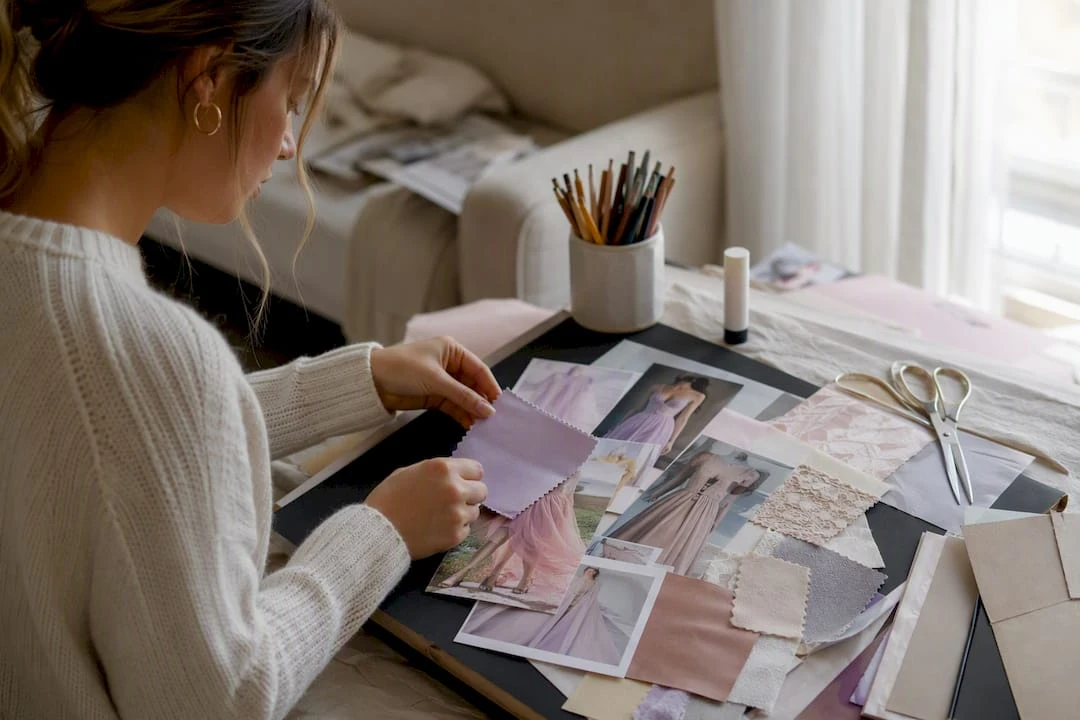
How to Create Vision Boards for Prom, Weddings, and Quinceañeras
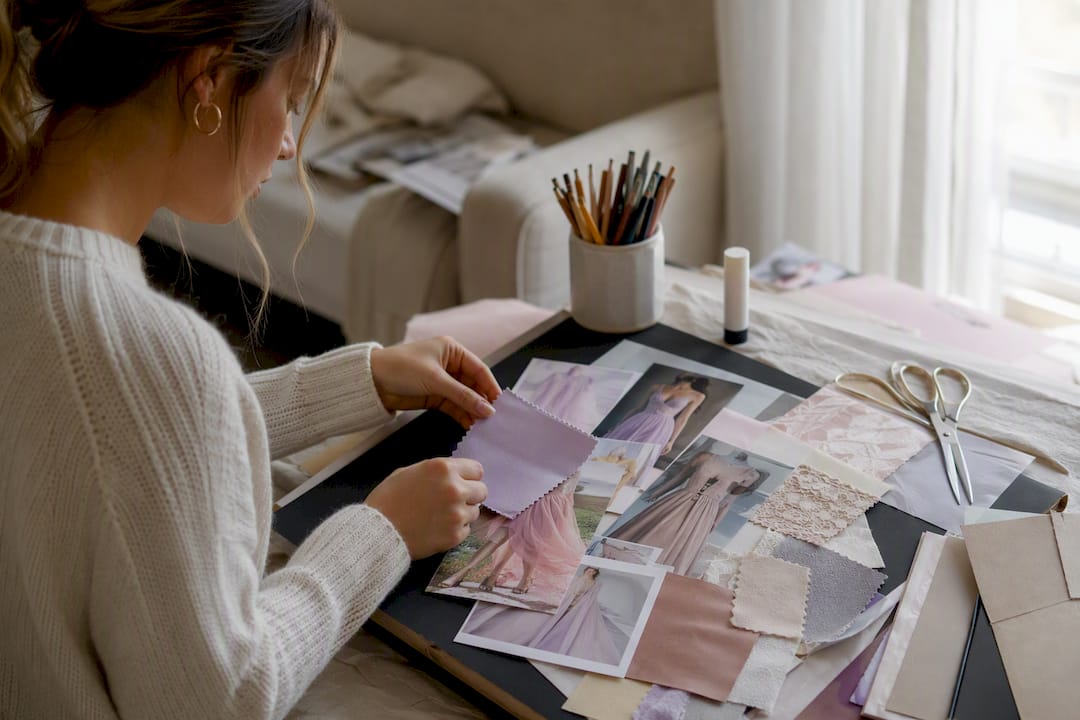
A fashion vision board for a formal event is a one-page visual plan that turns scattered outfit inspiration into a shopping-ready checklist. Instead of scrolling through hundreds of dress photos with no clear direction, you land on one cohesive look, backed by a color story, fabric picks, and the accessories to match. Learning how to create vision boards this way saves you from the “I’ll know it when I see it” shopping trap that leaves you overwhelmed at every rack.
Here’s your immediate next move: pick your event, then choose one anchor image or outfit that captures the feeling you want. Everything else gets built around that single choice.
What to expect once you start:
- Time investment: about two hours once you’ve gathered your references, according to the Direction Stack method used by fashion stylists
- Target image count: 10 to 15 final images, no more
- End result: a board you can actually shop from, not just admire
Key Takeaways
A shopping-ready vision board combines a clear concept, 10 to 15 curated images grouped by color and fabric, and a written rationale that ties the look back to your event.
| Point | Details |
|---|---|
| Start with one anchor | Pick a single image or piece before gathering anything else to give your board direction. |
| Cull to 10 to 15 images | Narrow your gathered references down and look for recurring colors, fabrics, and silhouettes. |
| Use the Direction Stack | Organize your board into concept, color story, fabric, silhouette, styling, and rationale. |
| Check the context matrix | Match dress code, venue, and your role before finalizing any image. |
| Shop with Dressmeupny | Filter Dressmeupny’s catalog by silhouette and fabric to match your finished board to a real dress. |
Table of Contents
- How to Create Vision Boards Step by Step
- Ground Your Choices in the Real Event
- Choosing the Right Platform for Your Board
- Turn Your Board Into a Shopping List
- Why This Process Draws on Real Styling Expertise
- Vision Boards Beyond Your Event Outfit
- Keeping Your Board Useful as Plans Change
- Sourcing Images the Right Way
- A Stylist’s Take on Building Your Board
- Let Dressmeupny Help You Finish the Look
- Sources
How to Create Vision Boards Step by Step
Building a fashion vision board isn’t about collecting every pretty dress you find. It’s a process of narrowing, and narrowing well is the entire skill.
1. Write your one-line concept. Before you touch Pinterest, describe who you are, what the event is, and how you want to feel. Something like: “Sophomore prom, romantic but not over-the-top, soft pastels.” This sentence becomes your filter for every image you save afterward.
2. Gather references from everywhere. Pull from Pinterest boards, magazine tears, your own camera roll (that dress you saved from a store window), and product pages from sites you actually shop. Don’t self-edit yet. Save generously in this phase.
3. Cull ruthlessly to 10 to 15 images. This is the step most people skip, and it’s the one that matters most. The Knot recommends narrowing your gathered images down and pruning until recurring patterns emerge: are you drawn to the same shade of blue over and over? The same flowy silhouette? Tag each surviving image by layer: color, fabric, silhouette, or styling detail.
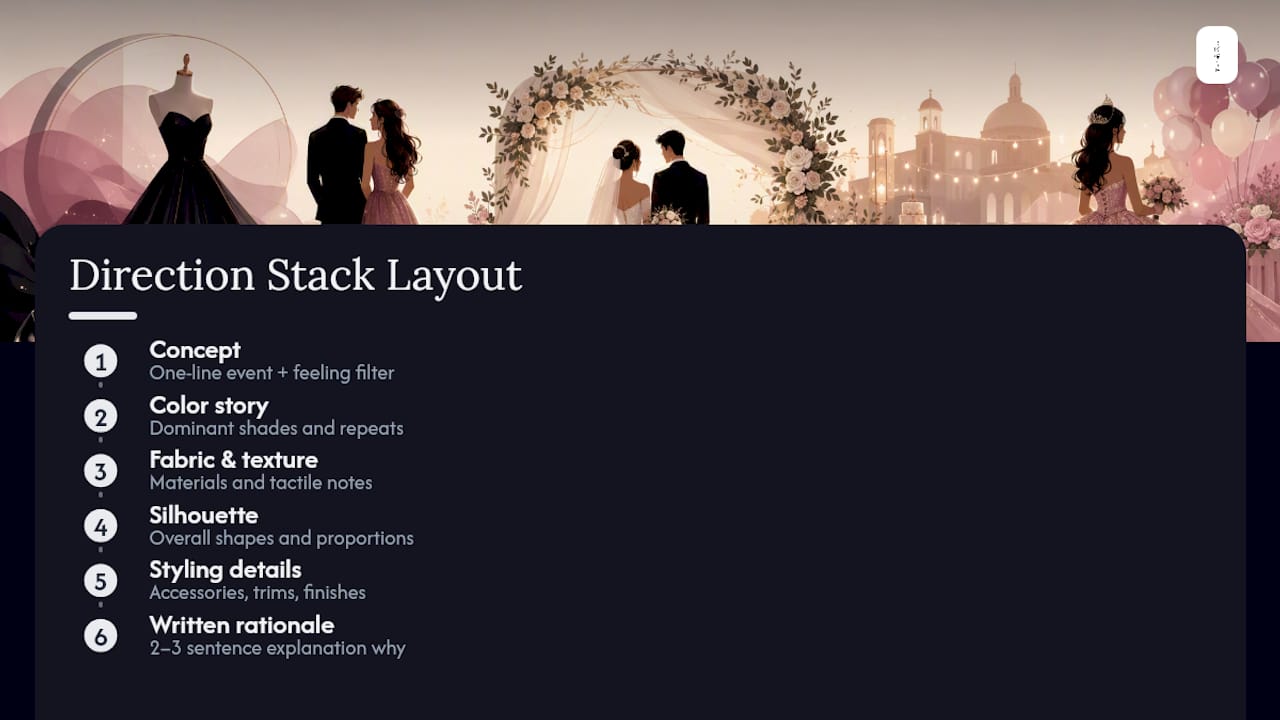
4. Assemble the Direction Stack. This layout, outlined by Storyflow, organizes your board into six sections: concept, color story, fabric and texture, silhouette, styling details, and a written rationale. That last piece is the one amateur boards almost always skip. A two or three-sentence explanation of why these colors and shapes work for your event turns a pretty collage into a real plan.
5. Export and build your shopping checklist. Once the board is finalized, translate every layer into a line item you can search for online or ask a salesperson about.
Pro Tip: Write your rationale as if you’re explaining the board to a stranger. If you can’t explain why the sequined bodice works for an evening wedding but not a garden ceremony at 2 p.m., that image probably doesn’t belong on your board yet.
Ground Your Choices in the Real Event
The prettiest picture on Pinterest can still be the wrong dress for your actual event. A gorgeous sequined gown photographs beautifully under studio lighting but reads as too much glare at a 3 p.m. garden wedding. A strapless silhouette that looks perfect indoors might leave you shivering at an outdoor evening reception in October.
This is where a context matrix keeps your vision board honest. Before you fall in love with an image, run it against three checkpoints:
- Dress code: Is this black tie, semi-formal, cocktail, or festive? Each carries different fabric and coverage expectations.
- Venue: What’s the flooring (grass, cobblestone, ballroom), the lighting (natural, low, dramatic uplighting), and the likely temperature?
- Your role: Are you the guest, a bridal party member, the Quinceañera herself, or prom royalty? Your role often dictates how much attention your outfit should draw.
A five-variable decision framework built around dress code, time of day, venue lighting, photography expectations, and wearer priority is one of the more reliable ways stylists map an image to real-world appropriateness, rather than relying on gut instinct alone.
Before pinning an image to your final board, ask: does the fabric suit the temperature? Does the silhouette match the formality level? Would this survive three hours of standing, dancing, and photos? If any answer feels shaky, keep the image in your reference pile, not your final 15. Our formal chic dress code guide breaks down exactly what each dress code term actually requires.
Choosing the Right Platform for Your Board
Digital or physical? Your answer depends on how you plan to use the board once it’s built.
Digital boards work best if you’re shopping online or need to share the board with a stylist, tailor, or family member who lives far away.
- Pinterest or Shuffles are great for the wide-net gathering phase.
- Milanote, Canva, or Storyflow work better once you’re ready to build a structured, private board with labeled sections.
- Canva in particular includes templates and automatic color-extraction tools that pull a palette straight from your saved images, which speeds up the color story layer significantly.
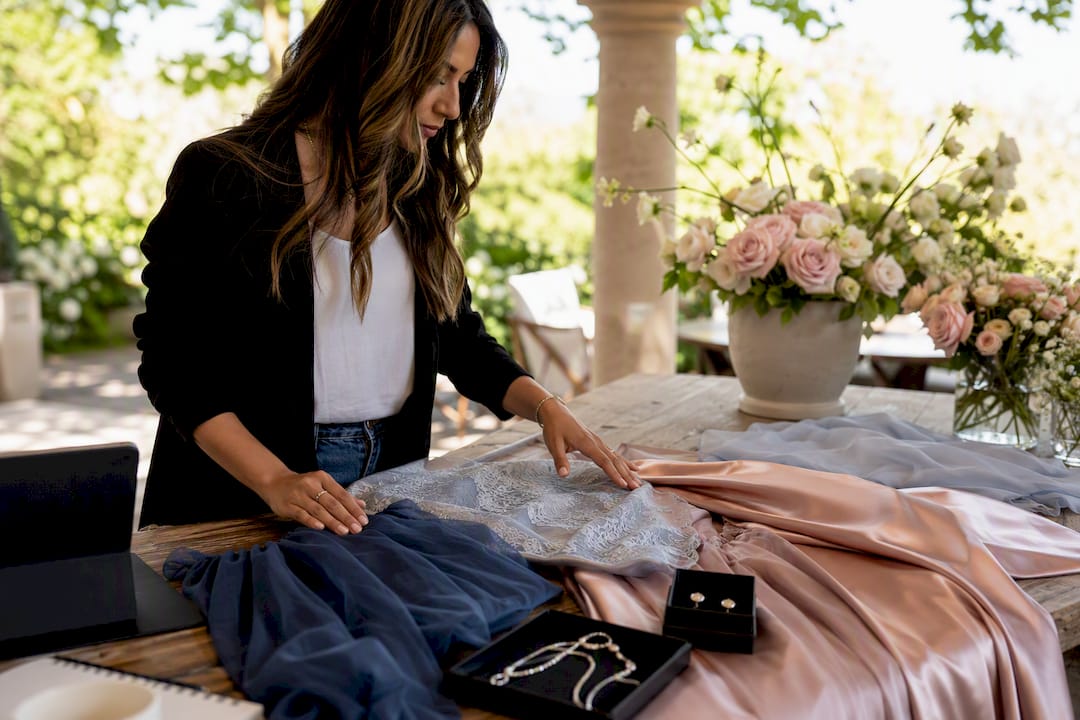
Physical boards (corkboard, poster board, a binder) shine when you’re bringing fabric swatches to a fitting or want something tactile to flip through with your mom or bridesmaids.
Whichever you choose, exporting the finished board as an image or PDF makes it easy to text a boutique before you visit, or hand it to a tailor at your first fitting. If you’re leaning on real fabric swatches, bring them physically. No photo fully captures how a silk charmeuse drapes compared to a stiffer taffeta.
Turn Your Board Into a Shopping List
A finished vision board is only useful if it changes what you actually buy. Here’s how to convert those six Direction Stack layers into a checklist you can carry into a store or use to filter an online catalog:
- Color palette: Write down your two or three main colors, plus one accent.
- Silhouette: Note the shape, whether it’s A-line, mermaid, ballgown, or fitted column.
- Fabric: List textures you’re drawn to (satin, chiffon, velvet, lace) since fabric affects both formality and comfort.
- Accessories: Jewelry, wrap, clutch, and hair pieces that complete the look.
- Footwear rules: Match heel height to your venue’s flooring. Grass and cobblestone punish stilettos.
- Emergency kit: Safety pins, fashion tape, a small sewing kit, blister pads.
Before you commit to any dress, run it through three quick physical tests recommended by event stylists: the flash test, sit test, and heel test. Photograph yourself in the dress with flash on to check how colors and fabric actually read on camera. Sit down in it to make sure nothing gaps or rides up. Walk in your actual shoes to confirm you can move for hours, not just minutes.
Pro Tip: Order your dress at least six to eight weeks before the event if it needs alterations, and add another two weeks of buffer if you’re ordering online. Tailoring always takes longer than you think it will.
Our guide to shopping formal wear boutiques walks through exactly what to bring and ask for once your checklist is ready.
Why This Process Draws on Real Styling Expertise
Dressmeupny’s editorial team focuses specifically on formalwear: prom, weddings, Quinceañeras, and red carpet dressing, not general fashion trends. That focus shapes every guide we publish.
- Our signature style guide helps you nail down the concept step before you start gathering images.
- Our evening wear style rules cover fabric and silhouette formality by time of day.
- Every guide maps directly onto the board-to-shopping process described above, so you’re never stuck translating inspiration into an actual purchase.
Vision Boards Beyond Your Event Outfit
Fashion boards for a single event are just one use of this tool. Interior designers build them to plan a room’s palette and furniture direction before buying anything. Wedding planners often build separate boards for the ceremony décor, the reception florals, and the bridal party looks, keeping each moodboard scoped to one decision at a time.
Some people build a capsule wardrobe board, mapping out a small set of interchangeable pieces meant to work across several events in a season rather than one single day. If you love the exercise of building this event board, creating a capsule wardrobe applies the same skill to your everyday closet.
Stylists also use working boards for client consultations, essentially a visual shorthand that replaces long verbal descriptions of “what the client wants.” A context matrix approach that pairs personal style with practical constraints, like body type, budget, or lifestyle, works whether you’re planning one dress or an entire seasonal wardrobe. The core skill you just practiced (gather, cull, group by pattern, write a rationale) transfers to nearly any visual planning project you’ll tackle later.
Keeping Your Board Useful as Plans Change
A vision board isn’t a contract. Dates shift, venues change, and your own taste evolves between the day you start planning and the day you actually shop. Treat the board as a living document, not a locked-in decision.
Revisit it every couple of weeks, especially after you’ve tried something on. If a color you loved on-screen looked washed out in a fitting room, pull that reference and swap in something closer to what actually worked on your skin tone. Boards get stronger through revision, not through getting it perfect on the first pass.
Watch for scope creep too. It’s tempting to keep adding “just one more” pretty image, but that undoes the narrowing work you did earlier. If a new image genuinely earns a spot, remove one to keep your board at that 10 to 15 image sweet spot.
Once your dress is purchased, don’t delete the board. Keep it active through fittings and alterations. It’s a useful reference for a tailor who’s trying to understand the silhouette you’re chasing, and it’s genuinely handy again next season when you’re shopping for shoes, a wrap, or jewelry that needs to match what you already committed to.
Sourcing Images the Right Way
Save images from retail product pages, brand social accounts, and stock photo sites that explicitly allow personal use. Most fashion retailers expect their catalog photos to be pinned and shared. That’s part of why the images exist. Personal, non-commercial use for planning your own outfit is standard practice and rarely an issue.
Where it gets murkier is if you plan to repost the board publicly, monetize it, or use it in any commercial capacity, like a stylist building a portfolio. In that case, stick to platforms explicitly built for sharing (Pinterest, Milanote’s public boards) rather than screenshotting and redistributing a photographer’s original work without credit.
If you’re pulling fabric swatches or trim samples for a physical board, ask boutiques directly. Many will happily cut a small swatch for a client actively shopping with them. It’s a normal part of the fitting process, not an imposition.
A practical rule: if you wouldn’t feel comfortable if the original photographer or designer saw exactly how you used their image, don’t use it that way. Personal planning boards, kept private or shared with a small circle for feedback, almost never raise concerns.
A Stylist’s Take on Building Your Board
Start with one piece you already love, even before you build the rest of the board. Maybe it’s a color you’ve always felt confident in, or a silhouette that fit right the one time you tried it on. That single anchor does more work than a hundred scattered Pinterest saves, because it gives every other choice something to answer to.
Pro Tip: When you photograph reference images or your own try-on shots, use natural daylight near a window. Camera flash and store fluorescents distort color in ways that will throw off your palette decisions later.
Whatever you land on, wear the full look, dress, shoes, and accessories, the night before your event. Sitting, walking, and moving in it once removes almost all the surprises.
— Dressmeup
Let Dressmeupny Help You Finish the Look
Once your board is built and your checklist is in hand, the shopping part shouldn’t feel like starting over. Dressmeupny organizes its catalog by the exact filters your board just gave you: silhouette, fabric, color, and occasion, so you can search directly for what your Direction Stack pointed to instead of scrolling endlessly through unrelated styles.
Browse curated collections for prom, wedding guest looks, and Quinceañera gowns, or reach out to customer service if you need help with sizing questions or alteration guidance before you commit to a purchase. If your board calls for a specific silhouette or fabric you’re struggling to track down, that’s exactly the kind of question their team can help narrow down. Start browsing the full dress collection at Dressmeupny and match your finished board to a dress you can actually buy today.
Sources
- How to Create a Fashion Mood Board (Step by Step, 2026) | Storyflow
- How to make an inspiration board | The Knot
- How to Pick the Right Dress for the Occasion: A Decision Framework for … | Curated Sense
- How to build a wedding mood board | Creately
Recommended
- Choosing Dresses for Quinceañeras: A Step-by-Step Guide - DressMeUpNY
- Pretty Quinceanera Dresses: Choosing Your Dream Style - DressMeUpNY
- What Is a Quinceañera? Guide for 2025 Style & Traditions - DressMeUpNY
- 7 Fun Promposal Ideas for Friends to Remember - DressMeUpNY