
How to Keep Shoes Fresh Every Single Day
How to Keep Shoes Fresh Every Single Day
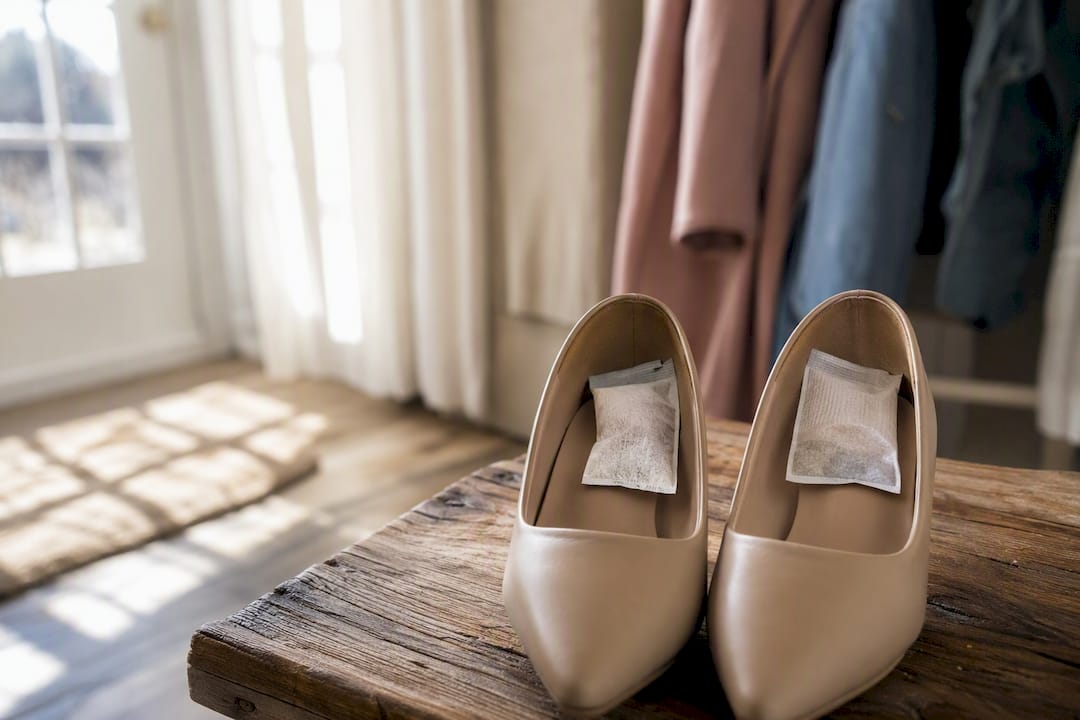
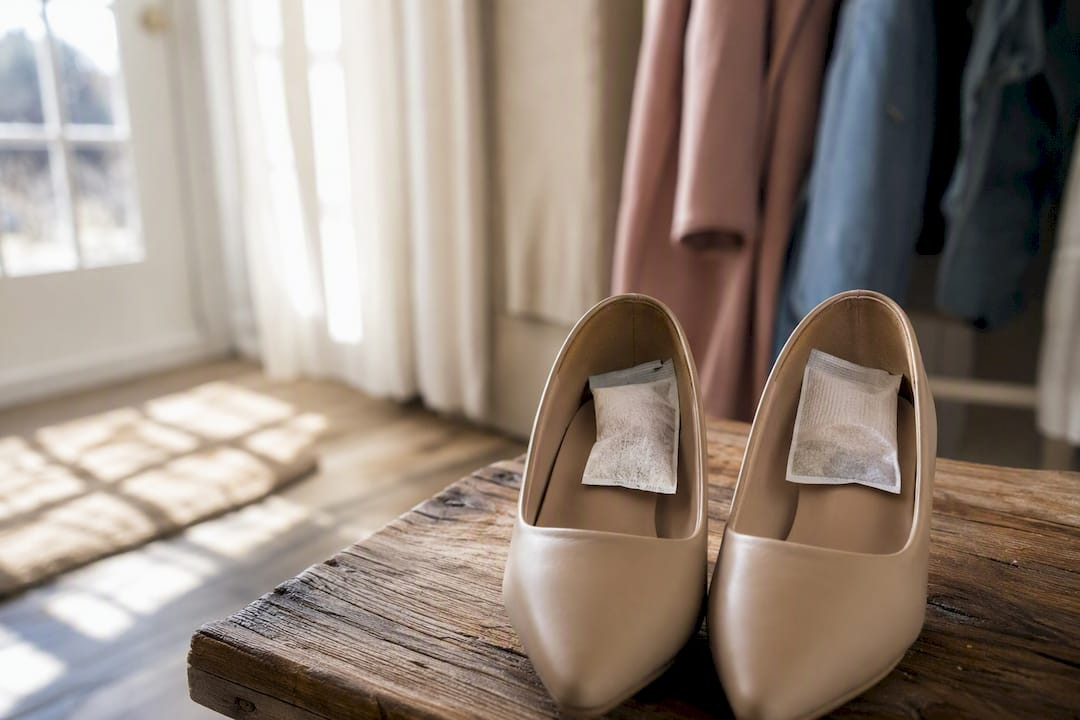
The easiest way to keep shoes fresh is a simple nightly routine: pull the insoles out after every wear, let the shoes air out for at least 24 hours, wear moisture-wicking socks, and toss in a baking soda pouch or charcoal insert before bed. That’s it. No fancy gear, no big time commitment, just a habit you build once and repeat.
Here’s your six-step, do-it-tonight checklist:
- Pull off your socks and check for dampness before shoes go anywhere near a closet.
- Slide the insoles out (or swap in a dry backup pair if you have one).
- Sprinkle a little baking soda directly into each shoe.
- Stuff the toe box with dry newspaper or a dryer sheet to pull out moisture.
- Drop in a charcoal or cedar insert if you have one on hand.
- Set the shoes somewhere with airflow, not shoved in a gym bag or closed bin.
That 24-hour air-out window matters more than people think. Bacteria need moisture to multiply, and giving shoes a full day to dry out starves them of the damp environment they thrive in. We built this guide because keeping shoes smelling clean shouldn’t require a chemistry degree. It just takes the right five-minute habits, done consistently.
Key Takeaways
Moisture control, not fragrance, is what actually keeps shoes fresh, and it starts with airing shoes out for at least 24 hours between wears.
| Point | Details |
|---|---|
| Air shoes for 24+ hours | Let bacteria lose the damp environment they need by resting shoes a full day between wears. |
| Rotate multiple pairs daily when possible | Daily exercisers benefit most from alternating shoes rather than relying on one pair. |
| Address the insole, not just the shoe | Replace worn insoles instead of trying to deep-clean ones that have absorbed months of sweat. |
| Choose neutralizers over fragrance | Baking soda and charcoal absorb odor molecules; sprays that only add scent just cover it up. |
| Store shoes with airflow | Open racks and breathable bags prevent the humidity buildup that closed bins and plastic trap. |
Table of Contents
- How to Keep Shoes Fresh With Fast Overnight Fixes
- Daily Habits That Stop Shoe Odor From Coming Back
- How to Clean Shoes Properly, Step by Step
- Best Shoe Odor Remedies: Deodorizers and Inserts Compared
- Where to Store Shoes so Moisture Never Builds Up
- Choosing Shoe Materials That Resist Odor and Moisture
- Preventing Odor Before It Starts: Buying and Breaking In New Shoes
- Sources
How to Keep Shoes Fresh With Fast Overnight Fixes
When you don’t have time for a deep clean but need shoes wearable by morning, a few overnight tricks do real work instead of just masking the smell.
Baking soda is the workhorse here. A shaker or a sock filled with baking soda and tied off, left inside the shoe overnight, absorbs odor molecules and neutralizes the acids causing the stink, according to Nike’s shoe-care guidance. Activated charcoal pouches work on the same principle but pull double duty by managing moisture too, and you can “recharge” them by leaving them in direct sunlight for a few hours, which resets their adsorption power.
Dryer sheets stuffed into the toe overnight leave a light, clean scent without moisture. Tea bags are a surprisingly solid option for mild odors. Black tea contains tannins that inhibit bacteria and soak up a bit of moisture, making it a cheap fix you probably already have in the kitchen, per reporting on the tea bag trick. Just use dry, unused bags, not ones that are still damp.
The freezer trick (sealing shoes in a plastic bag and freezing overnight) can knock back bacterial activity temporarily, but it doesn’t remove the sweat and skin cells bacteria feed on, so any relief tends to fade within a day or two.
A quick safety note: don’t soak leather in anything, wet tea bags can add moisture instead of removing it, and the freezer is a stopgap, not a solution.
Pro Tip: Make reusable baking-soda sachets by filling old socks with a few tablespoons of baking soda and knotting the end. Toss them in shoes nightly, then shake out and refill once a month.
Bacteria thrive in warm, damp environments. Cut the moisture, and you cut the smell at the source.
Daily Habits That Stop Shoe Odor From Coming Back
Fixing smelly shoes once feels good. Keeping them that way is about a few small habits you barely notice once they’re automatic.
The three that matter most: rotate your footwear so each pair gets sufficient time to fully dry, wear moisture-wicking socks and change them regularly, and make sure your feet are clean and completely dry before you put shoes on. Scholl’s guidance on shoe rotation](https://www.drscholls.com/blogs/expert-advice/tips-to-keep-our-feet-and-shoes-smelling-fresh).
A simple daily rhythm looks like this:
- Morning: dry feet fully, especially between toes, before socks go on.
- Midday: if you’re on your feet a lot, do a quick sock or shoe check if you notice dampness.
- Evening: pull insoles, air out shoes, and let that second pair take over tomorrow.
If insoles start looking worn or flattened, replace them regularly depending on use. Socks are cheap enough to rotate through often. If you’re relying on one pair of shoes for daily wear and can’t seem to get ahead of the smell, that’s usually the clearest sign it’s time to buy a second pair.
How to Clean Shoes Properly, Step by Step
When quick fixes stop cutting it, a real clean is the reset button. Here’s the workflow that handles most material types safely:
- Remove insoles and laces. Set them aside for separate cleaning.
- Pre-scrub the exterior with a soft brush and mild soap to lift dirt before it gets wet through.
- Hand-wash canvas or mesh shoes with warm water and gentle detergent, or machine-wash on a delicate, cold cycle inside a mesh laundry bag if the material allows it.
- Rinse thoroughly so no soap residue is left behind, since residue can trap odor over time.
- Air dry fully, ideally with some sun exposure, before wearing again. Never rush this step.
Insoles deserve their own attention since they’re often the real source of the smell. Because they’re porous, insoles absorb sweat and skin cells that bacteria feed on, and scrubbing a heavily worn insole often does less than simply replacing it. Antimicrobial or moisture-wicking replacement insoles tend to be more effective than older foam ones that have absorbed sweat over time.
Once bacteria colonize the lining of a shoe, the smell can return fast after just one heavy wear, unless you address the insole itself.
A few safety notes worth repeating: skip the dryer’s heat setting for leather or glued shoes, since heat can warp soles and break down adhesive. Avoid bleach or harsh solvents on colored fabric or suede. When in doubt, air dry slowly rather than force it with heat, per Nike’s cleaning recommendations.
Best Shoe Odor Remedies: Deodorizers and Inserts Compared
Not every deodorizer works the same way, and picking the right one depends on how often you wear a pair and how bad the odor gets.
- Sprays give you the fastest reset. Antimicrobial or enzyme-based sprays tend to outperform fragrance-only versions for athletic shoes, penetrating foam and fabric rather than just sitting on the surface, based on Runner’s World product testing.
- Shoe balls are convenient for grab-and-go use, dropped into shoes between wears with minimal effort.
- Activated-charcoal pouches handle both adsorption and moisture control, making them a strong all-around pick for daily sneakers or gym shoes.
- Cedar inserts offer a light, natural scent while helping shoes dry, better suited to dress shoes or occasional wear than heavy daily runners.
- Baking-soda shakers neutralize the acids behind odor and cost next to nothing, ideal for anyone who wants a fragrance-free option.
A daily runner benefits most from charcoal or enzyme sprays, while occasional dress shoes do fine with cedar. If you’ve cycled through every one of these and the smell keeps coming back, that usually points to the insole itself, not the deodorizer. A commercial antimicrobial insole replacement often solves what sprays and pouches can’t touch.
Where to Store Shoes so Moisture Never Builds Up
Storage is where a lot of good habits quietly fall apart. Shoes tossed into a closed gym bag, a cramped closet floor, or a plastic bin trap the same moisture you just spent an evening drying out.
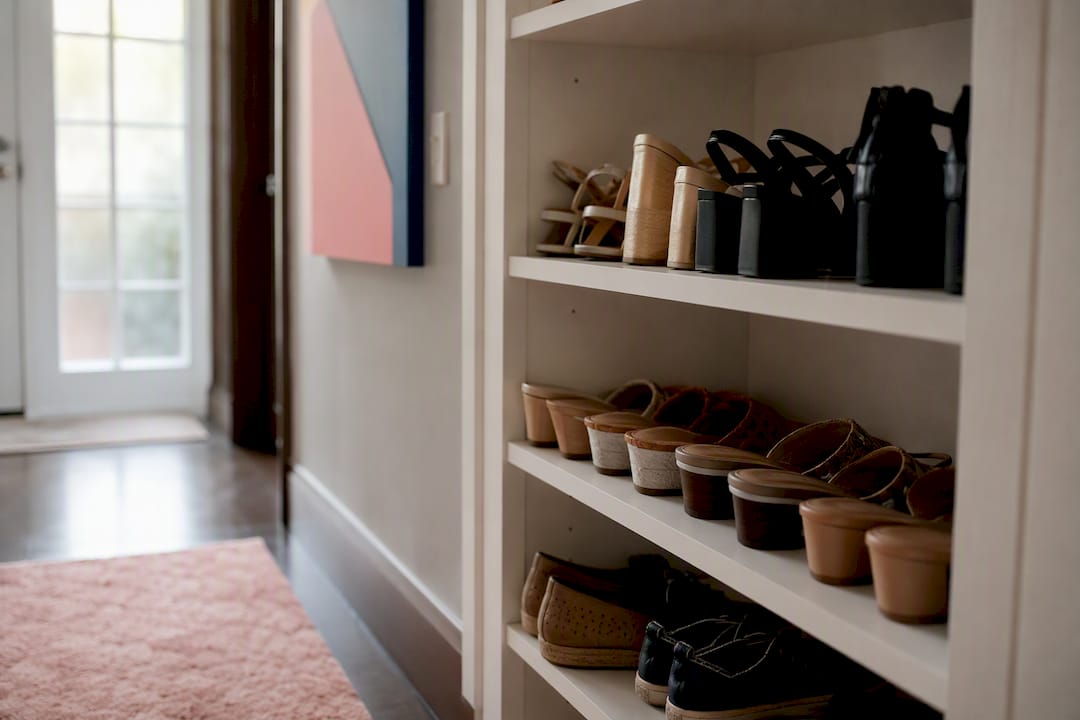
Ventilation is the priority. An open shoe rack with slats or gaps, rather than a solid-bottom cabinet, lets air circulate around each pair instead of pooling humidity underneath. If your closet doesn’t get airflow, cracking the door for a few hours a day or using a small fan periodically makes a real difference, especially in humid climates.
Avoid storing shoes near heat sources like radiators or direct sun through a window, since heat and humidity together create ideal bacterial breeding conditions. A cool, dry closet beats a warm, sealed one every time.
For anyone storing special occasion shoes, like the kind that pair with a gown or cocktail dress from Dressmeupny, breathable dust bags work far better than plastic ones. Plastic traps whatever moisture is left in the shoe, while breathable fabric lets it escape slowly without inviting dust.
If you’re tight on closet space, stackable shoe racks with open sides are worth the investment over sealed boxes. And if you do use boxes for delicate or dressy shoes, tuck a small silica packet or cedar block inside to manage residual humidity between wears. It’s a five-dollar habit that saves you from opening a shoebox to a musty surprise months later.
Choosing Shoe Materials That Resist Odor and Moisture
Some materials are simply easier to keep fresh than others, and knowing this before you buy saves a lot of frustration later.
Leather breathes reasonably well and resists moisture absorption better than synthetic fabrics, though it needs conditioning to stay supple and shouldn’t be soaked. Canvas and mesh are breathable and machine-washable in many cases, which makes maintenance simple, but they also absorb sweat quickly, meaning they need more frequent airing.
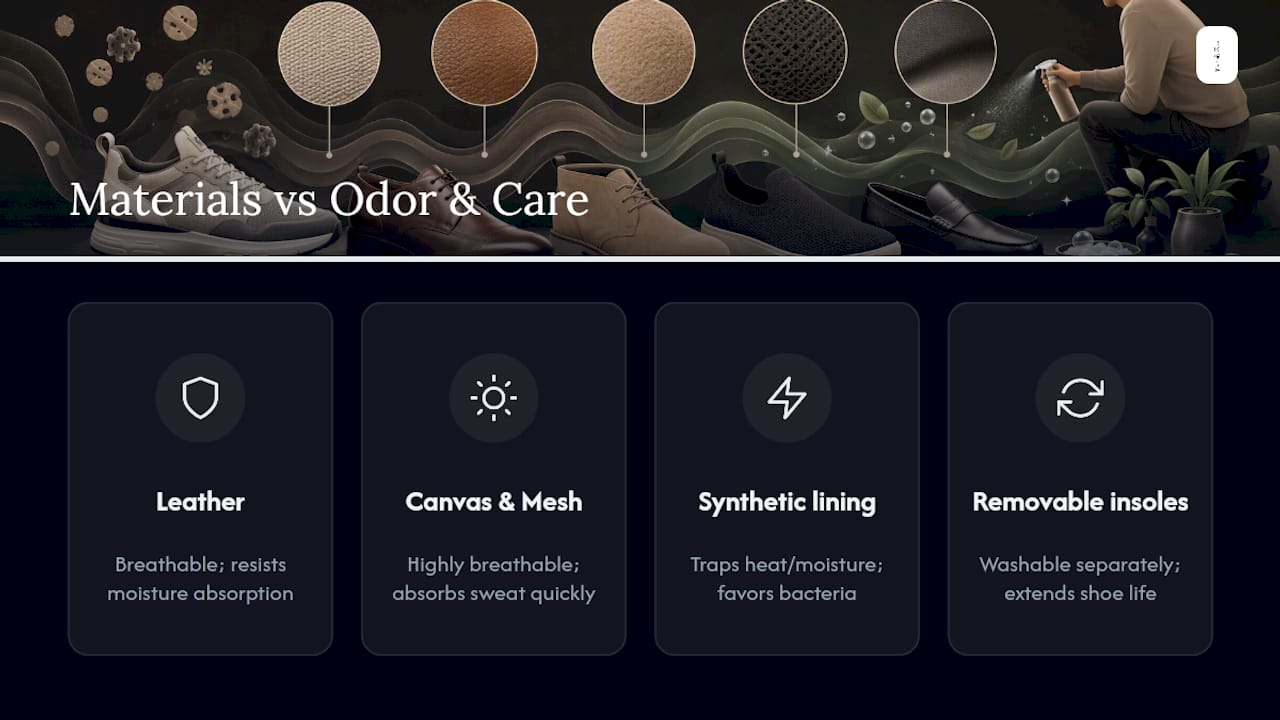
Synthetic linings found in a lot of budget athletic shoes tend to trap heat and moisture against the foot, which is exactly the environment bacteria like. If you’re shoe shopping and odor control matters to you, look for shoes with moisture-wicking linings, perforated panels for airflow, or removable, washable insoles, since being able to pull the insole out and clean it separately extends the life of the whole shoe.
For formal and occasion footwear, where breathability often takes a back seat to style, material choice matters even more since these shoes tend to sit unworn between events, giving any trapped moisture time to turn into a real problem. Leather and fabric uppers with a removable insole hold up far better over time than fully synthetic, sealed-construction dress shoes.
If odor resistance is a top priority and you’re choosing between two similar styles, the one with a washable insole and a breathable upper will almost always outlast the one that looks nicer but seals moisture in.
Preventing Odor Before It Starts: Buying and Breaking In New Shoes
The best time to prevent shoe odor is before you’ve even worn the shoes once.
When you buy new shoes, a proper break-in period does more than prevent blisters. It lets the material adjust gradually to your foot, reducing excess friction and sweat that come from forcing a stiff new shoe into daily wear too fast. Start with short wear sessions, an hour or two at a time, rather than committing to a full day right out of the box.
Treating new shoes early also pays off. A light application of a water-and-stain repellent spray on canvas, suede, or leather creates a barrier against moisture before odor-causing bacteria ever get a foothold. For leather specifically, a conditioning treatment early on keeps the material supple and less prone to trapping sweat in cracks and creases over time.
If you’re buying shoes for a specific event, like a wedding, prom, or Quinceañera, breaking them in over several short wears in the weeks beforehand means the big day isn’t also the shoe’s first real test. It’s a small step that pays off twice: less foot pain, and no first-wear odor buildup on shoes you want to wear again.
Starting with a baking soda sachet in new shoes during the first few weeks isn’t necessary, but it doesn’t hurt either, especially for synthetic athletic shoes that run warmer than leather.
Editor’s Quick Routine
Every night, insoles come out, a baking soda sock goes in, and shoes sit somewhere with airflow until morning. It works because it tackles moisture at the source instead of masking it later. For dress shoes or anything delicate, skip the baking soda and use a cedar block instead, which manages moisture without any risk of residue on fine leather or fabric linings, as recommended in How to Clean Cork Handbags Naturally for Lasting Beauty – The Cork Store.
Sources
- How to Remove Odor from Shoes - Nike
- How to get rid of smelly shoes – Runner’s World
- The tea bag trick for smelly shoes - Economic Times
Recommended
- How to Match Dresses with Shoes for Every Formal Event - DressMeUpNY
- How to Match Dress Shoes for Your Next Formal Event - DressMeUpNY
- How to Store Formal Dresses: Easy Tips for 2025 Events - DressMeUpNY
- How to Walk in High Heels for Special Occasions - DressMeUpNY