
Long Sleeve Plus Size Formal Dresses: Shop Top Picks
Long Sleeve Plus Size Formal Dresses: Shop Top Picks
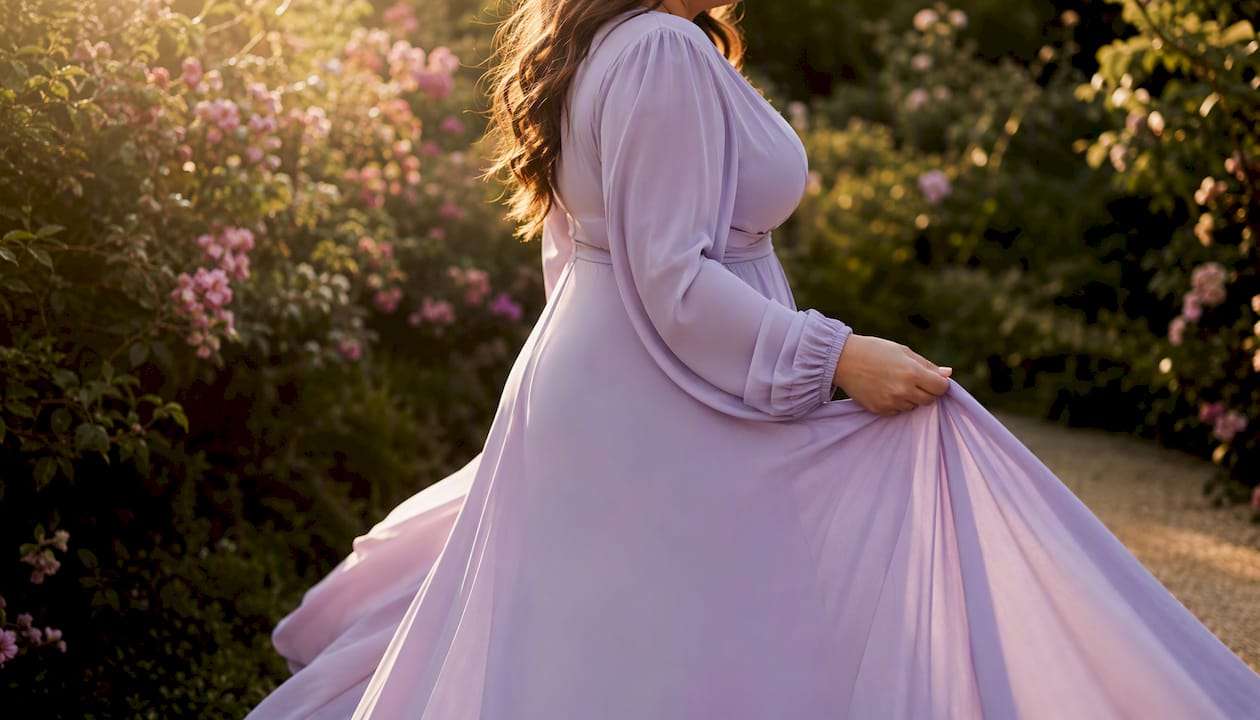
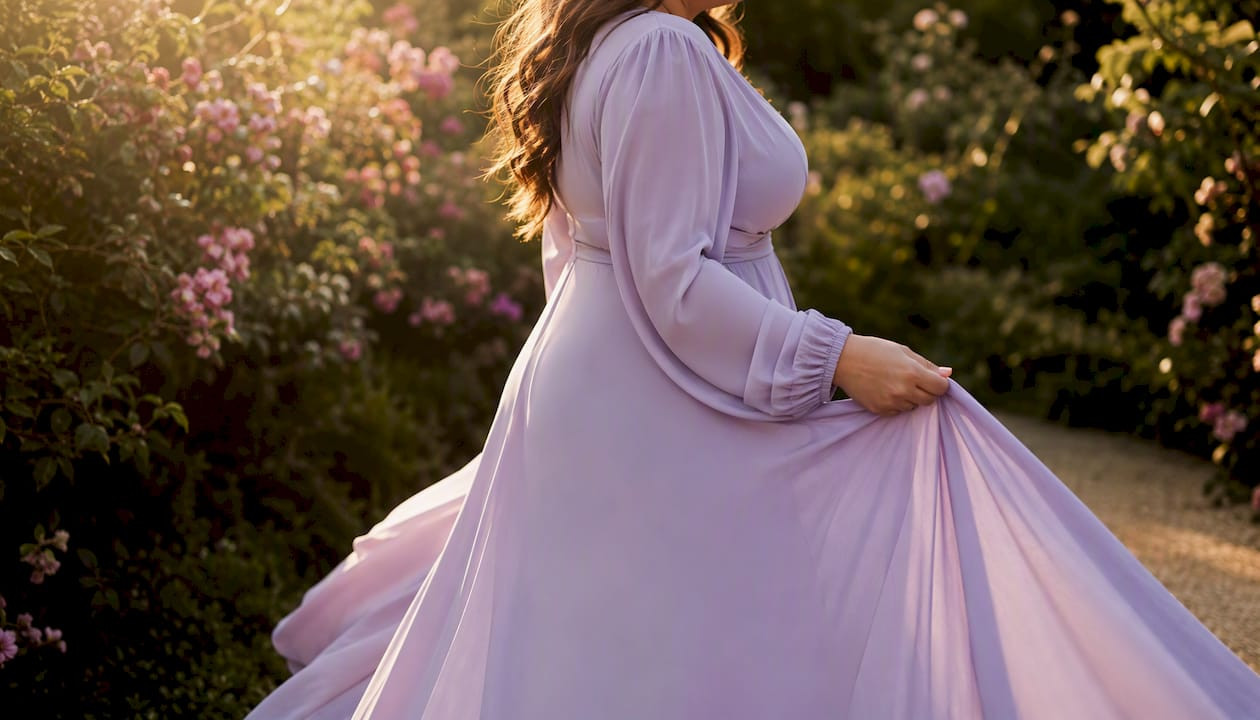
The best long sleeve plus size formal dresses fall into four categories: illusion lace with built-in support, stretch-jersey wraps, lined chiffon with boning, and structured bishop-sleeve gowns, each solving a different fit or coverage need. Dressmeupny curates all four across its evening gown and wedding guest collections, so you can shop by occasion instead of scrolling endlessly.
Here’s where to start looking:
- Illusion lace long sleeve gowns — best for black-tie and mother-of-the-bride events, with sheer sleeves that read elegant without feeling heavy.
- Stretch-jersey wrap dresses — best for wedding guests who want comfort and a defined waist without any zipper anxiety.
- Lined chiffon with boning — best for proms and galas that call for structure through the bodice and a flowing skirt.
- Bishop-sleeve statement dresses — best for shoppers who want drama up top and a forgiving line through the arms.
Every one of these styles is browsable now at Dressmeupny, where size charts, real customer photos, and a clear returns policy make it easier to buy with confidence instead of guesswork.
Key Takeaways
The right long sleeve plus size formal dress comes down to matching garment measurements (not size labels) to your body, choosing a sleeve style suited to your event, and confirming return policies before you buy.
| Point | Details |
|---|---|
| Match garment charts, not sizes | Compare your body measurements to unstretched garment dimensions, allowing 1 to 2 inches of ease at the bust and waist. |
| Choose sleeves by shape and event | Fitted sleeves suit structured hourglass looks; bishop and bell sleeves balance fuller arms with movement. |
| Prioritize construction, not just fabric | Lining, boning, and built-in cups affect fit more than fabric choice alone, especially at the bust. |
| Budget time for alterations | Hemming and side-seam work are low-risk; sleeve alterations on lace or lined gowns take longer and cost more. |
| Read reviews for measurement details | Reviews with the reviewer’s height, usual size, and specific fit notes are far more reliable than star ratings alone. |
| Shop with size and support tools ready | Dressmeupny lists garment size charts and customer photos on every long sleeve formal product page. |
Table of Contents
- Long Sleeve Plus Size Formal Dresses to Shop Right Now
- Which Long Sleeve Styles Flatter Your Shape?
- How Do You Measure Yourself for a Formal Gown?
- What Fabric and Construction Details Matter Most?
- What Should You Wear to Different Formal Events?
- What Do Long Sleeve Formal Dresses Typically Cost?
- How Much Do Alterations Typically Cost?
- How Do Customer Photos and Reviews Help You Choose?
- What Our Fit Experience Has Taught Us
- Ready to Shop Long Sleeve Formal Dresses?
- Frequently Asked Questions
- Sources
Long Sleeve Plus Size Formal Dresses to Shop Right Now
Dressmeupny organizes its plus-size formal catalog around the moments you’re actually shopping for, not just generic “dresses” categories. That matters because a wedding guest and a prom-goer need very different things from a long sleeve gown, even if both want long sleeves for the same reason: coverage that still feels glamorous.
Plus-size evening gowns. These are your floor-length, black-tie-ready pieces. Best for galas, formal weddings, and red carpet-style events. Size range typically spans a broad plus-size spectrum depending on the style. Signature feature: fitted long sleeves paired with a structured bodice that holds its shape through the evening. The long line from shoulder to hem elongates the silhouette, a principle AARP’s plus-size styling guidance points to directly when it comes to dressing well in a larger size.
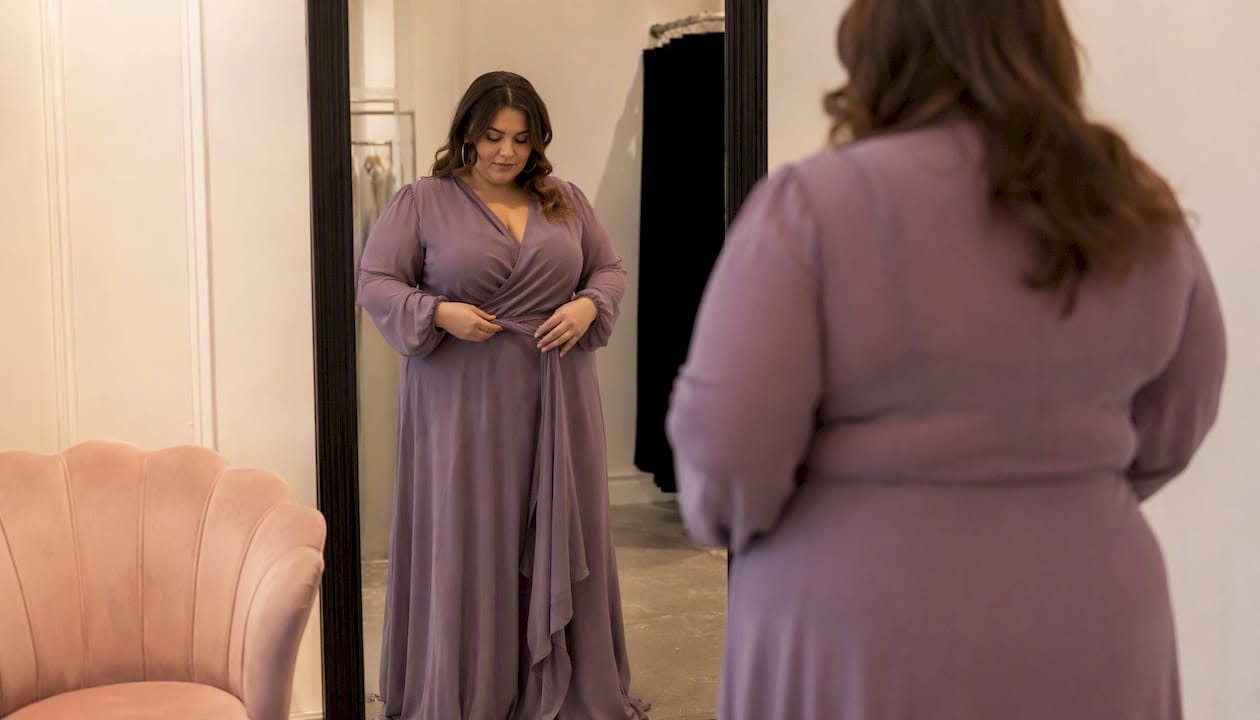
Long sleeve wrap gowns. Best for wedding guests and semi-formal dinners where you want polish without rigidity. The wrap silhouette self-adjusts to your shape, and a tie waist does the job a zipper can’t: it defines your midsection no matter how your measurements shift day to day. Stretch-jersey wraps in particular forgive a lot, which is why they show up so often in plus-size formal collections built around movement and comfort.
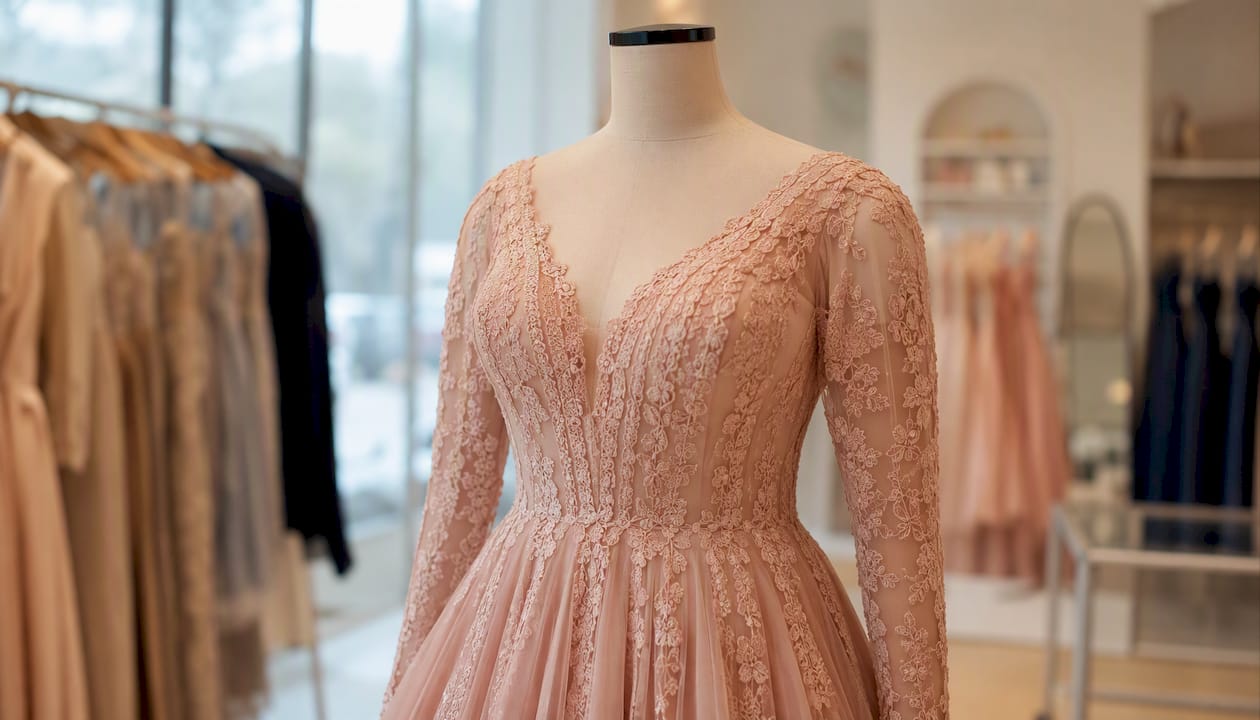
Lace-sleeve mother-of-the-bride styles. Best for family formal events where you want coverage that still photographs beautifully.
Long sleeve cocktail dresses. Best for shorter formal events, holiday parties, or rehearsal dinners. Knee-length or midi, often with a ruched or asymmetric bodice that creates visual balance for curvier frames.
Before you add anything to your cart, check the product page for three things: a linked size chart with actual measurements (not just S/M/L), real customer photos showing the dress on different body types, and a note about internal support like built-in cups or a lined bodice. If a listing skips all three, keep scrolling. Dressmeupny’s sleeved formal dress collection includes all of the above on every product page, which is exactly what you want when you can’t try before you buy.
Which Long Sleeve Styles Flatter Your Shape?
Sleeve shape changes the whole story a dress tells about your body. Here’s a quick breakdown of the most common types you’ll see while shopping:
- Fitted sleeve — hugs the arm from shoulder to wrist, works best with a structured bodice.
- Bishop sleeve — fitted at the shoulder, gathers into fullness at the forearm, then cinches at the wrist.
- Bell sleeve — flares gradually from elbow to hem, moves beautifully but adds width.
- Sheer illusion sleeve — mesh or tulle with lace appliqué, gives coverage without visual bulk.
- Trumpet sleeve — fitted through the upper arm, flares dramatically below the elbow.
If you have an hourglass shape, a fitted sleeve paired with a structured, nipped-waist bodice keeps your proportions crisp. If you carry more fullness through the upper arms, a bishop or bell sleeve is your friend: the gathered fabric skims rather than clings, and the narrower cuff at the wrist keeps the whole look from reading as shapeless. Sheer illusion sleeves are a smart middle ground for anyone who wants coverage for a formal or religious event without the visual weight of solid fabric.
Vertical detailing does a lot of quiet work here. A long sleeve with a seam running down the outside of the arm, or a dress with vertical lace panels down the bodice, draws the eye up and down instead of side to side. That’s the same elongation principle AARP highlights for plus-size dressing generally: define the waist, elongate the line, and let the shape speak instead of the size number.
Pro Tip: If you’re between sleeve styles, choose the one with a defined cuff over one with a loose, unfinished edge. A cuff (even a simple elastic one) anchors the sleeve and keeps fuller fabric from reading as bulky in photos.
For a deeper walkthrough of which silhouette pairs with which sleeve, Dressmeupny’s guide to formal dress advice breaks down more combinations by body type.
How Do You Measure Yourself for a Formal Gown?
Use your actual body measurements against the brand’s garment chart, not your usual street size. That one habit prevents more returns than anything else on this list.
Formalwear runs differently than everyday clothing because it’s built with structure: boning, linings, and fitted bodices don’t have the same give as a cotton t-shirt. Follow these steps before you order:
- Bust — measure around the fullest part, keeping the tape level across your back.
- Underbust — measure directly under your bust, where a band would sit.
- Natural waist — measure at the narrowest point, usually just above your belly button.
- High hip — measure about four inches below your waist.
- Full hip — measure around the widest part of your hips and rear.
- Shoulder width — measure from shoulder point to shoulder point across your back.
- Sleeve length — measure from the shoulder point down to where you want the cuff to hit.
Once you have your numbers, compare them to the garment measurements listed on the product page, not the size label alone. Reputable plus-size sellers list unstretched garment dimensions right on the page, which lets you check your fit before you buy instead of hoping for the best. A garment measurement that runs 1 to 2 inches larger than your body measurement at the bust and waist is normal and gives you comfortable ease for sitting, dancing, and eating dinner in your dress.
A few fit rules specific to formalwear:
- Size up, not down, if the dress is heavily embellished or fully lined. Extra fabric layers reduce stretch.
- Boning and built-in cups mean less forgiveness at the bust. Trust the chart over your gut instinct.
- Elastic sleeve cuffs are the most forgiving detail on a long sleeve dress. Rigid, buttoned cuffs need more precise sizing.
- Adjustable straps under a fitted bodice give you a small margin for error if you’re between sizes.
If your measurements fall between two sizes, most stylists recommend sizing up, since taking in a seam is far easier than letting one out, especially on structured bodices with boning.
Pro Tip: Measure yourself wearing the shoes and shapewear you plan to wear on the day. Heel height changes your posture and can shift where a hem or sleeve cuff hits by an inch or more. And if you’re ordering alterations, check the return window first; some sellers won’t accept a dress back once it’s been tailored.
Dressmeupny’s full style and fit guide walks through brand-specific sizing quirks if you want to go even deeper before you check out.
What Fabric and Construction Details Matter Most?
Fabric choice affects how a dress moves, clings, and photographs, and that matters more on plus-size formalwear than almost any other clothing category.
Charmeuse and satin have a liquid drape that looks stunning in photos but clings to every curve, so they’re less forgiving unless the dress has a built-in lining. Chiffon is lightweight and floats rather than clings, which makes it a strong pick for anyone who wants movement without tightness. Crepe has more structure and holds a defined shape at the waist and hips without being stiff. Stretch-jersey is the most forgiving fabric on this list; it moves with your body and rarely needs sizing up. Lace adds texture and visual interest but needs a slip or lining underneath for both modesty and comfort. Velvet has weight and richness for winter formals but runs warm, so it’s a poor choice for outdoor summer events.
Construction details matter just as much as the fabric itself:
- Lining — a separate inner layer that prevents clinging and adds opacity to sheer fabrics like lace or chiffon.
- Boning — thin structural strips sewn into the bodice that hold shape and reduce the need for a bra.
- Sewn-in cups — built-in bust support that eliminates bra strap visibility under sleeves.
- Built-in waistbands — a firmer inner band that defines the waist without a separate belt.
- Stretch panels — hidden elastic sections, often at the side seams, that add ease without changing the outer silhouette.
For alterations, jersey and crepe are the easiest fabrics to take in or let out. Lace and heavily boned bodices are the hardest, since altering them means working around a pattern or structural seams instead of just plain fabric. Keep that in mind while filtering: if you already know you’ll need significant alterations, a stretch-jersey or crepe dress gives your tailor more room to work with. Dressmeupny’s complete guide to plus-size formalwear covers more on fabric behavior across seasons and event types.
What Should You Wear to Different Formal Events?
The occasion decides almost everything: color, sleeve weight, and how much structure you need underneath.
Wedding guest. Skip white, ivory, and anything that could compete with the bride. Choose modest embellishment and consider sheer illusion sleeves if the ceremony has a dress code that calls for shoulder coverage. Lightweight fabrics work best for daytime or outdoor weddings.
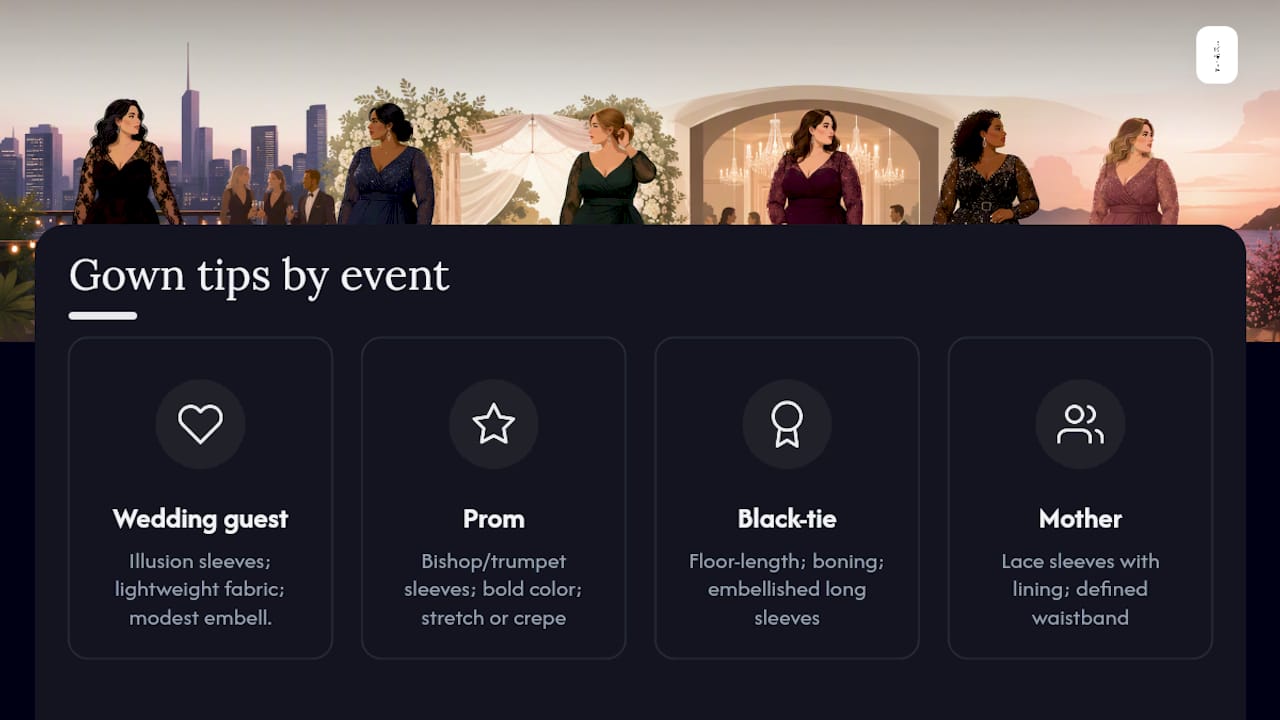
Prom. This is the one occasion where bold color and dramatic sleeves are encouraged. Bishop or trumpet sleeves photograph beautifully on the dance floor, and stretch-jersey or crepe keeps you comfortable through hours of movement.
Black-tie. Floor-length is close to mandatory, and you’ll want real structure underneath: boning, built-in cups, or a corseted bodice. Embellished long sleeves (beading, lace appliqué) read as more formal than plain fabric.
Mother of the bride. Lace-sleeve styles with a lining underneath strike the balance between elegance and appropriate coverage, and a defined waistband photographs well next to the bridal party.
A few quick accessory notes to round out the look: a wrap or shrug adds warmth for outdoor events without covering your sleeve detail, while statement earrings pull focus upward when your sleeves are already doing visual work at the bodice. For more occasion-specific pairing ideas, Dressmeupny’s guide to elegant plus-size formal wear and its styling tips for elegant event dressing both go further into pairing details.
What Do Long Sleeve Formal Dresses Typically Cost?
Price generally tracks with fabric quality and construction complexity, not just brand name. Budget dresses (often stretch-jersey or simple crepe with minimal embellishment) sit at the lower end and work well for one-time events. Mid-range dresses add lining, boning, or lace detail and hold up to repeated wear or dry cleaning. Designer-level pieces bring in hand-beading, silk blends, or couture-level tailoring, and pricing reflects that labor.
Before you check out, confirm these policy details:
- Return window length — most retailers give 14 to 30 days; know yours before you order close to an event date.
- Who pays return shipping — some sellers cover it, others deduct it from your refund.
- Final-sale items — heavily discounted or custom-sized pieces are often non-returnable.
- Alteration-friendly returns — confirm whether a dress can still be returned after minor try-on alterations, since some sellers void returns the moment scissors touch the fabric.
If your event is coming up fast, expedited shipping is worth the extra cost, but build in buffer time for alterations after the dress arrives. A dress that ships in three days still needs a week or two with a tailor if hemming or sleeve work is involved. Order early enough that a shipping delay doesn’t collide with your alteration appointment.
How Much Do Alterations Typically Cost?
Budget for alterations the same way you budget for shoes: as a normal part of buying formalwear, not an afterthought.
The most common adjustments are hemming, sleeve shortening, taking in bust darts, narrowing side seams, and shortening straps. Hemming is low-risk and usually quick, even on lined dresses. Taking in side seams is moderate, and straightforward on crepe or jersey. Sleeve alterations are the trickiest: shortening a sleeve or changing how it’s set into the shoulder is more complex on lace or fully lined gowns, since the tailor has to work around an existing pattern rather than plain fabric.
A few rules of thumb: keep the original seam allowance intact whenever possible so a tailor has extra fabric to work with, and always mention the fabric type to your tailor before they quote a price. If you know you’ll need sleeve alterations, order true to your bust and waist measurement rather than sizing up for the sleeves alone; a good tailor can shorten a sleeve far more easily than they can rebuild one that’s too short.
How Do Customer Photos and Reviews Help You Choose?
Real customer photos tell you more than any product description ever will, especially for fit on curves.
When reading reviews, look for reviewers who mention their own measurements, height, and usual size alongside their experience with the dress. A review that says “I’m 5’4”, usually a 16, ordered a 16 and it fit true" is worth far more than a generic five-star rating with no detail. Also watch for repeated notes about the same issue: if multiple reviewers mention tight sleeves or gaping at the bust in the same size, that’s a real pattern, not a one-off.
For photos, check the lighting and posture, whether the dress is shown fully zipped or buttoned, and whether the reviewer is wearing shoes similar to what you’d wear for your event. A dress photographed unzipped in the back can look deceptively looser than it actually fits.
Pro Tip: Sort reviews by “most recent” first. Retailers sometimes adjust sizing between production runs, so a review from two years ago may not reflect the current fit.
What Our Fit Experience Has Taught Us
Fitting plus-size formal customers for years has taught Dressmeupny one thing above all: the size number on the tag matters far less than the garment measurement behind it. Every brand cuts differently, which is exactly why we build detailed size charts and post real customer photos on every product page instead of asking you to guess. If a fit question comes up that the chart can’t answer, our customer service team is there to help you sort it out before you order, not after.
Ready to Shop Long Sleeve Formal Dresses?
Dressmeupny brings all of this fit knowledge directly into the shopping experience instead of leaving you to compare product pages across a dozen different sites. Every long sleeve formal style, from illusion lace to structured bishop sleeves, is organized by occasion, with a garment size chart, customer photos, and support details listed right on the page.
That means fewer surprises when your dress arrives and less time spent guessing whether a size 18 in one brand matches a size 18 in another. Sizing questions, exchanges, and fit concerns are handled through our customer service team, and our returns policy is built around the reality that formalwear shopping sometimes needs a second try. Browse the full collection at Dressmeupny and filter by sleeve style, size, and occasion to find your dress today.
Frequently Asked Questions
What sleeve length works best for a formal event? Full-length sleeves that end at the wrist are the most versatile for weddings, black-tie events, and proms. If you want more coverage without heaviness, look for sheer illusion sleeves with a lining underneath.
Should I size up in a plus size formal dress with long sleeves? Size up only if the dress is heavily lined, boned, or embellished, since those features reduce stretch. Otherwise, match your measurements to the garment chart rather than defaulting to a larger size.
What’s the difference between plus size cocktail dresses and evening gowns with sleeves? Cocktail dresses are typically knee-length or midi and less structured, while evening gowns run floor-length with more built-in support like boning or sewn-in cups, making them better suited to black-tie events.
Are long sleeve dresses appropriate for a summer wedding? Yes, if you choose a lightweight fabric like chiffon or a sheer illusion sleeve. Heavier fabrics like velvet or fully lined lace run warmer and suit cooler seasons better.
How do I know if a plus size formal dress will fit before I order? Check the product page for a garment measurement chart, real customer photos, and reviews that mention the reviewer’s height and usual size. Compare those numbers directly to your own measurements rather than relying on the size label alone.
Sources
- 10 Plus-Size Fashion Tips with a Body-Positive Attitude - AARP
Recommended
- Plus Size Formal Dresses with Sleeves for Any Occasion - DressMeUpNY
- Women’s Plus Formal Dresses: Style & Fit Guide 2026 - DressMeUpNY
- Find stylish plus-size formal dresses that boost confidence - DressMeUpNY
- Complete Guide to Plus Size Formal Wear - DressMeUpNY