
Pastel Color Formal Outfits: How to Wear Soft Shades Right
Pastel Color Formal Outfits: How to Wear Soft Shades Right

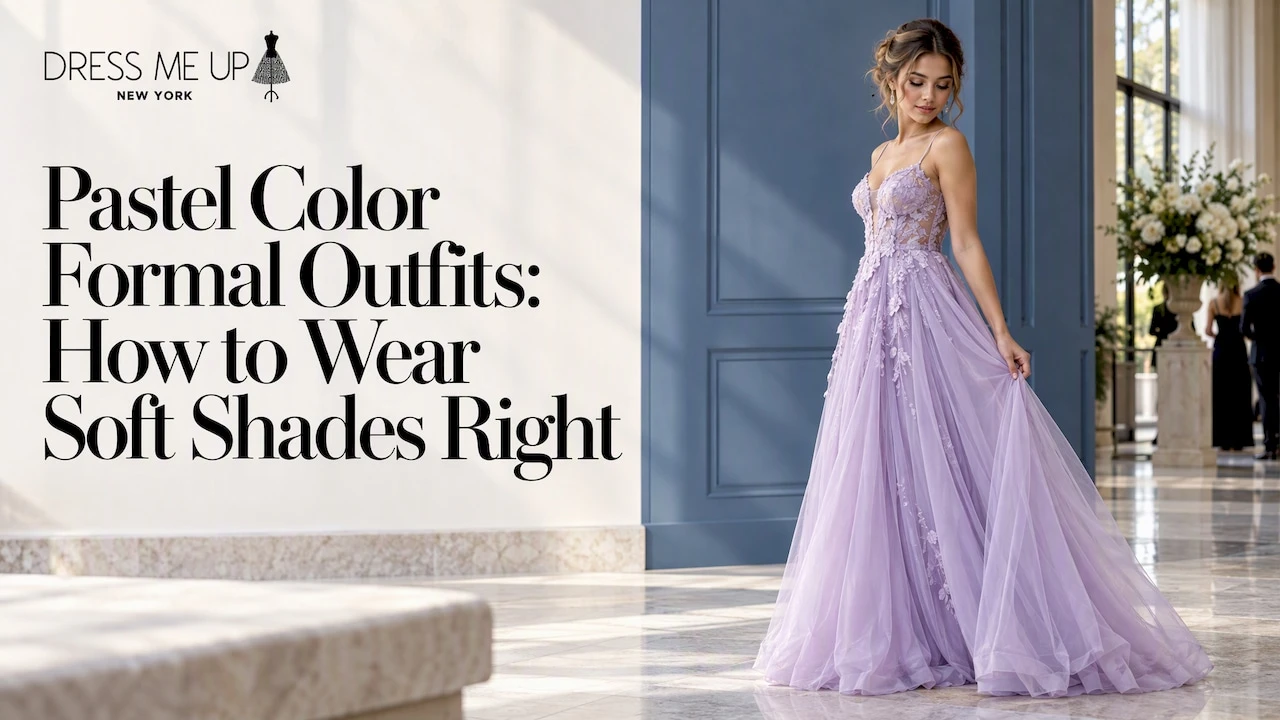
Yes, pastels can be fully formal. What makes a pastel outfit formal is not the color. It’s the fabric, the fit, the length and the accessories you build around it. Choose satin, crepe or tulle over cotton, go floor-length for black-tie, keep the shade clearly different from white, and add metallic or deeper-toned finishing touches. Do that and a blush, lilac or powder blue gown looks intentional and elegant.
We’ll walk you through the shades, the events, the fabrics and the few traps (hello, flash photography) that catch people out.
TL;DR
- Pastels work for formal events when the fabric and silhouette are formal: satin, crepe, chiffon or tulle, with a long hem for the dressiest dress codes.
- At weddings, pick a pastel that stays clearly colored under indoor light and flash. Never anything that could read as white, cream or ivory.
- Accessories do the heavy lifting: metallic jewelry, a structured bag and deeper neutral shoes keep a light dress from looking washed out.
- For prom, check your school’s dress code before you buy, since length and neckline rules are common.
- When in doubt, dress a notch fancier than the invitation suggests.
Table of Contents
- What counts as a pastel, and why it feels so right for formal events
- Match the pastel to the dress code
- Which pastel shades work best
- Lighting is the trap nobody warns you about
- Don’t match the wedding party by accident
- Fabric is what makes a pastel formal
- Accessories: how to keep soft colors from fading out
- Outfit ideas by occasion
- What we think at Dress Me Up NY
- Ready to find your pastel?
- A quick checklist before you buy
- FAQ
- Sources
What counts as a pastel, and why it feels so right for formal events
Pastels are soft, lightened versions of a color: blush pink, baby blue, lilac, mint, butter yellow, peach. They look fresh, flattering on most skin tones and a little romantic, which is why they show up at spring weddings, proms, bridal showers and garden-party galas.
The worry people have is fair: a pale color can feel casual, like a sundress. But formality comes from more than color. As stylists often point out, it’s the combination of fabric, fit and accessories that sets the level. The same lilac can be a backyard brunch outfit in cotton and a gala look in satin with heels and refined jewelry.
So think of pastel as your starting palette, not your dress code. The dress code tells you how dressy to go, and the pastel tells everyone you have a sense of play.
Match the pastel to the dress code
Before you fall for a shade, read the invitation. The dress code sets the length, fabric and overall polish. Our own guide to dress code levels and event types breaks down the basics, and here’s how pastels fit into each one.
| Dress code | What to wear in pastel | What to avoid |
|---|---|---|
| White tie / black tie | Floor-length gown in satin, crepe, chiffon or structured tulle; deeper or dusty pastels such as dusty rose, sage or periwinkle | Very short hems, cotton or linen, anything sheer-pale |
| Formal / black-tie optional | Gown or elegant long dress; metallic accents; heels | Casual sandals, sundress shapes |
| Cocktail | Knee-length or midi dress, a sleek jumpsuit, or a mini with polish | Beachy fabrics, overly casual prints |
| Semi-formal | Midi dress or dressy separates in pastel | Anything you’d wear to the office on a Friday |
For black-tie weddings, the Knot’s guidance is that the dress code is the easiest guide to color: black-tie events typically call for darker tones like black, navy or emerald. That doesn’t ban pastels. It does mean that at a black-tie evening wedding, a deeper, dustier pastel in a rich fabric will sit more comfortably than a very light one. At a spring daytime ceremony, soft pastels are a natural fit.
If you’re stuck between two dress codes, Vogue’s guide to formal attire says formal dressing generally means hems that fall well below the knee, and sometimes floor or ankle length. When you’re unsure, go longer.
Which pastel shades work best
Not every pastel behaves the same way. Here’s how we’d sort them.
Safest bets for weddings
Light blue, baby pink, pale yellow and mint green are commonly named as appropriate for daytime and spring weddings, since they echo the season’s feeling of renewal. Lavender, sage and powder blue are friendly choices too because they’re clearly colored rather than almost-white.
Shades to handle with care
Ultra-pale blush, champagne, pearl and “barely there” blues are the risky ones. Vogue’s writers put the rule bluntly: never wear white, cream, ecru or eggshell, anything that could be mistaken for bridal. Very pale pastels sit right on that line, and that’s where the debate starts.
Best for prom and quinceañeras
Prom and Quinceañera events are celebrations where the guest of honor is you or your court, so the “don’t look bridal” rule relaxes a lot. Pastels in lilac, baby blue, rose and mint look beautiful in tulle ball gowns, corset bodices and sequined or beaded fabrics. Just check the venue and school rules first (more on that below).
Lighting is the trap nobody warns you about
Here’s the thing many shoppers miss. A pale pink or baby blue that looks lovely in daylight can photograph nearly white under bright indoor lighting or camera flash. That’s how an innocent outfit becomes an accidental etiquette problem in the wedding album.
A simple test before you commit:
- Hold the fabric up in your bathroom or bedroom with the lights on, not by the window.
- Take a photo of it with flash, next to something actually white, like a sheet of paper.
- If the dress looks like the paper in the photo, pick a deeper shade.
Photographers know this problem well. Planning around wedding day lighting is part of how couples avoid color mismatches in photos, and it’s worth remembering that guests’ outfits go through the same lighting.
Don’t match the wedding party by accident
Pastel is also the favorite palette of bridal parties. If you’re a guest and you worry your dress could look like the bridesmaids’, the advice from experts like Cassie Walker Graham, reported by Vogue, is to check in with the couple if you know them well, or choose a bolder, less bridal-adjacent color when you’re unsure. If a dress looks too close to white under any lighting, it isn’t worth the risk.
There are easy workarounds:
- Pick a pastel family the couple is unlikely to use for the party (a butter yellow if you suspect blush and sage).
- Go slightly deeper: dusty blue instead of baby blue, mauve instead of pale pink.
- Ask. A quick text to the couple or a bridesmaid saves you worry.
If you’re shopping as a bridesmaid, our rundown of bridesmaid dress trends is a good place to start comparing silhouettes and shades.
Fabric is what makes a pastel formal
This is the part that moves a pastel outfit from cute to formal.
- Satin and silk-charmeuse: a luminous finish that reads as evening wear immediately.
- Crepe: structured, matte and very polished, great for midi dresses and jumpsuits.
- Tulle and organza: romantic volume for ball gowns and prom.
- Chiffon: floaty and elegant for bridesmaid and guest dresses.
- Sequins and beading: shimmer adds formality fast. See our guide to styling sequin dresses.
Natural fibers like linen and cotton poplin are perfect for daytime garden parties but often look too casual for formal evening weddings. For warm-weather formality, that same guidance suggests silk-charmeuse, crepe or high-quality tulle, which keep their structure while still letting you breathe. Our overview of popular gown styles and fabrics goes deeper on how each one drapes.
The nice thing is that the same pastel dress can shift register. Stylists note a pastel can move from a casual garden party to a formal evening event by swapping cotton or linen for satin or crepe, and trading casual sandals for structured heels and refined jewelry.

Accessories: how to keep soft colors from fading out
A head-to-toe pastel can look washed out without contrast. Fashion editors suggest pairing pastels with metallics like gold for a warm, elevated feel, or balancing them with neutrals such as chocolate brown, navy or charcoal for depth. Bright white or cream works for a fresher, more seasonal look, though for weddings we’d keep white and cream away from the dress itself.
Some easy combinations:
- Blush or dusty rose: rose-gold or champagne metallics, a taupe or deep mauve clutch.
- Powder or baby blue: silver jewelry, navy heels.
- Lilac or lavender: silver or pewter, plus a deep plum or charcoal shoe.
- Mint or sage: gold jewelry, a warm nude or chocolate accessory.
- Butter yellow or peach: gold and soft brown tones.
Deeper neutral accessories give a light-colored formal outfit definition. If you want more ideas on using deeper neutral accessories to make a look pop in photos, that styling logic carries over nicely to formal wear.
And if you’re worried about feeling underdressed in a pastel, the advice from stylists is to go a notch fancier than you think the invitation requires: a structured evening bag, refined metallic jewelry and polished shoes make the outfit look intentional. Statement earrings are one of the easiest upgrades, and we’ve put together a guide to wearing statement earrings for formal occasions.
Outfit ideas by occasion
Wedding guest
A mid-tone pastel midi or maxi dress in chiffon or crepe, metallic sandals or heels, and a small structured bag. Stay clear of anything near white. For a spring or garden ceremony, a pastel linen look can suit the season, per Zola’s advice, but upgrade the fabric if the reception is a formal evening one.
Bridesmaid
The couple usually sets the color, so your job is fit and fabric. Look for soft chiffon or satin in the chosen pastel, and think about whether the dress will look the same under reception lighting as it does in the fitting room.
Prom
Pastels are a prom classic: lilac tulle ball gowns, baby blue satin A-lines, rose-pink corset gowns with beading. Many schools publish rules. One school’s prom policy, for example, sets requirements on dress length and neckline, and many gowns need small tailoring tweaks, like securing straps or adding a modesty panel, so they stay put while you dance. Check your own school’s policy before you order, and leave time for alterations.
Quinceañera
Soft pastels like lilac, pink and powder blue are a lovely choice for a court of damas, or for the honoree if she wants something softer than the traditional bold look. Voluminous skirts and sparkle keep it ceremonial.
Gala or cocktail evening
A satin slip dress in pale peach with a tailored blazer and statement earrings, or a pastel designer jumpsuit with metallic heels. Cocktail codes are a chance to have fun, and a short or midi hem in pastel is perfectly at home.
What we think at Dress Me Up NY
We look at a lot of formalwear, and our view is simple: pastel is one of the most forgiving ways to dress formally, as long as you respect three things.
First, build the outfit from the event backwards. Dress code first, then color. Second, treat the lighting seriously. A shade that looks soft online or in a dressing room needs to survive a ballroom and a camera flash. Third, choose structure over softness where it counts: a crisp bodice, a fabric with body, a hem that suits the occasion.
Our catalog is organized by event, designer and style, so you can start with “wedding guest” or “prom” and then filter your way to the shades you love, rather than scrolling through everything. And if you’re torn between two pastels, pick the slightly deeper one. It almost always photographs better and feels easier to wear.
— Dressmeup
Ready to find your pastel?
If you’re shopping for a wedding, browse our wedding guest and bridesmaid dresses. For a floor-length look, head to our formal gowns, and for a night out or a cocktail party, see our cocktail dresses, designer jumpsuits and mini dresses. Prom and Quinceañera shoppers will find soft tulle and sparkle in our Quinceañera dresses. If you want a deeper dive on dressing the part, our formal chic dress code guide covers key attire options and fabrics.
A quick checklist before you buy
- Read the dress code and note the hem length it implies.
- Test the shade under indoor light and flash next to white paper.
- Check whether the couple, school or venue has color or length rules.
- Choose a satin, crepe, chiffon, tulle or sequined fabric, not casual cotton or linen.
- Plan your metallics and deeper neutrals for shoes, bag and jewelry.
- Leave time for alterations such as straps, hems or a modesty panel.
FAQ
Are pastel dresses appropriate for formal events?
Yes. Pastel dresses suit formal events when the fabric, cut and length match the dress code. Satin, crepe or tulle in a floor-length silhouette with polished accessories looks completely formal. For black-tie evenings, deeper or dustier pastels tend to feel more at home than very pale ones.
What is the pastel color dress code?
It isn’t a standard dress code. It usually means a wedding or party where the hosts have asked guests to wear soft colors. Follow the formality level on the invitation, choose clearly colored pastels, and avoid white, cream and ivory. If the hosts list a palette, stick to it.
What colors go well with pastels?
Metallics like gold, silver and rose gold are the easiest partners. Deeper neutrals such as navy, charcoal and chocolate brown add definition, and Harper’s Bazaar notes that bright white or cream can give a fresher seasonal feel. Pick one accent color and keep the rest simple.
What are the pastel colors for prom?
Popular choices include lilac, baby blue, blush and rose pink, mint, peach and butter yellow. Tulle ball gowns, satin A-lines and beaded or sequined styles all look great in them. Check your school’s prom dress code for length and neckline rules before ordering.
Sources
- What Colors to Wear As a Wedding Guest, According to Experts (The Knot)
- What Not to Wear to a Wedding, According to the Experts (Vogue)
- Is It Okay to Wear a Light-Colored Dress to a Wedding? (Vogue)
- The Vogue Guide to Formal Attire (Vogue)
- Beach Formal Wedding Attire (Vogue)
- Best wedding guest dresses, summer 2026 (Harper’s Bazaar UK)
- Spring wedding guest outfits (Harper’s Bazaar)
- How to Style the Chartreuse Trend (Harper’s Bazaar)
- Wedding Guest Attire: A Guide to Every Dress Code (Zola)
- 2025 Prom Dress Code & Procedures (St. Theodore Guerin Catholic High School)
- Wedding Day Lighting Plan for Couples
- Karaoke Night Outfits for Women
Recommended
- How to layer formal outfits: elegant styling for events
- How to Match Dresses with Shoes for Every Formal Event
- Find your perfect evening dress color: expert guide
- Winter Formal Outfit Ideas for Women: 2026 Guide