
Petite Dress Shopping Tips for Formal Events
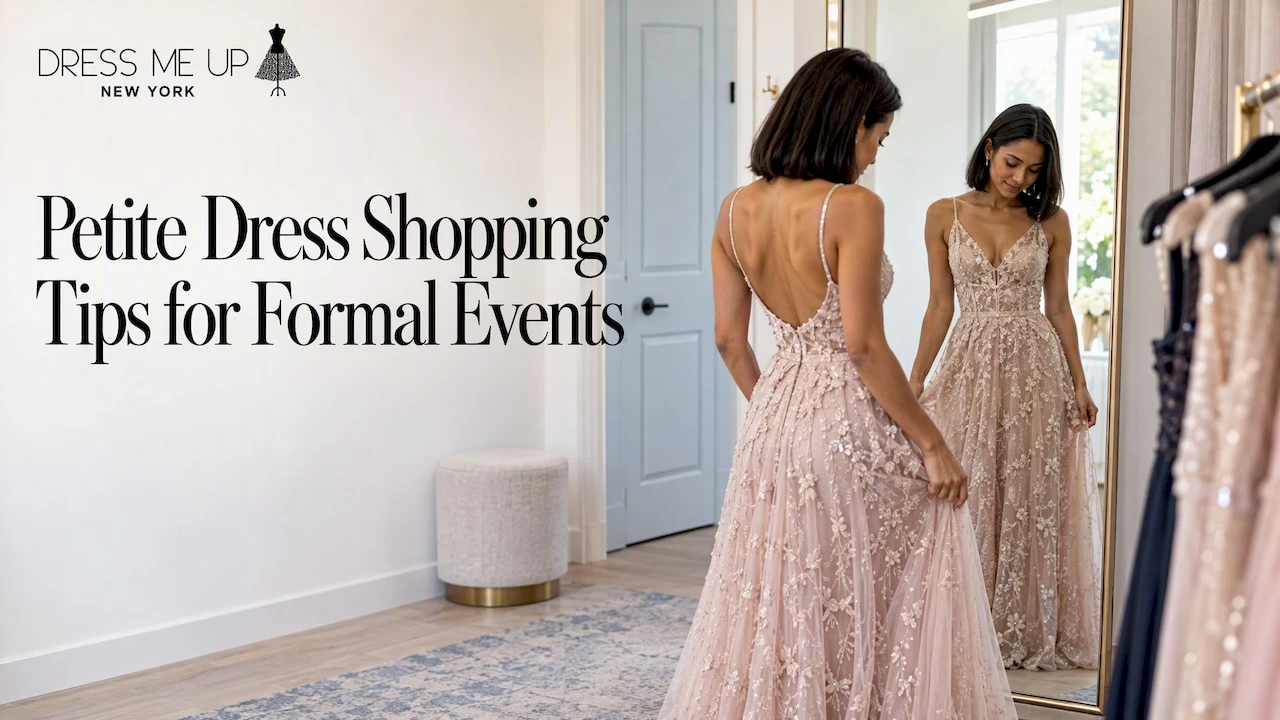
Petite Dress Shopping Tips for Formal Events

The short version: shop by proportion, not just by size. Look for a waist that sits at your natural waistline, a hem that lands at a flattering point on your leg, and a neckline and fabric that don’t swallow your frame. Then budget for a simple hem or strap adjustment, because even a perfect dress sometimes needs a tweak. We’ll walk through each step, so your next prom, wedding or gala dress feels like it was made for you.
TL;DR
- Petite sizing is built for people about 5’4" and under, and it adjusts proportions like sleeve length, torso length and hem, not just overall size.
- Pick vertical lines (sheaths, columns, A-lines) and keep the waist seam at or just above your natural waist.
- Aim for hems above the knee, at the slimmest part of the calf, or floor-length. Skip the awkward mid-calf spot.
- Measure yourself, compare to the size chart, and plan for alterations before the event, not the night before.
- You don’t have to stay in the petite section. Regular-size dresses can work with a quick alteration.
Table of Contents
- What “petite” actually means in dress shopping
- Start with your measurements, not your usual size
- Silhouettes that work for petite frames
- Waist placement: the detail that changes everything
- Hemlines for formal events
- Necklines, sleeves, prints and fabric
- Accessories and shoes that finish the proportions
- Shopping online as a petite: what to check before you order
- Alterations and timing
- Our perspective at Dress Me Up NY
- Find your petite-friendly dress
- Tips by occasion
- Common mistakes to avoid
- FAQ
- Sources
What “petite” actually means in dress shopping
Petite is a height category, not a body type. According to Byrdie’s explainer on petite sizing, it is usually meant for people under 5’4", it refers to height rather than weight, and people of all body types can wear it. The point is the proportions: sleeves, hems and rises are shortened to suit a shorter frame.
That matters for formalwear, where a dress is cut to hit a precise spot. A gown made for a 5’8" model can pool on the floor on a 5’1" wearer, and the waist seam can land across your hips instead of your waist. Petite-friendly cuts, or smart alterations, fix that.
Also worth knowing: you might not be “true petite” by height and still benefit from petite pieces. Boston University’s profile of a designer who works with extra-petite shoppers notes that petite pieces can work for taller customers with shorter torsos or legs. If regular dresses always fall too long in the torso or skirt, trust what the mirror tells you over the number on a chart.
Start with your measurements, not your usual size
Sizes vary from label to label, so the most reliable habit is measuring yourself and comparing the numbers to each dress’s size chart. Here’s a quick routine:
- Bust: measure around the fullest part, keeping the tape level.
- Natural waist: the narrowest part of your torso, usually just above the belly button.
- Hips: around the fullest part, usually 7 to 9 inches below your waist.
- Height in the shoes you plan to wear: this is the one people forget. Heels change how a hem falls.
- Shoulder to waist and waist to floor: these two numbers tell you more about fit than any size label.
Write them down and keep them in your phone. When you shop, check the dress’s chart for bust, waist and hip, then look for any length details in the product description, such as the garment length from shoulder to hem.
What if your numbers fall between two sizes? A bridal fit guide advises that if you land between sizes, you should choose the larger one. It’s much easier to take a dress in than to let it out, and that holds for prom and wedding guest dresses too.
Silhouettes that work for petite frames
The goal is an unbroken vertical line that makes you look longer from shoulder to hem. A petite dress fit guide suggests sheaths, columns and A-lines, because they avoid horizontal interruptions that chop up your height.
Here’s how that plays out by event.
| Silhouette | Why it works on a petite frame | Good for |
|---|---|---|
| Sheath or column | Keeps one long line from shoulder to hem | Evening events, galas, wedding guests |
| A-line | Skims the hips and opens gently, so the skirt doesn’t overwhelm you | Prom, bridesmaid dresses, semi-formal weddings |
| Fit-and-flare | Defines the waist, then flows with a controlled skirt | Cocktail parties, rehearsal dinners |
| Wrap dress | Adjusts at the waist and creates a V-neckline | Wedding guests, cocktail events |
| Mini or cocktail dress | Shows leg, so there’s no extra fabric to manage | Homecoming, parties, receptions |
Volume is the thing to watch. A huge ball gown skirt can look wonderful on a Quinceañera, but it needs the right proportion, such as a defined bodice and a skirt that isn’t layered so heavily that it hides your legs entirely. If you love a full skirt, choose one with a clearly fitted waist and fewer horizontal tiers.
For more dress-by-dress ideas, our guides on petite formal dress styles that actually flatter and silhouettes for petite formal evening dresses go deeper on specific cuts.
Waist placement: the detail that changes everything
If you remember one fit rule, make it this one. The waist seam should sit at or slightly above your natural waist. That placement borrows length for your legs, while dropped waists can visually shorten your frame.
A simple test in the fitting room or at home: put the dress on, stand straight, and look at where the seam crosses your body. If it’s near your hip bone, the dress is too long in the torso for you. If it sits right at the narrowest part of your midsection, you’re in the sweet spot. Empire cuts, with the seam just under the bust, can also work well because they stretch the visual length of the skirt.
Hemlines for formal events
Hem length is where petite shoppers most often feel stuck. The general principle from the same fit guide is that petite frames look best when the hem hits above the knee, at the slimmest part of the calf, or at the floor. Mid-shin or mid-calf lengths land at the widest part of the leg and can make you look shorter.
Translate that into formal options:
- Mini and cocktail: a hem above the knee is the easiest, most proportional choice for a short frame.
- Floor-length: a gown should skim the top of your shoe or just graze the floor in your heels. If you can’t walk without lifting it, it’s too long.
- Midi: possible, but fussy. It needs a hem right at the slimmest part of your calf, plus heels. If that sounds like too much work, choose mini or floor-length instead.
- High-low: a short front with a longer back can show off your legs while keeping the drama of a long skirt.
Always try the dress with the shoes you’ll actually wear. A hem that looks perfect in flats will drag in two-inch heels, and the other way around. Slits and a slightly shorter front hem also help a long dress feel lighter.
Necklines, sleeves, prints and fabric
These four details quietly decide whether a dress looks sleek or overwhelming.
Necklines. V-necks and wide scoop necklines open up the chest and lengthen the neck, which creates a longer vertical line. Petite fit advice points the same way. High, heavy necklines, such as big ruffled collars, can crowd a smaller frame. Halters and strapless dresses can be lovely, but check that the bodice length matches your torso, since a long bodice on a short torso will gape or sit awkwardly.
Sleeves. The classic petite complaint is sleeves that cover your hands. For formal dresses, look for sleeves that end at the wrist bone, or choose three-quarter or sleeveless styles that don’t depend on exact length. Puffy sleeves and wide bell sleeves add volume at the shoulder, so go for a softer version if you love them.
Prints. Large, bold prints can overpower a small frame, while small to medium prints scale better. If you want a print on a formal dress, pick one where the pattern is proportionate to you. Vertical stripes or a single-color dress also keep the eye moving from top to bottom.
Fabric. Look for fabrics that drape rather than stand away from the body, such as crepe, satin, chiffon and jersey. Stiff, heavy fabrics like thick taffeta add bulk fast. If you want structure, choose it in the bodice, and let the skirt flow. Lining matters too: a good lining helps the dress fall cleanly instead of clinging in the wrong places.

Accessories and shoes that finish the proportions
The right accessories can add inches of visual length. Jean Wang, the designer profiled by Boston University, suggests matching your tights to your shoes to elongate the legs, and resizing a belt that’s too long so it doesn’t overwhelm your waist.
A few other guidelines:
- Shoes: pointed pumps and ankle-strap heels extend the visual line of the leg. Ankle straps cut the line a bit, so choose a skin-tone shade if you want the longest look.
- Clutches: a small or medium clutch is usually easier to balance than an oversized one.
- Jewelry: delicate drop earrings and a slim necklace flatter a V-neck, while chunky statement pieces can compete with the dress.
- Hair: an updo or a half-up style can lengthen the neck, especially with a strapless or V-neck dress.
If you’re dressing for a wedding, plan the finishing touches together. Once the dress is chosen, these DIY bridal makeup tips can help you build a look that works with your neckline and your colors.
Shopping online as a petite: what to check before you order
Online shopping gives you far more options than a single store rack, but you can’t try things on, so you need a checklist.
- Find the garment length. A product page that lists the dress length from shoulder or waist to hem lets you compare against your own measurements.
- Read the size chart, not just the size. Compare bust, waist and hip to your numbers. Between sizes? Go up.
- Look at the model’s height. If the model is 5’9" and the dress is full-length, imagine what that looks like on you.
- Check the details that can be changed. Hems, straps and zippers are usually easy alterations. Waist seam placement and bodice length are much harder.
- Read the return and exchange terms before you buy. Formalwear often has rules about tags, wearing and timing. Look at them first, not after the event.
- Order early. This gives you time for returns, exchanges and tailoring.
Boston University’s profile has a reassuring takeaway here: proper fit is key, simple alterations can make a dramatic difference, and you shouldn’t restrict yourself to the petite department. Cropped or three-quarter-length items from the regular section may fit as well.
Alterations and timing
Most petite shoppers end up with a tailor at some point, and that’s normal. Typical alterations include hemming, shortening straps, taking in the waist or side seams, and sometimes raising the bust darts. Hemming a dress with layers of tulle, beading or lace takes more skill and more time than a plain hem, so ask about that first.
For weddings, the timeline is longer. A bridal guide notes that made-to-order gowns commonly take 16 to 20 weeks to arrive and recommends starting 9 to 12 months ahead. It also suggests allowing for up to three fittings and budgeting for alterations on top of the purchase price. Those timelines are for bridal gowns. For prom, homecoming or a wedding guest dress, you generally need less lead time, but giving yourself a few weeks for tailoring is still smart.
If you’re looking for a local seamstress, our guide to formal gown alterations and fitting essentials covers what to ask and bring to your first appointment.
Our perspective at Dress Me Up NY
We talk to shoppers every day who tell us the same thing: “I love it, but I’m afraid it won’t fit me right.” We get it. Formalwear has more details to get right than a pair of jeans, and you often shop months before the event.

Our view is that petite shopping works best when you start from the event and your proportions, not the size tag. Our catalog is organized by event, designer and style, so you can go straight to what you need, whether that’s a prom gown, a wedding guest dress, a cocktail mini or a Quinceañera dress. Our team has experience in fashion and can help you think through length, silhouette and timing. We also curate collections from New York’s fashion district and from global designers, which gives you more shapes and lengths to compare in one place.
If we could give every petite shopper one rule, it would be this: choose the dress that flatters your frame first, and let a tailor handle the small stuff. A hem is a ten-minute fix for a good seamstress. A dress that doesn’t suit your shape is something you’ll notice in every photo.
— Dressmeup
Find your petite-friendly dress
Ready to start browsing? We have collections organized by event, so you can narrow things down quickly. Explore formal gowns for floor-length elegance, cocktail and party dresses for shorter hems that are easy on petite frames, or wedding guest and bridesmaid dresses for your next ceremony.
Shopping for a Quinceañera or prom? Our Quinceañera dresses and evening dresses are good places to start. If you want a second opinion on fit, our customer service team is happy to help.
Tips by occasion
Prom and homecoming
Teens and young adults often get the most pressure to “go big,” but a petite frame can look stunning with a clean, fitted bodice and a skirt that moves. Try a fitted A-line, a short fit-and-flare for homecoming, or a column gown with a slit. Our guide to flattering dresses for petite teens gets specific about the choices that tend to suit younger shoppers.
Weddings: guest and bridesmaid
For guests, a midi can be tricky, so a knee-length or floor-length dress is usually easier. For bridesmaids, ask the bride about the color and fabric, then choose a silhouette that suits you within that palette. If every bridesmaid wears the same dress, plan for hem alterations well in advance. Our section on wedding and formal event dress guidelines can help you match the dress to the venue and dress code.
Galas and red carpet nights
Long evening gowns can be magical on a petite frame, as long as the hem skims your shoe and the waist seam sits right. Consider a column or mermaid with a slit, or an empire-waist gown that lengthens the skirt. For more picks, see our roundup of petite formal evening gowns.
Cocktail parties and receptions
Here you have the most freedom. Minis, short fit-and-flares and tailored jumpsuits all work well. If you like jumpsuits, check the rise and the inseam carefully, since the crotch point on a regular-size piece can land too low on a shorter torso.
Common mistakes to avoid
- Buying for the size tag only. Compare your actual measurements with the chart every time.
- Ignoring shoes until the end. Hem length depends on heel height, so decide on your shoes first.
- Choosing a hem that lands at your widest calf. Go shorter or longer instead.
- Skipping alterations. A small tweak often separates “nice” from “wow.”
- Piling on volume. Ruffles, tiers and puffed sleeves can be beautiful, but one statement feature is usually enough.
- Waiting too long. Late orders leave no time for returns or tailoring.
Want to understand your overall shape too? Our guide to identifying your unique body type pairs nicely with the height-based tips here, and our seven expert tips for formal wear for petites is a quick checklist to bring on your shopping trip.
FAQ
What height is considered petite for dresses?
Petite sizing is generally designed for people under 5’4", though some stylists describe it as 5’4" and under. It’s about height, not weight. If you’re slightly taller but have a shorter torso or legs, petite pieces may still fit you better.
Do I have to buy from the petite section?
No. Boston University’s profile of a petite designer advises not restricting yourself to the petite department. Regular-size dresses, especially in cropped or shorter lengths, can work well with a simple alteration such as a hem or strap adjustment.
What dress length is best if I’m petite?
Aim for hems above the knee, at the slimmest part of your calf, or floor-length. Avoid lengths that land at the widest part of your calf, since they can cut the leg and make you look shorter. Always check the hem in the shoes you plan to wear.
What should I do if my measurements fall between two sizes?
Choose the larger size and have it tailored. Bridal fit advice says to size up when you’re between sizes, because taking a dress in is much easier than letting it out.
How early should I shop for a formal dress?
For prom, homecoming or a wedding guest dress, shop several weeks ahead to leave time for returns and tailoring. For a made-to-order bridal gown, one guide recommends starting 9 to 12 months before the wedding.
Sources
- What Is Petite Sizing? All About This Clothing Category (Byrdie)
- My Big Idea: Style Tips (and Curated Garments) for the Extra Petite (Boston University)
- Petite Women Dress Fit Guide (Fashion Informed)
- Petite Wedding Dresses: Fit, Hems, Costs & Timing (My Wedding Source)
Recommended
- 7 Expert Tips for Choosing Formal Wear for Petites
- Petite Formal Dress Styles That Actually Flatter You
- Petite Formal Evening Dresses: Silhouettes That Actually Fit
- Petite Formal Evening Gowns: Best Picks for Short Frames