
Petite Formal Dress Styles That Actually Flatter You
Petite Formal Dress Styles That Actually Flatter You

TL;DR:
- Petite formal dresses should emphasize vertical lines and proper waist placement to enhance proportions. Styles like A-line, sheath, and fitted gowns with tailored hems are most flattering, especially when paired with elongating shoes. Tailoring is crucial, as even petite-labeled dresses often require alterations to achieve the perfect fit.
Finding a formal dress when you’re petite is its own kind of challenge. The wrong silhouette swallows you whole. A misplaced waistline breaks your figure in two. And what looks stunning on a size-chart model can turn into a costume on a shorter frame. But the right petite formal dress styles don’t just fit your body. They work with your proportions to create a look that feels polished, powerful, and genuinely you. This guide walks you through exactly what to look for and what to skip.
Table of Contents
- Key takeaways
- 1. Understanding what makes petite formal dress styles work
- 2. A-line dresses: the most universally flattering option
- 3. Sheath and column dresses: sleek and sophisticated
- 4. Fit-and-flare styles: shaped structure with movement
- 5. Mermaid and trumpet gowns: proportion placement is everything
- 6. Floor-length gowns: rethinking the “too much dress” myth
- 7. Short and high-low dresses: when structure saves the look
- 8. Situational style picks: matching the dress to the event
- 9. Style comparison: petite formal dress silhouettes at a glance
- My honest take on petite formal dressing in 2026
- Find your perfect petite formal dress at Dressmeupny
- FAQ
Key takeaways
| Point | Details |
|---|---|
| Prioritize vertical lines | Streamlined silhouettes with vertical seams elongate the frame more than any styling trick. |
| Waist placement matters most | Empire or above-natural waistlines create the illusion of longer legs and better proportions. |
| Neckline shapes your silhouette | V-neck, scoop, and sweetheart necklines open up the upper body without adding visual bulk. |
| Floor-length can work beautifully | Properly tailored floor-length gowns often flatter petite frames more than midi or knee lengths. |
| Fit beats size label every time | Expect to hem even “petite” labeled dresses. Tailoring is the real finishing touch. |
1. Understanding what makes petite formal dress styles work
Before you fall in love with a specific style, it helps to understand why certain designs flatter short frames and others fight against them. The principles are consistent and technical, and once you know them, shopping becomes a lot less frustrating.
The goal of great petite formalwear is vertical emphasis. That means vertical seams, clean lines and uninterrupted color palettes that carry the eye from shoulder to hem without interruption. The moment a design breaks that vertical flow, with a wide sash at hip level or a dramatic horizontal ruffle, it visually shortens your figure.
Here are the foundational principles to check against every dress you consider:
- Waist placement: Empire waistlines or seams placed slightly above the natural waist create longer-looking legs and a taller silhouette overall.
- Necklines that open up: V-neck, scoop, sweetheart necklines draw the eye upward and create the appearance of length. Avoid high crew necks, which close off the upper body and make you appear shorter.
- Fabric weight: Lightweight, fluid fabrics like chiffon, crepe, and charmeuse drape naturally and move with you. Heavy brocade or stiff taffeta adds volume that works against petite proportions.
- Embellishment scale: Smaller, vertically oriented motifs on beaded or floral patterns keep the eye moving upward. Large horizontal patterns shorten your frame visually.
- Shoe choices: Pointed-toe heels in nude or dress-matching tones visually extend the leg line. Chunky ankle straps cut it off.
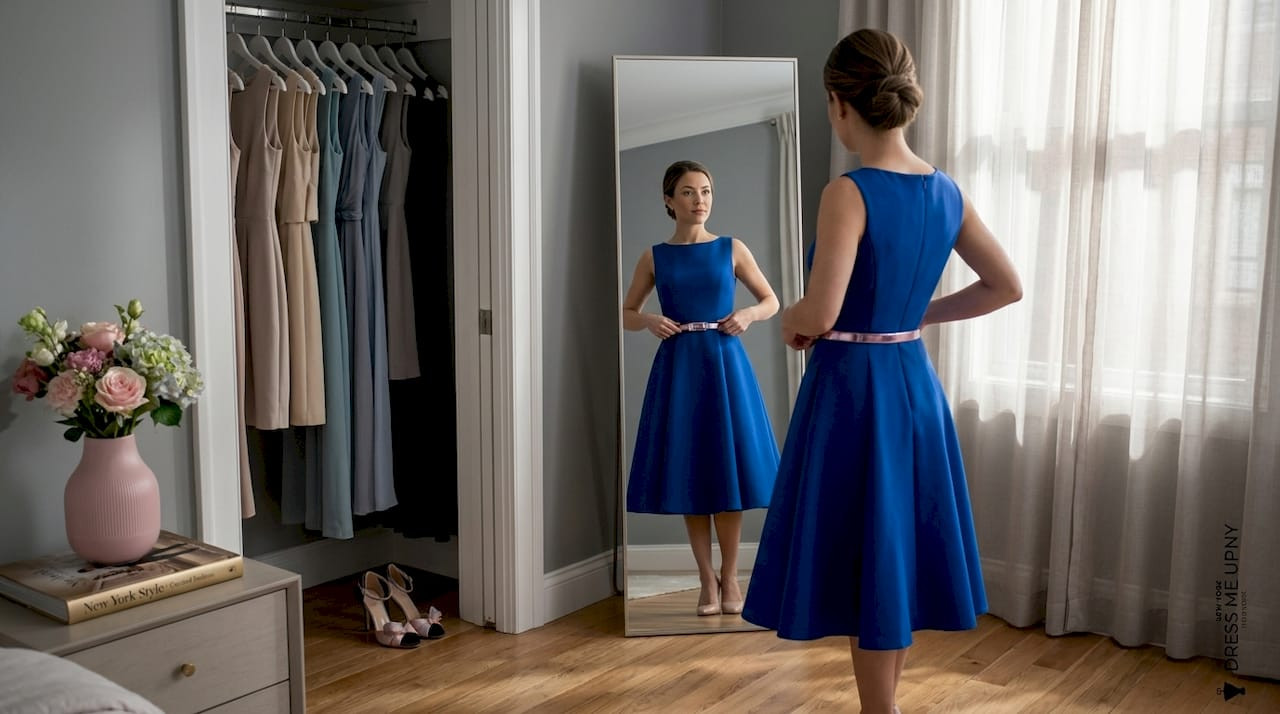
Pro Tip: A slim, tonal belt placed just above the natural waist can do more for your silhouette in seconds than an entire redesign of a dress. It’s one of the fastest proportion fixes in petite styling.
2. A-line dresses: the most universally flattering option
The A-line silhouette is the closest thing to a guaranteed win in petite size formal wear. It fits through the bodice and waist, then gently flares outward from the hips to the hem. That controlled flare creates movement without adding bulk, and the defined waist keeps your proportions looking balanced.

What makes A-line dresses particularly powerful for petite frames is the natural emphasis they place on the upper body. The flare starts from the hips, so attention stays on your waist and above, exactly where you want it. According to styling guidance for petite frames, A-line, sheath/column, and fit-and-flare silhouettes with empire or higher waist placement are consistently recommended as the most proportionate choices. For more on why this shape excels in formal settings, Dressmeupny’s guide to A-line formal dresses is worth reading before you shop.
Choose an A-line in a flowing fabric like chiffon or georgette for formal events, and go for one in a single, unbroken color to maximize the elongation effect.
3. Sheath and column dresses: sleek and sophisticated
The sheath dress is the petite woman’s secret weapon for black-tie events. It follows the body’s natural lines from shoulder to hem without flaring, gathering, or adding volume anywhere. The result is a clean vertical line that reads as effortlessly tall and polished.
Sheaths work especially well in fabric with a slight stretch, like ponte or jersey, because they skim the body without clinging uncomfortably. The key detail to prioritize in a sheath is where it ends. A well-tailored floor-length column creates more elongation than one that hits mid-calf, which is one of the most proportion-stealing lengths for petite frames. Think of it this way: a dress that ends at mid-calf creates a visual stopping point right at the thickest part of the leg. A dress that hits the floor lets the eye travel all the way down.
4. Fit-and-flare styles: shaped structure with movement
Fit-and-flare dresses share DNA with A-line styles, but the flare point typically sits lower, at the knee or mid-thigh rather than the hips. For petite women, this means fit-and-flare works best when the flare begins above the knee. When that transition sits at the knee or below, the flare point visually shortens the leg.
The most flattering versions of this style for petite frames have structured bodices that define the bust and waist clearly, with a skirt that fans out enough to create movement but not so much that it adds volume. Cocktail-length fit-and-flare dresses work particularly well for prom and semi-formal events, where a bit of youthful energy is a plus.
5. Mermaid and trumpet gowns: proportion placement is everything
Mermaid and trumpet gowns have a reputation for being difficult on petite frames, and that reputation is partly earned. When the flare begins at or below the knee, these styles can make legs look shorter and make it harder to walk gracefully in them, which compounds the visual effect.
But when a mermaid gown is cut with the flare starting at mid-thigh instead of the knee, the silhouette actually elongates beautifully. The fitted column from shoulder to thigh creates an uninterrupted vertical line, and the flare adds drama without disrupting proportion. If you love this style, try it on and pay close attention to where that flare begins on your specific frame before committing.
6. Floor-length gowns: rethinking the “too much dress” myth
Many petite women avoid floor-length gowns entirely, assuming they’ll get lost in the fabric. This is one of the most common misconceptions in petite formalwear. Well-tailored floor-length gowns create more elongation than short hemlines, which can visually cut the leg and make the figure appear wider than it is.
The critical word here is tailored. Petite sizing is typically designed for women who are 5’4" and under, but even with that label, hemming is almost always necessary for a truly polished look. A gown that drags even an inch on the floor destroys the elegance of the silhouette. Get it hemmed so that the fabric just grazes the top of your shoe when you’re wearing the heels you plan to pair with it.
7. Short and high-low dresses: when structure saves the look
Short dresses and high-low hemlines absolutely work for petite frames, with one condition: the tailoring must be structured enough to create shape on its own. A short, poufy skirt with heavy volume will overwhelm a smaller frame. A short dress with a defined waist, clean lines, and a hem that hits just above the knee? That creates a proportionate, youthful look that works beautifully for proms and cocktail events.
High-low styles add an interesting design element, but pay attention to how low the back hem falls. If it hits mid-calf in the back, you’ll run into the same proportion problem as a midi length. Aim for a high-low where the back hem falls at or just below the knee.
8. Situational style picks: matching the dress to the event
Different formal events call for different approaches, even when you’re working with the same silhouettes.
For prom: Youthful energy matters here. Fit-and-flare cocktail dresses, structured A-line styles with playful embellishments, and short dresses with clean tailoring all work well. Keep volume in the skirt moderate and the bodice fitted. If you want a floor-length gown for prom, choose one with a side slit that adds movement and shows off your shoes without chopping the leg line. Dressmeupny’s guide on flattering dresses for petite teens has specific picks worth bookmarking.
For wedding guest and bridesmaid events: Polished and classic is the goal. A-line midi or floor-length dresses in fluid fabrics like chiffon or crepe photograph beautifully and feel appropriate across a range of wedding settings. Avoid overly structured skirts that can look stiff in photos.
For galas and black-tie events: This is where monochromatic, floor-length elegance shines. Choose a gown in a single color from neckline to hem, with minimal horizontal breaks. A statement neckline like a deep V or an off-shoulder style draws attention upward and adds drama without volume. 2026 formalwear trends favor this kind of precision-driven elegance.
Pro Tip: Match your shoe color to your dress or your skin tone whenever possible. This single choice can add what looks like two inches to your height by creating one unbroken line from hem to floor.
9. Style comparison: petite formal dress silhouettes at a glance
| Style | Best for | Elongation effect | Key advantage | Watch out for |
|---|---|---|---|---|
| A-line | All formal events | High | Universally flattering waist emphasis | Skirts that are too full |
| Sheath/column | Black-tie, gala | Very high | Sleek vertical line head to toe | Needs excellent fit through hips |
| Fit-and-flare | Prom, cocktail | Medium-high | Playful movement with structure | Flare point too low on frame |
| Mermaid/trumpet | Gala, prom | High when cut right | Dramatic, sophisticated silhouette | Difficult to walk if flare starts at knee |
| Floor-length gown | Gala, black-tie | Very high (tailored) | Maximum formal elegance | Must be hemmed precisely |
| Short/high-low | Prom, cocktail | Medium | Youthful, energetic, shows shoes | Excessive volume overwhelms petite frames |
My honest take on petite formal dressing in 2026
Something has genuinely shifted in how petite women approach formalwear, and I think it’s worth naming directly. For years, the conversation centered almost entirely on how to look taller. The whole framework was about visual tricks designed to compensate for height. That framing was never particularly useful, and it often led women toward choices that felt like workarounds rather than genuine style.
What I’ve learned from years of working with petite formalwear is that 2026 fashion trends encourage embracing a powerful, balanced, and curated look rather than simply chasing the appearance of more height. The goal has become proportion and elegance, not disguise. And that shift in thinking actually makes the styling process much more interesting.
In my view, the biggest mistake petite women still make is skipping technical tailoring. A dress that fits in the shoulders, defines the waist correctly, and hits the right hemline will always outperform a dress two sizes larger that’s been pinned and improvised. Fit is not a luxury for petite formalwear. It’s the whole thing. The size label on the tag means almost nothing. What matters is how the dress actually sits on your specific frame, and that almost always requires at least one alteration.
Wear what genuinely excites you. Then get it tailored.
— Dressmeup
Find your perfect petite formal dress at Dressmeupny
Dressmeupny carries an extensive selection of formal dresses for petites, curated with the kind of fit and proportion details that actually make a difference on shorter frames. Whether you’re shopping for prom, a wedding, or a black-tie gala, the collection spans evening gowns and cocktail styles in sizes and silhouettes designed to flatter petite figures without requiring a complete overhaul. Petite-friendly formal dresses are available at accessible price points, with styles starting as low as $23 to $40 for select occasion dresses, making it easy to find something stunning at any budget. Browse the full collection at Dressmeupny and use the fit principles in this guide to shop with confidence.
FAQ
What are the best petite formal dress styles for short women?
A-line, sheath, and fit-and-flare silhouettes are consistently the most flattering petite formal dress styles for shorter frames. These shapes create vertical emphasis and define the waist without adding overwhelming volume.
Should petite women wear floor-length gowns?
Yes. Properly tailored floor-length gowns actually elongate petite frames more than midi or knee-length dresses, which can cut the leg line at an unflattering point. Hemming is almost always necessary for the best result.
What necklines work best for petite formal dresses?
V-neck, scoop, and sweetheart necklines are the most flattering choices for formal dresses for petites. They open up the upper body and draw the eye upward, creating a longer, more proportionate silhouette.
Do petite-labeled dresses fit without alterations?
Rarely. Petite sizing is designed for women 5’4" and under, but even those dresses typically need hemming for a perfect fit. Plan for at least one alteration, particularly at the hemline, when shopping petite size formal wear.
What shoes should I wear with a petite formal dress?
Pointed-toe heels in nude tones or a shade that matches your dress are the best choice. They visually extend the leg line without interruption. Avoid chunky ankle straps or block heels, which break the leg line and reduce the elongating effect of your dress.
Recommended
- 7 Expert Tips for Choosing Formal Wear for Petites - DressMeUpNY
- Flattering Dresses for Apple Shape: Formal Event Choices 2025 - DressMeUpNY
- Finding the Perfect Fit: Your Guide to Stylish Formal Attire - DressMeUpNY
- How to choose flattering dresses for petite teens - DressMeUpNY