
Petite Formal Evening Dresses: Silhouettes That Actually Fit
Petite Formal Evening Dresses: Silhouettes That Actually Fit
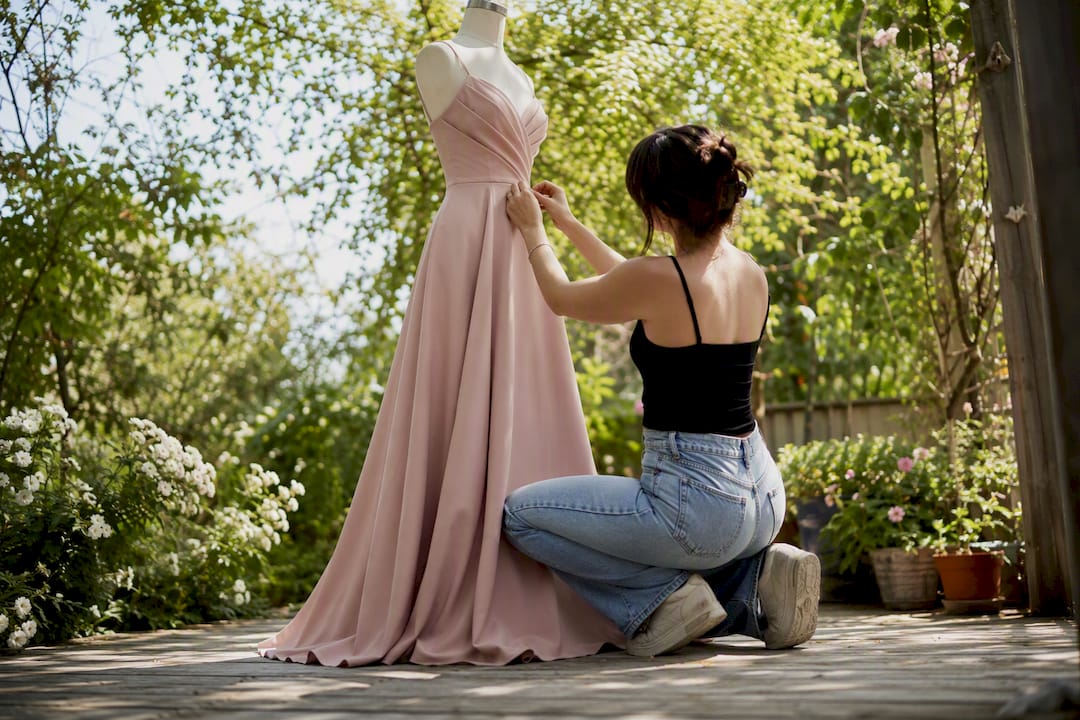
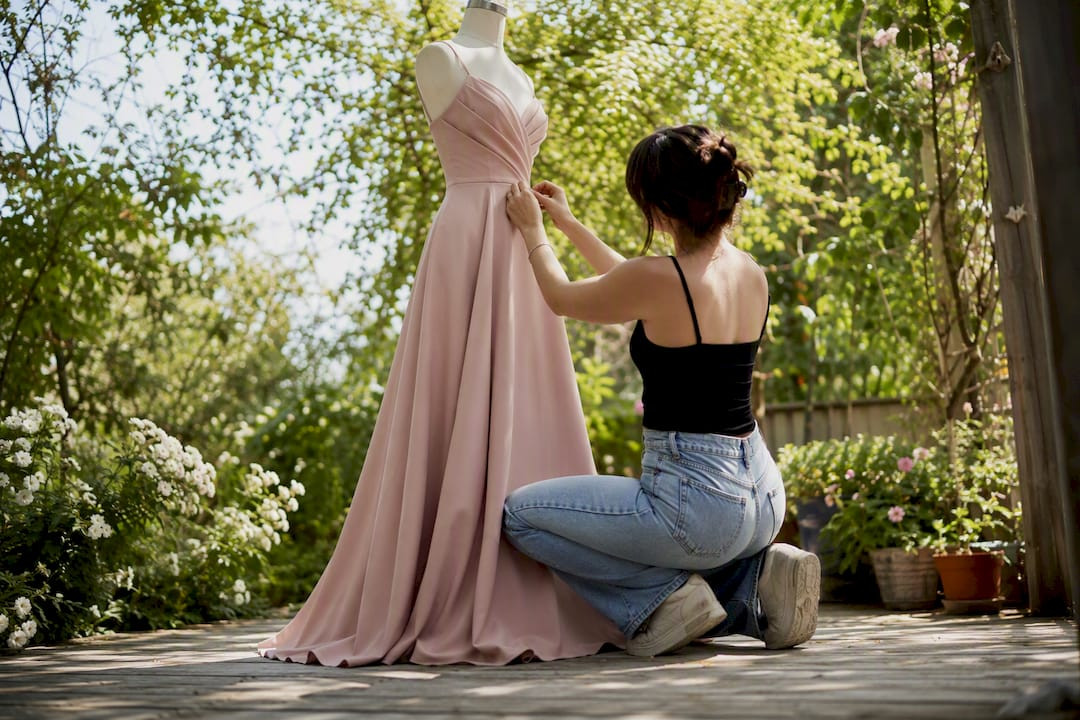
If you’re 5’4" or under, the fastest path to a great formal look is an A-line, sheath, or high-waist fit-and-flare dress in a petite-specific cut, since these shapes create length instead of cutting your frame into short segments. Hemming comes first on any alteration list; the bodice and straps come second, once the length is right. And if you’d rather skip the trial-and-error entirely, DressMeUpNY curates petite formal styles built around these exact proportions, with sizing guides that do the guesswork for you before you buy.
Here’s your quick-start checklist before you shop:
- Measure your torso length (shoulder to crotch), not just waist and hips
- Choose A-line, sheath, or empire silhouettes over full ball gowns
- Check the product page for model height and hem allowance
- Plan for hemming first; only add bodice alterations if needed
- Confirm the seller’s return policy before you buy online
Key Takeaways
Petite formal dressing comes down to choosing A-line, sheath, or empire silhouettes, measuring torso length before size, and hemming first before any other alteration.
| Point | Details |
|---|---|
| Best silhouettes | A-line, sheath, and empire waists create length; avoid voluminous ball gowns and heavy tiers. |
| Measure torso length | Shoulder-to-crotch measurement predicts bodice fit better than waist-to-hip alone. |
| Hem before bodice work | Hemming is the first, least invasive, and most impactful alteration for petites. |
| Match heel to hemline | Floor-length gowns need heels close to the hem’s break point; cocktail lengths suit a two- to three-inch heel. |
| Shop DressMeUpNY’s petite collection | DressMeUpNY curates petite-cut formal dresses with sizing notes and return policies to reduce fit risk. |
Table of Contents
- Best Silhouettes for Petite Formal Evening Dresses
- Sizing and Proportions: How Petites Differ From Standard Fit
- Fabrics and Embellishments That Flatter a Smaller Frame
- Hemline, Length, and Heel Pairing for Evening Events
- Styling and Accessories That Elongate Your Silhouette
- Shopping Checklist and Measurement Guide
- Why DressMeUpNY Is a Trustworthy Source for Petite Fit Advice
- Color Choices and Patterns That Complement Petite Frames
- Seasonal Trends and Formal Dress Options for Petites
- Budget Ranges and Pricing Expectations for Petite Formal Dresses
- What Most Shopping Guides Get Wrong About Petite Formalwear
- Shop the DressMeUpNY Petite Formal Collection
- Frequently Asked Questions
- Sources
Best Silhouettes for Petite Formal Evening Dresses
A-line and sheath dresses show up again and again in petite formal collections for a simple reason: they follow your natural line instead of adding volume where you don’t need it. An A-line skims the body through the bust and waist, then releases gently toward the hem, which reads as height rather than bulk. A sheath does the opposite, tracing close to the body from top to bottom, and works especially well if you have a defined waist you want to show off without a lot of fabric competing for attention.
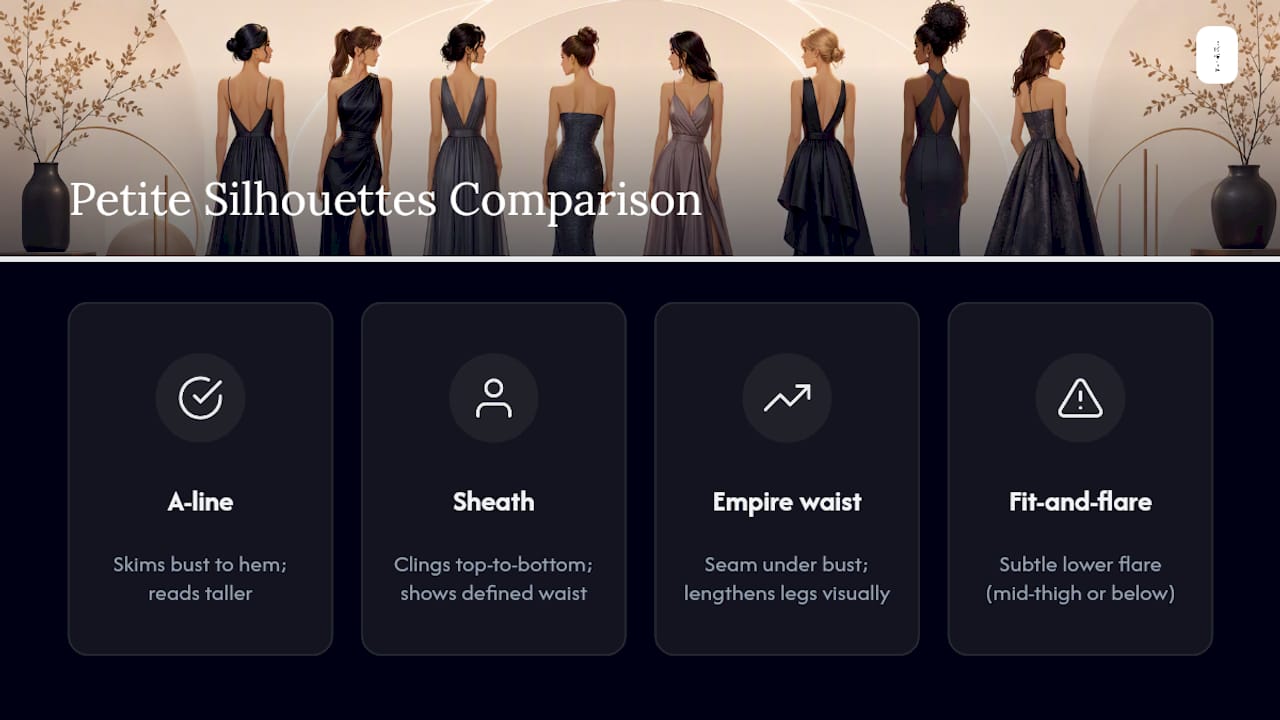
Empire waists deserve more credit than they usually get. By placing the seam just under the bust, an empire dress shortens the visual distance your eye has to travel before it hits the “waist,” which makes your legs look longer by comparison. This is one of the better options for a petite frame carrying weight around the middle, since it skips the waist definition altogether and lets the fabric fall straight down.
Fit-and-flare can work too, but only in a subtle version. A dramatic flare that kicks out below the knee tends to shorten a petite frame by cutting the leg line at an awkward point. If you love that silhouette, look for one where the flare starts lower, closer to mid-thigh or below, so more of your leg reads as one continuous line.
Ball gowns and heavily tiered skirts are the ones to approach carefully. A voluminous skirt that starts at a natural waist can visually swallow a smaller frame, and multiple horizontal tiers chop up your silhouette exactly where you want it to look continuous.
Necklines and sleeves do more work than most shoppers expect. A V-neck or sweetheart neckline draws the eye downward in a vertical line, while cap sleeves or thin straps keep the shoulder area from looking boxy. For black-tie events, a floor-length gown in one of these silhouettes reads as formal without overwhelming; for a semi-formal wedding or cocktail party, a knee-length or midi version of the same shape keeps the same flattering logic at a lower formality level, which aligns well with examples of elegant wedding entertainment for couples.
Pro Tip: If you’re torn between two silhouettes, pick the one with fewer seams and less structure at the waist. Simpler construction almost always reads longer on a petite frame than something busy, even if the busier option looks more “special” on the hanger.
Sizing and Proportions: How Petites Differ From Standard Fit
Standard sizing assumes proportions that don’t match a lot of petite bodies, and the mismatch usually shows up in three places: torso length, waist placement, and shoulder-to-waist distance. A dress cut for average height often puts the waist seam an inch or two below where your natural waist actually sits, which is why a dress can look “off” even when the size technically fits.
- Measure your torso length first. Shoulder to crotch matters more than waist-to-hip for long gowns with a defined bodice, since it tells you whether the bodice will land where it’s designed to land or bunch below your natural waist.
- Check the model’s height and size on the product page. Retailers that list model height and hem allowance give you a much better read on how a gown will actually fall on a shorter frame than the size chart alone.
- Fix the hem before anything else. It’s the single alteration that changes a dress the most for the least cost, and it should always come before bodice work.
- Address bodice or shoulder fit second, only if the dress still gaps or pulls after hemming.
- Factor in fabric stretch when picking a size. A dress with spandex or elastane content can size down comfortably, while a rigid satin or structured crepe should be sized to your largest measurement, not your smallest.
Fabrics and Embellishments That Flatter a Smaller Frame
Lightweight, drapey fabrics tend to outperform heavy or stiff ones on petite frames. Chiffon, crepe, and lightweight satin move with the body instead of standing away from it, and petite-focused retail collections consistently favor these three fabrics for exactly that reason. A heavy brocade or thick taffeta, by contrast, can add visual bulk that a smaller frame doesn’t need, even at a size that technically fits.
- Choose small-scale prints over large ones; a giant floral pattern can overwhelm a petite frame the same way an oversized bag does
- Look for vertical seaming or ruching, which draws the eye up and down instead of side to side
- Favor embellishment placed in clusters or along a single line rather than scattered across the whole bodice
- Consider built-in structure (light boning, a fitted lining) when you want shape without adding a bulky layer underneath
Structured fabric isn’t off-limits. A dress with boning or a built-in liner can actually help a petite frame by holding a clean shape without the extra layer of shapewear, which keeps the overall silhouette from adding bulk elsewhere.
Hemline, Length, and Heel Pairing for Evening Events
Hem length and heel height work together, and getting the pairing wrong is one of the easiest ways to shorten your look without meaning to. A floor-length gown needs a heel that keeps the hem just barely off the ground; too much extra fabric pooling at your feet reads as unfinished rather than elegant. Mid-calf and tea-length hems are more forgiving but need a heel with some height, usually two to three inches, to keep the leg line from getting cut at an unflattering point.
- Full-length gowns suit black-tie events and formal weddings, and read best with a heel matched closely to the hem’s intended break point
- Cocktail-length dresses (just above or at the knee) work for semi-formal events and generally look longer with a pointed-toe heel rather than a rounded one
- Nude or monochrome pumps that match your skin tone or dress color remove the visual break at the ankle, which adds perceived height
- A strappy sandal in a color close to your skin tone does the same elongating trick as nude pumps, just with more visible ankle
If you’re deciding between two shoe options for the same dress, a detailed guide to formal evening shoe pairing can help you land on the right heel height for your exact hemline.
Styling and Accessories That Elongate Your Silhouette
Accessories either extend the line your dress creates or interrupt it, and there’s rarely a middle ground. A single dominant color from head to toe, sometimes called monochrome dressing, is one of the most reliable tricks for adding height, since it removes the visual breaks that come from mixing contrasting colors at the waist or shoulders.
- Keep belts narrow and placed exactly at your natural waist, not below it, since a wide belt or one placed too low shortens the torso
- Choose a clutch or small structured bag sized to match the dress; an oversized bag can visually compete with a fitted formal look
- A cropped jacket or shrug should end above or right at the waistline, never mid-hip, to avoid adding a horizontal break
- An updo elongates the neck and shoulder line, which pairs well with a fitted bodice or strapless neckline
- Drop earrings extend the vertical line from your face downward, doing the same visual job as a V-neck
Pro Tip: Skip the wide statement necklace if your dress already has a detailed neckline. Two competing focal points at chest height can make your torso look shorter than it is.
Shopping Checklist and Measurement Guide
Getting the fit right starts before you ever click “add to cart” or step into a fitting room. Take these measurements at home first: bust, natural waist, hips, and torso length from shoulder to crotch. That last measurement matters more than most shoppers realize for long gowns with a fitted bodice, since it tells you exactly where the waist seam will land on your body.
- Measure torso length in addition to the usual bust, waist, and hip numbers, since it’s the one measurement standard charts skip.
- In-store, try on one A-line and one sheath in the same size to see which shape reads better on your specific proportions before committing to a style.
- Online, check for model height, hem allowance, and seam placement in the product description; these details predict fit far better than the size number alone.
- Ask customer service about petite-specific cuts or shortened bodice options if the size chart doesn’t mention them directly.
- Prioritize hemming as your first alteration, and only book a bodice or strap adjustment if the dress still doesn’t sit right after the hem is fixed.
- Confirm the return window and whether alterations void it before you buy, especially for a dress you’re ordering close to an event date.
DressMeUpNY’s expert tips for petite formal wear walk through this same prioritized order in more detail, including which alterations tend to run cheaper at a local tailor.
Why DressMeUpNY Is a Trustworthy Source for Petite Fit Advice
Dressmeup authors the DressMeUpNY blog with content built specifically around petite proportions, not generic sizing advice repurposed from standard-size guides. That focus shows up in resources like the site’s petite silhouette guide and its alteration-priority tips, both written to answer the questions petite shoppers actually ask.
- Size charts and product notes are built to reduce guesswork before you buy
- Return policies and customer support act as a safety net if a dress doesn’t fit as expected
- Promotional offers, including free shipping on qualifying orders, lower the cost of trying a style you’re unsure about
Color Choices and Patterns That Complement Petite Frames
Solid, deep colors tend to do more flattering work than busy patterns on a petite frame, mostly because a single unbroken color reads as one continuous shape rather than several visually separate sections. Jewel tones like emerald, sapphire, and deep burgundy read as formal and rich without adding the visual weight that very light or very bright colors sometimes can.
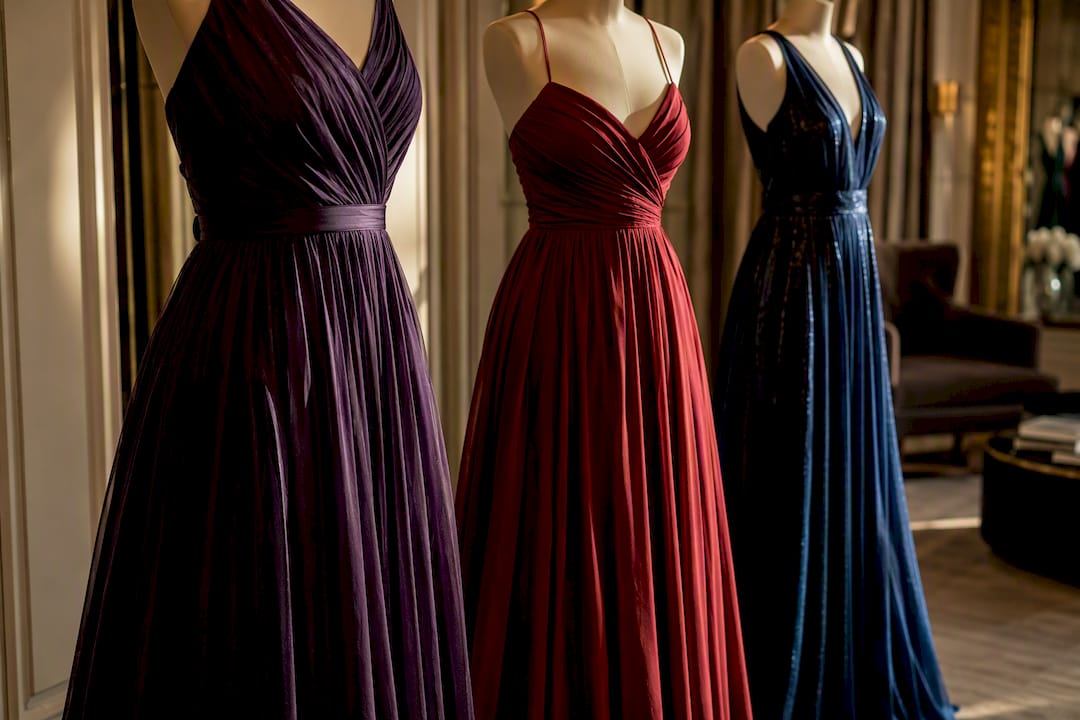
Patterns aren’t off-limits, but scale matters enormously. A small, evenly spaced print or a subtle metallic shimmer keeps the eye moving smoothly over the fabric, while a large, high-contrast print can break a petite frame into visual chunks the same way an oversized tier or ruffle does. If you love a patterned dress, look for one where the design runs vertically or in a small repeat rather than one with big horizontal bands of color.
Color blocking works too, but only when the blocks run vertically rather than horizontally. A dress that pairs a dark bodice with a lighter skirt, split at the natural waist, tends to shorten the torso the same way a wide belt in the wrong spot does. A vertical color panel running down the center front does the opposite, adding length exactly where you want it.
For very formal black-tie events, sticking to one saturated color from top to bottom is usually the safest and most elegant choice. Save the bolder patterns and color combinations for cocktail-length dresses at semi-formal events, where a little more personality in the print reads as fun rather than overwhelming.
Seasonal Trends and Formal Dress Options for Petites
Formal dress trends shift with the seasons, and petite shoppers benefit from paying attention to which trends actually flatter a smaller frame versus which ones just look good on a runway model. Spring and summer formal seasons, heavy with weddings and proms, tend to favor lighter colors and softer fabrics like chiffon and organza, both of which drape well on petite frames without adding bulk.
Fall and winter formal events lean toward richer colors and slightly heavier fabrics, but that doesn’t mean petites need to sacrifice fit for warmth. A crepe or lightweight velvet in a sheath or A-line cut still moves the same way a summer chiffon does; it just carries a deeper color palette suited to the season. Long sleeves or a cropped jacket in a matching fabric can add warmth for a winter event without breaking the vertical line a sleeveless gown would create.
One trend worth watching closely each year is the rise of convertible or two-in-one formal dresses, which let you remove an overskirt or jacket to shift from a floor-length gown to a cocktail-length look. For petites, this can be a practical way to get two events out of one dress, as long as both configurations are checked against your torso length before you buy.
Whatever the season, the underlying rules don’t change: A-line and sheath silhouettes, vertical design lines, and a hem that’s been properly fitted will outlast any single year’s trend cycle.
Budget Ranges and Pricing Expectations for Petite Formal Dresses
Petite formal dresses generally span a wide range depending on fabric, embellishment, and brand positioning, and it helps to know roughly where your priorities should sit before you start browsing. Simpler sheath and A-line styles in crepe or lightweight satin tend to sit at the more accessible end of a formalwear budget, since they use less fabric and fewer construction steps than a heavily beaded or fully lined gown.
Dresses with hand-placed embellishment, structured boning, or fully lined bodices cost more, largely because of the labor involved in construction rather than the size of the garment. If you’re working with a tighter budget, prioritize a well-fitted silhouette over embellishment. A simple, well-hemmed A-line in a good color will read as more put-together than a heavily beaded dress that’s the wrong length.
Set aside a small portion of your budget for alterations, even when buying from a petite-specific line. Hemming alone is usually inexpensive relative to the cost of the dress itself, and it’s the adjustment most likely to be needed regardless of how carefully you shop. If a dress is on the higher end of your budget, that’s exactly the one worth having professionally hemmed rather than risking a DIY fix.
What Most Shopping Guides Get Wrong About Petite Formalwear
Most advice on formal dresses for petites treats “petite” as a single body type, when in practice torso length and shoulder-to-waist distance vary just as much within petite sizing as they do in standard sizing. That’s why a blanket rule like “always choose A-line” misses shoppers whose proportions actually favor a sheath, or vice versa.
The conventional wisdom also underrates alterations. A lot of guides treat hemming as an afterthought, something you deal with after the dress arrives, rather than a planned step in the budget and timeline. Treating it as the first and most important adjustment, not a backup plan, changes how you shop from the start.
What actually matters most is measuring your torso length before you fall in love with a silhouette. Everything else, fabric, color, embellishment, is easier to adjust or work around than a bodice that fundamentally sits in the wrong place on your body.
Shop the DressMeUpNY Petite Formal Collection
If everything above has you ready to actually shop instead of just reading about proportions, DressMeUpNY’s petite formal category is built around exactly the silhouettes covered here: A-line, sheath, and empire styles cut with petite proportions in mind, so you’re not starting from a standard-size dress and hoping the hem works out.
Each product page includes sizing notes to help you compare against your own torso length and shoulder-to-waist measurements before you buy, and the site’s petite silhouette guide is worth a quick read if you’re still deciding between two shapes. Return and shipping policies are listed clearly at checkout, so you have a clear path if a dress doesn’t fit exactly as expected once it arrives. Browse the DressMeUpNY petite formal collection now and filter by length or occasion to find a style suited to your next wedding, prom, or black-tie event.
Frequently Asked Questions
What is the most flattering silhouette for petite formal evening dresses? A-line and sheath silhouettes are the most reliable choices for petites, since they create a continuous vertical line instead of adding volume at the waist or hips. Empire waists work well too, especially for petites carrying weight around the middle.
Should I size up or down for a petite formal dress? Size to your largest measurement, especially in rigid fabrics like satin or crepe with little stretch. A dress with spandex or elastane content offers more flexibility, but when in doubt, order the size that fits your bust or hips comfortably and plan to take in the waist rather than squeeze into a smaller size.
What alteration should I prioritize for a petite formal dress? Hemming should always come first. It’s the least expensive, least invasive change and it has the biggest visual impact on how a formal dress reads on a petite frame. Bodice or shoulder adjustments should only follow if the dress still doesn’t sit correctly after the hem is fixed.
How do I choose the right heel height for my dress length? Match your heel height to your hemline’s intended break point. Full-length gowns need a heel that keeps the hem just off the floor, while cocktail-length dresses generally look best with a two- to three-inch heel that elongates the visible leg line.
Are plus size petite evening gowns available with the same silhouette options? Yes. Plus size petite evening gowns follow the same core principles: A-line and sheath silhouettes, vertical design lines, and proportionate embellishment work just as well on a curvier petite frame as they do on a straighter one, as long as the torso length is measured and matched correctly.
Do petite formal dresses cost more than standard sizes? Not necessarily. Pricing depends more on fabric and embellishment than on petite sizing itself. A simple A-line in a petite-specific cut often costs about the same as its standard-size counterpart, with alterations being the main additional cost to budget for.
Recommended
- Women’s Plus Formal Dresses: Style & Fit Guide 2026 - DressMeUpNY
- Affordable Plus Size Evening Gowns That Actually Fit - DressMeUpNY