
Plus Size Short Formal Dresses: How to Find Your Fit
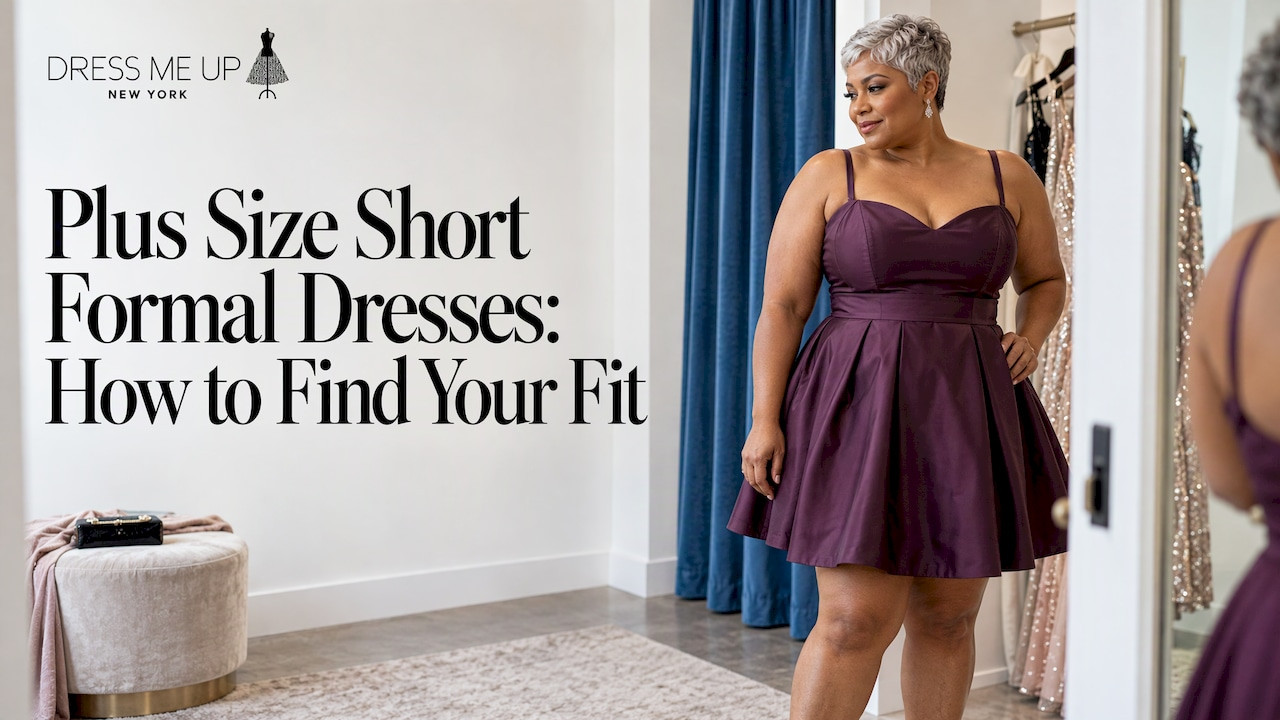
Plus Size Short Formal Dresses: How to Find Your Fit

A short formal dress can be every bit as polished as a gown, as long as three things line up: the hem suits the dress code, the structure supports you, and you can move, sit and dance without thinking about it. Get those right and a knee-length, tea-length or mini style is a confident, fun choice for prom, a wedding or a holiday party. We built our catalog by event, designer and style, so you can go straight to the occasion you’re dressing for and see short options side by side.
Below, we walk through how to choose the length, the fit and the details, with a few real-life checks you can use before you click “add to bag.”
TL;DR
- Short is welcome at most formal events. Only traditional black tie calls for a floor-length gown, so cocktail, tea-length and midi hems are safe for “formal” and “semi-formal” invitations.
- Fit beats everything. Pick a dress that lets you move, sit and dance, with a structured bodice, a quality lining and smooth draping.
- For prom and Quinceañera, start four to six months ahead and plan for alterations like hemming and added bust support.
- Weddings: check the invitation’s dress code, then choose a midi or knee-length style in a fabric that breathes.
- Shop by occasion and style in our cocktail and party collection to compare short designer options quickly.
Table of Contents
- What “short formal” actually means
- Match the hem to the dress code
- Choosing a short dress for prom or a Quinceañera
- Short dresses for weddings, bridesmaids and guests
- How to check the fit before you commit
- Fabrics, necklines and sleeves that work
- Foundations and finishing touches
- Short formal trends and how to wear them
- A sample plan: from search to special night
- Our perspective
- Find your short formal dress at Dress Me Up NY
- FAQ
- Sources
What “short formal” actually means
Short formal is a big umbrella. It covers a few hem lengths, and each one reads a little differently:
- Mini: ends above the knee. Playful, great for prom, homecoming and parties.
- Knee-length: ends at or just above the knee. The classic cocktail length, and a reliable pick for evening events and work functions.
- Midi: ends between the knee and the ankle, usually mid-calf. Elegant and easy to wear for weddings.
- Tea-length: a type of midi that falls just above the ankle, with a vintage, ballerina feel when the skirt is full.
When shoppers type “short formal dress,” they usually mean something in the cocktail family: dressier than a sundress, less dramatic than a ball gown. That’s the sweet spot we’ll focus on.
Match the hem to the dress code
The invitation tells you most of what you need to know. Here’s the quick translation.
| Dress code | Is short okay? | Good short options |
|---|---|---|
| Black tie | Traditionally no. A floor-length gown is the most traditional choice | Choose a gown from our formal gowns |
| Formal or “black tie optional” | Yes, with more freedom for shorter styles | Elevated midi or tea-length dress |
| Cocktail or semi-formal | Yes | Knee-length dress, structured mini, dressy jumpsuit |
| Prom or homecoming | Yes, varies by school | Mini or knee-length in a structured fabric |
| Reception or rehearsal dinner | Yes | Short lace, sparkly or one-shoulder styles |
The black tie point comes straight from the stylists: traditional black tie is the most polished dress code and calls for a floor-length gown, while formal dress allows more freedom for shorter styles. For a formal event that permits a shorter hem, that same guide suggests an elevated midi or tea-length silhouette.
If an invitation is unclear, a quick text to the host settles it. Hosts almost always appreciate the question, and you skip the guesswork.
Choosing a short dress for prom or a Quinceañera
Prom and Quinceañera shoppers often love a short dress for a simple reason: it’s easier to dance in, and it shows off shoes. It also keeps the look youthful and fun. Here’s how to make it work for a plus size body.
Start early and plan for tailoring
Plus size prom shoppers are advised to start four to six months ahead, earlier for custom orders. That gives you time to order, try on, return or exchange if needed, and have a seamstress make adjustments. Common alterations include:
- Hemming, which matters even more with a short dress because a half inch changes the whole look
- Bust adjustments
- Waist shaping
- Added support
The same guide suggests prioritizing bust support, waist stability and structure when you move. Think about what you’ll actually be doing: hugging friends, getting in and out of a car, posing for photos, and dancing for hours.
Look for structure, not just stretch
A designer quoted in that guide argues that fabric and structure change everything for a plus size body. Heavier fabrics, proper boning, lining and built-in support create shape and comfort without relying on anything that pinches. Her point of view is a good one to carry into the fitting room: a dress that supports you properly beats one chosen out of fear.
In a short dress, that translates to:
- A bodice with internal structure or boning so it holds its shape
- A full lining, so the fabric doesn’t cling or ride up
- A skirt with enough ease for you to sit and take a full step
- A neckline you don’t have to tug at all night
Quinceañera notes
Traditionally, the quinceañera’s main gown is full-length and dramatic. A short dress is a popular pick for the damas and family members, for the after-party outfit change, or for a fun second look. If you’re shopping for the guest of honor, our Quinceañera dresses are the place to start. For a second look, short styles from our cocktail collection are easy to dance in.
Short dresses for weddings, bridesmaids and guests
Wedding season is where short formal dresses really shine. A few things to think through before you choose.
Read the invitation first
For black tie weddings, a floor-length gown is the traditional answer. For anything described as formal, cocktail or semi-formal, midi and tea-length styles are welcome. If the ceremony is in a house of worship, you may also want shoulders covered. A wrap, a bolero or sleeves solve it without changing the dress.
Pick something you can move in
The same stylists’ advice is simple: a formal dress should let you move, sit and dance comfortably. Weddings are long. You’ll be standing for the ceremony, sitting for dinner, and probably dancing late. A short dress with a breathable fabric is especially nice if the venue is warm. Comfort, particularly for dinner and dancing, is a theme in a wedding-reception guide from The Knot, which describes short reception dresses as a fun, flirty alternative to a long gown.
Ideas for guests and bridesmaids
If you’re a guest, here are styles that tend to work well:
- A short lace dress with a sweetheart neckline, one of the reception-dress looks highlighted by The Knot
- A one-shoulder style with ruffled edges, also from that guide, for a softer, romantic feel
- A dress with short puffed sleeves, which one fashion editor calls a playful choice that pairs well with statement earrings
- A midi wrap or A-line dress in a rich solid color for evening weddings
Bridesmaids usually follow the bride’s color and length, so ask early. Short bridesmaid dresses are a nice option for casual or garden weddings, and the bride often welcomes different necklines for different bodies. You can browse our wedding guest and bridesmaid dresses by style to see what’s available.
Shopping for the bride herself? The Knot notes that short, sparkly styles are an option for a second bridal look or a reception party dress.
How to check the fit before you commit
Fit is the decisive test. The best-looking dress on the hanger isn’t the one to buy if it fights you when you sit down. Run through this list at home when your order arrives, wearing the shoes and undergarments you plan to wear on the day.
- Sit down. Does the hem stay at a length you like? Does the waist dig in or the bodice gape?
- Raise your arms. Hug an imaginary friend. If the dress rides up, pulls at the armholes or shifts at the bust, it needs a different size or tailoring.
- Walk and take a big step. A skirt should let you stride into a car or climb stairs.
- Dance for a minute. Twirl, bounce, reach. Check that nothing slips.
- Check the lining and seams. Smooth draping and a quality lining make a short dress look expensive and feel better on the skin.
- Look at the back. Zippers should close without strain, and the back neckline shouldn’t bunch.
Those points line up with the expert guidance that fit is the main test: look for structured bodices, quality linings and smooth draping, and choose details that highlight features you like, such as your waist, shoulders or neckline.
Sizes and measurements vary from designer to designer, so check each product’s size chart and compare it to your bust, waist and hip measurements. If you’re between sizes, our team of experienced fashion professionals is ready to help you think it through. For more detail on sizing, our fit-first style guide and our plus size formal attire guide go deeper.
Fabrics, necklines and sleeves that work
There’s no single formula, and your own comfort is the best guide. These are general styling ideas we like, not rules.
Fabrics
- Crepe, satin and stretch satin have a polished finish and drape smoothly.
- Lace over a lining adds texture and feels dressy, especially for weddings.
- Structured fabrics like taffeta, brocade or mikado hold a shape, which is useful in fuller short skirts for prom.
- Sequins and beading go well with a lining that keeps the inside smooth and comfortable.
For very warm venues, look for breathable linings, and bring a wrap for air-conditioned rooms.
Necklines
- Sweetheart is flattering and supportive, and it pairs well with a boned bodice.
- V-neck and wrap necklines are easy to adjust and highlight the neck and shoulders.
- Square and bateau give a clean, modern look.
- Halter or one-shoulder can feel glamorous. Check that the straps are secure and that the support is built into the dress.
Sleeves
Sleeves are a fun way to adapt a short dress to the setting. Puffed short sleeves add playfulness, flutter sleeves feel romantic, and long sleeves give a short hem a sophisticated, balanced look for winter events. Straps that are a bit wider usually feel more secure than very thin ones.
Color and print
Rich jewel tones, classic black, navy, emerald and blush are all easy choices for formal events. If you want a head-to-toe monochrome look, matching your shoes and accessories to the dress color creates a long, sleek line. Choose the color that makes you feel like yourself, and check how it looks in daylight and indoor light.
Foundations and finishing touches
A short dress shows more of your legs, so the finishing touches matter. A smooth base layer helps the dress sit the way it was designed to. If you like layering for comfort and a seamless line, these bodysuit outfit ideas show how a smooth base can work under a variety of looks.
A few more tips:
- Shoes: If you’ll be dancing, choose a heel or wedge you can wear for hours, or pack flats.
- Jewelry: Statement earrings work well with simple necklines. If the dress is busy, keep jewelry simple.
- Outerwear: A wrap, blazer or faux fur stole makes a short dress work for cooler evenings.
- Bag: A small clutch keeps your hands free for dancing.
Short formal trends and how to wear them
Trends move quickly, so treat these as inspiration rather than rules. A few short formal styles come up again and again: sparkly mini dresses, structured cocktail dresses with sculpted bodices, and dressy jumpsuits. The easiest way to adapt a trend to a formal event is to keep the shape and elevate the fabric. For example, take a playful mini and choose a lined, structured version in a rich color. Our designer mini dresses and jumpsuits are grouped together so you can compare them in one place.
For more silhouettes and styling ideas, try our guides on six formalwear silhouettes for prom, weddings and galas and plus size formal dresses by style and fit.

A sample plan: from search to special night
If you want a simple timeline, here’s how it can look for an event a few months away.
- Four to six months out: Decide on your dress code, budget and general style. Browse by occasion and save favorites.
- Three months out: Order your top choice, so there’s time for returns, exchanges and tailoring.
- Two months out: Try the dress on with your shoes and undergarments. Book a seamstress if you need hemming or bust or waist adjustments.
- Two weeks out: Do a final fitting, test the dance-and-sit checks, and plan accessories.
- The week of: Steam the dress, pack a small emergency kit with double-sided tape, safety pins and a spare pair of shoes, and enjoy.
Our perspective
We believe a short formal dress should feel like the best version of getting dressed up: easy, confident and made for moving. The hem is just the beginning. What makes the difference is the structure inside the dress, the way the fabric drapes, and how well it supports you from the first photo to the last dance.
That’s why we organize our catalog by event, designer and style. You shouldn’t have to scroll through everything to find a knee-length dress for a spring wedding or a structured mini for prom. Our collections are curated from New York’s fashion district and global designers, and our team of experienced fashion professionals is here to help you when you’re deciding between two favorites or two sizes.
Our advice is to choose the dress that makes you stand tall. If you love it and can move in it, you’ve found the right one.
Dressmeup
Find your short formal dress at Dress Me Up NY
Ready to browse? Our cocktail dresses, designer jumpsuits and designer mini dresses make it simple to compare short styles for parties, proms and receptions in one place. If you’re dressing for a wedding, head to our wedding guest and bridesmaid collection, and if you need a gown for a black tie night, you’ll find options in our formal gowns.
We also offer gift certificates, which are a thoughtful choice if you’re shopping for a friend or family member who wants to pick her own dress. You can see current promotions, including free shipping on certain orders, on our site.
FAQ
Is a short dress appropriate for a formal event?
In most cases, yes. Traditional black tie calls for a floor-length gown, but formal and semi-formal events allow more freedom for shorter styles, especially elevated midi and tea-length dresses. When the invitation is unclear, ask the host.
What length is best for a plus size cocktail or short formal dress?
Knee-length, midi and tea-length are the most dependable choices for formal settings. Minis work well for prom, homecoming and parties. The best length is the one that stays where you want it when you sit, walk and dance.
How far in advance should I order a prom dress?
Plan to begin four to six months ahead, and earlier for custom orders. That leaves time for hemming, bust adjustments and waist shaping, which are common alterations on a prom dress.
What should I wear under a short formal dress?
Choose underpinnings that match the neckline and back of your dress, and try everything on together before the event. A dress with built-in support and a quality lining reduces the need for extra layers, and a smooth base layer can help the dress drape cleanly.
Can I wear a short dress as a wedding guest?
Yes, for most weddings that are not black tie. A midi or knee-length dress in a refined fabric is a classic choice. Check the invitation, consider the venue and season, and bring a wrap if the ceremony is in a house of worship or the evening gets cool.
Sources
- The Best Plus-Size Formal Dresses for Galas and Weddings, Who What Wear
- 18 Plus-Size Reception Dresses: Short, Sparkly & Sexy, The Knot
- The 20 Best Plus-Size Wedding-Guest Dresses, Who What Wear
Recommended
- Plus Size Gowns: How to Find One That Fits
- Plus-size formal attire: find your perfect fit & style
- Women’s Plus Formal Dresses: Style & Fit Guide 2026
- Formal Outfits for Plus Size: A Fit-First Guide