
5 Measurements to Nail Royal Blue Plus Size Formal Dresses
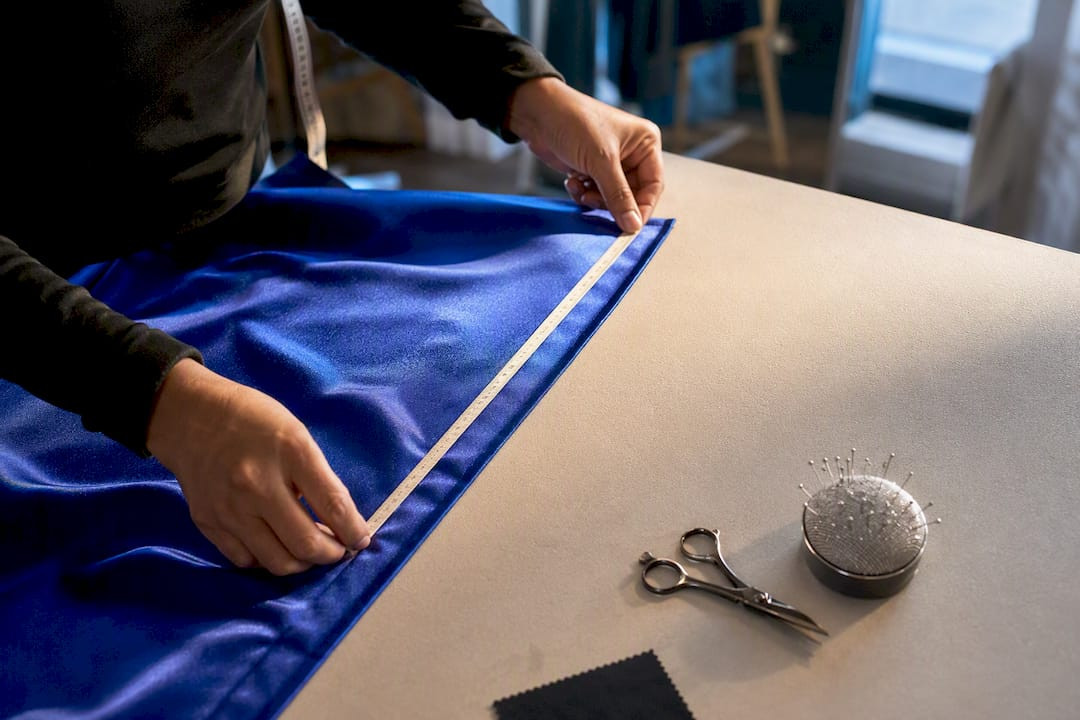
5 Measurements to Nail Royal Blue Plus Size Formal Dresses
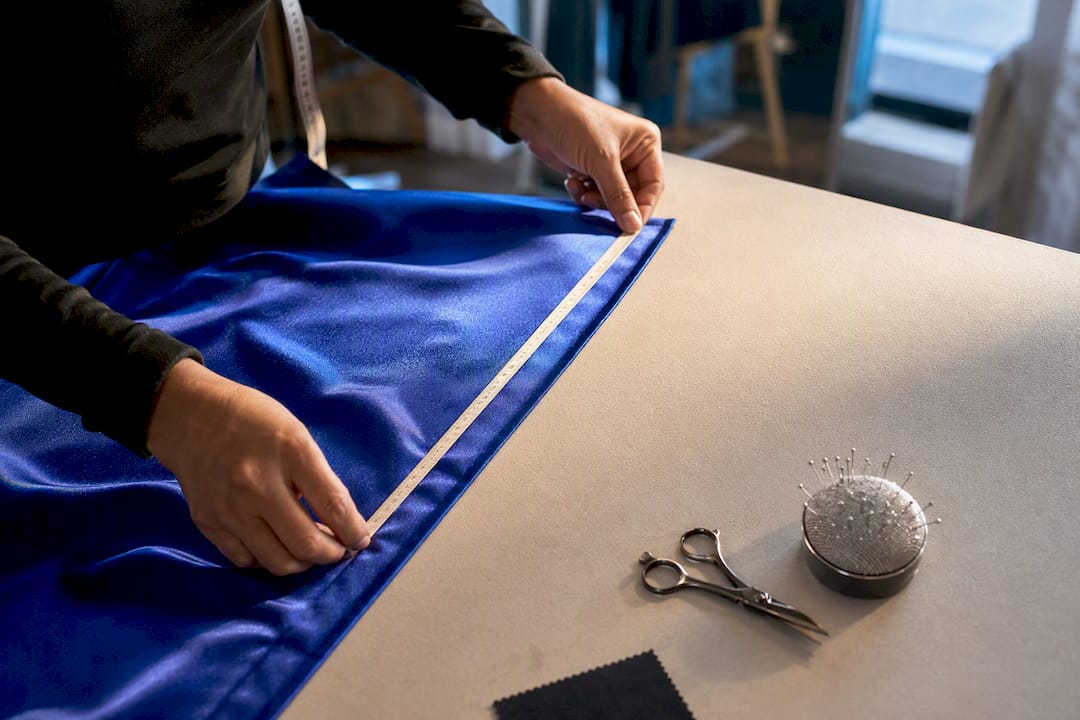
The best royal blue plus-size formal dresses lean on A-line, fit-and-flare, or empire waist silhouettes built from structured fabrics like duchess satin, crepe, or velvet. Floor-length works for black tie; midi and knee-length dresses are commonly accepted for cocktail-style events when the fabric reads formal. Fit and proper sizing beat price every time, so measure twice before you buy anything.
TL;DR:
- Choosing the right silhouette depends on your body shape, with A-line and empire waist designs being the most forgiving for plus sizes.
- Fabrics like duchess satin, crepe, and velvet are essential for a formal royal blue dress, while lightweight or see-through fabrics should be avoided.
- Accurate measurements of the bust, waist, hips, and torso are crucial, especially for fitted or structured styles like mermaid or sheath dresses.
- Proper fit and comfort, including breathable linings and correct sizing, are more important than price or trend for a polished, wearable formal look.
- Shopping online requires careful review of images, fabric details, and size charts, and consultation with customer service helps ensure the dress fits properly before purchase.
Table of Contents
- What Silhouettes Actually Flatter Curves in Royal Blue?
- Which Fabrics Read as Formal in Royal Blue?
- Getting the Fit Right Before You Order
- Finishing the Look: Shoes, Bags, Jewelry, and Outerwear
- Your Online Shopping Checklist Before You Click Buy
- What Dress Me Up NY Recommends for Fit-First Shopping
- Comfort Isn’t a Trade-Off for Formality
- Author Perspective: Confidence, Inclusivity, and How to Make Royal Blue Feel Like You
- Find Your Fit With Dress Me Up NY
- Sources
What Silhouettes Actually Flatter Curves in Royal Blue?
Silhouette matters more than color when you’re building a formal look, and royal blue happens to be forgiving enough to work with almost every shape on this list. Here’s how the main options behave once you put them on.
A-line and fit-and-flare dresses define the waist and then release gracefully over the hips, which balances a fuller bust or midsection without clinging anywhere it shouldn’t. These two styles are the safest starting point if you’re not sure what you like yet.
Empire waist and wrap dresses sit just under the bust and skim past everything else. If you carry weight through your middle or you want extra room to move (and breathe) during a long reception, this cut does a lot of quiet work for you.
Ballgowns and full-skirt dresses bring drama through volume, but that same volume can overwhelm a shorter frame. They shine at black-tie weddings and galas where a bigger silhouette is expected, less so at a casual cocktail hour.
Mermaid and sheath dresses are the most tailored options on this list. They hug the body from bust to knee or thigh, so they demand a near-perfect fit. Get the sizing wrong and every seam shows it.
Two-piece sets and jumpsuits are the quiet disruptors of plus-size formalwear. A structured top paired with a wide-leg pant or matching skirt gives you the same formal impact with more room to move, and two-piece formal separates are becoming a real alternative for readers who find traditional gowns restrictive.
Length depends on the dress code. Black-tie events call for a floor-length gown, though a well-made cocktail dress in midi or knee-length is accepted when the fabric and finish read formal. Knee-to-midi hems also work for many semi-formal and cocktail events as long as the material isn’t casual.
- A-line and fit-and-flare: universal starting point, waist definition without clinging
- Empire waist and wrap: best for midsection coverage and freedom of movement
- Ballgown: dramatic, best for black tie, can overwhelm petite frames
- Mermaid and sheath: structured, tailored, needs precise sizing
- Two-piece and jumpsuit: modern alternative with built-in mobility
Which Fabrics Read as Formal in Royal Blue?
Fabric choice is honestly the fastest way to tell a formal dress from a fancy dress. Vogue’s own guide to formal attire puts silk, satin, velvet, crepe, and sequins at the top of the list, and that hierarchy holds true whether you’re shopping for a prom or a gala.
Royal blue in duchess satin has a stiffness that holds a silhouette’s shape and catches light in a way that photographs beautifully. Crepe drapes more softly and skims the body without clinging, a good pick if you want structure without stiffness. Velvet brings depth and warmth to the color, especially for fall and winter formal events, and it tends to be more forgiving around the midsection. Structured tulle, when properly lined, adds volume to a skirt without looking costume-y.
Weight and opacity matter as much as the fabric name. A thin jersey or a lightweight poplin will look casual no matter how deep the blue is, because the fabric doesn’t hold a shape or block light the way formal materials do. If you can see your hand through the fabric when you hold it to a window, skip it for anything black tie.
Embellishments like sequins and beading can visually balance a silhouette. Placed at the waist or along one shoulder, they draw the eye exactly where you want it. Scattered all over a bodice, they can add unwanted bulk, so ask about placement before you buy.
Fabric quality matters more than the price tag. A well-fitted dress in appropriate fabric consistently reads more elegant than an expensive dress in the wrong material, which is one reason a mid-range satin gown can outshine a pricier but poorly cut competitor.
- Prioritize: duchess satin, silk blends, crepe, velvet, structured tulle
- Avoid: cotton poplin, thin jersey, unlined chiffon
- Check embellishment placement before ordering
- Follow care labels closely. Satin and velvet usually require dry cleaning, not home washing
Getting the Fit Right Before You Order
Fit is the single biggest factor separating a dress that looks formal from one that just looks expensive. Take these measurements before you shop, not after the dress arrives:
- Bust and high bust — measure both, since the difference tells you whether a bodice with a built-in cup will sit correctly.
- Underbust — critical for structured gowns with boning or a fitted waist seam.
- Waist — measure at your natural waistline, not where your pants sit.
- High hip and full hip — the widest point of your hips, usually seven to nine inches below your waist.
- Torso length — from shoulder to natural waist, which matters enormously for gowns with built-in cups or fitted bodices, since a mismatch here is what causes the bust or waistline to sit in the wrong place.
When you compare your numbers to a retailer’s size chart, size up if you fall between two sizes, especially on structured or mermaid styles that leave no room for error. A-line and empire waist dresses are more forgiving if you land between sizes.
Common alteration requests include hemming, taking in the waist, and adjusting bra cup depth on dresses with built-in support. For sheath and mermaid silhouettes, expect to need a tailor almost every time, since these cuts are the least forgiving of small sizing gaps. Some retailers also offer made-to-measure or custom adjustment options for plus sizes, which is worth asking about if standard sizing consistently runs off for your proportions.
Pro Tip: Ask the retailer for the seam allowance and hem allowance before you order. Knowing how much extra fabric a tailor has to work with saves you a wasted trip and speeds up alterations considerably.
Finishing the Look: Shoes, Bags, Jewelry, and Outerwear
Royal blue is bold enough to carry metallics well, which opens up more accessory options than you might expect. Gold and silver both work, so pick based on your other jewelry rather than forcing a rule.
For footwear, heels remain the standard choice at formal events, but embellished flats are a completely acceptable substitute when they’re in good condition and dressy in style. Closed-toe satin pumps are the safest classic pick if you want something that photographs well and holds up through hours of standing and dancing.
Keep your bag small. A structured clutch or a mini bag with a delicate chain strap keeps the proportion of a full-skirted gown intact, where anything bulky competes with the dress instead of complementing it.
Outerwear gets skipped more than it should, and it shouldn’t be an afterthought. Gala-appropriate outerwear means opera cloaks, velvet capes, or a well-made long wool wrap rather than a puffer or a casual jacket that breaks the formal line the moment you put it on.
- Footwear: heels or embellished flats, closed-toe satin pumps for versatility
- Bags: small clutch or mini bag, avoid bulky totes
- Outerwear: opera cloak, velvet cape, or long wool wrap
- Jewelry: gold or silver metallics both pair well with royal blue
Pro Tip: Try your outerwear on over the dress before the event, not just on its own. A cape that looks great solo can hide the waistline you spent so much time getting right.
Your Online Shopping Checklist Before You Click Buy
Shopping for a formal dress online without seeing it in person means you have to do a little more homework. Here’s what to check on every product page:
- Look for full-length and back-view photos, plus a close-up of the fabric texture, so you know how it drapes and whether it’s see-through.
- Note the model’s height and size relative to the dress size shown. This single detail is one of the strongest signals for how the dress will actually fit your body.
- Read the fabric content, lining details, and closure type (zipper, corset back, hidden hooks). Unlined satin and lace often need a slip underneath.
- Check the return policy and shipping timeline, especially if the dress is made-to-order, since those can run several weeks longer than in-stock items.
- Scroll customer photos, not just written reviews. Real bodies in real lighting tell you more than a five-star rating alone.
- Contact customer service if you’re between sizes or have specific concerns about torso length or bust support before you place the order.
What Dress Me Up NY Recommends for Fit-First Shopping
The size guides are built around one idea: fit comes before everything else, including trend and price. Our fit and style guide for plus-size formal dresses walks through measurements in more detail than most retailers bother to.
Shoppers are often pointed toward dresses with built-in cups, reinforced waistbands, and structured linings, since these details hold a silhouette’s shape through a full night of dancing. When standard sizing doesn’t match your proportions, especially torso length, we recommend a professional alteration rather than forcing a size that’s technically “close enough.” Our key tips for choosing plus-size formal gowns covers common tailoring fixes, and Customer service teams can often answer sizing questions before ordering.
Comfort Isn’t a Trade-Off for Formality
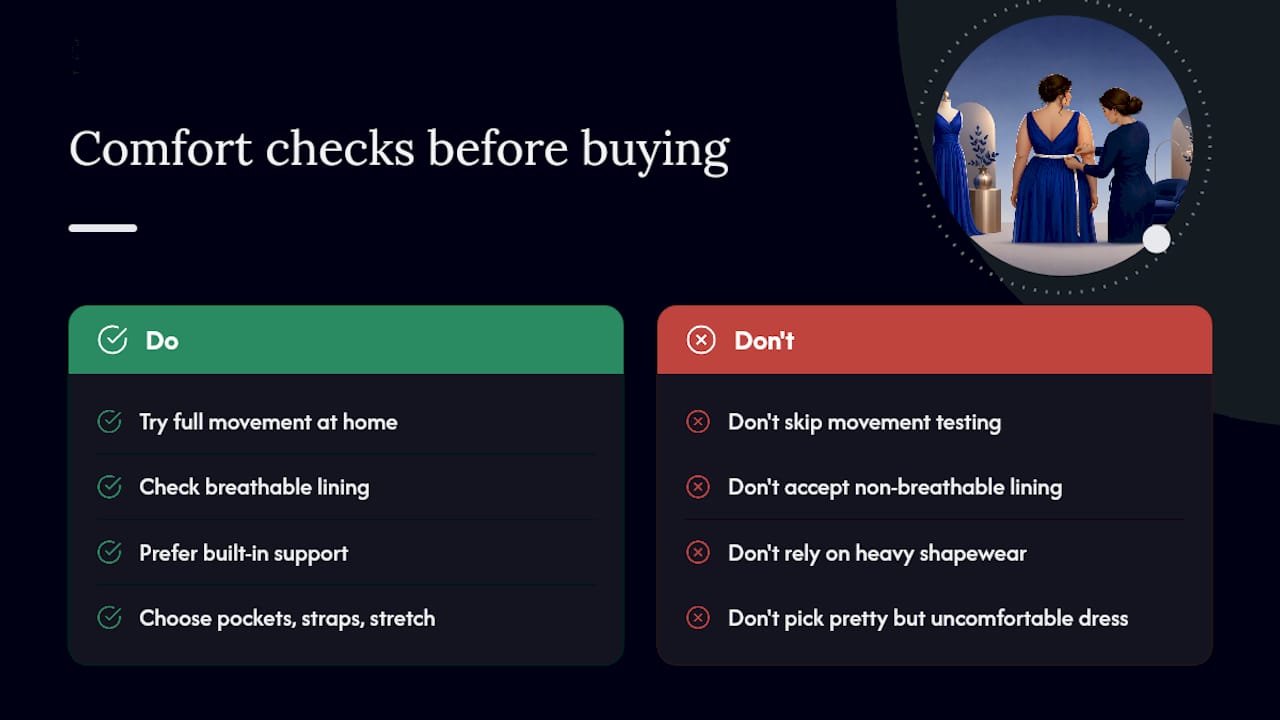
A formal dress that pinches, restricts your arms, or traps heat under layers of fabric isn’t doing its job, no matter how good it looks in a photo. Comfort and formality aren’t opposing goals. They’re both part of getting the fit right.
Breathable linings matter more than most shoppers realize, especially under structured bodices or boning. A dress lined in a breathable fabric will feel dramatically different after three hours at a reception than one lined in a heavy, non-breathable synthetic, even if both look identical in a product photo.
Ease of movement is worth testing before the big day, not during it. Raise your arms overhead, sit down, and take a few real steps in the dress at home. A mermaid or sheath silhouette that looks flawless standing still can restrict your stride if the fit is too tight through the knee, which is exactly the kind of thing you want to catch before an event, not during your entrance.
Built-in support, like structured cups or a reinforced waistband, can also reduce how much you’re relying on separate shapewear underneath, which itself affects how comfortable you feel over a long night. If a dress requires multiple layers of restrictive shapewear just to look right, that’s often a sign the silhouette itself isn’t suited to your shape, rather than a sign you need a different foundation garment.
Pockets, adjustable straps, and stretch panels built into linings are small details, but they add up. A dress with even one of these features tends to get worn again, while a beautiful dress that’s uncomfortable often ends up worn once and forgotten in the closet.
Author Perspective: Confidence, Inclusivity, and How to Make Royal Blue Feel Like You
We’ll say this plainly: the dress should work for your body, not the other way around. Too many guides treat plus-size dressing as a list of things to hide, and that framing does readers a disservice. Royal blue is a genuinely flattering color across skin tones, and the right silhouette in that color should make you feel like yourself, just dressed up.
Prioritize fit and comfort over trend. A dress you can move in, breathe in, and stand tall in will always look better in photos than one you’re quietly fighting all night. Use a real size chart, take real measurements, and don’t be afraid to reach out for guidance before you order.
— Dressmeup
Find Your Fit With Dress Me Up NY
This retailer specializes in formalwear designed for various body types, with size guides that go beyond generic charts and a style team available to answer sizing questions before checkout. Their catalog covers evening gowns, prom dresses, and wedding guest dresses in sizes intended to fit curves properly.
Before you order, browse our plus-size formal dress collection and check the size chart against your own measurements rather than guessing from the model photo alone. If you’re unsure between two sizes or need advice on torso length for a fitted bodice, reach out to our customer service team directly. They can walk you through fabric choice, lining details, and expected fit before you commit, so the dress that shows up matches the one you pictured.
Sources
- The Vogue Guide to Formal Attire | Vogue
- Attire guide: Dress codes from casual to white tie — Emily Post
Recommended
- Plus Size Formal Dress Tips for Elegant Event Style
- 7 Key Tips for Choosing Plus Size Formal Gowns
- How to Find Dress Size for Formal Events Step by Step
- Find stylish plus-size formal dresses that boost confidence