
Plus Size Trends: 3 Fit Priorities for Special Occasion Dresses
Plus Size Trends: 3 Fit Priorities for Special Occasion Dresses

Structured gowns, statement sleeves, sequined cocktail dresses, two-piece sets, and elevated jumpsuits are leading the trends in plus-size special occasion wear right now. Before you fall for any single silhouette, lock in three priorities: a flattering cut for your shape, a fabric with real recovery, and measurements taken before you shop. We built this guide so you can shop with confidence instead of guesswork.
TL;DR:
- Measure your high bust and full bust separately, then compare both with the brand’s chart; using full bust alone can leave fitted bodices gaping.
- A study of 496,365 orders found size finder users had about a 0.65% higher return rate, but repeat customer value rose 5% to 7%.
- Choose your natural measurements for scuba or high quality matte jersey with recovery, but size up in structured, boned gowns with little give.
- Order at least 3 to 4 weeks before the event for alterations; confirm hem length with event shoes and request a bustle if the gown has a train.
Table of Contents
- 1. Trendy Looks for Every Occasion, from Wedding Guest to Gala
- 2. Getting the Fit Right: Measurements That Actually Matter
- 3. Fabrics and Construction That Hold Their Shape All Night
- 4. Styling, Tailoring, and Accessories That Finish the Look
- 5. Dress Me Up NY: Fit-First Curation for Every Occasion
- 6. Caring for Your Dress After the Event
- What Shoppers Get Wrong About Plus-Size Formalwear Trends
- Ready to Find Your Dress? Here’s Where to Start
- FAQ
- Sources
1. Trendy Looks for Every Occasion, from Wedding Guest to Gala
Every event has its own dress code, but the silhouettes that work hardest for plus-size figures tend to repeat across occasions. Here’s how to match the trend to the moment.
A-line gowns remain the safest bet for weddings and galas because they nip in at the waist and release gracefully over the hips, skimming rather than clinging. Ask for a fitted bodice with a seamed waistband, and look for crepe or matte jersey for a floor-length version that moves without catching on heels.
Column dresses with ruching are having a moment for evening galas and black-tie events. The gathered fabric at the waist or side does double duty: it adds texture and camouflages any area you’d rather not highlight. These work best in fabrics with real stretch recovery, since ruching needs tension to hold its shape all night.
Wrap and draped bodices flatter nearly every bust size because the diagonal line created by the wrap draws the eye up and across, rather than straight down. This is a strong choice for wedding guest dresses when you want something polished but not overly formal.
Off-the-shoulder necklines and statement sleeves are trending hard for prom and Quinceañera looks in 2026. A structured sleeve, whether bishop, puff, or bell, balances broader shoulders and hips by adding visual weight up top. Pair this with a sweetheart or portrait neckline for a classic finish.
Sequined cocktail dresses are everywhere for party season, and a lined sequin mesh is the difference between a dress that photographs beautifully and one that itches by hour two. Shorter hemlines (knee-length or just above) work well here, especially when paired with a defined waist seam.
Two-piece formal sets, a cropped top paired with a long skirt, give you the ability to mix proportions: a fitted top with a flowy skirt, or a flowy top with a sleek skirt. These are increasingly popular for Quinceañeras and proms because they photograph as one cohesive look while fitting two different body zones independently.
Structured jumpsuits have moved from “alternative” to “trend leader” for wedding guests and formal parties who want elegance without a gown. A wide-leg cut with a defined waist, like the Alyce Paris 27743 Textured One Shoulder Wide-Leg Jumpsuit, balances proportion while staying comfortable for a full evening of dancing.
A few quick style notes worth keeping in mind as you browse:
- Jewel tones and deep emerald are trending for 2026 galas and wedding guest looks.
- Textured fabrics (crinkle satin, embossed velvet) add dimension without adding bulk.
- Asymmetric necklines, like the one on the Alexander by Daymor 1382 Strapless Asymmetric Neck Jumpsuit, are a modern alternative to a classic strapless cut.
If you want a budget-friendly option, a jersey wrap dress delivers most of the same flattering lines as a draped gown at a fraction of the fuss. If you’re ready to splurge, a fully boned, structured gown from our Formal Gowns collection gives you shaping that a soft fabric alone cannot.
Pro Tip: When in doubt between two silhouettes, choose the one with a defined waist seam. It photographs better in every lighting condition.
2. Getting the Fit Right: Measurements That Actually Matter
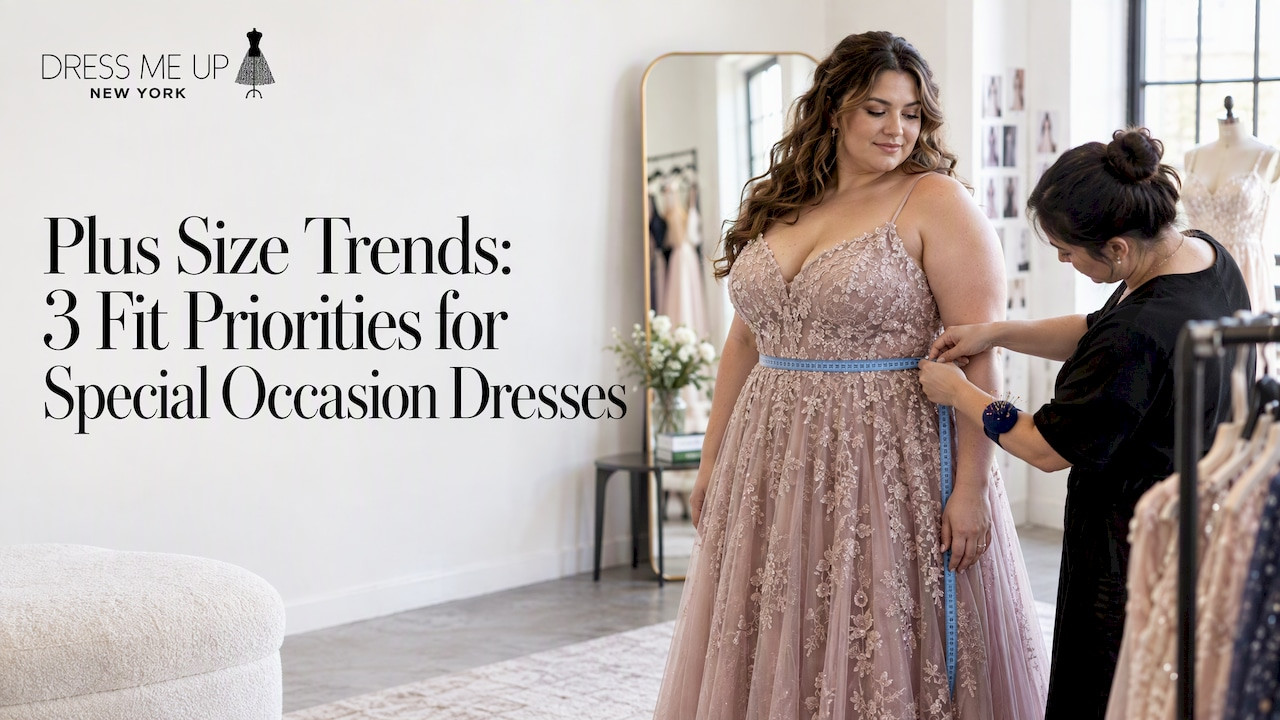
Fit problems cause more returns than style regret. A regression analysis of plus-size bridal apparel found that sizing and fit significantly predict return rates, with the model explaining over half the variation in returns across the sample studied, which makes fit the single biggest lever you control before you click “buy.” Research on plus-size apparel fit also recommends that retailers align sizing standards and widen assortment breadth, something worth considering when a size chart feels inconsistent between brands.
Take these measurements before you shop, in this order:
- High bust, measured just under your armpits across the back and front, to size the bodice frame correctly and prevent the back from gaping.
- Full bust, measured at the fullest point, to confirm cup volume against the brand’s chart.
- Natural waist, measured at the narrowest point, usually just above the belly button.
- Full hip, measured at the widest point, typically 7 to 9 inches below your natural waist.
- Torso length, from the base of your neck to your natural waist, especially important for jumpsuits and fitted gowns.
Here’s where most shoppers go wrong: they measure full bust only, then size based on that number alone. That approach tends to create gaping at the back of a fitted bodice, because the frame of the dress is cut for the high bust, not the fullest point. Measuring both numbers and comparing them to the brand’s chart solves this before the dress ever arrives.
Fit should feel secure at three points: the underbust seam, the natural waist, and the shoulder line. If a strap digs in, if the waistband rolls, or if a zipper strains anywhere other than right at installation, that’s a sign to size up rather than hope it stretches out over the event.

A size-finder tool can meaningfully change how confident you feel about that decision. A study of 496,365 orders from 75,707 customers found that shoppers using a size finder had a slightly higher return rate, about 0.65%, but the same group showed a 5 to 7% increase in repeat-customer value over following quarters. In plain terms: the tool doesn’t eliminate returns, but it builds enough trust that shoppers come back and buy again.
If a fabric has real stretch recovery (like scuba or a high-quality matte jersey), you can often size to your natural measurements; consider exploring versatile options in black dresses that combine comfort and style. If it’s a structured, boned gown with little give, size up rather than down, since boning and side seams are harder to let out than to take in. Plan on ordering at least 3 to 4 weeks before your event to leave room for alterations, especially if a bustle or hem adjustment is likely.
For a deeper walkthrough of measuring techniques by silhouette, our plus-size formal attire fit guide breaks down specific adjustments by dress type.
3. Fabrics and Construction That Hold Their Shape All Night
The fabric does as much work as the silhouette. Scuba and neoprene blends offer built-in shaping, which makes them ideal for column dresses and structured jumpsuits where you want the fabric itself to hold a line without relying on separate shapewear. Matte jersey drapes forgivingly and moves well for wrap dresses and two-piece sets, while thinner jersey blends can cling in ways that highlight areas you’d rather smooth. Crepe sits between the two: it has enough weight to hang cleanly but enough flexibility for A-line and column cuts. Chiffon is beautiful for layered skirts and movement but needs a built-in lining to avoid see-through fabric at the hip and thigh. Sequin mesh looks stunning in photos but only works comfortably when it’s fully lined, since unlined sequins can scratch and shift throughout the night.
When you’re shopping product photos rather than fabric swatches, a few features to watch for:
- Boning or structured seams visible at the waist or bust usually mean better shaping without added shapewear.
- A double-layered skirt (visible in the product description or a close-up photo) prevents clinging and static.
- A quality zipper, ideally metal rather than plastic, that extends well into the bodice for a smoother close.
- A lining noted on the product page, especially for sequin, lace, or chiffon pieces.
- Waist stays (small interior tabs) mentioned in the description, which keep a strapless or off-shoulder bodice from shifting during movement.
If you want structure with stretch, look at how the dress photographs on a moving model rather than a static shot, since that tells you more about recovery than a flat product image ever will.
4. Styling, Tailoring, and Accessories That Finish the Look
The dress is the anchor, but the finishing details decide whether a look feels complete. For off-shoulder and statement-sleeve dresses, keep earrings simple (studs or small drops) so they don’t compete with the neckline, and consider an updo that shows the shoulder line. For wrap and draped bodices, a single statement cuff or a wide belt in a contrasting texture adds definition without clutter.
Shapewear should smooth, not squeeze. A high-waisted brief under a column gown gives a clean line at the waist, while a full-coverage slip under chiffon or lace prevents any clinging at the hip. If you’re ordering online, note on your sizing chart whether the brand accounts for shapewear in its listed measurements, since some do and some don’t.
A few tailoring requests worth making, whether online or with a local tailor:
- Ask for side or center-front boning on strapless or sweetheart gowns for better bust support without flattening.
- Request a bustle point for any gown with a train, so you can dance without tripping on fabric.
- Confirm hem length with your actual event shoes, not flats, since a 3-inch heel changes hem length significantly.
- Ask about extending or shortening straps for a more secure shoulder fit.
Footwear matters more than most people plan for. A block heel or platform gives the same formal height as a stiletto with far more comfort across a 4 to 5 hour event. For outerwear, a cropped faux-fur shrug or a tailored blazer works over nearly any silhouette without hiding the dress’s line.
Pro Tip: Bring (or request) your event shoes before your final alteration appointment. Hem length is the single most common last-minute fix.
5. Dress Me Up NY: Fit-First Curation for Every Occasion
We built our catalog around the occasions you’re actually shopping for, not generic categories. Our Evening Dresses collection, Quinceañera Dresses, and Wedding Guest Dresses sections are organized so you can filter by event, silhouette, and designer instead of scrolling endlessly.
Because fit drives most of the frustration in formalwear shopping, we’ve put together resources to help before you order. Our women’s plus formal dress style and fit guide and our 7 key tips for choosing plus-size formal gowns walk through measurement techniques and common fit mistakes by silhouette.
We also run promotional offers, including free shipping on qualifying orders and quantity discount deals, so you can outfit an entire event (dress, accessories, even a second option as backup) more conveniently. Our team can help you narrow down a shortlist if the catalog feels like a lot to sort through on your own.
6. Caring for Your Dress After the Event
A great dress deserves a little care once the night winds down. Hang your gown or jumpsuit immediately rather than leaving it folded in a bag, since structured fabrics like crepe and scuba can hold creases if left compressed for more than a day or two.
Check the care label before attempting to clean anything yourself. Most sequined, beaded, or heavily embellished pieces need professional dry cleaning, since home washing can loosen stitching or dull embellishments. For simpler jersey or crepe dresses, a gentle steam often removes travel wrinkles without a full cleaning cycle.
Spot-treat any stains as soon as possible rather than waiting until your next event reminds you the dress needs cleaning. A professional cleaner familiar with formalwear will have better luck with a fresh stain than one that’s set for months.
Store your dress on a padded hanger inside a breathable garment bag, not plastic, which can trap moisture and yellow light-colored fabrics over time. If the dress has a long train or delicate straps, consider stuffing the bodice lightly with tissue paper to help it hold its shape in storage.
A little upkeep after the event means the dress is ready to wear again, whether that’s a second event this season or a future one entirely.
What Shoppers Get Wrong About Plus-Size Formalwear Trends
The biggest mistake we see is chasing a silhouette because it’s trending rather than because it suits the body wearing it. A structured gown that looks incredible on one body shape can overwhelm another, and a trend list is only useful once you’ve filtered it through your own measurements and comfort preferences.
The conventional advice tends to stop at “know your body shape,” which is true but incomplete. What actually reduces disappointment is measuring before you shop, not after a dress arrives and doesn’t fit the way the photo suggested. Fit problems are also the leading driver of returns in this category, which means the fit-first approach isn’t just about comfort. It’s about avoiding the frustration of a last-minute scramble for a backup dress.
If we had to name one habit worth building, it’s this: measure your high bust and full bust separately before you open a single product page. That single step prevents more disappointment than any trend forecast ever could.
— Dressmeup
Ready to Find Your Dress? Here’s Where to Start
Shopping for a special occasion dress works best as a short, deliberate process rather than an open-ended scroll. Start by measuring yourself using our women’s plus-size special occasion dress fit guide, then browse by event and silhouette rather than by trend alone.
A few steps to make the process smoother:
- Measure your high bust, full bust, waist, and hips before you start browsing.
- Filter our Evening Dresses catalog by silhouette and fabric to narrow options fast.
- Check the returns policy on any piece before ordering, especially if you’re bracketing sizes.
- Reach out to our customer service team if a size chart question comes up. We’re glad to help you land on the right fit the first time.
Our promotional offers, including free shipping on qualifying orders, make it easier to order with confidence and adjust if something needs to go back.
FAQ
What silhouette is most flattering for plus-size special occasion dresses?
There’s no single answer since it depends on your proportions, but A-line gowns, wrap bodices, and dresses with ruching are among the most consistently flattering because they define the waist while skimming rather than clinging elsewhere. Structured jumpsuits and two-piece sets are also strong options if you prefer more coverage with the same defined-waist effect.
How do I know what size to order for a plus-size formal dress?
Measure your high bust, full bust, waist, and hips, then compare those numbers directly to the brand’s size chart rather than relying on your usual size. Research on sizing and fit in plus-size apparel shows that fit and sizing are strong predictors of returns, which is why measuring first matters more than guessing based on past purchases.
Should I size up or down for a stretchy fabric like scuba or jersey?
For fabrics with real stretch and recovery, like scuba or high-quality matte jersey, you can generally size to your natural measurements rather than sizing up. For structured, boned fabrics with little give, size up, since it’s easier for a tailor to take a dress in than to let one out.
How far in advance should I order a dress for a wedding or prom?
Plan to order at least 3 to 4 weeks before your event to allow time for alterations, especially if the dress needs hemming or a bustle point added. Ordering earlier also gives you room to exchange for a different size if the fit isn’t right the first time.
What should I look for in product photos to judge fabric quality online?
Look for mentions of lining, boning, or waist stays in the product description, and check whether the dress is shown on a moving model rather than only a static shot. A double-layered skirt and a visible metal zipper extending into the bodice are both strong signs of better construction.
Sources
- Fits like a glove? Knowledge and use of size finders and high-end fashion retail returns
- The Relationship Between Anthropometric Sizing, Fit Issues, and Return Rates in Plus-Size Women’s Apparel
Recommended
- Women’s Plus Size Special Occasion Dresses: Your Fit Guide
- Plus Size Formal Dress Tips for Elegant Event Style
- Plus Size Gala Attire: Style and Fit Guide for 2026
- Plus Size Prom Dresses: Curvy-Friendly Picks You’ll Love