
Two-Piece Formal Gowns: How to Choose, Fit and Style One
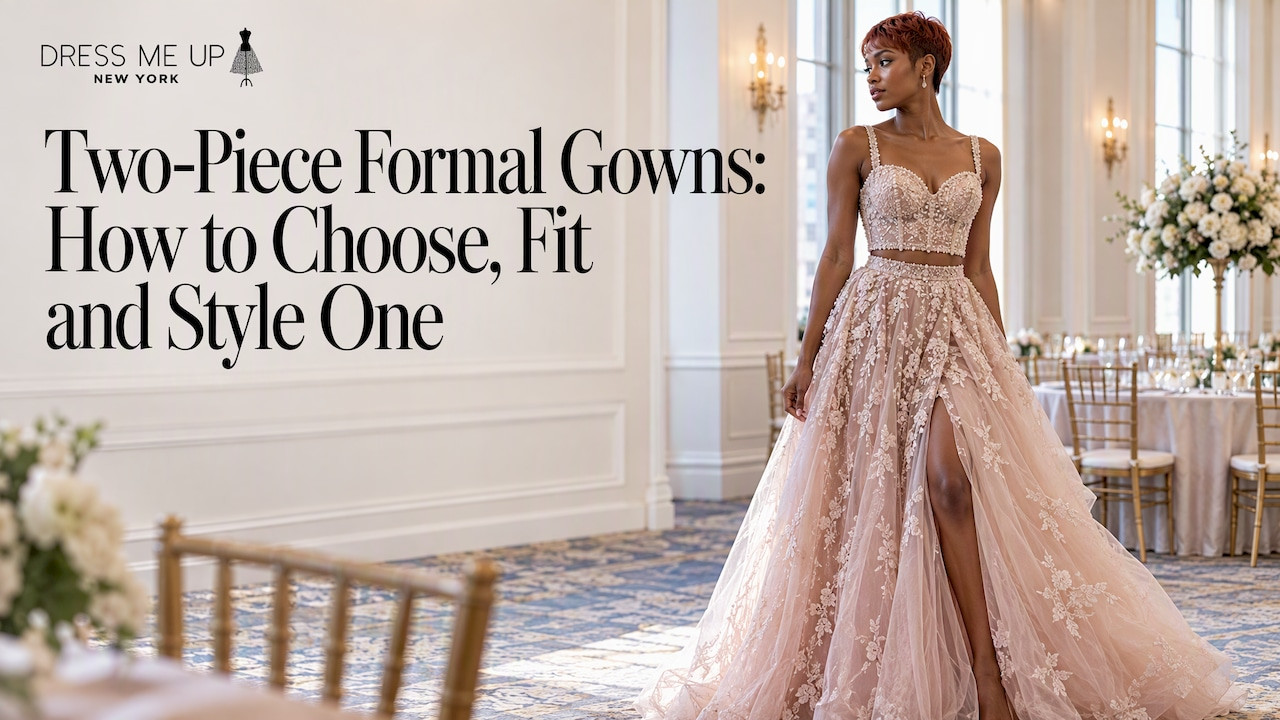
Two-Piece Formal Gowns: How to Choose, Fit and Style One

A two-piece formal gown is a top and a skirt (or a top and trousers) designed to be worn together as one floor-length or formal look. It’s a great pick when you want a gown that fits your proportions, shows a little skin without a full cutout, and feels a bit more current than a classic one-piece. Below, we walk through the silhouettes, how to pick the right fit and coverage, what to check on sizing and care, and how to style the whole look for prom, a wedding, a Quinceañera or a gala.
TL;DR
- A two-piece gown has two main parts, usually a bodice and a skirt, and the pairing is built to look like a single outfit.
- Because the top and bottom are separate, they can fit your body more precisely, especially if your bust and hips sit in different size ranges.
- Choose the skirt for the event (ball gown for drama, A-line for ease, mermaid for shape) and the top for your comfort and coverage.
- Check the waistband overlap, fabric weight, lining and closures before you buy, and plan for a quick alteration if you need one.
- Keep accessories simple: the set already makes a statement.
Table of Contents
- What counts as a two-piece formal gown?
- Why shoppers love two-piece gowns
- Choosing the right skirt silhouette
- How to choose fit, coverage and sleeves
- Which occasions suit a two-piece gown?
- Sizing, construction and care: a pre-purchase checklist
- Styling your two-piece formal gown
- Shop two-piece formal looks at Dress Me Up NY
- Our perspective
- FAQ
- Sources
What counts as a two-piece formal gown?
The definition is simple. Museum costume cataloguing standards describe a two-piece dress as two main parts, typically a bodice and a skirt, and they don’t count extras like belts or collars as separate pieces. A one-piece dress, by contrast, is a single main garment.
In formalwear, that definition shows up in a few familiar ways:
- Crop top and full skirt. The most popular prom and gala combination right now, with a bare strip of midriff or a cleverly placed gap between the pieces.
- Corset-style bodice and skirt. Structured and supportive, with boning that shapes the waist.
- Long top and skirt with no gap. The pieces overlap, so from a distance it reads like a regular gown. A good choice if you want the two-piece detailing without showing skin.
- Top and wide-leg trousers. Less common, but a polished option for a wedding guest or a gala when you’d rather skip a skirt.
- Matching set with a jacket or cape. Technically three pieces, but it’s the most practical way to add coverage for a ceremony or a chilly venue.
None of these is better than a one-piece gown. They just solve different problems, and the biggest problem they solve is fit.
Why shoppers love two-piece gowns
We hear the same reasons again and again from customers:
- Fit that follows your shape. If your top and bottom halves don’t land in the same size, a one-piece gown forces a compromise. With two pieces, each part can be sized to the body part it covers.
- A modern look on a formal silhouette. You still get the sweep of a ball skirt or the line of a mermaid, but with a more fashion-forward top.
- Comfort. Separate pieces move a little differently, and a waistband sitting at your natural waist is easier to dance in than a long, rigid bodice.
- Flexibility. A solid-color skirt can sometimes be worn again with a different top, which stretches your budget.
If you’d like to see what’s available in our catalog right now, browse our formal gowns and look for sets and separates by event or designer.
Choosing the right skirt silhouette
The skirt sets the mood of the whole look, so start there.
Ball gown skirt
Full, voluminous and dramatic, usually in tulle, satin or organza. It’s the natural choice for a Quinceañera or a formal prom where you want a big entrance. Pair it with a fitted crop top or corset top to keep the proportions balanced: volume below, structure above.
A-line skirt
Flows from the waist to the hem without the full volume of a ball gown. It’s easy to walk in, forgiving on most body types, and works well for weddings and galas where you’ll be sitting through dinner and then dancing.
Mermaid or fit-and-flare skirt
Hugs the hips and flares out below the knee. It’s glamorous and shows off your curves, but check that you can sit, climb stairs and take a full stride. Some mermaid skirts limit movement more than you’d expect.
Column or slim skirt
Straight and sleek, often with a slit. It looks sophisticated on a red carpet or at an evening event, and it pairs nicely with a more embellished top.
Fabrics you’ll see
Satin, tulle, lace, sequins and beading are common in two-piece formal sets. A quick rule: let one piece carry the sparkle. A beaded top with a plain satin skirt looks intentional. Beads and sequins on both can feel heavy unless the design is clearly meant to match.
How to choose fit, coverage and sleeves
This is where two-piece gowns really earn their place, and where a few small decisions make a big difference.
Start with your measurements
Measure your bust, natural waist and hips with a soft tape, standing relaxed. Then compare each measurement to the size chart for that specific piece. With a set, you may find the top fits one size and the skirt another. That’s normal. Many shoppers whose measurements fall into two different size ranges find this the main reason to choose separates, and if the retailer allows ordering the pieces in different sizes, take advantage of it. Check the product page or contact customer service before you order.
Look at the waist overlap
When you stand, sit and raise your arms, how much space shows between the top and skirt? Decide ahead of time whether you want a bare midriff, a thin strip of skin or full coverage. A set that looks seamless in a standing photo can shift when you move, so look for a skirt with a higher waistband or a top with a longer hem if you want to stay covered.

Pick the neckline for support
Strapless and sweetheart tops look beautiful but depend on boning and a snug fit to stay put. If you’re planning to dance all night, check for internal boning, a grip strip or the option to add straps. Halter and high-neck tops give more security and often photograph well.
Long sleeves, done elegantly
A long-sleeve two-piece formal dress is a smart option for a winter wedding, a ceremony in a house of worship, a gala in an air-conditioned ballroom, or simply if you prefer more coverage. A few things to look for:
- Sleeve fabric. Sheer lace or mesh sleeves keep the look light. Opaque satin or crepe sleeves feel more structured and formal.
- Arm room. Try raising both arms. If the top rides up a lot, size up or choose a style with a longer hem.
- Cuff and wrist. Fitted cuffs with buttons or illusion sleeves often look best with sparkly gowns, since they don’t compete with bracelets.
- Balance. If the sleeves are dramatic (bishop or puff), keep the skirt clean.
Plan for the event’s dress code
A two-piece set can be as formal as any gown, but the details should match the occasion. For weddings, Emily Post suggests considering the type and timing of the wedding and the venue, and any restrictions a house of worship may have. That advice is written about bridal gowns, but it works well for guests, too: a crop top may be perfect for a ballroom reception and wrong for a morning ceremony.
Which occasions suit a two-piece gown?
| Occasion | What works well | What to watch |
|---|---|---|
| Prom | Crop top with ball gown or A-line skirt, corset top, sequin or beaded sets | School dress code, how much midriff you want to show |
| Quinceañera | Full ball skirt with a structured top, soft pastel or jewel tones | Volume and movement for the waltz and photos |
| Wedding guest | Long-sleeve or high-neck top with an A-line or column skirt, coordinated sets | Venue, time of day, and avoiding white or ivory |
| Bridesmaid | Matching sets in one color, mixed tops with the same skirt | Group consistency and the bride’s preferences |
| Gala or red carpet | Embellished top with a sleek skirt, bold color or metallic | Train length, stairs, and how you’ll sit |
For more guidance on dress codes, our guides on wedding guest dress etiquette and what to wear as a wedding guest go into more detail. If you’re shopping for prom specifically, this prom skirt and top set guide explains why structure matters, and our overview of 2-piece formal gowns and custom fit options is a good next read.
Sizing, construction and care: a pre-purchase checklist
Before you click “add to bag,” run through these points.
- Size each piece separately. Use the chart for the top and the chart for the skirt. Don’t assume they’ll both be your usual size.
- Check the closures. A zipper or corset lace-up on the top and a zipper or hook on the skirt. Lace-up backs are adjustable, which helps with fit but takes a few minutes to tie, so practice or ask a friend.
- Look at the lining. Sheer or lace fabrics should be lined where you need coverage. If the product photos show the model in a nude lining, that’s what you’ll get.
- Feel for structure. Boning, interior seams and a grosgrain waist stay put much better than a simple stitched band. Details in the product description or close-up photos tell you a lot.
- Mind the embellishments. Heavily beaded seams take time and skill to alter, so if you’re between sizes, it can be wiser to pick the larger one and have a seamstress take it in, rather than the other way around.
- Think about hem length. Try the skirt with the shoes you’ll actually wear. A skirt that’s perfect with 4-inch heels will pool on the floor in flats.
- Read the return policy before ordering. Formalwear usually has conditions: unworn, tags attached, within a specified window. Check the exact terms on the retailer’s page, and try the dress on at home without wearing it outside.
Taking care of the set
Check the care label on each piece. Tulle, sequins, beading and satin often need gentle handling, and many formal sets are dry-clean or hand-wash only. Store the pieces on padded hangers, skirt hung by loops where possible, and keep beaded tops flat or in a garment bag so the embellishments don’t snag. Steam rather than iron, and test on an inside seam first.
Plan the timeline too. Order early enough for a fit check, for any alteration, and for a possible exchange. A last-minute fix is stressful, and the best-fitting dress is the one you tried on with weeks to spare.

Styling your two-piece formal gown
Two-piece sets are already doing a lot, so the best styling is edited. Fashion editors often point out that a matching set can be worn together or split up and mixed with other pieces, which is useful to keep in mind if you want a second life for your skirt or top after the event.
Shoes
Choose shoes that you can stand and dance in. A block heel, a low stiletto or an embellished flat all work under a long skirt, since the hem hides much of the shoe. For a short crop-top set with a slim skirt, a pointed pump or strappy sandal lengthens the leg.
Jewelry
Let the neckline decide. A strapless or sweetheart top loves a statement necklace or a simple pair of drop earrings. A high-neck or embellished top needs only earrings and maybe a cuff. Skip the layers if the top is already beaded.
Outer layers
A wrap, shawl or bolero adds warmth and coverage and doesn’t fight the lines of the set. A tailored blazer can work with a column skirt for a modern wedding. If you’re planning for cold weather, a faux fur stole or a long dress coat in a neutral shade keeps the silhouette intact.
Hair and makeup
If your top has detail at the shoulders or neckline, wear your hair up or swept to one side so the design shows. With a simple top, you can go for loose waves or a half-up style.
The small stuff
For a more tailored two-piece look with trousers, think about what’s underneath too. If you want comfortable, breathable basics for a long wedding day, here’s a quick read on what kind of socks to wear to a wedding, which pairs well with a polished set. For gowns with a floor-length skirt, shapewear or a slip in the right shade keeps lines smooth.
Shop two-piece formal looks at Dress Me Up NY
We organize our catalog by event, designer and style, so you can go straight to the category that matches your plans, whether that’s prom, a wedding, a Quinceañera or a cocktail party. Our team is made up of experienced fashion professionals who are happy to help you choose.

Start with our formal gowns for ball skirts and sets, explore wedding guest and bridesmaid dresses if you’re dressing for a ceremony, or see our Quinceañera dresses for full-skirted celebration looks. For a shorter, party-ready option, our cocktail and party collection has you covered, and you can start at our homepage to see what’s new.
Our perspective
We think the two-piece gown is the most practical way to get a formal dress that feels like it was made for you. A one-piece gown asks your body to match a single set of measurements. A set lets you choose the bodice for how it supports and flatters you, and the skirt for how it moves and photographs.
That’s why we organize our catalog by event, designer and style, so you can narrow down fast and still have plenty to compare. Our collections draw on New York’s fashion district and designers from around the world, and our team is here to help you work through fit, coverage and styling questions before you order.
Our advice is to start with the occasion, then choose the skirt silhouette, and only then fall in love with the top. Try the whole look with your shoes, your jewelry and the wrap you’ll actually wear. If the set lets you move, sit and dance with confidence, you’ve found the one.
Dressmeup
FAQ
Can I order a two-piece formal gown in two different sizes?
Sometimes. Separates are sized independently, so it’s common for the top and skirt to be different sizes, especially if your bust and hips differ. Not every set is sold that way, so check the product page or ask customer service before you order.
Is a two-piece gown appropriate for a wedding?
Yes, as a guest, when the details suit the venue and time of day. A long-sleeve or high-neck top with a floor-length skirt is a safe choice for a ceremony. Etiquette advice for weddings suggests considering the venue and any house-of-worship restrictions, and avoiding white or ivory, which are traditionally the bride’s colors.
How do I find a long-sleeve two-piece formal dress that still looks elegant?
Look for sleeves made of lace, mesh or crepe, a top with a clean neckline, and a skirt with simple lines. Check that you can lift your arms comfortably and that the top doesn’t ride up. Keep the embellishment on one piece so the look stays balanced.
Can I alter a two-piece formal gown?
Usually, yes. Skirts are often easy to hem or take in at the waist, and tops can often be adjusted at the side seams. Heavily beaded or boned pieces take more skill, so find an experienced seamstress and allow several weeks before your event.
How should I wear my two-piece set again after the event?
Try the pieces separately. A satin skirt can work with a simple knit or blouse for a dinner, and a dressy top can go with tailored trousers. Fashion writers often highlight how matching sets can be worn separately or together, which makes them a good value.
Sources
- Vocabulary of Basic Terms for Cataloguing Costume, Collections Trust
- Inside Weddings: Wedding Attire, Emily Post
- 12 Classic Pieces Your 2026 Capsule Wardrobe Needs, Who What Wear
- What Kind of Socks to Wear to a Wedding, Breevar
Recommended
- Two Piece Formal Dresses Plus Size: 2026 Style Guide
- 2 Piece Formal Wear: Style, Versatility, and Impact
- Complete Guide to 2 Piece Formal Dresses
- 7 Expert Tips for Styling Two Piece Formal Wear