
Winter Formal Attire: Warm, Elegant Looks for Women
Winter Formal Attire: Warm, Elegant Looks for Women
TL;DR:
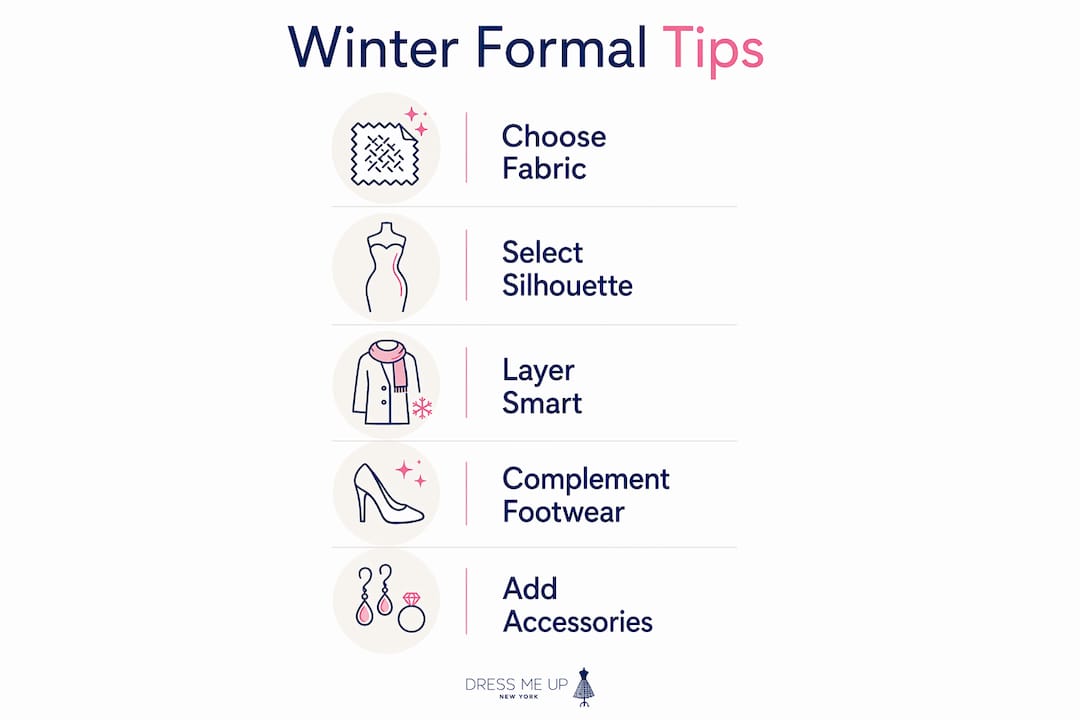
- Winter formalwear combines warm fabrics, longer silhouettes, and layered accessories for polished elegance. Velvet, brocade, and lined satin are ideal fabrics, with long sleeves and midi or floor-length styles providing extra coverage and warmth. Layering with tailored coats and matching accessories ensures a complete, stylish look suitable for indoor and outdoor winter events.
Formal attire winter is defined by the combination of warm, structured fabrics, longer silhouettes, and deliberate layering that keeps you polished from the parking lot to the dance floor. The industry term for this category is “winter formalwear,” and it covers everything from floor-length gowns at black-tie galas to midi dresses at winter proms and wedding receptions. Getting it right means understanding three things: fabric weight, silhouette length, and how your outerwear works with your dress. This guide covers all three, plus footwear, color, and the mistakes that quietly ruin an otherwise great look.
Which fabrics and dress styles work best for winter formal events?
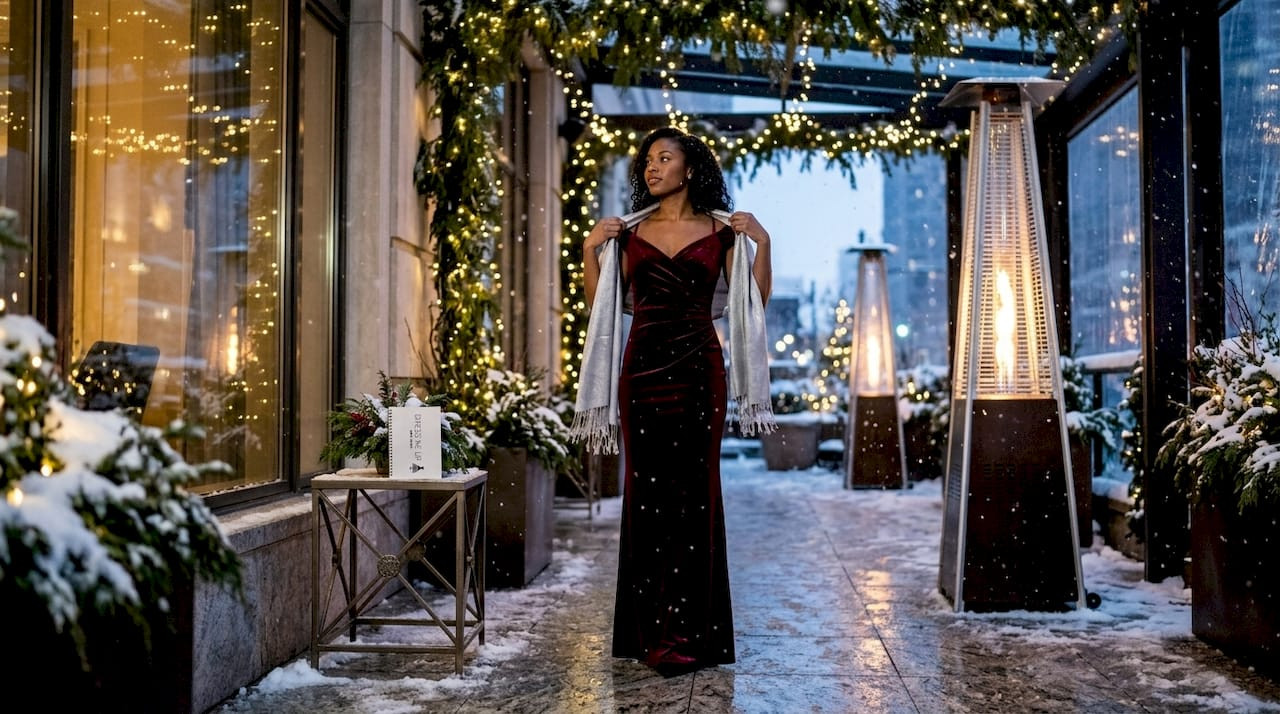
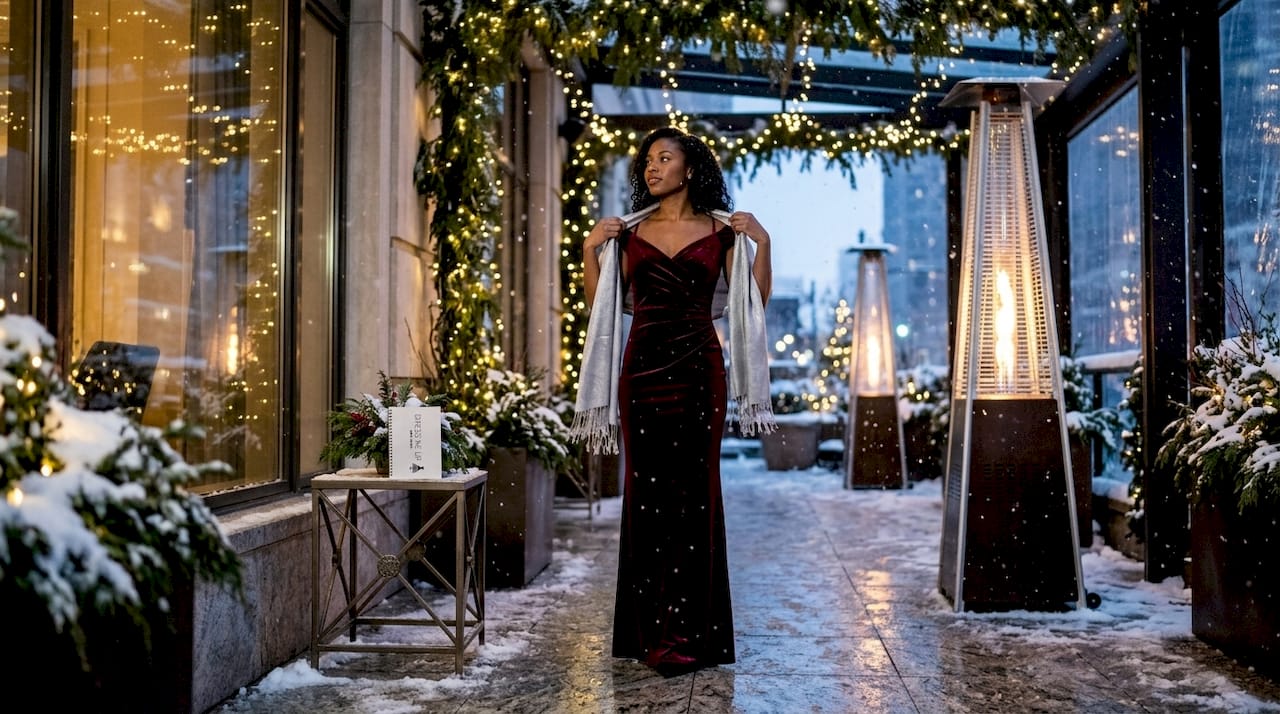
Velvet, satin with lining, wool blends, crepe, brocade, and jacquard are the gold-standard fabrics for winter formalwear. These materials share two qualities that matter most in cold weather: natural insulation and enough structure to hold their shape over base layers or hosiery. A velvet gown, for example, traps warmth close to the body while reflecting light in a way that reads as deeply luxurious under dim event lighting.
Silhouette length is equally important. Longer hemlines like midi, maxi, and floor-length gowns provide coverage that shorter cocktail dresses simply cannot. They also photograph better at winter events, where the contrast between a sweeping gown and a candlelit venue creates the kind of image you actually want to keep.
Sleeve length is the third variable. Long-sleeve formal dresses with full-length, sheer-lined, lace, or structured sleeves eliminate the need to hold a coat all night. They maintain warmth without adding bulk, and they read as intentional rather than reactive to the cold.
Here are the fabric and style combinations that perform best:
- Velvet midi or floor-length gown: Maximum warmth, rich texture, ideal for galas and winter weddings
- Brocade or jacquard structured dress: Holds shape beautifully, works for winter banquet dresses and formal dinners
- Satin with full lining: Elegant drape with added warmth from the lining layer
- Lace overlay with long sleeves: Feminine and warm, popular for winter formal dance dresses
- Crepe with texture: Lightweight but structured, good for heated indoor venues
Pro Tip: When shopping for winter gala dresses, run your hand along the inside of the fabric. A fully lined dress will always outperform an unlined one in cold weather, regardless of the outer fabric.
How to layer outerwear without losing your formal look
Layering is the central strategy for transitioning from cold sidewalks to heated ballrooms without sacrificing style. The goal is not just warmth. The goal is a complete, considered look from the moment you step out of the car to the moment your coat comes off inside.
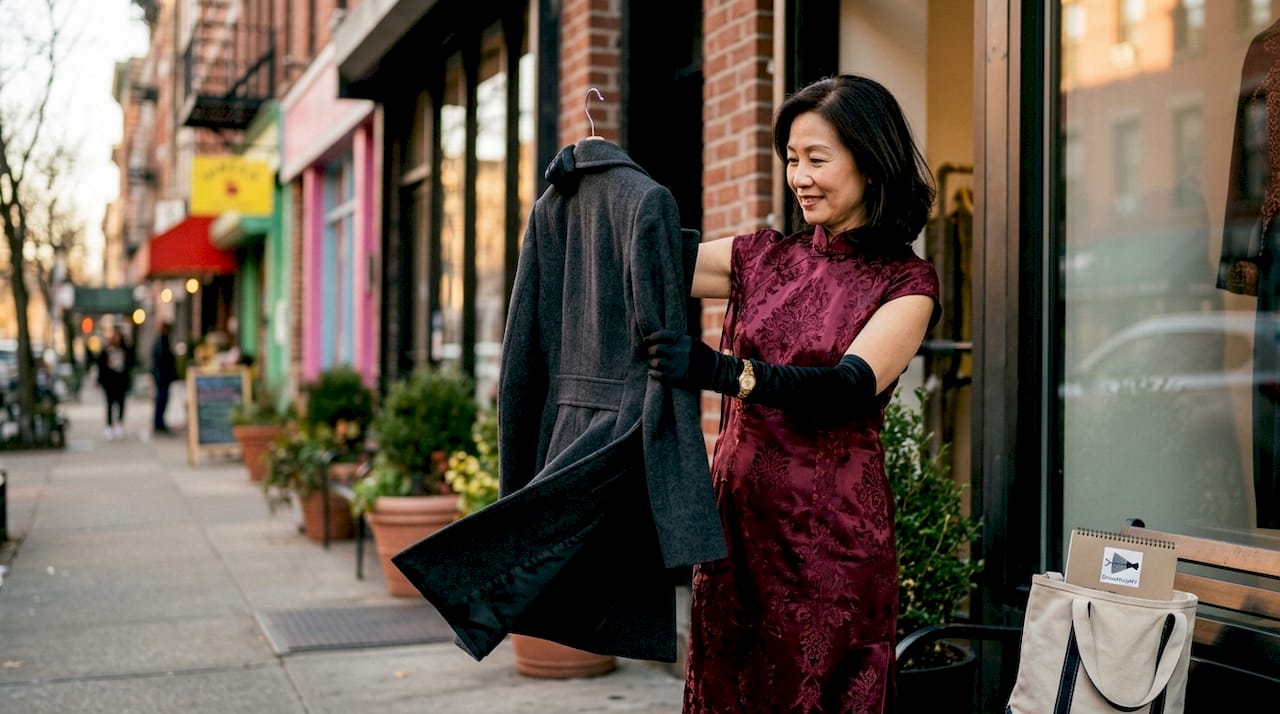
Think of winter formalwear styling as “transition styling.” Your outer layer is the first thing people see, and outerwear often dominates first impressions at winter formal events. A tailored wool coat in a coordinating color, an elegant wrap, or a faux fur jacket can function as a statement piece on its own. When you remove it indoors, the dress takes over seamlessly.
The table below shows how to match your outerwear to your event setting:
| Event Setting | Best Outerwear Choice | Why It Works |
|---|---|---|
| Fully indoor (ballroom, hotel) | Elegant wrap or shawl | Easy to remove, drapes over arm gracefully |
| Mixed indoor/outdoor (venue with outdoor areas) | Tailored wool coat | Structured warmth, polished silhouette |
| Outdoor ceremony or reception | Long wool or cashmere coat | Full coverage, maintains formal appearance |
| Winter prom or school dance | Faux fur jacket or cropped wrap | Trendy, warm, easy to check at coat check |
Outer layers should be chosen based on the indoor/outdoor mix of your specific event. A long wool coat works for an outdoor ceremony but can feel heavy at a fully indoor dinner. A shawl is perfect for a heated ballroom but offers little protection in a parking lot in January.
Accessories complete the layered look. Elbow-length gloves in satin or velvet add formality and warmth simultaneously. Sheer tights or semi-opaque hosiery work under floor-length gowns without showing, and they make a real difference in comfort. A silk or cashmere scarf worn over the coat during transit can be tucked away once you arrive.
Pro Tip: Choose outerwear in a color that appears in your dress. If your gown is burgundy, a charcoal or black coat with burgundy lining creates a cohesive look that photographs well even before you walk inside. For more ideas on building a complete layered look, explore winter formalwear layering from Dressmeupny.
What footwear best complements winter formal attire?
Closed-toe pumps and dressy boots are the two essential footwear categories for winter formalwear. Strappy sandals are a warm-weather choice. Wearing them in winter creates both a comfort problem and a style mismatch that pulls the entire look apart.
The right shoe depends on your dress length and the event’s formality level:
- Classic closed-toe pumps: The most versatile option. A pointed-toe pump in black, nude, or metallic works with nearly every formal winter dress silhouette.
- Heeled ankle boots: A strong choice for winter formal dance dresses and proms. A sleek leather or suede ankle boot with a block or stiletto heel reads as formal while providing real warmth.
- Knee-high heeled boots: Works beautifully under a midi dress. The boot fills the gap between hem and floor, eliminating the need for heavy tights.
- Embellished flats: A practical option for long floor-length gowns where the shoe is barely visible. Comfort matters when you are on your feet for hours.
- Metallic heeled mules with a closed toe: A modern choice for indoor-only events where you will not be walking on cold pavement.
The one rule that applies across all options: match the shoe’s formality level to the dress. A velvet floor-length gown deserves a satin or metallic pump, not a casual boot. A structured brocade midi dress can carry a heeled ankle boot with confidence.
How to choose winter formal dresses for weddings and proms
Event type determines dress code, and dress code determines your choices. Winter formal attire for a black-tie wedding is not the same as dressing for winter formals at a high school prom, even if both events happen in december.
Darker color palettes and jewel tones are the defining color story of winter formalwear. Deep green, burgundy, navy, onyx, and charcoal gray all perform well under the warm, low lighting typical of winter venues. Metallic accents in gold or silver add dimension without competing with the seasonal palette.
The table below maps event type to the right dress choice:
| Event Type | Recommended Style | Key Fabric | Color Direction |
|---|---|---|---|
| Black-tie winter wedding | Floor-length gown | Velvet, silk, structured wool | Black, navy, deep jewel tones |
| Semi-formal wedding | Elegant midi dress | Crepe, satin with lining | Burgundy, forest green, charcoal |
| Winter prom or school dance | Formal winter dance dress | Lace, sequin, brocade | Deep red, midnight blue, emerald |
| Winter gala or charity dinner | Floor-length or structured midi | Jacquard, velvet, brocade | Onyx, gold, deep plum |
| Holiday office party (formal) | Midi or tea-length dress | Crepe, velvet | Navy, black, deep green |
Sheer or semi-opaque hosiery is recommended for winter weddings and formal events as both a warming element and a polished finishing touch. Treat hosiery as part of the outfit, not an afterthought. A sheer black tight under a navy midi dress creates a clean, intentional line. For guidance on winter gala dress choices by formality level, Dressmeupny has a dedicated resource worth reviewing.
Floor-length gowns or elegant midi dresses in darker shades using elevated fabrics like velvet, silk, or structured wool are the standard for formal winter weddings. This is not a suggestion. At a black-tie winter event, a short cocktail dress in a light color reads as underdressed regardless of how well it fits.
What are the most common mistakes in winter formalwear?
The most common mistake in winter formalwear is treating warmth and style as competing priorities. They are not. Every decision, from fabric to footwear, can serve both goals simultaneously when you approach the outfit as a system rather than a collection of separate pieces.
Here are the specific mistakes to avoid:
- Wearing outerwear that overwhelms the dress: A bulky puffer coat over a floor-length velvet gown creates a jarring contrast. Choose a coat with clean lines and a length that complements the dress silhouette.
- Ignoring the indoor temperature: Most formal venues are heated. A heavy wool dress in a warm ballroom becomes uncomfortable quickly. Balance fabric weight with the expected indoor environment.
- Skipping hosiery: Bare legs under a formal dress in winter reads as unfinished at most events. Hosiery acts as both comfort and style enhancement and should be treated as part of the ensemble.
- Choosing impractical footwear for outdoor conditions: Stiletto heels on icy pavement are a safety issue. If the venue involves outdoor walking, choose a block heel or wedge heel for stability.
- Underdressing for the dress code: Winter events often carry stricter dress codes than summer equivalents. When in doubt, go longer and darker rather than shorter and lighter.
Pro Tip: Before the event, walk a full block in your chosen shoes and coat combination. If anything feels unstable or uncomfortable at normal pace, adjust before the night arrives. For more on selecting evening gowns with sleeves, Dressmeupny’s guide covers sleeve styles and fabrics in detail.
Key takeaways
Winter formalwear works when fabric weight, silhouette length, layering strategy, and footwear all function as a single coordinated system rather than independent choices.
| Point | Details |
|---|---|
| Fabric is the foundation | Choose velvet, wool blends, brocade, or lined satin for warmth and structure. |
| Longer silhouettes outperform short | Midi, maxi, and floor-length styles provide coverage and read as more formal in winter. |
| Outerwear makes the first impression | Select a tailored coat or wrap that coordinates with your dress and removes gracefully indoors. |
| Color palette matters | Jewel tones and dark shades like navy, burgundy, and deep green suit winter lighting and dress codes. |
| Hosiery is part of the outfit | Sheer or semi-opaque tights add warmth and polish, especially at weddings and galas. |
Why i think most women overthink winter formalwear
The most common question we hear at Dressmeupny is some version of “How do I stay warm without ruining the look?” The honest answer is that the question itself reveals the problem. Warmth and elegance are not in conflict. They become conflicting only when you treat the dress as the whole outfit rather than the centerpiece of a layered system.
The women who look best at winter formal events are not wearing the most expensive dresses. They are wearing dresses that work with their outerwear, their hosiery, and their footwear as a complete picture. A burgundy velvet gown under a charcoal wool coat, with sheer black tights and a pointed-toe pump, is a complete winter formal look. Every element earns its place.
My strongest advice: invest in one great coat before you invest in a second dress. The coat travels with you through every winter event for years. A well-chosen tailored wool coat in black or charcoal coordinates with nearly every formal dress you will ever own. That is not a compromise. That is a strategy.
The other thing I have noticed is that women consistently underestimate the power of color. Wearing a pale blush gown to a winter event is not wrong, but it works against you. Winter lighting is warm and low. Deep jewel tones absorb and reflect that light in a way that makes the wearer look intentional and polished. Pale colors can wash out. Dark colors command the room.
— Dressmeup
Find your perfect winter formal look at Dressmeupny

Dressmeupny carries an extensive selection of winter formal dresses built around the fabrics, silhouettes, and sleeve styles covered in this guide. From velvet floor-length gowns to structured brocade midi dresses, the catalog is organized by event type so you can filter directly to what you need. Long-sleeve options, lined satin styles, and jewel-tone collections are all available in one place. The site also features elegant wraps and layering pieces that coordinate with formal dresses for a complete winter look. Browse the full women’s formal dress collection at Dressmeupny to find styles suited for winter weddings, proms, galas, and seasonal celebrations.
FAQ
What is the best fabric for winter formal dresses?
Velvet, wool blends, brocade, and lined satin are the best fabrics for winter formalwear. These materials provide natural insulation, hold their shape over base layers, and photograph well under warm event lighting.
What should i wear over a formal dress in winter?
A tailored wool coat, an elegant wrap, or a faux fur jacket are the top choices for winter formal outerwear. Select based on your event’s indoor/outdoor mix, and choose a style that coordinates with your dress rather than covering it completely.
Are long-sleeve dresses appropriate for winter formals?
Long-sleeve formal dresses are not just appropriate. They are one of the most practical and stylish choices for winter events. Lace, sheer-lined, and structured sleeve styles add warmth while maintaining a polished, formal appearance.
What colors work best for winter formal attire?
Deep jewel tones including navy, burgundy, emerald, and onyx are the strongest color choices for winter formalwear. These shades complement warm event lighting and align with the darker, richer aesthetic of winter dress codes.
Do i need to wear tights or hosiery to a winter formal?
Sheer or semi-opaque hosiery is strongly recommended for winter formal events, particularly weddings and galas. Hosiery adds warmth, creates a finished look, and is considered part of the formal ensemble rather than optional.
Recommended
- Winter Gala Dinner Dresses: Elegance Meets Seasonal Style - DressMeUpNY
- Master Winter Formalwear Layering: Stay Warm & Stylish - DressMeUpNY
- 7 Key Tips for Choosing Winter Evening Gowns with Sleeves - DressMeUpNY
- Formal Evening Wear for Ladies: Style Rules That Matter - DressMeUpNY