
Your stress-free formal dress shopping checklist
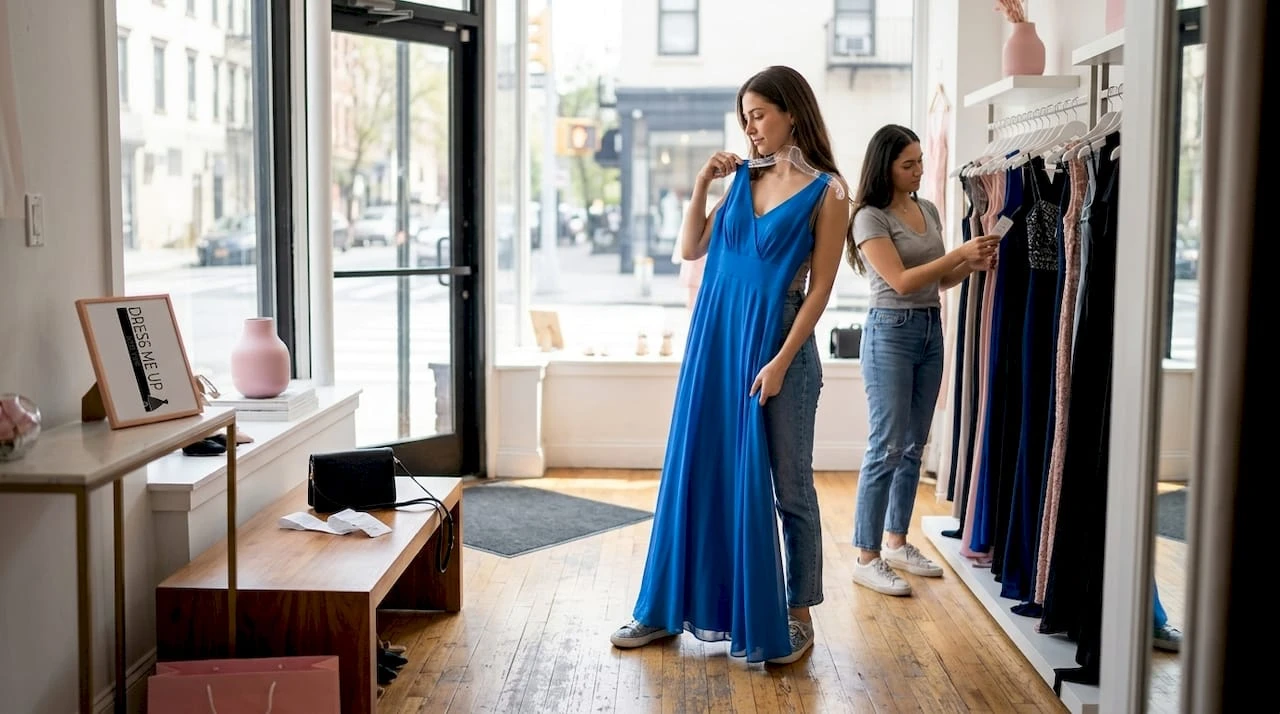
Your stress-free formal dress shopping checklist
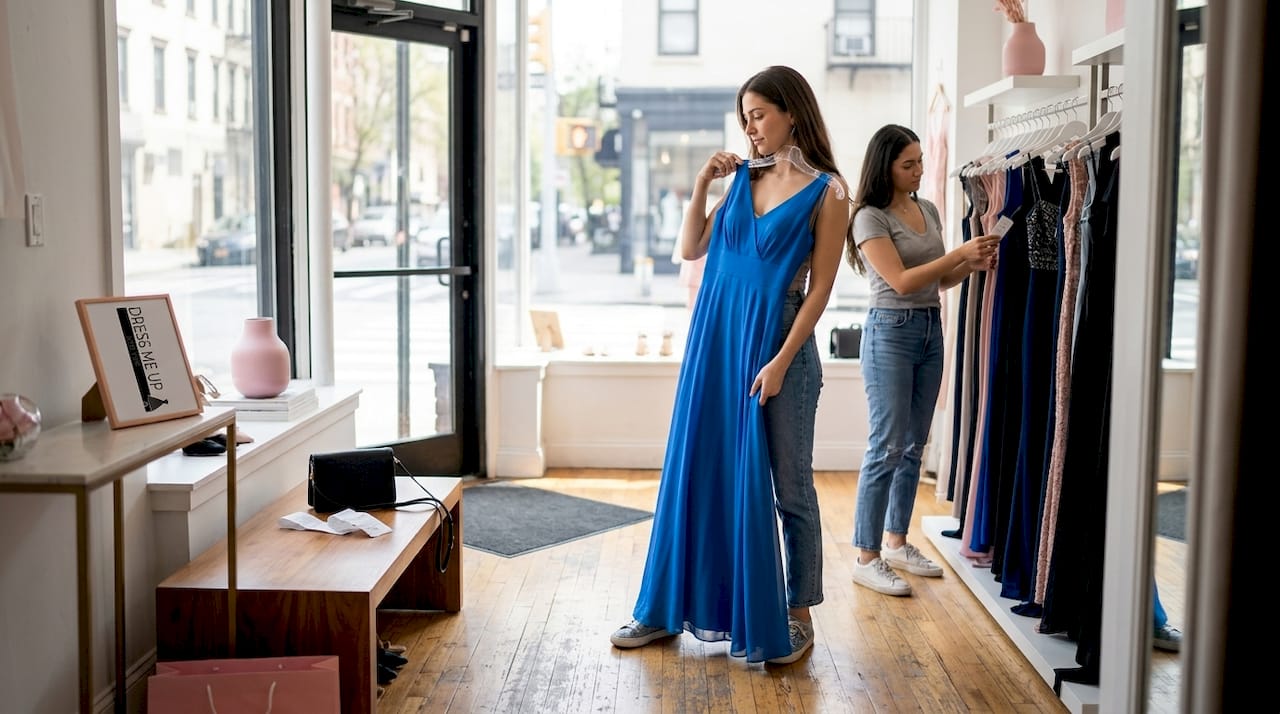
TL;DR:
- Proper research on event type, venue, and dress code prevents fitting mistakes.
- Starting dress shopping 2-3 months prior allows time for alterations and returns.
- Prioritizing fit, comfort, and personal confidence creates memorable event experiences.
Picture this: it’s two weeks before prom, and the dress you ordered online arrives two sizes too large. The tailor you called is fully booked for the next month, and your backup dress doesn’t match your venue’s dress code. Sound familiar? This exact situation happens to thousands of shoppers every year, and it’s completely avoidable. A smart, step-by-step checklist removes the chaos from formal dress shopping so you can focus on looking and feeling incredible. Whether you’re heading to prom, a wedding, or a black-tie gala, this guide walks you through every decision with confidence.
Table of Contents
- Identify your event and dress code
- Build your personalized dress shopping checklist
- Focus on fit: Fittings, alterations, and timing
- Your decision matrix: Comparing styles and priorities
- What most shoppers miss: It’s about memories, not just the dress
- Find your dream dress with DressMeUpNY
- Frequently asked questions
Key Takeaways
| Point | Details |
|---|---|
| Plan ahead | Start dress shopping 2-3 months early for best selection and fitting schedule. |
| Know your dress code | Clarify your event’s style requirements to choose the appropriate dress length, color, and fabric. |
| Budget realistically | Include accessories and alteration costs so you’re not caught off guard. |
| Prioritize fittings | Schedule multiple fittings to achieve a polished, comfortable look tailored just for you. |
| Choose for you | Select a dress that feels like your authentic style—confidence always wins. |
Identify your event and dress code
With your excitement growing, start by clarifying your event requirements so you can limit your search to suitable looks.
Before you fall in love with a silhouette on social media, you need to understand what your event actually calls for. A prom held in a hotel ballroom has very different expectations than a rooftop wedding cocktail hour. Getting this wrong can mean showing up underdressed, overdressed, or just plain uncomfortable. Spending 20 minutes researching before you shop saves hours of regret later.
Start by answering these basic questions:
- What is the event type? (Prom, wedding, gala, quinceañera, formal birthday party)
- What is the venue? (Ballroom, outdoor garden, beach, rooftop, restaurant)
- Is there a stated dress code? Check the invitation, event website, or ask the host directly.
- What is the season and likely weather? This affects fabric and length choices more than most people realize.
- Are there any color restrictions? Wedding guest dress codes sometimes ask guests to avoid white, ivory, or specific wedding party colors.
When it comes to the most formal occasions, long evening gowns are the expected standard for women, along with evening-appropriate fabrics like chiffon, velvet, silk, and satin. Shorter hemlines and casual fabrics like jersey or cotton simply don’t land well in those settings, no matter how stylish they look in photos.
Outdoor venues add a practical layer of decision-making. A garden wedding in June might call for a flowy, lighter dress in breathable chiffon rather than a heavy, structured ballgown that collects grass stains and traps heat. If you’re walking on cobblestones or grass, a dramatic train might look stunning in photos but become a nightmare by dinner.
For events with cultural or tradition-specific dress requirements, do a quick search or check in with someone familiar with the custom. A quinceañera court, for example, often follows specific color palettes and silhouette guidelines that are coordinated across the entire group. Understanding the unspoken rules is just as important as reading the formal dress code. Our formal chic dress code guide breaks down what each level of formality actually means in practical terms so you’re never guessing.
Quick tip: Screenshot the event details page, invitation card, or venue photos and save them in a dedicated folder on your phone. You’ll reference these images constantly while shopping.
Build your personalized dress shopping checklist
Once you know your dress code, organize your gameplan with a clear, actionable checklist.
Knowing your dress code is the foundation, but the actual shopping process needs structure. Without a plan, it’s easy to overspend, run out of time, or end up with a dress that looks great on the hanger but doesn’t work with your shoes or undergarments. A checklist keeps you grounded and efficient.
Here’s a step-by-step shopping gameplan to follow:
- Start shopping 2 to 3 months before your event. This gives you enough time for shipping, possible exchanges, alterations, and any last-minute styling changes. Waiting until the final month, especially during prom season, means limited inventory and rushed timelines.
- Set a full budget, not just a dress budget. Factor in shoes, jewelry, a clutch or evening bag, any wraps or outerwear, undergarments, hair and makeup, and potential alteration costs. A $150 dress can easily become a $350 outfit once all the extras are included.
- Plan to shop both online and in-store. In-store shopping helps you understand your measurements and silhouette preferences. Online shopping gives you access to wider variety and better price points. Use both strategically.
- Bring the right items to your try-ons. Try on dresses with the exact shoes and undergarments you plan to wear on the actual day. The height of your heel changes where a hem falls. The cut of your bra or shapewear changes how a bodice fits. What feels like a perfect fit in flats might gap at the back in heels.
- Create a shortlist of dress styles you love. Pin or save at least 8 to 10 inspirational looks before shopping. Look for patterns in what you’re drawn to: do you gravitate toward fitted silhouettes or floaty ones? Strapless or detailed necklines? This shortlist becomes your filter.
- Prepare your accessory vision board. Know ahead of time whether you’re leaning toward statement earrings, a delicate necklace, a metallic clutch, or a floral wrap. Accessories can dramatically change the overall feel of the same dress.
Pro Tip: If you’re shopping online, order two or three sizes or styles at once (if the return policy allows it) so you can compare at home. Many formal dress retailers make returns easy for this exact reason, and planning your dress shopping trip in advance helps you map out timing and budget from day one.
Focus on fit: Fittings, alterations, and timing
Armed with your checklist, make sure fit and timing don’t sabotage your dream look by planning for professional finishes.
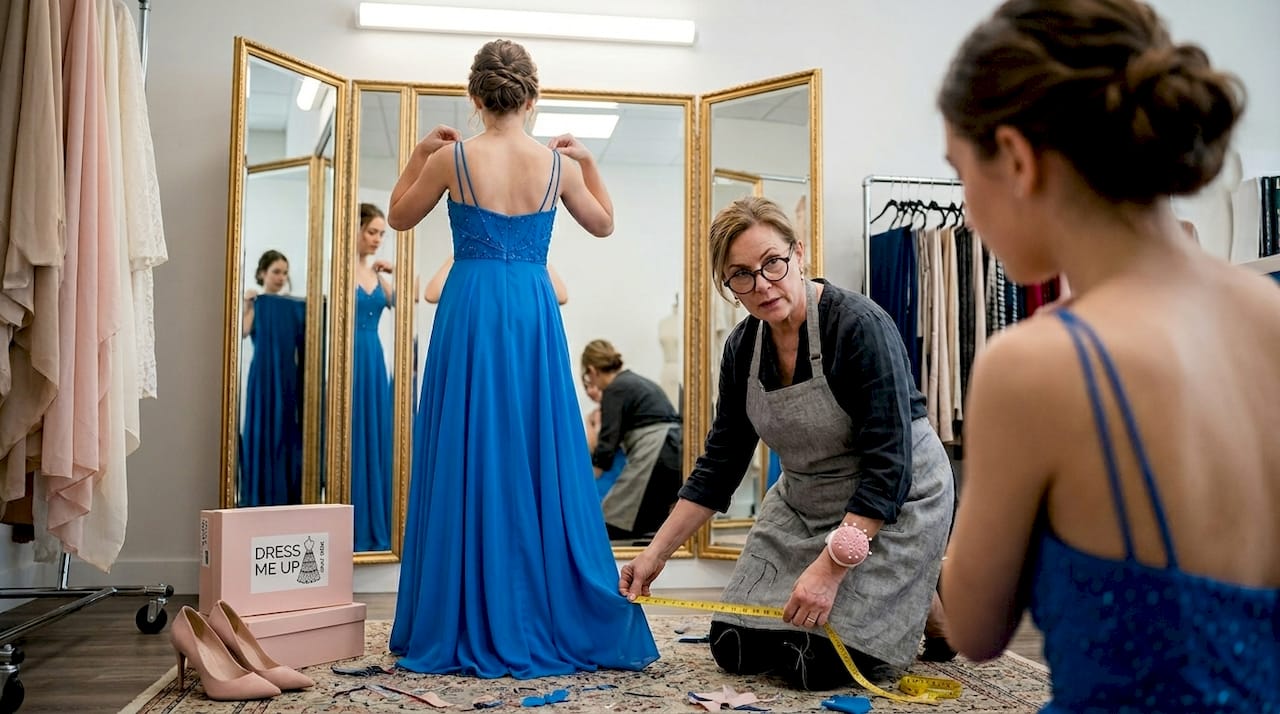
Even the most stunning dress won’t look right if it doesn’t fit perfectly. Off-the-rack formal dresses are made to general size specifications, but bodies are uniquely individual. Most shoppers need at least one alteration, whether it’s a hemline adjustment, strap shortening, or bodice shaping. The key is building this step into your timeline so it doesn’t become a crisis.
Here’s a realistic look at alteration timelines by service type:
| Alteration type | Estimated time needed | Notes |
|---|---|---|
| Hem (basic) | 1 to 2 weeks | Longer for dresses with beading or lace borders |
| Strap adjustment | 3 to 5 days | Quick fix, but can affect fit elsewhere |
| Bodice/waist shaping | 2 to 4 weeks | More complex, especially with boning |
| Full corset back conversion | 3 to 6 weeks | Structural change, needs skilled tailor |
| Beading or appliqué repair | 1 to 3 weeks | Depends on density and placement |
| Bustle (for gowns with trains) | 1 to 2 weeks | Often done in final fitting |
Complex structured gowns with boning, heavy beading, or corset backs consistently require more alteration time and sometimes carry rush charges if you’re cutting the timeline too close. During peak prom and wedding seasons (March through June), tailors book out fast.
Plan for at least two to three fitting appointments with your tailor. The first fitting identifies what needs to change. The second checks that the adjustments are working as expected. A third appointment, often called the final fitting, is where you put on the dress with all your accessories and confirm everything is perfect. Skipping any of these steps is how people end up with dresses that fit fine on the hanger but fall apart on the dance floor.
Pro Tip: Ask your tailor for an honest timeline upfront. If they tell you they’re booked and can only do a rush job, factor in the extra fee or start looking for another option. A rushed alteration on a beaded ballgown is a risk not worth taking.
When choosing formal dresses for events where you know dancing or long wear is involved, ask about comfort at the fitting, not just appearance. Sit down, walk around, and raise your arms. If anything pulls or pinches during those simple movements, it will only get worse after four hours on the dance floor. Checking trusted formal wear boutiques early in the process gives you more options and more time.
Your decision matrix: Comparing styles and priorities
Now, line up your final contenders for a clear comparison before you decide what gets the big yes.
Once you’ve narrowed your search to two, three, or four serious contenders, the final decision can feel surprisingly hard. This is where a simple comparison method saves you. Instead of going on pure emotion (which often leads to regret), use a side-by-side framework that weighs the factors you actually care about.
Here’s an example comparison table for four dress options:
| Criteria | Dress A | Dress B | Dress C | Dress D |
|---|---|---|---|---|
| Total cost (with alterations) | $280 | $390 | $220 | $450 |
| Venue appropriate | Yes | Yes | Borderline | Yes |
| Alteration needed | Minor hem | Full bodice | None | Strap + hem |
| Comfort rating | High | Medium | High | Low |
| Wow factor (1 to 10) | 8 | 9 | 6 | 10 |
| Photo quality | Great | Excellent | Good | Stunning |
| Confidence level | High | Medium | Medium | High |
Venue and event formality should carry serious weight in this comparison, not just aesthetics. A dress that photographs beautifully but requires you to take baby steps all evening or avoid stairs entirely is going to make your night miserable.
When reviewing your shortlist, revisit these key priorities:
- Comfort over hours of wear: How will this feel at hour three, not just hour one?
- Photography performance: Certain colors, textures, and silhouettes photograph better under event lighting.
- Budget reality check: Is the total cost (including all accessories and alterations) within your original plan?
- Dress code alignment: Does this dress fit the types of formal dresses appropriate for your specific event?
- Authentic confidence: Do you feel like yourself in it, or are you performing for an Instagram moment?
The decision matrix removes the mental fog that comes from comparing too many options at once. Fill it in honestly, weight the categories that matter most to you, and let the numbers guide you to a clearer answer.
What most shoppers miss: It’s about memories, not just the dress
After comparing your options, step back and consider what really matters: how you’ll remember your special moment.
Here’s something the dress shopping content world rarely says out loud. The most photographed prom queen in your class and the girl who spent the night laughing until her sides hurt probably wore very different dresses. But only one of them went home with a genuinely great memory.
The rush to look like an influencer or match a trend that’s peaking on social media right now can quietly override the thing that matters most: your comfort, your personality, and your actual enjoyment of the night. We’ve seen shoppers choose a dress that photographs beautifully but restricts movement so severely they sit out half the songs. We’ve also seen girls pick a silhouette that felt completely them, danced all night, and still talk about that event years later.
Trends shift fast. What’s labeled “the only dress to wear to prom” in February can feel dated by May. The dress that makes you feel genuinely confident, whether it’s a dramatic ballgown or a sleek minimalist slip dress, is always the right choice. Trust your own instincts even when the algorithm pushes you toward something that doesn’t feel like you.
Your formal event is a real moment in your real life. It deserves a dress chosen for how it makes you feel, not just how it performs in a photo. Browse beautiful special occasion dresses with that lens, and you’ll land on something genuinely unforgettable.
Find your dream dress with DressMeUpNY
Now that you’re equipped with a complete checklist and perspective, take the next step with trusted resources.
At Dress Me Up NY, we’ve built our entire collection around the needs of girls and women headed to exactly the kinds of moments this checklist covers: proms, galas, weddings, quinceañeras, and every formal event in between.
Browse our curated catalog of formal and special occasion dresses sorted by event type, silhouette, color, and budget so your checklist becomes a real outfit. From floor-length evening gowns to trendy cocktail looks, every style comes with detailed sizing guidance to make fit decisions easier. We regularly drop new arrivals timed to prom and wedding seasons, and our promotional deals (including free shipping thresholds and bundle savings) help you stay on budget while dressing your best. Start browsing today and give yourself the runway time your dream look deserves.
Frequently asked questions
When is the best time to start shopping for formal dresses?
Start your search 2 to 3 months before your event to allow enough time for delivery, sizing exchanges, and alterations without feeling rushed.
How many dress fittings should I expect?
Plan for 2 to 3 fittings over a 4 to 6 week window, especially if your dress needs structural changes or beading work.
What should I bring with me when trying on formal dresses?
Bring the exact shoes and undergarments you plan to wear on event day, since heel height and undergarment cut directly affect how the dress fits and falls on your body.
How much should I budget for dress alterations?
Alteration costs vary widely based on complexity. Simple hem adjustments run lower, while full bodice restructuring or corset back conversions cost significantly more, especially during peak season when rush fees apply.
Recommended
- The ultimate dress shopping checklist for every occasion - DressMeUpNY
- How to Plan a Dress Shopping Trip for Special Occasions - DressMeUpNY
- How to Find Stunning Formal Wear on a Budget - DressMeUpNY
- Dress shopping for teens: your ultimate guide to style - DressMeUpNY