
Modern Black Tie Dresses: Shop Fabric Before Silhouette
Modern Black Tie Dresses: Shop Fabric Before Silhouette

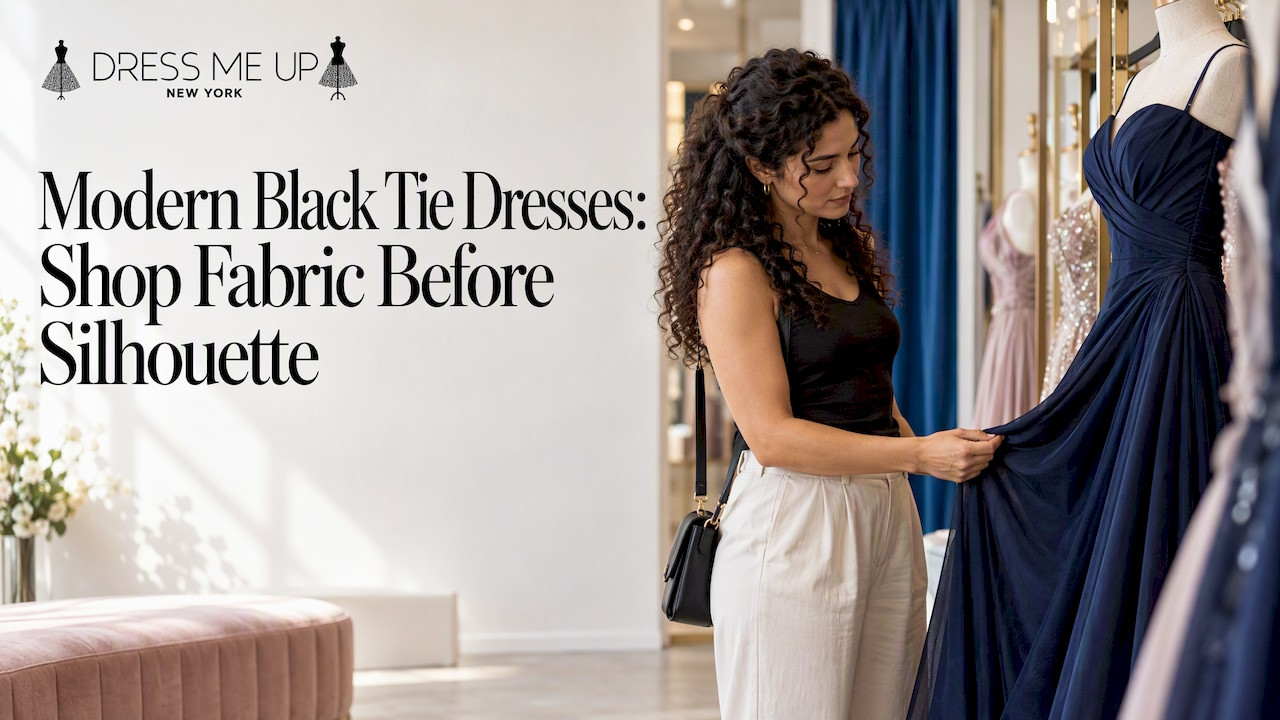
For a modern black-tie event, your safest bet is a floor-length gown, or an equally formal, well-tailored jumpsuit, made in a fabric with real shine or weight to it. Fabric and finish carry just as much weight as silhouette. Our collections are designed around this idea, so the categories below match this brief, no guesswork required.
TL;DR:
- A formal midi or tailored jumpsuit can substitute for a gown that reaches the floor, but shorter hems otherwise risk looking underdressed at events.
- Choose satin, silk, velvet, jacquard, or beading; casual cotton, loose tailoring, and poor construction can make even a polished silhouette look too casual.
- For weddings, avoid white and ivory; black, navy, emerald, aubergine, and burgundy remain suitable, while season should determine fabric weight.
- Try each gown with intended heels and shapewear, since the hemline and fit can shift once those pieces are added.
Table of Contents
- Modern silhouettes and fabrics that read black tie
- Length, color, and season: practical rules for black-tie events
- How to choose: a short shopping checklist by body and event
- Styling and accessories that modernize a black-tie look
- Curated shopping categories from Dress Me Up NY
- Dressmeup editorial note on curating modern black-tie looks
- Shop now: your next black-tie dress is a click away
- FAQ
- Sources
Modern silhouettes and fabrics that read black tie
Black tie has loosened up, but it still has rules. A floor-length gown remains the gold standard, and according to black-tie guidance from The Knot, a formal jumpsuit or tailored separates can stand in for a gown, but only when the fabric and tailoring are equally polished. A cotton jumpsuit will not do the job. A silk one, cut with precision, will.
Fabric is really what separates “formal” from “fancy casual.” Satin, silk, velvet, jacquard, and beaded detailing all signal that a dress belongs at a black-tie event, no matter the shape underneath. These materials catch light, hold structure, and move with weight, which reads as intentional rather than accidental.
A few modern details keep a formal look current without pulling it out of black-tie territory:
- Structured shoulders add polish to a simple gown without extra embellishment.
- A single high slit is formal when it is controlled and paired with a fitted bodice.
- Sheer paneling works only when it is strategic, lined, and minimal.
- Crepe fabric gives jumpsuits and column gowns a clean, modern drape.
The common thread: nothing sloppy, nothing undone. Modern black tie favors clean lines over fuss.
Length, color, and season: practical rules for black-tie events
Length is the first filter, and it is a simple one. Floor-length is the default for women’s black tie, and The Knot’s black-tie guide confirms that shorter hems risk reading as underdressed. A very formal midi or an impeccably tailored jumpsuit can work as an exception, never as the rule.
Color has more room to move than most people expect. Black, navy, and deep jewel tones like emerald, aubergine, and burgundy are all appropriate choices for black-tie events. The one firm caution: steer clear of white or ivory at a wedding, since those shades are reserved for the bride.

A dress made in formal fabric and cut to the floor is the single clearest way to avoid looking underdressed at a black-tie event, according to wedding attire guidance from The Knot.
Season should guide fabric weight, not color:
- Winter events call for velvet, heavier satin, or crepe with a fur or faux-fur wrap.
- Summer and spring favor lighter silk, chiffon overlays, or breathable jacquard.
- A structured wrap or tailored jacket keeps the line clean no matter the temperature.
How to choose: a short shopping checklist by body and event
Shopping for black tie goes faster when you work through it in order instead of browsing everything at once.
- Start with fabric and finish, since this is what separates black tie from cocktail attire.
- Confirm the hemline falls at the floor, or verify the alternative piece is formal enough to substitute.
- Check the lining, closures, and internal structure, since cheap construction shows the moment you move.
- Match the silhouette to your body and comfort: an A-line or fit-and-flare gown flatters most shapes, while a column gown suits a taller frame and a wrap style works well for anyone who wants waist definition. A curve black tie guide covers fit specifics for curvier figures in more depth.
- Factor in the event itself: a wedding calls for color caution, while a gala or formal dinner gives you more freedom.
- Before checkout, confirm the return window, whether alterations are offered or recommended, and how fast the piece can ship if your event is close. A guide to black-tie dresses with fast shipping breaks down options for last-minute shopping.
Pro Tip: Try the dress on with the shoes and shapewear you plan to wear, since hemlines and fit can shift by half an inch once you add heels.
For more detail on fit and examples pulled from real black-tie events, our full black-tie dressing guide is worth a read before you commit.
Styling and accessories that modernize a black-tie look
The dress does most of the work, but accessories decide whether a look feels current or dated. A black gown, in particular, benefits from texture and proportion play, since mixing matte and glossy fabrics or adding a sculptural accessory is what keeps black from reading as boring, according to Vogue’s styling commentary on the color.
A few additions update a formal look without breaking the dress code:
- A structured clutch or a single statement cuff adds interest without competing with the gown.
- Metallic or crystal-detailed heels modernize a simple silhouette better than an overly busy shoe.
- Smoothing shapewear preserves the clean line that satin and silk fabrics demand.
- A sleek, low bun or soft waves keep the focus on the dress rather than the hair.
Skip anything with a logo, a casual strap, or a daytime texture like canvas or straw. Those details undercut the formality a black-tie dress code calls for, no matter how expensive the dress itself is.
Curated shopping categories from Dress Me Up NY
The catalog is organized by common questions black-tie shoppers ask: how long, what fabric, what color, and what size. This structure means you can filter down to options that already fit the brief instead of scrolling through everything on the site.
A few categories worth starting with:
- Evening Dresses cover the widest range of floor-length formal options across colors and fabrics.
- Formal Gowns narrow in on the most event-appropriate silhouettes for galas and black-tie weddings.
- Cocktail and party styles, including designer jumpsuits and mini dresses, cover the modern alternatives we mentioned earlier.
- Wedding guest dresses filter out bridal-adjacent shades automatically, which takes one worry off your plate.
For a closer look at specific designers worth shopping this season, our designer black-tie picks roundup highlights labels known for exactly this kind of formal fabric work.
Dressmeup editorial note on curating modern black-tie looks
We built our catalog around one belief: fabric and fit matter more than following a strict silhouette rulebook. Collections are curated with that in mind, with pieces that read formal the moment they catch light. We write our blog with that same lens, covering fit, fabric, and shopping logistics so you spend less time guessing and more time deciding.
— Dressmeup
Shop now: your next black-tie dress is a click away
We make it simple to go from “what do I wear” to “this is the one.” Browse our Evening Dresses for the widest selection of floor-length options, or head straight to Formal Gowns if you already know the silhouette you want.
- Filter by fabric, color, and length to match the dress code of your event.
- Check each product page for current shipping timelines before you order.
- Browse wedding guest styles if bridal color rules are your main concern.
FAQ
What is the modern black-tie dress code?
Modern black tie still calls for floor-length formality, but it now welcomes polished jumpsuits and tailored separates as long as they are made in formal fabrics like silk, satin, or velvet. The emphasis has shifted from silhouette alone to fabric, finish, and tailoring quality, according to black-tie wedding guidance.
What dresses do you wear to a black-tie event?
A floor-length evening gown is the standard choice for women at black-tie events. An equally formal jumpsuit or tailored set can work as an alternative, but only when it is cut from a formal fabric and tailored with precision, per The Knot’s attire guide.
What color dresses are appropriate for a black-tie wedding?
Black, navy, and deep jewel tones like emerald, aubergine, and burgundy are all appropriate for a black-tie wedding. Guests should avoid white, ivory, or any shade that could be mistaken for a bridal color, according to wedding attire etiquette.
What is the dress code for a black-tie guest?
A black-tie guest should plan on a floor-length gown in a formal fabric, choosing a dark or jewel-toned color rather than anything bridal-adjacent. Fit and tailoring matter as much as the dress itself, since a loose or casual cut can undercut even the right fabric choice.
Can you wear a jumpsuit to a black-tie event?
Yes, a jumpsuit can work for black tie when it is made from a formal fabric like silk or crepe and tailored precisely at the waist and inseam. A loose or casual-fitting jumpsuit will read as underdressed, so fit is just as important as fabric choice.
Sources
- Black-Tie Attire Guide for Wedding Guests: Men’s & Women’s — The Knot
- Black is never boring: Pernille Teisbaek on wearing black with interest — Vogue
Recommended
- Black Tie Event Dresses: What to Wear and Where to Shop
- Designer Black Tie Dresses: Curated Picks to Shop Now
- Curve Black Tie Dresses for Curvy Women: 2026 Guide
- Shoppers: 7 Formal Dress Silhouettes and Fabric Clues