
Formal Gala Attire: Read the Invitation Twice Before Choosing
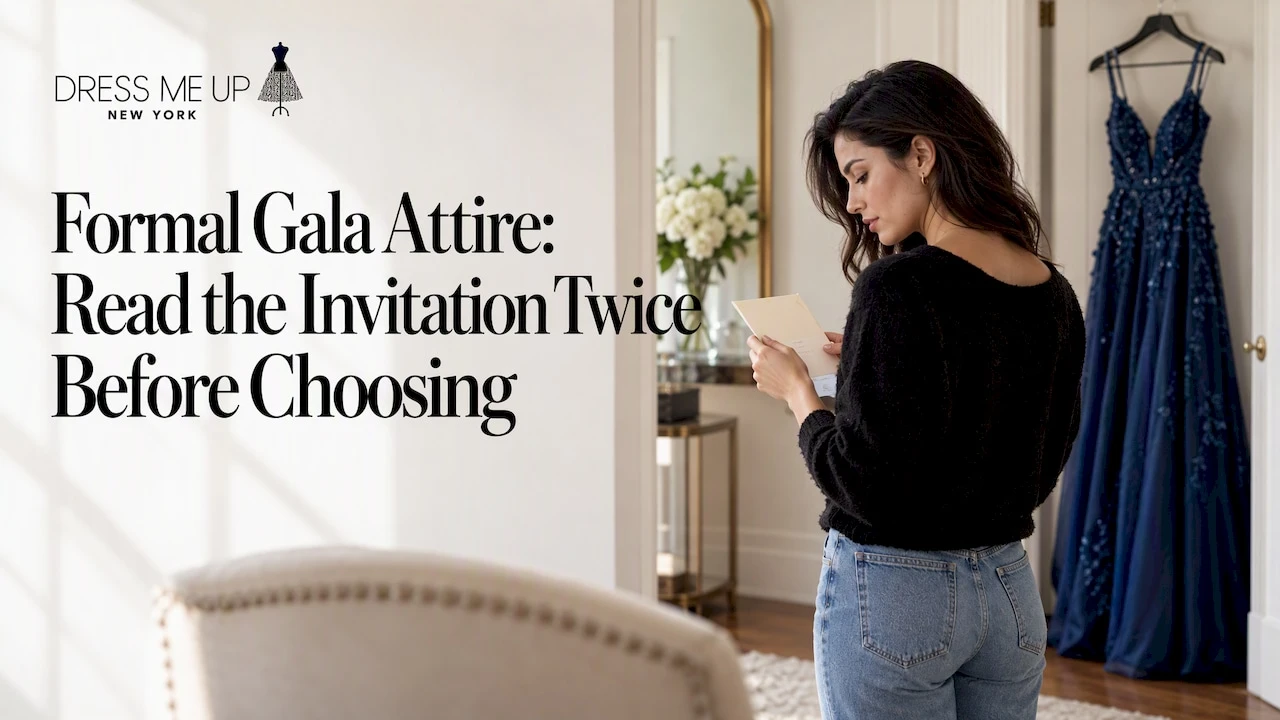
Formal Gala Attire: Read the Invitation Twice Before Choosing

The safest choice for a formal gala is a floor-length evening gown. White tie, a rare and strict dress code, calls for a full-length gown. Black tie usually calls for the same, though it leaves a little room to breathe. Black-tie optional and creative black tie open the door to elevated midis or dressy shorter pieces, but only when the invite says so. When you’re not sure, lean formal, read the invitation twice, and try sitting and walking in whatever you pick.
TL;DR:
- White tie should be named on the invitation, not inferred from the word gala; silk, chiffon, tulle, velvet, satin, and lace suit formal eveningwear.
- Past event photos can reveal a venue’s formality, while a museum fundraiser may invite more creativity than a medical benefit does.
- Creative black tie works best with one statement feature, such as color, texture, silhouette, or jewelry; keep the rest formal and understated.
- Check the venue’s flooring before choosing heels, and bring a formal coat or wrap for outdoor events; use coat check when available.
Table of Contents
- How to Decode Gala Dress Codes: White Tie, Black Tie, and Beyond
- Choosing the Right Gown: Length, Fabric, and Silhouette
- Shoes, Bags, Outerwear, and Jewelry: Finishing Touches That Last the Night
- How to Interpret Creative Black Tie Without Losing the Formal Feel
- Practical Prep Checklist: Research, Fit, and Timing
- Gala Dos and Don’ts: Etiquette Rules Worth Remembering
- Hair and Makeup That Match the Formality of Your Dress
- Accessorizing With Scarves, Shawls, and Wraps for Seasonal or Outdoor Galas
- How We Help You Prepare for Gala Night
- Quick Help From Dress Me Up NY: Where to Shop for Gala Gowns
- FAQ
- Sources
How to Decode Gala Dress Codes: White Tie, Black Tie, and Beyond
Every gala dress code sets a different bar, and the invitation is your best clue. White tie sits at the top: it calls for a full-length formal evening dress or ball gown, with long gloves as an optional finishing touch, according to Debrett’s guidance. It’s rare, and it should be spelled out on the invitation rather than assumed just because the event is called a gala.
Black tie is a common dress code for formal galas. It generally means a floor-length gown, and fabrics like silk, chiffon, tulle, or velvet signal the right level of evening polish, a point echoed by both Emily Post’s attire guide and Debrett’s.
Black-tie optional, cocktail, and creative black tie give you more room. Depending on the host and venue, these can stretch from a formal floor-length gown to an elevated midi or a dressy short silhouette, per Emily Post’s guidance. A few things to weigh before you decide how far to push it:
- Check venue photos from past events to see how other guests dressed.
- Consider the host type: a museum fundraiser tends to welcome more creative interpretation than a medical benefit, a distinction Vogue Hong Kong points out clearly.
- Match your formality to the event’s purpose, not just its label.
Choosing the Right Gown: Length, Fabric, and Silhouette
Once you know your dress code, length is the first decision. Full-length is the move for white tie and standard black tie. A formal midi or an elevated short dress only makes sense when the invitation explicitly says black-tie optional or creative black tie, according to Emily Post.
Fabric does a lot of the formality work. Silk, chiffon, tulle, velvet, satin, and lace all read as evening-appropriate because of how they catch light and move, a cue Debrett’s highlights in its own guidance.
Silhouette matters just as much as fabric. A-line, column, sheath, and fit-and-flare shapes all work beautifully for a long evening. Debrett’s also flags a couple of silhouettes worth avoiding:
- Skip excessive volume. A dramatic ball skirt can be genuinely hard to manage at a seated dinner.
- Avoid extreme slits or very tight red-carpet cuts that limit your ability to sit comfortably through a multi-course meal.
- Choose a shape that lets you walk, sit, and reach for a glass without adjusting constantly.
If you’re shopping for a wider range of body types and shapes, our plus size gala attire guide covers fit-friendly silhouettes in more depth.
Pro Tip: Schedule alterations well before the gala, then do one full walk-through in the dress, including sitting down and taking stairs, exactly as Emily Post recommends.
Shoes, Bags, Outerwear, and Jewelry: Finishing Touches That Last the Night
Your gown sets the tone, but the finishing pieces determine how comfortable your night actually feels. Closed-toe pumps or formal heels are the safest footwear choice, and Vogue’s gala guide suggests weighing heel width and sole grip against the venue’s flooring, especially if there’s dancing involved. Our guide to formal evening shoes breaks down comfort features worth checking before you buy.
A few other details round out the look:
- Carry a small clutch or a delicate-strap evening bag sized only for essentials, and use coat check whenever it’s offered.
- Choose an evening-appropriate coat, an opera cloak, or a long wool wrap. Emily Post and Vogue both steer guests away from casual outerwear like puffer jackets.
- Pick one dominant jewelry piece and let the rest support it quietly. A piece from a curated jewelry collection can anchor a look without tipping into costume territory.
How to Interpret Creative Black Tie Without Losing the Formal Feel
Creative black tie invites a little personality, but the outfit still needs to read as formal from across the room. Emily Post’s guidance suggests picking one dominant statement element, whether that’s color, texture, silhouette, or jewelry, and keeping everything else supportive rather than competing for attention.
A few ways this plays out well:
- A bold jewel tone in a refined fabric like silk or velvet.
- Structured separates, such as a tailored top paired with a formal skirt.
- A jumpsuit cut from an evening-appropriate fabric, with clean, sculptural lines.
What doesn’t work: costume-level themes, novelty prints, or casual fabrics like cotton jersey, even when the word “creative” appears on the invite. Creative black tie stretches the silhouette and color palette, not the formality floor.
Practical Prep Checklist: Research, Fit, and Timing
A little planning goes a long way toward feeling settled on gala night instead of scrambling.
- Read the invitation wording closely, then research venue photos and past events to gauge how formal the room will actually be, a sequence both Emily Post and Vogue Hong Kong recommend.
- Choose and order your dress early, then schedule tailoring well ahead whenever your timeline allows.
- Run a full rehearsal in the outfit, shoes, bag, and outerwear together: walk, sit, and take a flight of stairs to confirm everything moves the way you need it to.
- Pack an emergency kit with fashion tape, heel tips, and spare hosiery, and line up coat check or transport for your outerwear ahead of time.
Pro Tip: Book your fitting appointment soon after you order your dress. Our guide to gown alterations explains what to ask your tailor and how far in advance to book.
Gala Dos and Don’ts: Etiquette Rules Worth Remembering
Small missteps can contribute to gala wardrobe regrets, and they’re easy to sidestep once you know what to watch for.
- Do lean more formal when the invitation is vague, and reach out to the host directly if you’re genuinely unsure, a strategy Emily Post recommends more than once.
- Don’t assume black automatically signals the right formality. Length and fabric carry more weight than color ever will.
- Do prioritize comfort. Supportive shoes and a silhouette that lets you move and eat with ease will serve you better than anything purely dramatic.
- Don’t treat a creative dress code as permission to go casual or costume-like. Our elegant gala dress tips cover how to stay polished while still having fun with the look.
Hair and Makeup That Match the Formality of Your Dress
Your hair and makeup should feel like a continuation of your outfit, not an afterthought tacked on at the last minute. For white tie or black tie, polished updos, like a classic chignon or a sleek low bun, pair naturally with the structure of a full-length gown. Soft waves work too, especially with a dress that already has a lot of movement or embellishment, since you don’t want competing focal points.
Makeup for a formal gala generally leans toward a refined, slightly elevated version of your everyday routine rather than a dramatic departure from it. A defined eye with a classic red or deep berry lip reads as timeless under evening lighting, while a bold smoky eye paired with a neutral lip works well if your dress has simpler lines. The goal is balance: if your gown has heavy embellishment or a statement color, let your makeup support it rather than pull focus.
Skin prep matters more at galas than at daytime events, since much of the evening happens under warm, low lighting that can be unforgiving to dry or overly matte finishes. A dewy base with subtle highlighting tends to photograph and look better in person than a flat matte one.
If your hairstyle or jewelry is doing a lot of visual work, like a statement necklace or an intricate half-up style, keep the rest of your beauty look simple. One focal point per look reads as intentional. Several competing focal points can read as unplanned.

Accessorizing With Scarves, Shawls, and Wraps for Seasonal or Outdoor Galas
Outdoor galas and cooler-weather events add a layer of planning that indoor, climate-controlled venues don’t require. A wrap or shawl isn’t just a styling choice here, it’s often the difference between an enjoyable evening and a cold, distracted one.
For cooler months, a cashmere or wool shawl in a neutral tone works with almost any gown color and adds warmth without bulk. Silk or chiffon scarves work better for milder evenings or transitional seasons, when you want a little extra coverage for photos or a breezy courtyard without committing to a heavier piece.

Drape matters as much as fabric choice. A shawl draped loosely over both shoulders reads more formal than one knotted tightly, which can look more casual than the rest of the outfit intends. For outdoor cocktail hours before a seated dinner, consider bringing both a lightweight wrap for arrival photos and a warmer coat or cloak for later in the evening once temperatures drop.
Color coordination still applies. A wrap in a tone that complements rather than matches your gown exactly tends to look more considered, and it also gives you flexibility to repeat the piece with a different dress at a future event.
How We Help You Prepare for Gala Night
We built Dress Me Up NY as an online retail store focused on women’s formal and special occasion dresses, so gala dressing is genuinely our focus, not an afterthought next to everyday clothing. Our curated evening collections and alteration resources exist to take the guesswork out of fit and timing. We’d rather you spend your energy on the event itself than on wondering whether your hem will survive the stairs, so we built our guides to answer those questions well before the big night.
Quick Help From Dress Me Up NY: Where to Shop for Gala Gowns

We carry a curated selection of Formal Gowns and Evening Dresses built for exactly the moments covered in this guide, from strict black tie to creative black tie. Browse our collections and build in time for alterations once your dress arrives. If you’re shopping for a shorter or more fashion-forward option for a black-tie optional event, our cocktail and party collection covers that range too.
FAQ
What should you wear if the invitation doesn’t specify a dress code?
Lean toward a floor-length gown in a formal fabric like silk, chiffon, or velvet, since that reads appropriately dressed across nearly every formal gala setting, according to Emily Post’s guidance. If you’re still unsure after checking venue photos, reaching out to the host directly is a reasonable next step.
Is a short dress ever acceptable at a formal gala?
A short or midi dress works only when the invitation says cocktail, black-tie optional, semi-formal, or otherwise signals a relaxed interpretation, per Emily Post. For an unlabeled evening gala or strict black tie, a floor-length gown remains the safer choice.
Does black tie mean you have to wear black?
No, black tie refers to the formality level, not the color. A floor-length gown in any refined color and fabric satisfies the dress code just as well as black does.
How formal is white tie compared to black tie?
White tie is the more formal of the two and calls for a full-length evening gown or ball gown, while black tie allows slightly more flexibility, including black-tie optional variations, as Emily Post explains. White tie is also far less common and should be stated explicitly on the invitation.
Where can I find gala gowns with reliable size guidance?
We offer a curated range of Formal Gowns, and our alteration resources outline how to time tailoring ahead of your event.
— Dressmeup
Sources
- Attire Guide: Dress Codes from Casual to White Tie Formal — Emily Post
- Events and Dress Codes • Debretts
Recommended
- 5 Steps to a Gala Night Dress: Buy or Rent with Dress Me Up NY
- 6 Tips for Choosing Elegant Gala Dresses for Formal Events
- Gala Dinner Dresses: Choosing Elegance That Stands Out
- Gala dress code guide: What to wear to formal events in 2026