
Avoid Returns: Schedule Formal Wear Alterations Near Me 4–6 Weeks
Avoid Returns: Schedule Formal Wear Alterations Near Me 4–6 Weeks

Pick a dress with alteration-friendly construction, measure yourself precisely, and confirm the return terms before anyone touches a needle. That order matters: fit data and verified measurements cut your return risk, construction details decide what a tailor can safely change, and knowing the return window protects you if the dress needs more than a quick fix. We built our Evening Dresses catalog and fit resources with this exact workflow in mind.
TL;DR:
- Dress with generous seam allowances, open side seams, and adjustable closures offers the most flexibility for safe alterations.
- Accurate self-measurements, including bust, waist, hips, and shoe height, are essential to avoid costly tailoring mistakes.
- Alterations like bodice adjustments or beaded lace repairs typically require at least one to two weeks, with more complex work needing three or more.
- Confirm the retailer’s return policy before any alteration work, especially as many changes void the ability to return the dress.
- Providing detailed product fit data and measuring in the actual undergarments and shoes helps ensure a dress will require only minor, predictable updates.
Table of Contents
- Which dress features make alterations easier and safer
- How to measure yourself and prepare measurements for a tailor
- Alteration timeline and realistic cost checklist before your event
- Returns, refunds, and when to alter: the safe checkout checklist
- How Dress Me Up NY supports fit-ready purchases
- A note on planning ahead for alterations
- FAQ
- Sources
Which dress features make alterations easier and safer
A dress that alters well usually tells you so before you even buy it. Generous seam allowances, full linings, and open side seams give a tailor room to take a dress in or let it out without exposing raw edges or shifting a pattern. Removable straps, corset backs, and adjustable closures add flexibility you will not get with a fixed zipper or a bonded seam.
Fabric matters just as much as construction. Stable wovens like structured satin, crepe, and mikado hold a seam well and press cleanly after alteration. Beaded lace, slippery charmeuse, and fully boned corsetry are harder: beading has to be removed and reapplied by hand, slippery fabric shifts under a machine foot, and boning limits how much a bodice can move.

Sizing decisions depend on stretch and silhouette. A fitted, non-stretch gown is safer sized up, since a tailor can take in extra fabric far more easily than they can add it. A dress with spandex or a fuller skirt gives more forgiveness either way.
Before adding anything to your cart, check the product page for the details that predict how well a dress will alter:
- Garment measurements (bust, waist, hip, and length laid flat)
- Model height and the size she’s wearing
- Stretch percentage or a “no stretch” note
- Lining and closure details (zipper, hook and eye, corset lace)
- Fullness notes for skirts, trains, or layered tulle
Pages with this level of detail reduce fit guesswork, and better product presentation including size advice and clear fit information lowers return rates across online fashion retail generally.
How to measure yourself and prepare measurements for a tailor
Accurate numbers save you a wasted trip to the tailor and a wasted return shipment. Grab a soft tape measure, stand naturally, and have someone help you if possible.
- Bust: Wrap the tape around the fullest part of your chest, keeping it level across your back.
- High bust (if the dress has a fitted empire or bodice seam): Measure just under your arms, above the bust.
- Natural waist: Measure around the narrowest point of your torso, usually just above your belly button.
- Hips: Measure around the fullest part of your hips and backside, feet together.
- Shoulder-to-hem length: Measure from the top of your shoulder straight down to where you want the hem to fall, in the shoes you plan to wear.
- Shoe height: Note the exact heel height, since even half an inch changes where a floor-length gown should break.
Take these measurements wearing the undergarments and the shoe height you plan to wear to the event, since shapewear and heels both shift the numbers that matter.
For a dress with no stretch, prioritize whichever single measurement is largest relative to the size chart, since that number determines whether the dress zips at all. To size formal full-length gowns accurately, compare your bust, waist, hip, and height against the product’s exact chart rather than a generic size label. Write your notes directly next to the product page’s fit details so you can hand both to a tailor at once. Our own measurement guide walks through each step with visuals if you want a second reference.
Pro Tip: Photograph your measurements and the product page’s size chart side by side before you order, so you have a saved record if a fit question comes up later.
Alteration timeline and realistic cost checklist before your event
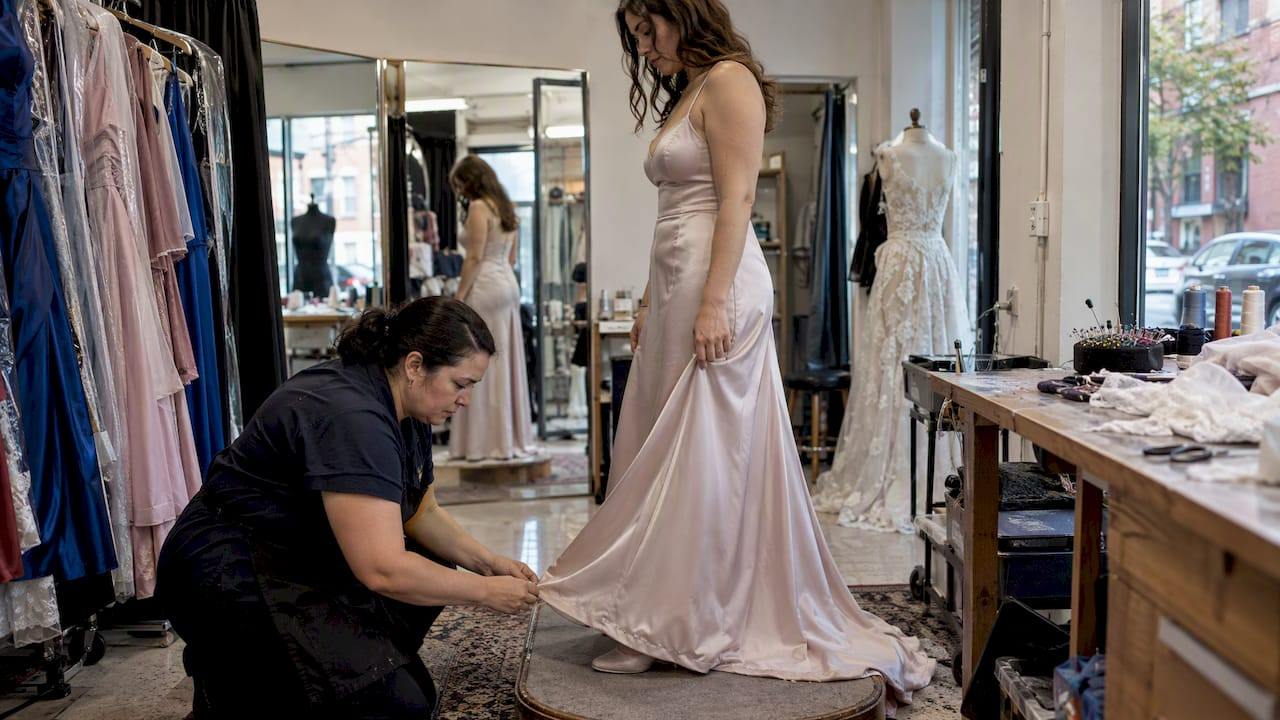
Alterations take longer than most people expect, and formalwear takes longer still. A simple hem can often be done in a single visit, but bodice takes, bust adjustments, and bustle construction for a train usually need one to two weeks, and anything involving hand-applied beading can take three weeks or more because the beadwork has to come off and go back on by hand.
Costs scale with complexity, and every reputable alteration provider should give you a written quote before starting:
- Simple hem or strap shortening: lower end of the price range, usually a quick turnaround.
- Taking in or letting out a bodice or waist seam: mid-range pricing, more labor-intensive.
- Bust cup adjustments, bustle construction, or beaded lace repair: top of the range, often priced per hour of hand work.
Build in extra time for at least one trial fitting, and two if your gown needs bustle work for a reception. Before you book anyone, ask about their experience with formal and bridal wear specifically, request photos of similar past work, and confirm how many fittings are included. Our evening gown alteration guide covers what a typical tailoring timeline looks like once your dress arrives.
Returns, refunds, and when to alter: the safe checkout checklist
Altering a dress can void your return rights, so confirm the policy before you let anyone cut into the fabric. Check the return window, whether the item must come back unworn and unaltered, who pays return shipping, whether restocking fees apply, and whether the item was final sale.
Save everything as you go:
- Order confirmation email with the price, size, and promised delivery date
- Shipping confirmation and tracking number
- Screenshots of the return policy as it appeared when you ordered
- Any written replies from customer service
If a seller does not state a shipping date, the FTC’s default expectation in the United States is shipment within 30 days, or the seller must offer a revised date and the option to cancel. That single rule gives you a concrete deadline to point to if a dress is delayed close to your event.
Paying by credit card adds another layer of protection if a dispute comes up later, since card issuers often offer chargeback options that other payment methods do not. Keep every record until well after the event, not just until the dress arrives.
How Dress Me Up NY supports fit-ready purchases
The product pages include details that make alterations predictable: garment measurements, model height, stretch notes, and lining information, all listed next to the dress itself rather than buried in a size chart elsewhere. Pairing that data with your own measurements is the fastest way to land on a dress that needs a tuck here and there rather than a full rebuild.
Our how-to-measure guide and plus-size fit guide walk through measuring in more depth, and our dress size guide helps you translate those numbers into a size before you check out. From there, browse Formal Gowns, Quinceañera Dresses, cocktail and party styles, or our wedding guest and bridesmaid collection to find a dress built to alter cleanly.
A note on planning ahead for alterations
We see the same pattern over and over: a dress arrives two weeks before the event, the fit is close but not quite right, and suddenly there’s a scramble to find a tailor with an open slot. The fix is almost always the same. Measure early, read the garment details before you buy, and book your fitting the week the dress arrives, not the week before the event. A little planning turns a stressful final stretch into a calm one.
— Dressmeup
FAQ
Can I return a formal dress once it has been altered?
Most retailers will not accept a return once a dress has been altered, since the garment is considered used. Always confirm the return policy before scheduling any alteration work, including whether minor adjustments like hemming count as alterations under that policy.
How long before my event should I schedule formal wear alterations?
Simple fixes like a hem can often be done quickly, but bodice, bust, or beading work can take one to three weeks depending on complexity. Plan to start alterations as soon as your dress arrives, ideally four to six weeks before your event to allow time for a trial fitting.
What measurements should I send to an alteration specialist?
Share your bust, natural waist, hips, shoulder-to-hem length, and the shoe height you plan to wear, along with any fit notes from the dress’s product page. Measuring in the undergarments and shoes you’ll actually wear gives a tailor the most accurate starting point.
How do I know if a dress will be easy or hard to alter?
Look for details like full linings, open seams, and adjustable closures, which give a tailor room to work, and be cautious with heavily beaded lace or fully boned corsetry. Stable fabrics such as satin or crepe generally alter more predictably than slippery or delicate materials.
What should I ask a formal wear alteration service before booking?
Ask about their specific experience with formalwear and bridal gowns, request photos of completed work, and confirm how many fittings are included in their quote. Get the price in writing before any work begins, since costs can vary widely by complexity.
Sources
- How to size formal full length gowns - a complete technical guide
- Online shopping | Consumer Advice | Federal Trade Commission
- New insights in online fashion retail returns from a customers’ perspective
Recommended
- Evening Dress Alterations Near Me: Plan 1–3 Weeks Ahead for a Better Fit
- Evening Gown Alterations Near Me: Get the Perfect Fit
- Where to Find the Right Formal Dress Tailor Near Me
- Order 4–6 Weeks Early: Fit First Shopping for Plus Size Gala Gowns