
Ball Gowns for Short Ladies: How to Find Your Fit
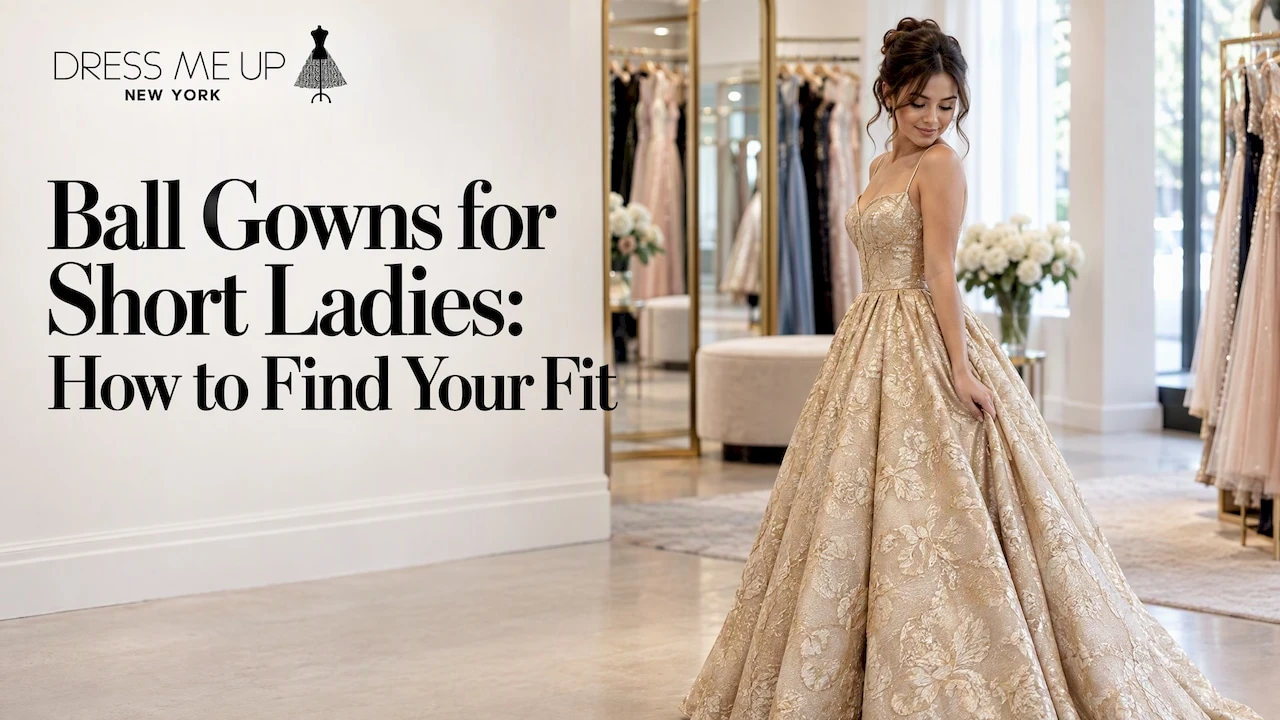
Ball Gowns for Short Ladies: How to Find Your Fit

Yes, you can wear a ball gown when you’re short, and you can wear it beautifully. The trick is not avoiding volume altogether. It’s choosing a waistline, skirt fullness and hem that work with your proportions, so the gown looks like it was made for you instead of wearing you. Below, we walk through the silhouettes, details, shoes and fit checks that matter most.
TL;DR
- Look for a defined waist at or just above your natural waist, and a skirt with moderate fullness rather than a huge, heavy one.
- Keep the top and bottom in proportion: a bodice that fits close and a skirt that flows from the waist makes your whole figure read longer.
- Choose a hem that skims the top of your shoes, and plan for alterations, since most off-the-rack gowns are cut for taller frames.
- Bring your actual shoes and undergarments to every fitting.
- Pick a long, unbroken line of color and a neckline that opens up the chest.
Table of Contents
- Why ball gowns feel tricky when you’re petite
- The silhouettes that work best
- Proportion: where the waist and bodice should land
- Necklines, color and fabric
- Hemlines and length: getting the hem exactly right
- Alterations: plan for them from the start
- Shoes and accessories that add height without the pain
- What we think
- Find your gown at Dress Me Up NY
- A short checklist before you buy
- FAQ
- Sources
Why ball gowns feel tricky when you’re petite
A classic ball gown is a lot of dress: a fitted bodice, a full skirt, often layers of tulle, satin or organza. On a shorter frame, all that fabric can swallow you. The skirt hits the floor too early, the waist lands in the wrong spot, and suddenly you’re looking at the dress instead of the person inside it.
The good news is that this is a fit problem, not a style verdict. Style writers who cover shorter frames note that modern ball gown designs often reduce the fullness slightly, keeping the drama while staying wearable on smaller frames. That’s your opening. You can have the swish and the sweep without the bulk.
If you’re not sure what makes a gown a true ball gown versus another formal style, our guide to what a ball gown is is a handy refresher.
The silhouettes that work best
The modified ball gown
This is the one for you if you love the princess look. It keeps the fitted bodice and flared skirt but trims the volume. Think a skirt that falls in soft fullness rather than a hoop-supported dome. You still get the movement and the entrance, with less fabric competing for attention.
A-line and empire styles
Style guides for shorter women commonly recommend A-line or empire gowns with moderate fullness, and advise skipping excess fabric or a skirt that seems to cut the body in half. An A-line widens gently from the waist or bust, which keeps one clean line from shoulder to hem. An empire waist sits high, just under the bust, and makes the legs look longer by moving the visual center of the dress upward.

Sleeker skirts with soft detail
If a full skirt isn’t your thing, a sleeker A-line with streamlined pleats or lightly ruched chiffon gives you movement without bulk. Fashion writers suggest that higher empire waistlines and streamlined A-lines help shorter women carry formal gowns without being overwhelmed by volume.
Silhouette cheat sheet
| Silhouette | Why it works on a short frame | Watch out for |
|---|---|---|
| Modified ball gown | Keeps the princess shape with less volume | Skirts with heavy, stiff layers |
| A-line | One long line from bodice to hem | Very wide, low-set skirts |
| Empire waist | Raises the waistline and lengthens legs | Gathers that add bulk at the bust |
| Basque waist | Dips to a V that elongates the torso | A deep point can shorten the torso |
| Fit-and-flare | Close at the hip, flowing below | Flare that starts too low on the thigh |
We cover more everyday formal shapes in petite formal dress styles that actually flatter you, and our roundup of petite formal evening gowns goes deeper on picks for short frames.
Proportion: where the waist and bodice should land
This is the heart of it. A ball gown is built around the waist seam, so where that seam sits decides everything.
Try the rule of thirds. One styling expert suggests that petites can use the rule of thirds, pairing a cropped or fitted top with a high-waisted, full-length bottom so the top takes up one-third of your look and the bottom two-thirds. In a gown, that means a waist seam that sits on or slightly above your natural waist, with a skirt that makes up the rest.
Consider a basque waist. A V-shaped basque seam can lengthen the torso. One wedding guide recommends a basque waist for petite brides because it elongates the torso, while cautioning against overly puffy skirts. Keep the dip gentle. If the point is very deep, it can do the opposite and make a short torso look shorter.
Check the bodice fit. A few quick tests when you try a gown on:
- The waist seam should land at your natural waist, not at your hips or ribs.
- The bust darts or cups should sit where your bust actually is. If they sit too low, the whole bodice looks stretched.
- The straps should stay put without pulling. Short torsos often mean straps that are too long.
- Sit down, raise your arms and turn. You should breathe and move without tugging.
Necklines, color and fabric
A lower neckline opens the chest and draws the eye down a vertical line, which helps a petite frame look longer. Sweetheart, scoop, deep square and deep V are all worth trying, according to the same style guide. High, heavy collars can chop up your height, so treat them with care.
Color is a quiet helper. Wearing one tone from head to toe creates length, and mixing fabrics and textures keeps a single-color look interesting. Picture a deep emerald gown with a satin bodice and a chiffon skirt: same color, different textures, no visual break.
A few practical fabric notes:
- Chiffon and soft tulle move freely and add less weight than stiff taffeta or heavy brocade.
- Satin and crepe give a clean, fluid line, great for a sleek A-line.
- Large prints and wide horizontal bands can cut your height into sections. Vertical detail, like long seams or soft draping, does the opposite.
- Contrasting belts or wide sashes can break the line. If you love one, match it to the dress.
The same ideas show up in our guide to flattering colors and design features, which applies just as well to a shorter frame.
Hemlines and length: getting the hem exactly right
The hem is where short women most often get tripped up, both figuratively and literally. A gown that’s even an inch or two too long will pool at your feet, catch on stairs and shrink your whole look.
Here’s what we suggest:
- Decide on shoes first. Hem length is always measured with the shoes you’ll wear on the night. A gown hemmed for heels will drag with flats, and the reverse leaves you with an ankle-skimming skirt.
- Aim for the top of your shoe. For a full-length gown, a hem that floats just above the floor and skims your shoe looks polished and doesn’t get stepped on.
- Be careful with in-between lengths. Midi hems can cut the leg unless tailored precisely to your height. If you want a shorter gown, tea length or a high-low shape done on purpose can look great.
- Think about the train. A long sweeping train is dramatic but can overwhelm a small frame. A shorter sweep train, or a bustle, is easier to manage.
For movement, a tailor can add a bustle button or a wrist loop so you can lift the skirt for dancing and stairs without wrestling it.
Alterations: plan for them from the start
Here’s the honest truth: most standard-size clothing is cut for taller women. A stylist who writes about petite fit notes that for women 5’4" and under, getting the right fit may mean paying for alterations. Treat that as part of the budget, not a surprise.

A good tailor can handle more than the hem. Vogue’s guide to wearing a ballgown points to reworking the hem, altering the waist and securing straps as common fixes.
What to bring and ask:
- Your shoes and undergarments. Both change the fit.
- Your hair plan, if it affects the neckline or straps.
- A short list of questions. Can the waist seam be raised? Can the straps be shortened? Is there enough fabric to hem without distorting the skirt?
- Time. Book your fitting well before the event, since gowns with layered skirts take longer to hem.
Hem work on a skirt with several layers or a lace border is more involved than on a plain skirt, so ask your tailor how they handle it. If you’re looking for help locally, our guides on formal gown alterations near me and evening gown alterations near me walk through what to look for and the fitting essentials.
Shoes and accessories that add height without the pain
A long ball gown is a long night. You don’t want to be limping by the second dance.
- Platforms and wedge soles. Fashion editors point to tall platforms with chunky wedge soles as a way to add height that can be more comfortable than traditional high heels. A floor-length skirt hides them completely.
- Pointed-toe flats. If you’d rather skip heels, pointed-toe flats are one option for petite women. Just have the dress hemmed to match.
- Delicate jewelry. Skip oversized statement pieces that compete with the bodice. A drop earring or a slim necklace keeps the line going.
- Hair up. An updo or half-up style can add a little height and shows off a neckline.
- Small clutch. A big bag adds visual weight at the hip.
Whatever shoes you pick, wear them for a few hours at home before the event.
What we think
At Dress Me Up NY, we hear this question from prom girls, bridesmaids and wedding guests alike, and our answer is always the same: stop asking whether you’re “allowed” to wear a ball gown. You are. What you want is a gown whose waist, skirt and hem respect your proportions.
Because our catalog is organized by event, designer and style, you can narrow down quickly to the category you need, whether that’s formal gowns, a Quinceañera dress or a bridesmaid gown, and then look closely at the waistline and skirt shape. Our collections are curated from New York’s fashion district and global designers, and our team of fashion professionals is here to help if you want a second opinion on a silhouette.
Our practical advice: pick the shape first, the color second, and book the tailor before you fall in love with a hem you can’t change. A well-chosen gown plus a good alteration beats an expensive gown worn off the rack, every time.
— Dressmeup
Find your gown at Dress Me Up NY
Ready to try on a few shapes? Browse our formal gowns for A-line, fit-and-flare and fuller silhouettes, or head to our Quinceañera dresses if you want the full princess moment. Bridesmaids and guests can look through our wedding collection, and our evening dresses are a good place to start if you’re after something sleeker.
Not sure which cut suits you? Our team can help you narrow it down.
A short checklist before you buy
- Does the waist seam land at or just above my natural waist?
- Is the skirt full enough to feel special but not so full that it overwhelms me?
- Will the hem work with the shoes I’m actually wearing?
- Are there straps, a bustle or a loop that can be adjusted by a tailor?
- Have I budgeted time and money for alterations?
If you can answer yes to most of these, you’re in good shape. And if you want to compare how fit works across ages and builds, our post on choosing the right size and fit has useful pointers.
FAQ
Can short women wear full ball gowns?
Yes. Choose a fitted bodice, a waist that sits at or just above your natural waist and a skirt with moderate fullness. A dramatic, very wide skirt can overwhelm a small frame, but a modified ball gown keeps the princess look without the bulk.
What length should a ball gown be if I’m short?
For a full-length gown, the hem should skim the top of your shoe without touching the floor. Always measure with the shoes you’ll actually wear, and be careful with midi lengths, which can cut the leg line unless they’re tailored precisely.
Are empire waists good for petite women?
Often, yes. An empire waist sits high and makes the legs look longer. Keep the fabric under the bust lightly gathered rather than bulky, and pick a skirt that flows straight down.
Do I need alterations on a ball gown if I’m petite?
Most likely. Standard sizing is cut for taller women, so plan for a hem adjustment at least, and possibly a raised waist or shortened straps. Book your tailor early, and bring your shoes and undergarments to the fitting.
What shoes should I wear with a ball gown if I’m short?
Tall platforms or wedge soles add height and are often more comfortable than stilettos, and a floor-length skirt hides them. If you prefer flats, have the dress hemmed to match.
Sources
- Are Ball Gowns Flattering? Exploring the Elegance of Ball Gowns
- Dresses for Women: Ten Silhouettes and Who Each One Suits
- Perfect evening wear essentials: complete style guide
- 7 Tips on Mastering Petite Style
- Princess Ball Gown Wedding Dress Guide
- How To Wear A Ballgown: Advice And Tips
- Florence Pugh and the platform shoe trend for petite women
- 8 Classic Petite Outfit Formulas
Recommended
- Petite Formal Evening Gowns: Best Picks for Short Frames
- Prom Dresses For Short Girls: The Ultimate Guide
- Find Your Dream Ball Gown: Types, Trends & Smart Shopping